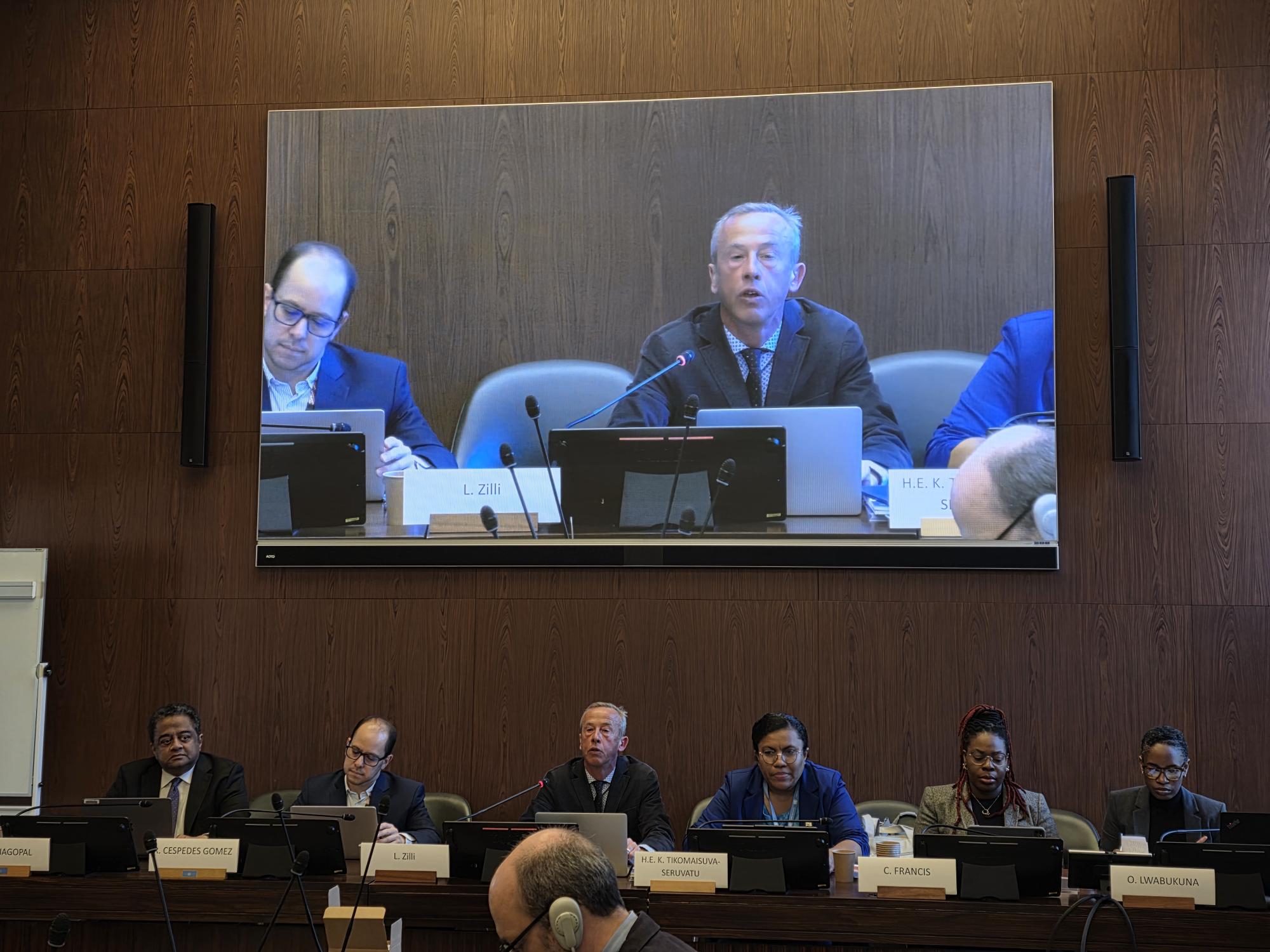
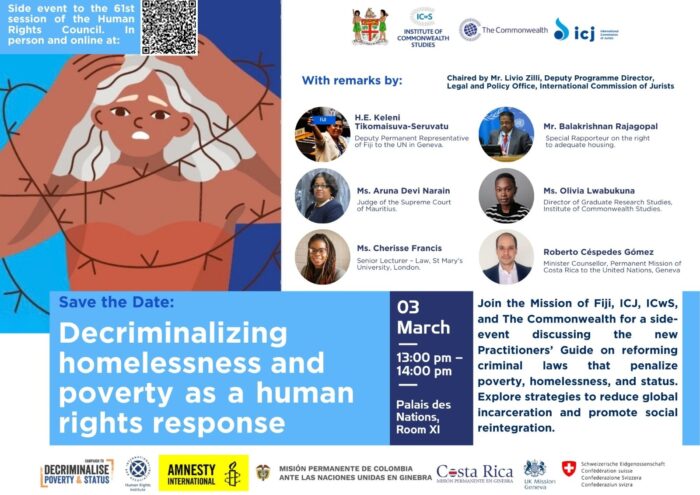
On 3 March 2026, the Commonwealth Secretariat (ComSec), the International Commission of Jurists (ICJ) and the Institute of Commonwealth Studies (ICwS) – together with the Permanent Mission of Fiji to the UN in Geneva – held a side event on the margins of the on-going 61st session of the Human Rights Council to showcase and discuss their Practitioners’ Guide (PG) on a human rights-based approach to criminal law, including to the decriminalization of conduct associated with poverty, homelessness and status. Speakers teased out and debated the pertinence and necessity of a human rights-based approach to criminal law with respect to the criminalization of conduct associated with poverty, homelessness and status.
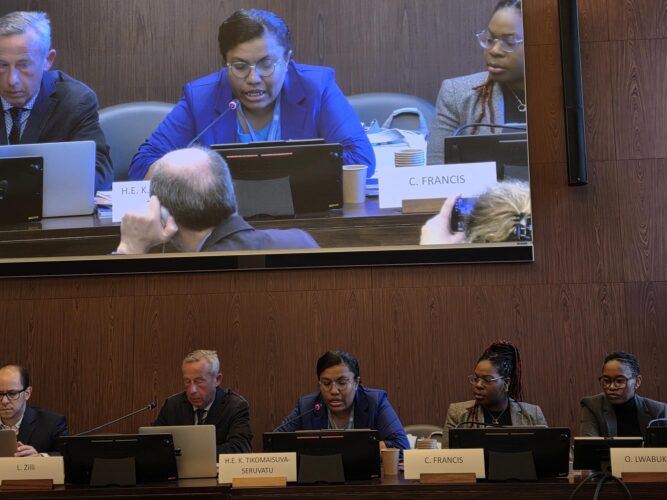
Ambassador Tikomaisuva-Seruvatu
In her opening remarks, Ambassador Tikomaisuva-Seruvatu, Deputy Permanent Representative of Fiji to the UN in Geneva, recommended the PG as a reference and practical guide to justice sector actors and others, offering a clear, accessible and operational legal framework and practical legal guidance on a human rights-based approach to criminal law, including on ways to further the decriminalization of conduct associated with poverty, homelessness and status.
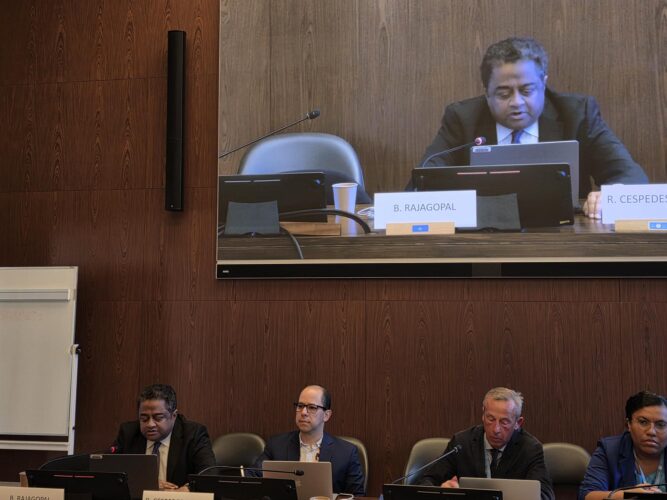
Special Rapporteur Balakrishnan Rajagopal
The Special Rapporteur on the right to adequate housing, Balakrishnan Rajagopal, who also addressed the side event, referenced his June 2024 joint study with the Special Rapporteur on extreme poverty – “Breaking the cycle: Ending the criminalization of homelessness and poverty” – underscoring how
“vagrancy laws, inherited from colonial times, impose punishment without clearly defining any criminal conduct. These laws disproportionately and negatively impact marginalized groups — including religious minorities, women, the LGBTQI+ community, street vendors, and others — who are often detained simply for being poor or homeless. They target individuals who have no alternative but to live in homelessness, penalizing them for their poverty and subjecting them to degrading treatment under international law. Criminal law does not resolve the problem — it deepens it — and it cannot replace comprehensive social policies. The Guide offers concrete legal and policy recommendations on alternatives to criminalization.”
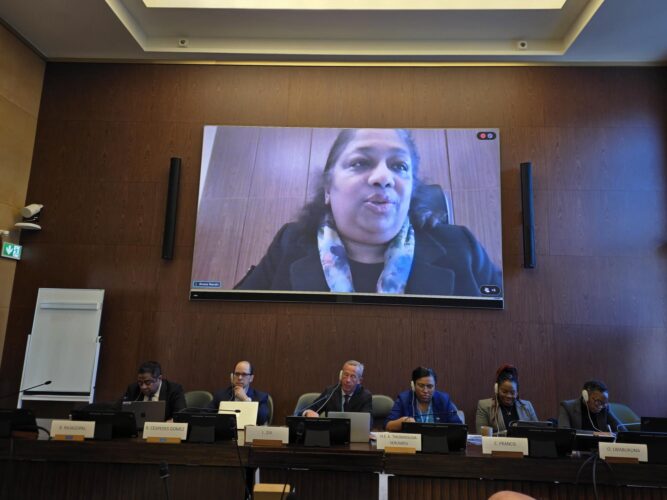
Justice Aruna Devi Narain
Aruna Devi Narain – a Puisne Judge of the Supreme Court of Mauritius, a Commissioner of the ICJ and a former Rapporteur of the Committee on the Elimination of Discrimination against Women – spoke about the ways in which the PG addresses the criminalization of women and girls living in poverty and experiencing homelessness, and highlighted the contribution of The 8 March Principles for a Human Rights-Based Approach to Criminal Law and, in particular, of Principle 21, which focuses on the criminalization of life-sustaining activities in public places and conduct associated with homelessness and poverty.
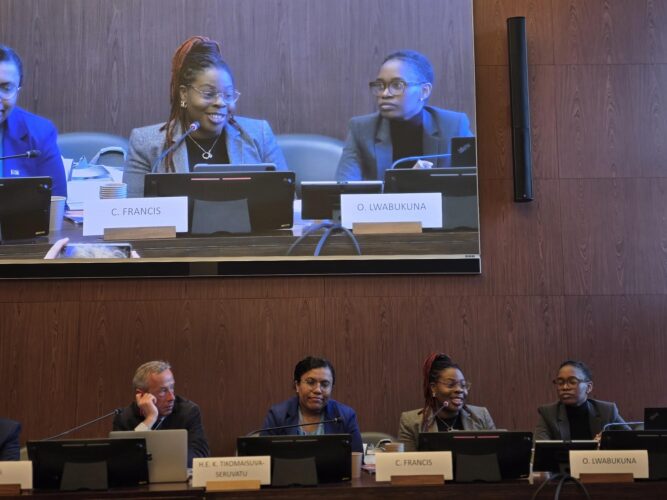
Dr Cherisse Francis
Cherisse Francis, a Senior Lecturer in Law at St Mary’s University in London, decried how,
“because of the way our criminal laws continue to operate, the structure of these colonial-era vagrancy laws is not based on conduct, but on stigma. They disproportionately affect minorities and those who are economically and socially disadvantaged. Their impact persists today, as enforcement is rooted in an individual’s status rather than any specific act. This Guide seeks to address that gap by upholding human dignity, reducing incarceration, and promoting reintegration into society.”
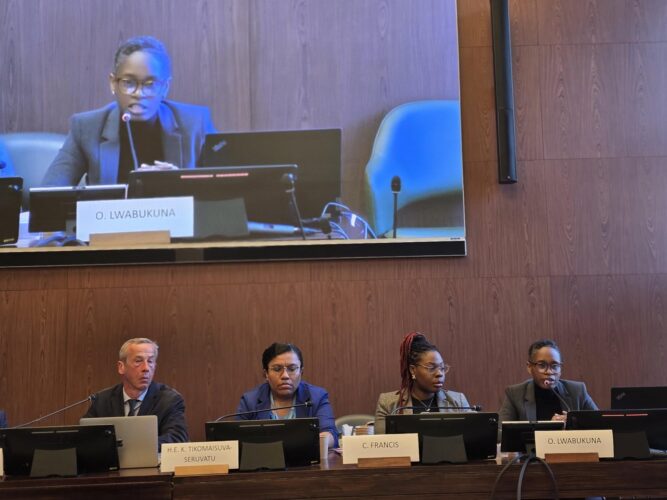
Dr Olivia Lwabukuna
Olivia Lwabukuna, a Senior Lecturer and Director of Graduate Research Studies and Fellowship Programme Coordinator at the ICwS, described how the PG Guide was being launched in different regions, accompanied by region-specific advocacy, thematic studies and translation efforts. She emphasized that the aim was to use the PG to foster trans-regional and south-south collaboration across Africa, Asia-Pacific, the Caribbean and Latin America in combatting the criminalization of conduct associated with homelessness, poverty and status.
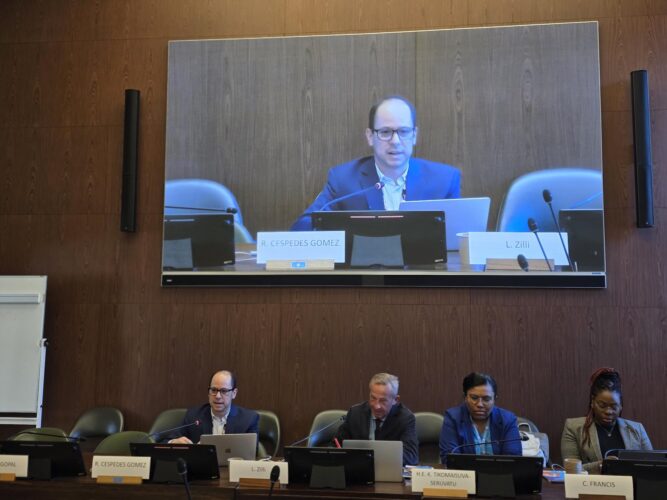
Minister Counsellor Roberto Céspedes Gómez
The side event also heard from Roberto Céspedes Gómez, Minister Counsellor of the Permanent Mission of Costa Rica to the UN. He pointed out that the social reintegration of people released from detention encountered significant barriers, including exclusion from housing, unemployment, and ongoing criminalization, with former detainees frequently targeted and further stigmatized through the criminalization of poverty-related conduct. Céspedes Gómez underscored how criminal laws are often drafted by individuals who have not experienced homelessness or poverty firsthand and who, therefore, may lack a full understanding of their detrimental impact. He observed that criminal law is no substitute for comprehensive social policies, and recommended that efforts to advance decriminalization adopt a participatory approach, ensuring that human rights principles guide the development and implementation of criminal law policy.
The side event was an opportunity to:
- Present and discuss the PG on the margins of the premier human rights organ of the UN;
- Harness the synergies with on-going pertinent initiatives, including the Council’s efforts in pursuit of the UN System Common Position on Incarceration’s goals of reducing both prison overcrowding and the prison population worldwide, towards the social reintegration of persons released from detention, and on the human rights of people in street situations; and
- Share insights about and build on the work of the Commonwealth to decriminalize conduct associated with poverty, homelessness and status.
The Permanent Missions of Colombia, Costa Rica, Switzerland and the United Kingdom to the UN, as well as Amnesty International, the Global Campaign to Decriminalise Poverty & Status and the International Bar Association’s Human Rights Institute co-sponsored the side event.
Background
The PG was initially launched at a side event at the Commonwealth Heads of Government Meeting (CHOGM) in Samoa in October 2024. In February this year, the PG was endorsed at the Commonwealth Law Ministers Meeting in Fiji.
The PG addresses the global growing trend towards wrongful overcriminalization of such conduct by presenting a human rights-based approach to criminal law, based on general principles of criminal law and international human rights law and standards. Such an approach addresses the detrimental impact of the criminalization of conduct associated with poverty, homelessness and status on health, equality and other human rights.
As such, the PG aims to serve as a reference and practical guide to justice sector actors and others – such as legislatures, government officials, policy-makers, national human rights institutions, oversight bodies, victims’ groups, human rights advocates, civil society organizations and academics – offering a clear, accessible and operational legal framework and practical legal guidance on a human rights-based approach to criminal law, including on ways to further the decriminalization of conduct associated with poverty, homelessness and status. This approach is based on general principles of criminal law and international human rights law and standards and grounded in SDG 16 – Peace, Justice and Strong Institutions.