Sep 18, 2017 | Events
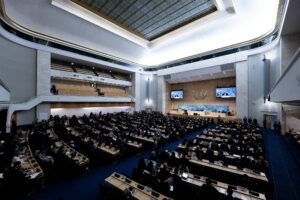
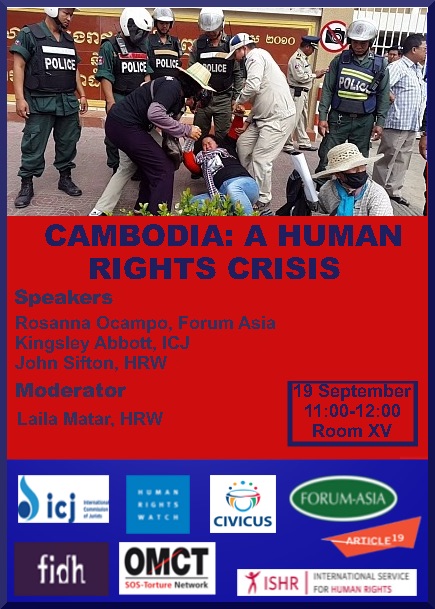
On 19 September, the ICJ and other leading international NGOs are convening a panel to discuss the crisis for human rights and rule of law in Cambodia, at a side event to the UN Human Rights Council session taking place in Geneva.
The side event comes as States consider a new draft resolution on Cambodia for adoption by the Human Rights Council. Before the session, the ICJ joined other organizations in calling for strengthening of the resolution and its measures for monitoring, reporting on and discussing the situation for human rights in the country.
Moderator:
- Laila Matar, Senior UN Advocate, Human Rights Watch
Speakers:
- Rosanna Ocampo, Forum Asia
- Kingsley Abbott, International Commission of Jurists
- John Sifton, Human Rights Watch
The event takes place Tuesday, 19 September 2017, 11:00 – 12:00, in the Palais des Nations, Room XV.
ICJ is organizing the event together with Human Rights Watch, Forum-Asia, Civicus, Article 19, FIDH, OMCT, and ISHR.
For more information, contact un(a)icj.org
Sep 15, 2017 | Доклады, Новости, Пресс-релизы, Публикации, Тематические доклады
Несоблюдение верховенства закона при передаче подозреваемых через границы увековечивает нарушения прав человека в случаях, когда применяется национальная безопасность, говорится в новом докладе МКЮ.
Выпущенный сегодня отчет МКЮ «Транснациональная неправосудность – перемещение лиц по соображениям национальной безопасности» документирует законы и практику в регионе ОБСЕ, предусматривающие передачу подозреваемых национальной безопасности всеми возможными способами без учета национального законодательства или международно-правовых обязательств государств.
«В этом докладе демонстрируется, что под разными видами некоторые государства по-прежнему продолжают злоупотреблять процедурами выдачи и высылки, а иногда даже прибегать к похищениям и выдаче в случаях, связанных с борьбой с терроризмом или национальной безопасностью», – сказала Роушин Пиллей, директор Региональной программы МКЮ по Европе и СНГ.
«Это имеет пагубные последствия для уважения прав человека и верховенства закона», – добавила она.
«В некоторых странах, например в России и Центральной Азии, существующие национальные правовые процедуры для защиты от злоупотреблений в отношении передачи были обойдены или неэффективны», – сказала Пиллэй.
Она добавила: «Мы должны поставить судей и прав человека в основу процедур выдачи для обеспечения их эффективности и предотвращения произвольных и внесудебных передач подозреваемых».
В докладе отмечается, что отсутствие подотчетности в тех случаях, когда нарушения прав подозреваемых были нарушены, приводит к дальнейшим злоупотреблениям.
«С закрытием Американских программ, выдачи, как полагали, закончились», сказал Массимо Фриго, юрисконсульт МКЮ.
«Почти полное отсутствие подотчетности за выдачи США предоставило пустую проверку законности любым странам, которые пытаются сгибать или нарушать правила за счет основных гарантий прав человека», – добавил он.
Дополнительная Информация
Практика в ряде государств в последние годы выявила серьезные последствия для прав человека и верховенства закона в отношении переводов людей на основание национальной безопасности и уголовного сотрудничества в Российской Федерации, Центральной Азии и за ее пределами.
Выдача, высылка и, иногда, переводы, происходящие вне правовых рамок, вызвали международные реакции и решения международных судов и полусудебных органов.
Доклад МКЮ «Транснациональная неправосудность – перемещение лиц по соображениям национальной безопасности» основан на исследованиях этой практики, документирований иллюстративных случаев и применимых правовых рамок.
Доклад анализирует выдачу, высылку и неофициальные переводы в Российской Федерации, странах Центральной Азии и членах ЕС, а также практику выдачи в Соединенных Штатах Америки, и оценирует ситуации к международным правам в области прав человека.
В докладе содержатся конкретные рекомендации относительно изменений, основанные на сравнительном опыте отдельных членов ЕС.
Контакты:
Роушин Пиллей, директор Региональной программы МКЮ по Европе, roisin.pillay(a)icj.org
Массимо Фриго, правовой советник МКЮ, massimo.frigo(a)icj.org
Europe-Transnational Injustices-Publications-Reports-Thematic reports-2017-RUS (Полный доклад на русском, PDF)
Europe-Translational Injustices-ExecSummary-Publications-Reports-Thematic reports-2017-RUS (Краткое резюме на русском, PDF)
Sep 15, 2017 | News, Publications, Reports, Thematic reports
Failure to assert the rule of law in the transfer of suspects across borders perpetuates violations of human rights in cases where national security is invoked, a new ICJ report finds.
Released today, the ICJ report Transnational Injustices – National Security Transfers and International Law documents laws and practices in the OSCE region involving transfer of national security suspects by all possible means without regard to national law or States’ international legal obligations.
“This report demonstrates that, under different guises, some States still continue to abuse extradition and expulsion procedures and sometimes even to resort to abductions and renditions in cases related to counter-terrorism or national security,” said Róisín Pillay, Director of the ICJ Europe and CIS Programme.
“This has pernicious consequences for the respect of human rights and the rule of law,” she added.
“In some states, such as in Russia and Central Asia, existing national legal procedures to protect against abusive transfers have been bypassed or ineffective,” Pillay said.
She added: “We need to put judges and human rights law at the heart of extradition procedures to ensure their effectiveness and to prevent arbitrary and extra-legal transfers of suspects.”
Lack of accountability in cases where suspects’ human rights have been violated fuels further abuses, the report finds.
“With the closure of the US programmes, renditions were thought to be over,” said Massimo Frigo, Legal Adviser at the ICJ.
“The almost complete lack of accountability for US renditions has provided a blank check of legitimacy to any countries trying to bend or break the rules at the expenses of the basic safeguards of one’s human rights,” he added.
Background
Practices in a number of States in recent years have highlighted the serious implications for human rights and the rule of law of transfers of people based on national security and criminal cooperation grounds in the Russian Federation, Central Asia and beyond.
Extraditions, expulsions and, sometimes, transfers occurring outside of the legal framework have triggered international reactions and rulings of international courts and quasi-judicial bodies.
The ICJ report Transnational Injustices – National Security Transfers and International Law is based on research of these practices, documenting illustrative cases, and the applicable legal framework.
The report analyses extradition, expulsion and informal transfers in the Russian Federation, Central Asian countries and EU Member States, as well as the rendition practices in the United States and assesses the situation against international human rights law.
The report offers concrete recommendations for change based on the comparative experiences of selected EU member States.
Contact:
Róisín Pillay, ICJ Europe Programme Director, t: +32 2 734 84 46 ; e: roisin.pillay(a)icj.org
Massimo Frigo, ICJ Legal Adviser, t: +41 22 979 3805 ; e: massimo.frigo(a)icj.org
Europe-Transnational Injustices-Publications-Reports-Thematic reports-2017-ENG (Full report in English, PDF)
Europe-Transnational Injustices-Publications-Reports-Thematic reports-2017-RUS (Full report in Russian, PDF)
Europe-Transnational Injustices-ExecSummary-Publications-Reports-Thematic reports-2017-ENG (Executive Summary in English, PDF)
Europe-Translational Injustices-ExecSummary-Publications-Reports-Thematic reports-2017-RUS (Executive Summary in Russian, PDF)

Sep 14, 2017 | Advocacy
In a joint statement released today, the ICJ joins several other organisations in calling on the Supreme Court of the Maldives to rescind the indefinite suspension of 56 lawyers.
The lawyers had signed a petition to the Supreme Court calling for the independence and reform of the judiciary.
The statement, made jointly with Maldivian Democracy Network, Front Line Defenders, Transparency International and FORUM-ASIA, can be downloaded here: Maldives-Advocacy-Lawyers-2017
Sep 13, 2017 | Incidencia
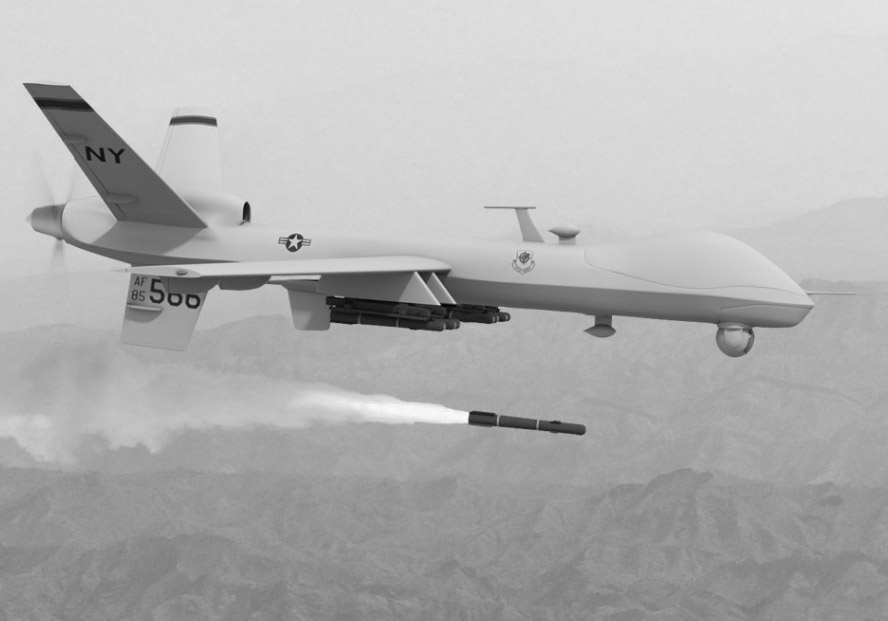
Drones han causado daño a comunidades, incluidas víctimas significativas; generado serias preocupaciones legales y éticas; y amenazado el orden internacional y el estado de derecho al reducir las restricciones políticas, prácticas y tecnológicas sobre el uso de la fuerza.
Los Estados deben de estar conscientes de que las características específicas de estas tecnologías facilitan la expansión global del uso de la fuerza letal.
Por consiguiente, los Estados no deben ignorar las reglas históricas del derecho internacional que rigen el uso de la fuerza.
Por lo tanto, el uso, la implementación, y la proliferación creciente de drones son retos fundamentales que necesitan atención.
Universal-Dronestandards-Advocacy-2017-SPA (Texto completo en PDF)