Mar 3, 2018 | Agendas, Events, News
Today begins in Istanbul (Turkey) a two-day training for lawyers and CSO practitioners representing and working with migrants, refugees and asylum-seekers.
This event is organized by ICJ, in cooperation with its partners Refugee Rights Turkey, the European Council on Refugees and Exiles (ECRE), Mülteci-Der (MD) and ICJ-EI, as part of the EU co-financed project Fostering Access to Rights for Migrants, Refugees and Asylum-Seekers in Turkey.
30 lawyers and civil society practitioners – representing nine different bar associations and relevant organisations from the Ankara area and other nearby key migration and asylum locations – are taking part in the training on 3 and 4 March.
The training aims to update lawyers and CSOs on the international and national law on the rights of refugees, migrants and asylum-seekers in order to be effective in their work at both the national and international levels. It aims at an effective implementation of the Turkish legal framework on asylum and migration.
The main thematic areas to be discussed will be the principle of non-refoulement, international protection, detention and access to economic, social and cultural rights.
The training will use as a basis the draft training materials prepared by the ICJ and its partners (to be published an the end of 2019) and, among other sources, the ICJ Practitioners Guide no. 6: Migration and International Human Rights Law.
The project “Fostering Access to Rights for Migrants, Refugees and Asylum-Seekers in Turkey” is funded by the European Instrument for Democracy and Human Rights (EIDHR) of the European Union.
Turkey-Training-Istanbul2-MigrationAsylum-Agenda-2018-tur (download the agenda in Turkish)
Feb 3, 2018 | Agendas, Events, News
Today begins in Ankara (Turkey) a two-day training for lawyers and CSO practitioners representing and working with migrants, refugees and asylum-seekers.
This event is organized by ICJ, in cooperation with its partners Refugee Rights Turkey, the European Council on Refugees and Exiles (ECRE), Mülteci-Der (MD) and ICJ-EI, as part of the EU co-financed project Fostering Access to Rights for Migrants, Refugees and Asylum-Seekers in Turkey.
30 lawyers and civil society practitioners – representing nine different bar associations and relevant organisations from the Ankara area and other nearby key migration and asylum locations – are taking part in the training on 3 and 4 February.
The training aims to update lawyers and CSOs on the international and national law on the rights of refugees, migrants and asylum-seekers in order to be effective in their work at both the national and international levels. It aims at an effective implementation of the Turkish legal framework on asylum and migration.
The main thematic areas to be discussed will be the principle of non-refoulement, international protection, detention and access to economic, social and cultural rights.
The training will use as a basis the draft training materials prepared by the ICJ and its partners (to be published an the end of 2019) and, among other sources, the ICJ Practitioners Guide no. 6: Migration and International Human Rights Law.
The project “Fostering Access to Rights for Migrants, Refugees and Asylum-Seekers in Turkey” is funded by the European Instrument for Democracy and Human Rights (EIDHR) of the European Union.
Turkey-Training-Ankara-MigrationAsylum-Agenda-2018-tur-eng (download the agenda in Turkish and English)
Jan 30, 2018 | Agendas, Events
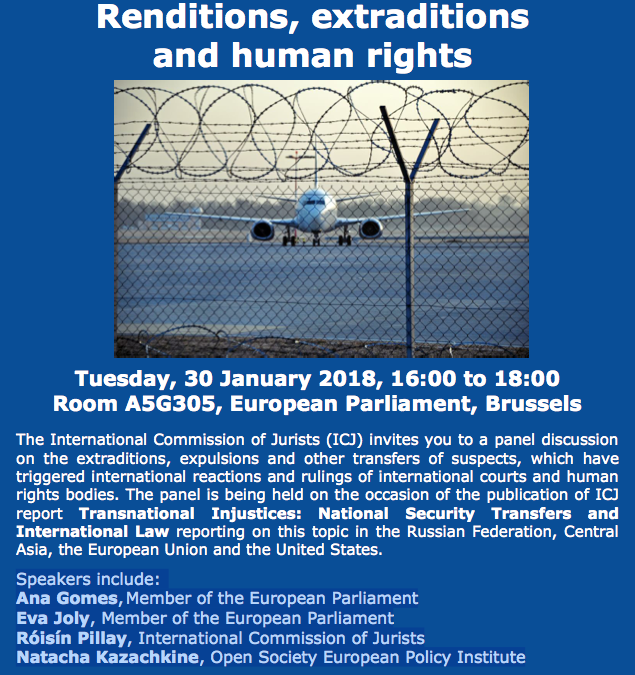
The ICJ invites you to an event to discuss challenges in prevention of, and accountability for, violations of human rights in renditions and other transfers of suspects, including through past European complicity in US-led renditions, and in ongoing transfers of suspects in the CIS region.
Join us for a discussion marking the EU launch of the International Commission of Jurists’ report, Transnational Injustices: National Security Transfers and International Law. The event is kindly hosted by Ana Gomez and Eva Joly, MEPs.
Panelists will discuss the ongoing practice of states unlawfully rendering people accused of terrorism, accountability for violations of human rights in past renditions, and how the EU institutions and EU Member States should address these.
When: Tuesday 30 January 16.00 – 18.00
Where: Room A5G305, European Parliament, Brussels
RSVP to: anamaria.gomes@europarl.europa.eu
Speakers include:
- Ana Gomes, Member of the European Parliament
- Eva Joly, Member of the European Parliament
- Róisín Pillay, International Commission of Jurists
- Natacha Kazachkine, Open Society European Policy Institute
A flyer for this event is available in PDF format by clicking here.

Jan 11, 2018 | Advocacy, Cases, Legal submissions
The ICJ responded today to the observations of the Czech Government on the merits of the collective complaint brought against it earlier last year by the ICJ and Forum for Human Rights.
The complaint to the European Committee of Social Rights (ICJ v. the Czech Republic, No. 148/2017) argues that the Czech Republic fails to ensure equal legal protection and participation of children below the age of criminal responsibility in the pre-trial stage of juvenile justice procedures.
The ICJ and Forum for Human Rights reinforced the complaint, relying on Article 17 of the Social Charter, in relation to the State party’s failure to ensure that children below the age of criminal responsibility but recognised as having infringed the penal law are treated in a manner consistent with the promotion of the child’s sense of dignity and worth, which reinforces the child’s respect for the human rights and fundamental freedoms of others and which takes into account the child’s age and the desirability of promoting the child’s reintegration and the child’s assuming a constructive role in society.
Europe-ECSR-ICJvCzechRepublic-ChildrenJustice-ICJresponse1-2018-ENG (download the ICJ reply)
Jan 8, 2018 | Advocacy, Cases, Legal submissions, News
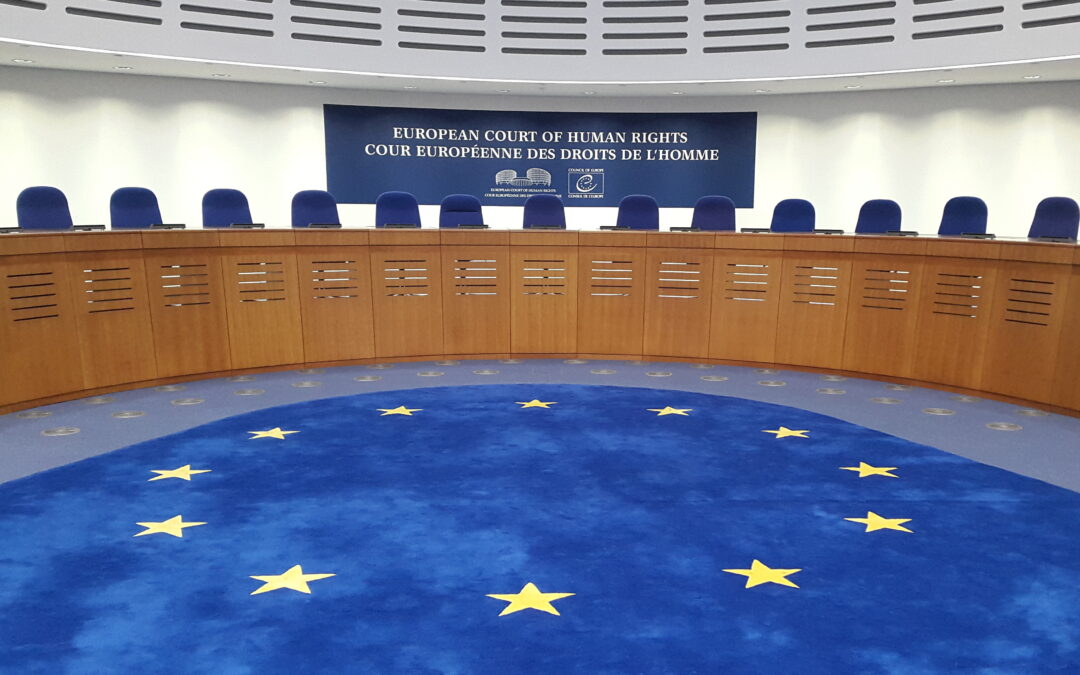
The ICJ and other organizations have intervened today before the European Court of Human Rights challenging expulsions of asylum seekers from Hungary to Serbia.
The International Commission of Jurists (ICJ), the European Council on Refugees and Exiles (ECRE) and the Dutch Council for Refugees have submitted today a third party intervention before the Grand Chamber of the European Court of Human Rights in the case of Ilias and Ahmed v. Hungary.
The case challenges the systematic practice by the Hungarian authorities to send back to Serbia foreign nationals asking for asylum under the pretention that Serbia is a safe third country in which to ask for international protection.
The intervening organizations have argued before the Court that:
- a removal that exposes an applicant to the risk of refoulement and deprives them of protections under international and EU law, is prohibited regardless of whether the decision was taken on the basis of the safe third country concept or the country was included in a “safe third country” list.
- International law requires, inter alia, a rigorous scrutiny of the applicant’s arguable claim of potential prohibited treatment, access to an effective remedy following a negative decision, and access to the rights under the 1951 Refugee Convention.
- Application of the safe third country concept for EU Member States is contingent on the applicant being admitted to the territory and having effective access to a fair asylum procedure in the safe third country
- An assessment of whether restrictions on the freedom of movement of migrants, imposed in a border or international zone, amount to deprivation of liberty under Article 5 ECHR must be based on the impact of these measures on the individuals concerned.
Hungary-ECtHR-amicusbrief-cases-Ilias&Ahmed-ICJ&others-2018-ENG (download the third party intervention)
Background
Ilias Ilias and Ali Ahmed, both Bangladeshi nationals, fled their home country in arrived at the Hungarian-Serbian border on 15 September 2015 after having briefly crossed through Serbia during their trip.
Having asked immediately for asylum in Hungary, they were confined for days in a transit zone, a ” a confined area of some 110 square metres, part of the transit zone, surrounded by fence and guarded by officers”.
Their applications were rejected on the very same day of their application on the grounds that they could have asked for asylum in Serbia, considered by Hungary a safe third country, and appeals were rejected.
They were removed to Serbia on 8 October 2015.