Nov 17, 2017 | News
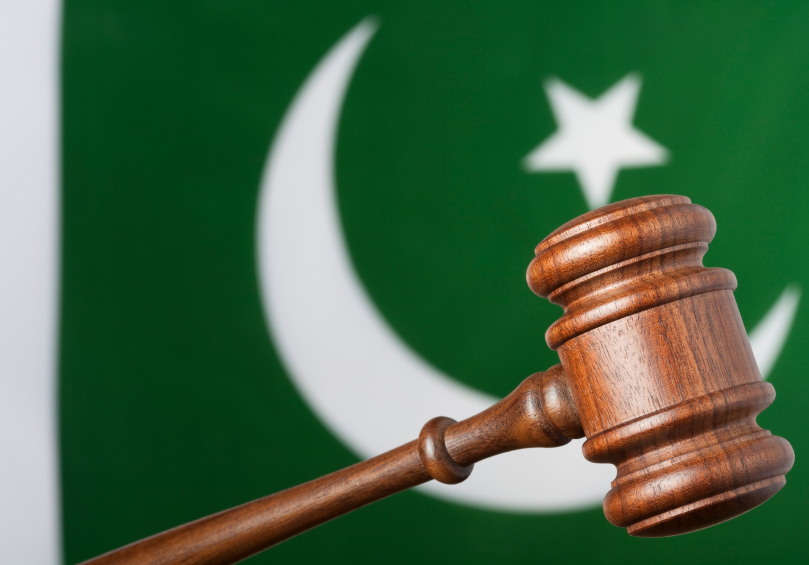
Pakistan’s third Universal Periodic Review (UPR) has drawn global attention to a number of serious human rights failures in the country, said the ICJ today.
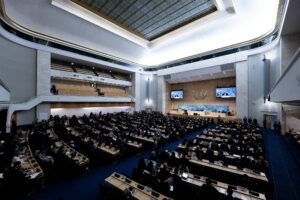
On 16 November, the UPR Working Group of the Human Rights Council adopted a draft UPR outcome report for Pakistan. Pakistan received a total of 289 recommendations – a substantial increase from its previous UPR in 2012, when Pakistan received 167 recommendations. As many as 111 State delegations took the floor to make statements, and 14 States submitted their questions in advance.
“That well over a hundred delegations participated in the review indicates the global community’s interest in Pakistan’s human rights situation,” said Frederick Rawski, ICJ’s Asia Director.
Key recommendations urge Pakistan to:
- Reinstate a moratorium on executions with the view to abolishing the death penalty;
- Repeal or amend “blasphemy laws” to bring them in line with international human rights law;
- Ratify the International Convention for the Protection of All Persons from Enforced Disappearance and a number of other human rights treaties;
- Ensure effective protection of the rights of religious minorities, human rights defenders, journalists and other vulnerable groups;
- Strengthen the National Commission for Human Rights;
- Ensure prompt, impartial and effective investigations of human rights violations and bring perpetrators to justice;
- Set 18 as the minimum legal age for marriage; and
- Ensure effective implementation of laws on violence against women.
“The States’ recommendations echo the concerns of dozens of civil society organizations and even the National Commission of Human Rights – who all agree that the Government must take urgent measures to address the downward spiral of rights in the country”, Rawski said.
Pakistan will now examine the recommendations and respond to the Human Rights Council at latest by the Council’s next session in March 2018.
Pakistan’s review comes at a time of serious concern about the rights situation in the country.
The Government lifted the informal moratorium on the death penalty and carried out nearly 500 executions in less than three years – among the highest execution rates in the world; Parliament enacted laws allowing military courts to try civilians for certain terrorism-related offences in secret trials; and the authorities started a new wave of crackdowns on NGOs, journalists and human rights defenders, including subjecting them to enforced disappearance.
Persecution of religious minority communities also continues despite the Government’s claims that religious minorities “enjoy equal rights as equal citizens of Pakistan”. Last month, three Ahmadi men were sentenced to death for blasphemy for allegedly scratching anti-Ahmadi pamphlets that had the “Mohr-e-Nabbuwat” (seal of the Prophet Muhammad) printed on them. And earlier this week, the Islamabad High Court directed the Government to respond to a petition demanding a separate database for Ahmadis in the civil service to ensure they are not “posted in offices involving sensitive matters”.
“As a member of the Human Rights Council, Pakistan is expected to uphold the highest standards in the promotion and protection of human rights, something it has clearly failed to do,” added Rawski.
“Pakistan should make use of this process by accepting the recommendations made during the review and adopting a concrete, action-based national human rights plan to ensure their effective implementation.”
Contact
Frederick Rawski, ICJ Asia Pacific Regional Director, t: +66 64 478 1121, e: frederick.rawski@icj.org
Reema Omer, ICJ International Legal Adviser for Pakistan (London), t: +447889565691; e: reema.omer(a)icj.org
Pakistan-UPR-PressRelease-2017-eng (download the press release)
Additional information
UN Member States reviewed Pakistan’s human rights record for the third time on Monday, 13 November, through the UPR process.
The UPR is a unique mechanism of the UN Human Rights Council aimed at improving the human rights situation of each of the 193 UN Member States. Under this mechanism, the human rights record of all UN Member States is peer-reviewed every four to five years by the UPR Working Group, consisting of the 47 UN Member States of the Human Rights Council; however, any UN Member State can take part in the discussions and the dialogue during the UPR of the reviewed States. States then make recommendations to the country under review, which has the option of accepting or noting the recommendations.
Nov 11, 2017 | Agendas, Events
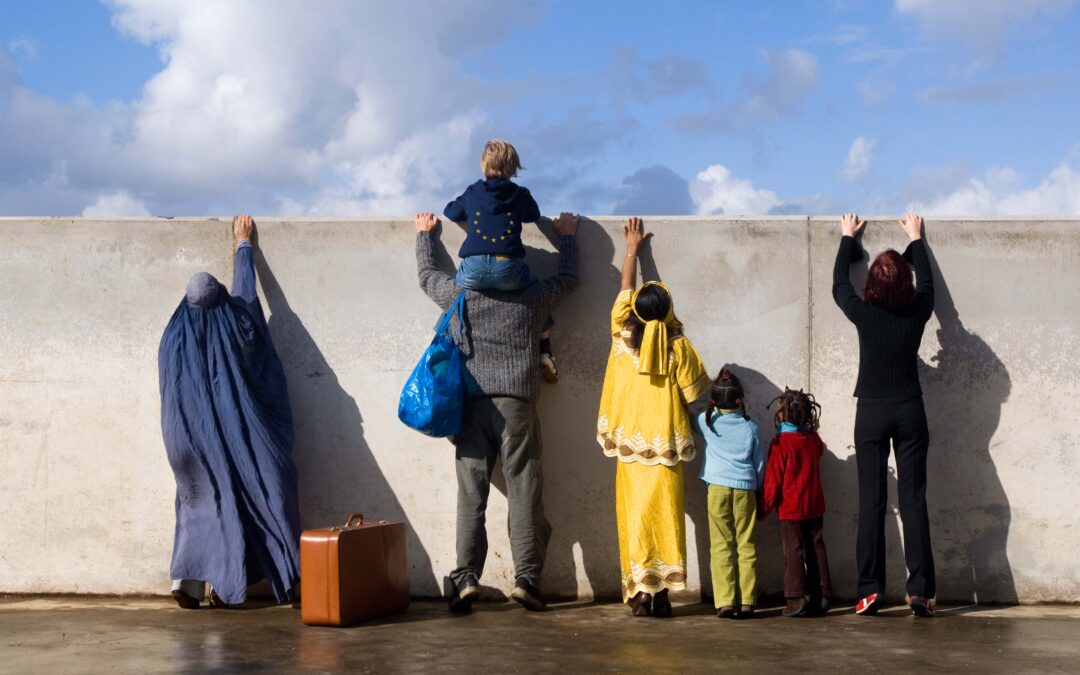
Today begins in Istanbul (Turkey) a two-day training for lawyers and CSO practitioners representing and working with migrants, refugees and asylum-seekers.
This event is organized by ICJ, in cooperation with its partners Refugee Rights Turkey, the European Council on Refugees and Exiles (ECRE), Mülteci-Der (MD) and ICJ-EI, as part of the EU co-financed project Fostering Access to Rights for Migrants, Refugees and Asylum-Seekers in Turkey.
30 lawyers and civil society practitioners – representing nine different bar associations and relevant organisations from the Istanbul area and other nearby key migration and asylum locations – are taking part in the training on 11 and 12 November.
The training aims to update lawyers and CSOs on the international and national law on the rights of refugees, migrants and asylum-seekers in order to be effective in their work at both the national and international levels. It aims at an effective implementation of the Turkish legal framework on asylum and migration.
The main thematic areas to be discussed will be the principle of non-refoulement, international protection, detention and access to economic, social and cultural rights.
The training will use as a basis the draft training materials prepared by the ICJ and its partners (to be published an the end of 2019) and, among other sources, the ICJ Practitioners Guide no. 6: Migration and International Human Rights Law.
The project “Fostering Access to Rights for Migrants, Refugees and Asylum-Seekers in Turkey” is funded by the European Instrument for Democracy and Human Rights (EIDHR) of the European Union.
Turkey-Training-Agenda-MigrationAsylumIHRL-Istanbul-2017-eng (download the agenda)
Nov 7, 2017 | Agendas, Events, News
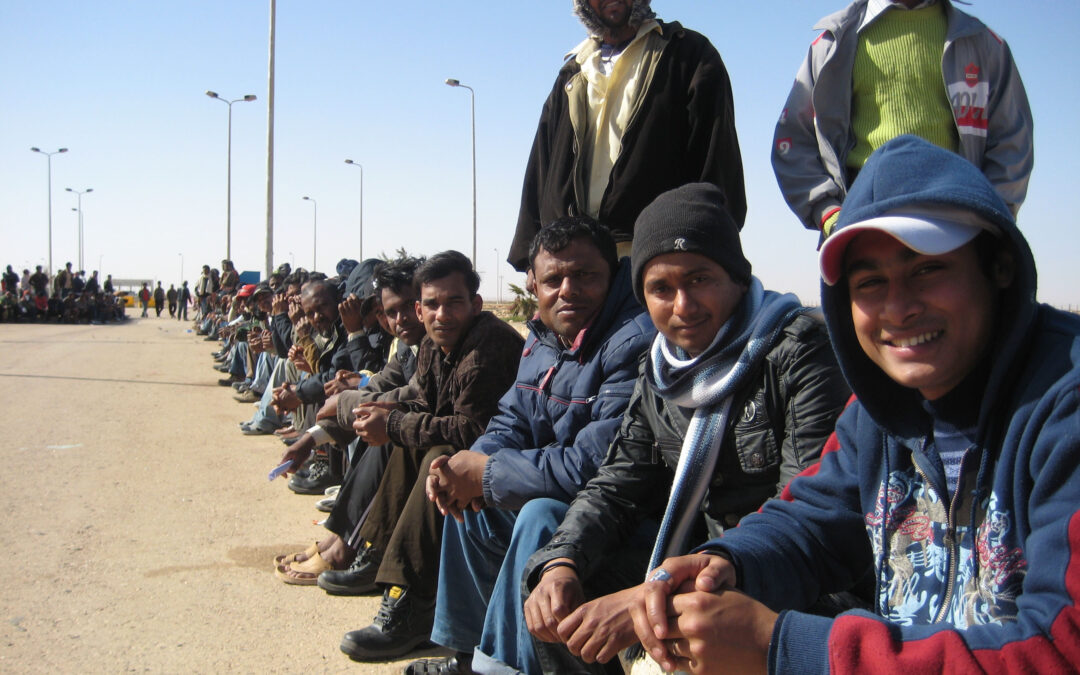
The ICJ delivers today and tomorrow a training on asylum, migration and international human rights law, organised by UNHCR-BiH, the Sector for Asylum of the Ministry for Security and Vaša Prava BiH.
The training, that takes place in the capital Sarajevo, will be delivered to officers of the Government of Bosnia and Herzegovina as well as of independent State institutions.
It will focus on human rights law related to the entry of migrants, including refugees, to the territory of a State, to the State’s obligations on international protection as well as to the rules applicable to detention of foreign national and their rights, and alternatives to detention.
BiH-Training-DetentionMigration&Asylum-ICJ&others-2017-eng (download the agenda in English and Bosnian)
Oct 9, 2017 | Events, News
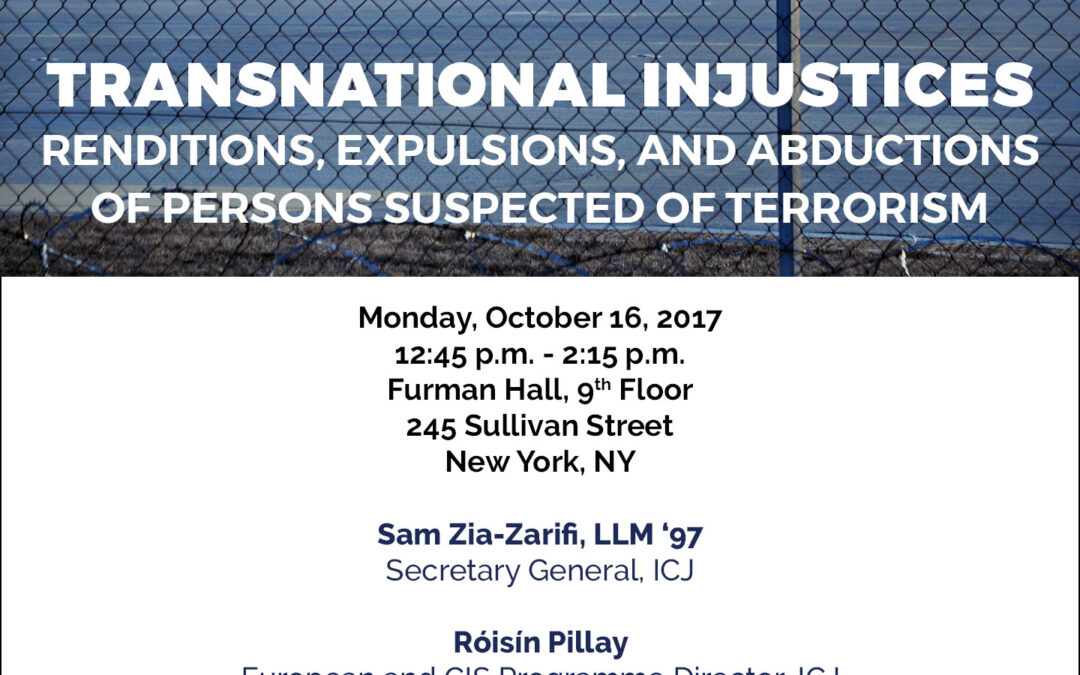
The ICJ, the Center for Human Rights and Global Justice and Amnesty International invite you today to an event to discuss challenges in prevention of, and accountability for, violations of human rights in the US-led rendition system, and in transfers of suspects in the CIS region.
Join us for a moderated discussion marking the U.S. launch of the International Commission of Jurists’ report, Transnational Injustices: National Security Transfers and International Law.
Panelists will discuss the ongoing practice of states unlawfully rendering people accused of terrorism, particularly in Russia and Central Asia, and explore the extent to which the impact of the CIA’s notorious extraordinary renditions can still be felt today.
When: Monday, October 16, 2017 – 12:45 pm to 2:15 pm
Where: Lester Pollack Colloquium Room – Furman Hall, 9th Floor, NYU School of Law – 245 Sullivan Street, New York City
RSVP here
Refreshments will be served
Speakers:
- Sam Zia-Zarifi, Secretary General, ICJ
- Róisín Pillay, European and CIS Programme Director, ICJ
- Margaret Satterthwaite, JD ’99, Professor of Clinical Law, NYU School of Law
Moderated by Julia Hall, Expert on Counter-Terrorism and Human Rights, Amnesty International
A flyer for this event is available in PDF format by clicking here.
Oct 6, 2017 | Advocacy, Cases, Legal submissions
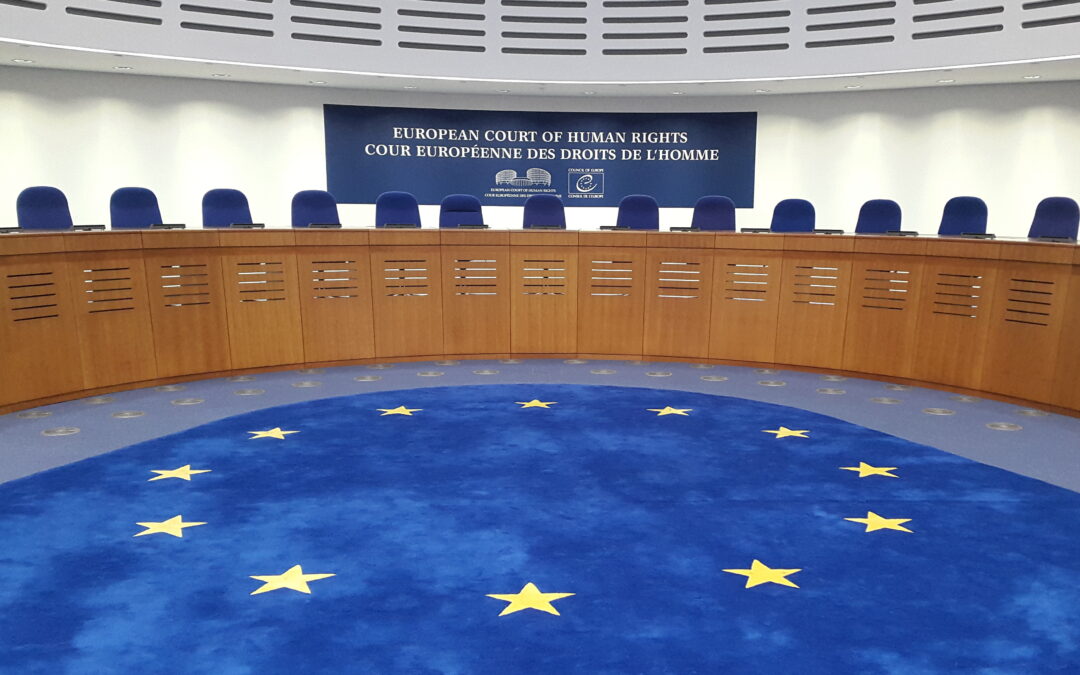
The ICJ and other human rights organisations intervened before the European Court of Human Rights in a case challenging the returns of migrants and refugees from Greece under the EU-Turkey deal.
The ICJ, the AIRE Centre, the European Council on Refugees and Exiles and the Dutch Council for Refugees have submitted a third party intervention before the European Court of Human Rights in the case of J.B. v. Greece. The case concerns the decision of Greek authorities to return a Syrian refugee to Turkey under the legal assumption that Turkey is a safe third country for refugees, that has been introduced following the EU-Turkey deal reached in reaction to the “refugee crisis”.
The interveners challenge the implementation of the rule of safe third country in these situations with regard to Greece’s obligations under the European Convention on Human Rights (ECHR). Specifically, the intervention focuses on:
- The principle of non-refoulement under the ECHR;
- The safe third country concept in international refugee law and EU law;
- The respect of the right to an effective remedy in cases of returns to Turkey under the safe third country rule.
Greece-JB_v_Greece-ECtHR-amicus-ICJ&others-final-eng-2017 (download the intervention)