Nov 9, 2016 | News
The ICJ welcomes the judgment of the European Court of Human Rights in Schukurov v Azerbaijan, finding that the right to petition the Court had been violated by the search of a lawyer’s premises and seizure of documents.
The ICJ submitted a third party intervention in the case, outlining international law and standards relevant to legal professional privilege and the seizure of legal documents.
The case files were seized as part of a criminal investigation opened against the lawyer, Intigam Aliyev, who was representing the applicants in the case. The Court found that the search and seizure by the Azeri authorities had violated article 34 of the Convention, which stipulates that States must not hinder in any way the effective exercise of the right of individual application to the Court.
The ICJ notes that the Court’s judgment follows its earlier finding of a violation of article 34 in the case of Annagi Hajibeyli v Azerbaijan, which arose from the same incident.
The ICJ stresses that these searches of lawyers’ premises are contrary to international standards on the role of lawyers. It is particularly worrying that they form part of a pattern of harassment of lawyers in Azerbaijan, including abusive disciplinary proceedings and criminal prosecutions. Such harassment damages the ability of lawyers to protect human rights through the judicial process, and undermines the independence of the legal profession.
The decision of the Court should now be fully and promptly executed, the ICJ said.

Oct 25, 2016 | Events
The ICJ convenes today a roundtable at the United Nations gathering several stakeholders to discuss on a possible future treaty on business and human rights.
Tuesday 25 October, 2016
13:00 to 15:00 hrs
Room XXVII- Palais des Nations
The second session of the Open Ended Intergovernmental Working Group to elaborate a legally binding instrument on Transnational Corporations and other business enterprises in relation to human rights, offers the opportunity to significantly advance the process of establishing an effective treaty that assist in preventing and addressing business related human rights abuses. Advancing the process will require stakeholders to reach a common platform of understanding on some core concepts and foundational elements before textual details can be elaborated and negotiated.
The objective of the roundtable is to assist in this process by creating a space for various stakeholders to address issues of importance for the treaty process from diverse points of view with the goal of enhancing mutual understanding among stakeholders of concepts and element that can serve as the basis for possible agreement for the future. This panel has a multistakeholder nature with a view to create a space of dialogue and understanding among the most important actors of the process.
Moderator:
Mr Ian Seiderman, Legal and Policy Director, International Commission of Jurists
Speakers:
Mr Ariel Meyerstein- United States Council of International Business, representing the International Organization of Employers
Mrs Makbule Sahan, Legal Advisor, International Trade Union Confederation
Prof Douglas Cassel, School of Law, University of Notre Dame, Indiana, United States
Prof Surya Deva, member of the UN Working Group on Business and Human Rights
Mr Humberto Cantú Rivera, Researcher at University of Panthéon-Assas, Paris II
Mrs Debbie Stothard, Secretary-General, International Federation of Human Rights (FIDH)
icj-side-event-2nd-session-flyer (download the flyer)
Oct 10, 2016 | Events, News
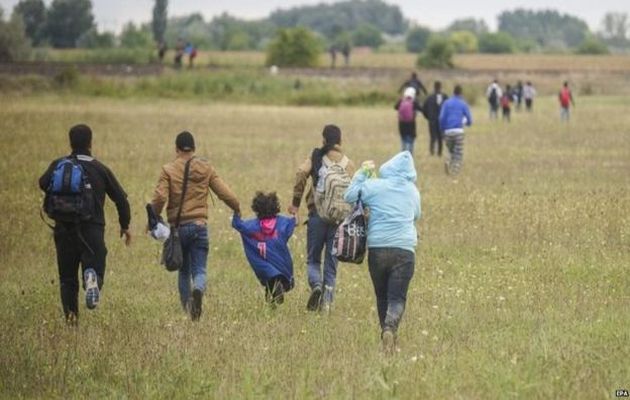
The ICJ, OSCE and Group 484 are holding a training on migration and international human rights law starting on From 10 to 13 October in Zlatibor (Serbia).
The training has been organised by the Organisation for Security and Cooperation in Europe (OSCE) and the Serbian NGO “Group 484” and will be given by the International Commission of Jurists.
It will focus on international protection of migrants and asylum seekers, access to territory and asylum and the principle of non-refoulement, in light of the current migrants and refugee crisis and drawing from the jurisprudence of the European Court of Human Rights, of the UN human rights systems and from EU law.
The training will be centred on the ICJ Practitioners Guide no. 6: Migration and International Human Rights Law.
serbia-jointtrainingmigrationhr-events-2016-eng (download the agenda)

May 10, 2016 | News
The ICJ today expressed concern at the disbarment proceedings against lawyer Muzaffar Bakhishov that are taking place before the Narimanov district court.
The ICJ calls for the disbarment proceedings to respect international standards on the role of lawyers and to ensure that no sanction is imposed contrary to the right to freedom of expression, as guaranteed under international law.
The ICJ understands that the proceedings against Mr Bakhishov, following a recommendation for disbarment by the Plenum of the Bar Association, are related to critical statements he made in a media interview with the news website moderator.az on the functioning of the Azeri judiciary with regard to judicial review of detention.
In the interview, he criticized the arrests of large number of persons by officers of the Ministry of National Security and the tendency of judges to approve orders of detention without proper scrutiny. He further raised concerns about lack of accountability of judges for failure to protect against arbitrary detention.
Under international law and standards, lawyers, like other individuals, enjoy the right to freedom of expression, including in regard to their professional role. Protection of lawyers’ right to freedom of expression is not only important to the individuals in question. It also serves to safeguard the important public function played by lawyers in a democratic society to comment on matters related to the rule of law and the administration of justice. Lawyers must be able to carry out these and their other professional functions without interference or intimidation.
The right to freedom of expression is protected in international human rights law, including by article 19 of the International Covenant on Civil and Political Rights (ICCPR) and article 10 of the European Convention on Human Rights (ECHR). Azerbaijan is party to both of these treaties.
The UN Basic Principles on the Role of Lawyers specify that lawyers “…shall have the right to take part in public discussion of matters concerning the law, the administration of justice and the promotion and protection of human rights …” The European Court of Human Rights has emphasized that lawyers are entitled to comment in public on the administration of justice, provided that their criticism does not overstep certain bounds, based on principles of dignity, honour, integrity, and respect for the fair administration of justice.
The ICJ considers that disciplinary proceedings against lawyers, solely for expressing criticism of the conduct or functioning of the judiciary, whether in the course of court hearings or elsewhere, constitute an unjustified interference with freedom of expression. As the European Court of Human Rights has noted in Maurice v. France, this is particularly the case where the allegations have been presented in good faith and are substantiated by evidence.
Azerbaijan-BakhishovDisbarment-Statement-2016-AZE (download statement in Azeri)
Contact:
Massimo Frigo, Legal Adviser of the ICJ Europe Programme, t: +41 22 9793805, e-mail: massimo.frigo(a)icj.org
Apr 21, 2016 | News
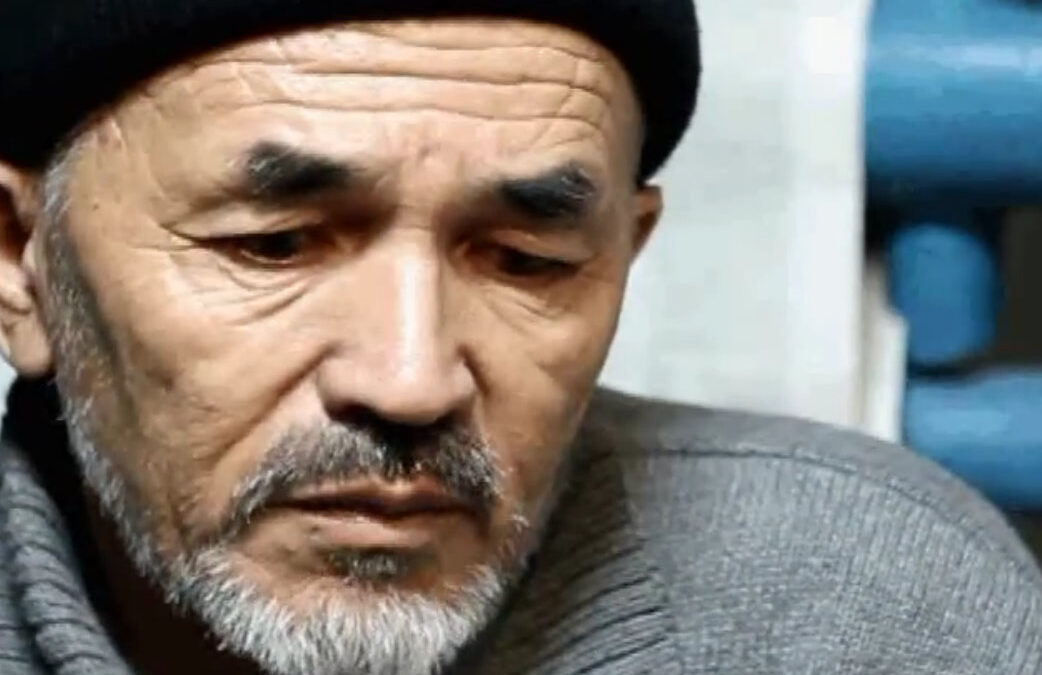
The ICJ welcomed today’s decision of the UN Human Rights Committee in the case of Azimzhan Askarov, a Kyrgyz human rights activist, sentenced to life imprisonment in Kyrgyzstan.
The Committee found multiple violations of Azimzhan Askarov’s human rights related to his arrest, detention and trial, including violations of Articles 7 (freedom from torture), Article 9 (prohibition of arbitrary detention); Article 10 (right to humane treatment in detention), Article 14 (right to a fair trial) of the International Covenant on Civil and Political Rights.
Azimzhan Askarov, a prominent human rights defender working in the South of Kyrgyzstan, was convicted in December 2015 of serious crimes, including the murder of a police officer, which took place during the violent ethnic clashes in the South of Kyrgyzstan in June 2010.
The ICJ observed the appeal hearing in the case before the Supreme Court on 20 December 2011. Based on the results of the mission as well as the documents of the case, the ICJ published a detailed Report on the arrest, detention and trial of Azimzhan Askarov.
The report established multiple violations of human rights in the arrest and trial of Azimzhan Askarov.
The decision of the UN Committee is an important step in providing a legal framework to remedy the violations in the case.
The ICJ calls on the relevant authorities of the Kyrgyz Republic to take urgent measures to implement the decision of the Human Rights Committee.
In particular, in accordance with the decision of the Committee, the Kyrgyz Republic must now immediately release Azimzhan Askarov; quash his conviction and provide him with adequate compensation.
Kyrgyzstan-Askarov-CCPR-Statement-2016-RUS (download the statement in Russian)