Oct 4, 2013 | Events
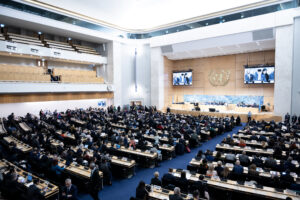
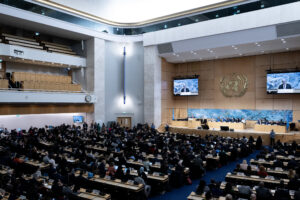
On 2 and 3 October 2013, the Office of the High Commissioner for Human Rights held a workshop on business and gender with the Human Rights Council’s Working Group on Discrimination against Women.
The ICJ participated in the workshop, addressing some of the ways in which business actors may be involved in women’s rights abuses and how States may fail to discharge due diligence obligations in this context. The ICJ’s presentation had a particular focus on accountability and the right to redress, and also explained the relevance to those issues of States’ extraterritorial obligations in respect of economic, social and cultural rights.
ProgrammeAgenda-BusinessAndGenderWorkshop (download the programme agenda for the workshop)
Oct 3, 2013 | News
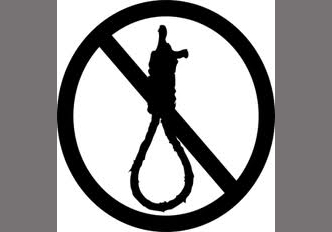
Following Pakistan’s reinstation of its moratorium on the death penalty, the ICJ calls on the Government to make the moratorium permanent and to move to abolish the death penalty in national law.
“This is a step forward for human rights in Pakistan,” said Sam Zarifi, ICJ’s Asia-Pacific Director. “It brings Pakistan closer to the regional and worldwide trend towards abolishment of the death penalty.”
Pakistan has had a moratorium on the death penalty in place since June 2008, with only the exception of Muhammad Hussain’s execution in November 2012 following a court martial.
The newly elected Pakistan Muslim League (Nawaz) Government decided not to renew the moratorium when it expired in June 2013.
The ICJ and other human rights groups denounced the move and urged Pakistan to immediately adopt a moratorium on the death penalty, prompting the Government to reconsider its decision.
According to the Interior Ministry spokesperson, today’s decision was taken to meet Pakistan’s international human rights obligations.
Pakistani Taliban also warned the Government that they would launch retaliatory attacks if any of their members were executed.
“This brave move by the government should be the first step toward reestablishing the rule of law and providing accountability in Pakistan,” Zarifi added. “The Government should now ensure that members of armed groups like the Taliban who have carried out serious human rights abuses like extrajudicial executions and attacks on civilians are held to account.”
The ICJ considers the death penalty in all cases to constitute a violation of the right to life and the right not to be subjected to cruel, inhuman or degrading punishment.
Contact:
Sam Zarifi, ICJ Asia-Pacific Regional Director, (Bangkok), t:+66 807819002; email: sam.zarifi(a)icj.org

Oct 2, 2013 | Events
The ICJ today welcomed the launch of the OSCE/FBA Handbook for Monitoring Administrative Justice as a tool able to contribute to the open administration of justice.
Noting that trends throughout the world see administrative cases dealt with in a manner that lacks transparency and fails to comport with the open administration of justice, the ICJ expressed the hope that the tool will be used by practitioners and officials to make an impact on the ground. The ICJ pointed to several reasons why the open administration of justice, in all forms of proceedings, is important to human rights and the rule of law:
- As a starting point, it is widely recognised, including by the UN Human Rights Committee in its General Comment on the right to a fair trial, that the open and transparent administration of justice is an important safeguard for the interests of both the individual and society at large.
- The conduct of administrative and other proceeds in an open and transparent manner helps to ensure the integrity of such proceedings and protect against potential abuse.
- Publicly accessible documentation, including timely and reasoned decisions, protects individuals from being subject to arbitrary decisions.
- Transparency and openness contributes to accountability by enabling parties to determine the viability of any appeal or review, including the possibility of taking a case to regional or international mechanisms.
- In all these ways, the open administration of justice also helps guarantee the right of individuals and society to access justice, including remedies and reparation.
The Handbook is a publication arising from a joint initiative of the Folke Bernadotte Academy (FBA) Rule of Law Unit and the OSCE Office for Democratic Institutions and Human Rights. Work began on the Handbook in May 2011. The ICJ participated in expert meetings on the development of the Handbook in 2011 and 2012.
OSCE/FBA Handbook for Monitoring Administrative Justice

Oct 2, 2013 | News
The ICJ welcomes the endorsement today by the Parliamentary Assembly of the Council of Europe of the Tshwane Principles on National Security and the Right to Information.
The ICJ was one of a number of civil society groups and government representatives who contributed to the development of the Principles.
Headline stories such as the Bradley Manning, Edward Snowden, and David Miranda cases, and the large number of other similar cases and situations around the world that do not necessarily receive the same media attention, demonstrate the timeliness and relevance of the Principles.
The ICJ hopes that the precedent set by the PACE will now be followed by other inter-governmental organisations at the global and regional levels, recognizing and endorsing the Principles.
Links to the resolution and recommendation by the PACE:
http://assembly.coe.int/nw/xml/XRef/Xref-DocDetails-EN.asp?fileid=20190&lang=EN
http://assembly.coe.int/nw/xml/XRef/Xref-DocDetails-EN.asp?fileid=20194&lang=EN
Global-Tshwane Principles on right to information-position paper-2013 (full text in pdf)