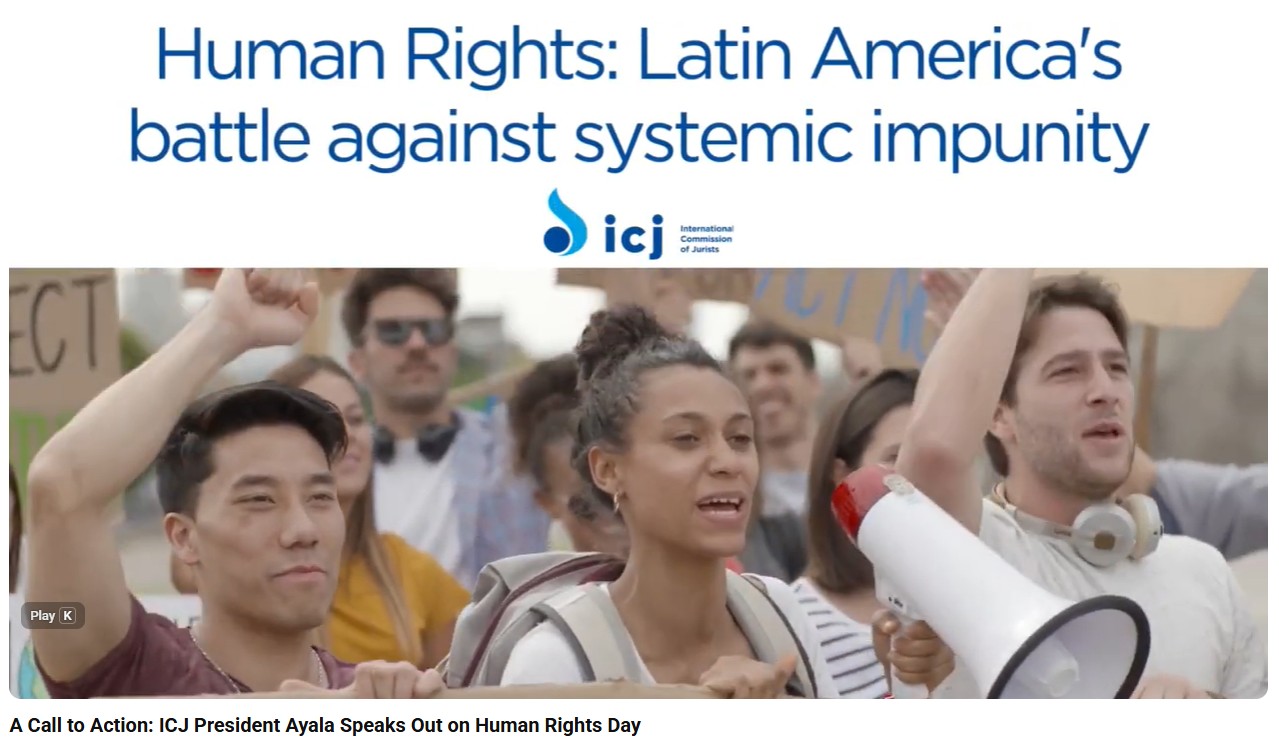
In an exclusive interview, Carlos Ayala, President of the International Commission of Jurists (ICJ), analyzes the systemic barriers obstructing justice for grave human rights violations in Latin America. From the resurgence of amnesty laws in Peru to the ongoing crimes against humanity in Venezuela, Ayala paints a sobering picture: impunity is not merely a legal failure; it is the fuel that incentivizes new violations.
A Serious State of Affairs
“I would say that the current state of impunity in Latin America regarding crimes related to grave human rights violations and crimes against humanity is serious,” Ayala states. He points to a backlog of Inter-American Court judgments, some dating back a decade, that remain unfulfilled by States.
The region presents a fractured landscape. While countries like Argentina have advanced by repealing amnesty laws, and Chile has moved forward through judicial decisions, alarming setbacks are emerging. Ayala highlights the case of Peru, where recent legislative moves seek to revive amnesty mechanisms previously declared invalid by the Inter-American Court.
Furthermore, impunity is no longer just about the past. “There are countries where these types of crimes are being committed and where overcoming impunity is precisely pending,” Ayala warns, citing the current crises in Nicaragua, Venezuela, and El Salvador.
The anatomy of structural impunity
For Ayala, the core of the problem lies in the dismantling of the separation of powers. “The main element that makes up structural impunity in Latin America is the lack of independence of the judicial powers,” he explains.
This “political capture” of the judiciary creates a system where investigations are controlled by the very power structures responsible for the crimes. Prosecutors and judges operate under a climate of fear, facing threats of dismissal or physical harm if they dare to prosecute powerful actors. This dynamic excludes victims from the process and, worse, exposes them to reprisals.
The result is what Ayala describes as a “culture of impunity.” It is a top-down signal that grave crimes can be evaded without consequence. “Impunity generates impunity,” Ayala asserts. “The very existence of impunity reinforces future impunity and even allows for new violations of human rights.”
If you want to know more, watch the full interview: