Jun 16, 2015 | News
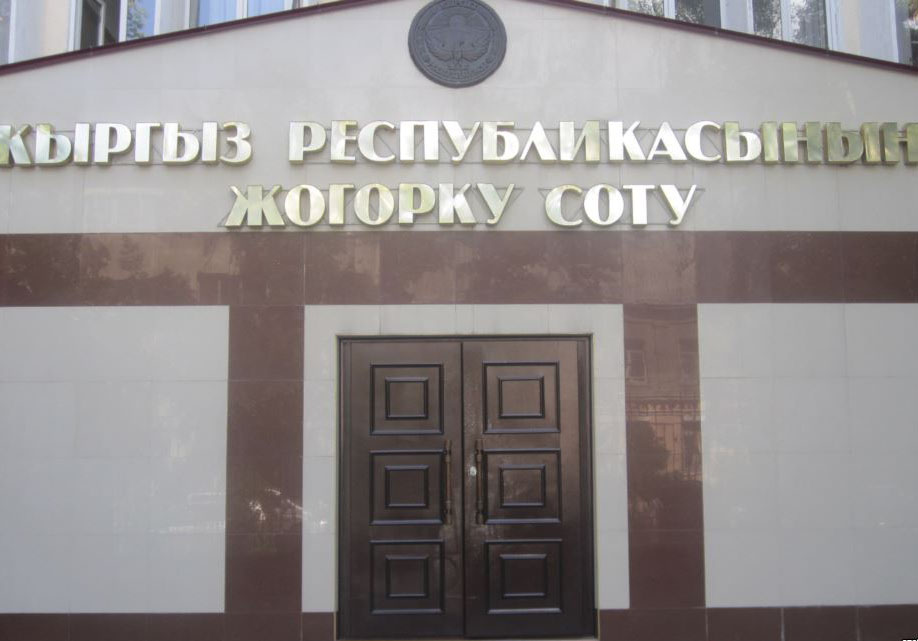
On 17 June, the ICJ will observe proceedings before the Supreme Court of the Kyrgyz Republic concerning searches of the workplace and homes of lawyers Valerian Vakhitov and Khusanbay Salieyv by law enforcement agents.
The case concerns confidentiality of lawyer-client communications and seizure of lawyers’ files, in light of the prohibition of arbitrary interference with privacy, correspondence, and home.
The Supreme Court of the Kyrgyz Republic is to consider the challenge of the Prosecutor’s Office to the decision of the Regional Osh Court of 30 April 2015.
The prosecutor also seeks disciplinary measures against the judges of the Regional Court who decided in favour of the protection of the professional guarantees of lawyers, ruling that the searches and seizures of documents were illegal.
The ICJ trial observation mission includes Olga Zimareva, a lawyer practicing in the Russian Federation and Almaz Osmanova, a lawyer in the Kyrgyz Republic and chair of the Central Asian League of Lawyers.
Following the conclusion of the case, the ICJ will publish its analysis of the proceedings and the judgment of the Supreme Court of the Kyrgyz Republic in light of international human rights law and international standards on the independence of the judiciary and the role of lawyers.
Contact:
Róisín Pillay, Director, Europe Programme, roisin.pillay(a)icj.org
Temur Shakirov, Legal Adviser, Europe Programme, temur.shakirov(a)icj.org
Kyrgyzstan-Trial observation-News-Web story-2015-RUS (full text in PDF, Russian)
Jun 9, 2015 | News
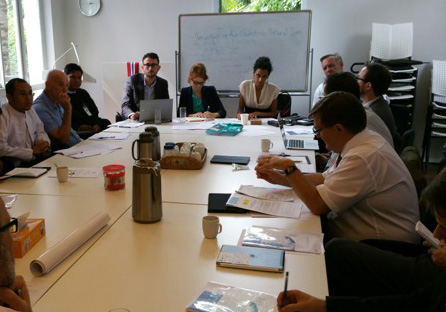
The ICJ today organized a diplomatic dialogue, in advance of the Universal Periodic Review (UPR), with ambassadors and high-level diplomatic representatives, to share the state of human rights in Myanmar.
Jun 8, 2015 | News
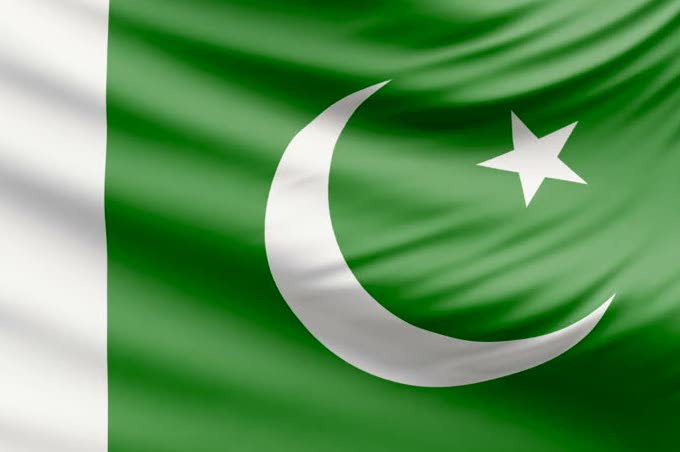
While the constitution of Pakistan’s first National Commission for Human Rights is welcome, the Commission risks being toothless unless its powers are extended to investigate human rights violations allegedly committed by the security agencies, the ICJ warned today.
The ICJ was informed that members of the National Commission for Human Rights were notified on 20 May 2015, three years after the National Commission for Human Rights Act was passed in June 2012.
“The establishment of a national human rights commission is a much-needed step for the promotion and protection of human rights in Pakistan,” said Sam Zarifi, ICJ’s Asia Director. “But for the new Commission to be able to assist the people of Pakistan, who face tremendous violations of their rights in terms of civil, political, social, economic, and cultural rights, it must be able to address the conduct of the country’s powerful military and security agencies.”
Under the National Commission for Human Rights Act, the Commission’s powers include investigating human rights violations, suo motu or on petition; visiting detention centers to ascertain the legality of the detention of detainees and ensure detainees are treated according to law; reviewing and suggesting amendments to Pakistan’s constitutional and legal framework on human rights; making recommendations for the effective implementation of international human rights treaties; and developing a national plan of action for the promotion and protection of human rights.
The law provides that while inquiring into complaints under the Act, the Commission shall have all powers of a civil court, including summoning and ensuring attendance of witnesses, receiving evidence on affidavits; and discovery and production of documents.
However, the Commission’s mandate is very limited where the armed forces or security agencies are accused of committing human rights violations, the ICJ says.
The law specifically states that “the functions of the Commission do not include inquiring into the act or practice of the intelligence agencies”.
Where the armed forces are accused of human rights violations, the Commission is only authorized to seek a report from the Government and make recommendations.
“The Commission’s restricted mandate over the armed forces, and especially the intelligence agencies, is of grave concern given that Pakistan’s military and intelligence services are accused of perpetrating gross human rights violations, including enforced disappearances, extrajudicial killings, and torture and ill-treatment,” Zarifi said. “A human rights commission that does not have jurisdiction over abuses by these actors risks being toothless and ineffective – and worst, a cover for continuing government inaction in response to these violations.”
“With these exceptions in place, it seems questionable that the Commission will get accreditation by the International Coordinating Committee of NHRIs, which is a requirement for a National Human Rights Institution to be recognized internationally,” he added. “The Pakistani government should ensure that the Commission complies with international standards so it can help protect and promote the rights of all people in Pakistan.”
Additional Information:
Justice (r) Ali Nawaz Chohan was appointed as the Chairperson of the Commission. Other members include one representative from each province; one representative each from the Islamabad Capital Territory and the Federally Administered Tribal Areas; the Chairperson of the National Commission on the Status of Women; and a member belonging from a religious minority community.
The UN Principles relating to the Status of National Institutions (Paris Principles) provide the minimum standards required by national human rights institutions to be considered credible and effective, and get accreditation by the International Coordinating Committee of NHRIs. Section 3 (a) (ii) of the Paris Principles states that a NHRI should have the power to hear a matter without higher referral over “any situation of violation of human rights which it decides to take up”.
Section 4 of the National Commission on Human Rights Act, 2012, provides the following procedure for appointment of members of the Commission: the Federal Government invites nominations for commissioners through public notice; the Prime Minister and Leader of the Opposition scrutinize the nominations; and the Prime Minister and Leader of the Opposition forward three names for each member of the commission to a parliamentary committee for confirmation. The law provides that the parliamentary committee would comprise of two members of the National Assembly (lower house) and two members of the Senate (upper house) –with two members each from the government and two from the opposition.
Contact:
Sam Zarifi, ICJ Asia Pacific Regional Director (Bangkok), t: +66 807819002; e: sam.zarifi(a)icj.org
Reema Omer, ICJ International Legal Adviser for South Asia (London), t: +44 7889565691; e: reema.omer(a)icj.org