Mar 27, 2014 | Events, News, Publications, Reports, Seminar and conference reports
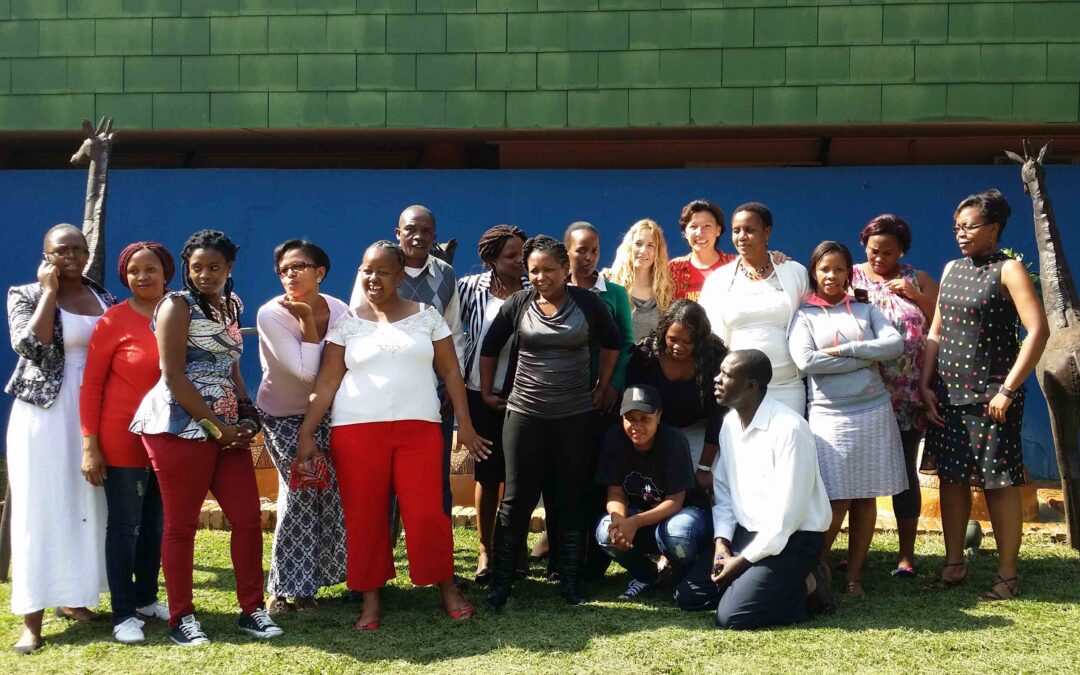
The ICJ hosted over 40 human rights defenders (HRDs) from Southern, Eastern and Western Africa to deliberate on strategies for enhancing the protection of human rights and human rights defenders.
The event took place on 27-28 March 2014 in Tswane, Pretoria.
Several African dignitaries attended the strategy session, including various independent experts from the African Union and United Nations focusing on protection and promotion of the work of human rights defenders.
This reflection session came in the wake of the increased sophistication of acts that undermine the independent, safe and secure operation of human rights defenders in Africa.
These acts include restrictive and punitive legislative enactments, in countries such as Uganda, Ethiopia and Kenya, and extra judicial killings and enforced disappearances in countries such as the Democratic Republic of Congo, Sudan, and South Sudan.
Other acts undermining the work and security of human rights defenders include the prohibition of access to funding; defamatory labeling of HRDs as “spies”, “unpatriotic”, “traitors”, and “foreign agents”; and the passing of laws criminalizing homosexuality.
The Universally acclaimed Declaration on Human Rights Defenders has recorded a greater number of breaches in recent times than before.
There is an increasing need for defenders to identify and reflect on opportunities to strengthen their collective responses and to provide rapid in-country and regional support and solidarity that nurtures a spirit of resilience, collectiveness and camaraderie within universally accepted norms of the defence of human rights.
Contact
Arnold Tsunga, Director, ICJ Africa Regional Programme, Arnold.tsunga(a)icj.org, +27731318411, or
Martin Okumu-Masiga, Deputy Director, ICJ Afria Regional Programme, Martin.okumu-masiga(a)icj.org, +27110248268 (full text in PDF)
Southern Africa-Strategic Session rapide response-Publications-Workshop report-2015-ENG (full text in PDF)
Mar 27, 2014 | News
The ICJ consider that yesterday’s order to prolong the detention pending trial of Swazi human rights lawyer, Thulani Rudolf Maseko, and The Nation Magazine editor Bheki Makhubu, for 7 more days, was inconsistent with the right to liberty.
The ICJ sent a team of lawyers to observe yesterday’s court hearing in Mbabane because of concerns that not only was the arrest and detention seemingly arbitrary, but also that the charges for contempt of court may be inconsistent with the enjoyment of the right to freedom of expression.
In the light of its concerns in the case, including with regard to the respect for the rights to a fair hearing before an independent and impartial tribunal, the rights to liberty and the rights to freedom of expression, the ICJ intends to continue to monitor the proceedings against Thulani Rudolf Maseko and Bheki Makhubu, and will send an international observer to the next hearing which is expected to take place on 1 April 2014.
Further information:
swaziland-maseko and makhubu custody hearing-2014 (full press release)
Contact:
Arnold Tsunga, Director, ICJ Africa Regional Programme, Arnold.tsunga(a)icj.org, +27 11 024 8268 or +27 73 131 8411
Martin Okumu-Masiga, Deputy Director, ICJ Africa Regional Programme, martin.okumu-masiaga(a)icj.org, +27 78 234 9125.
Mar 27, 2014 | News
The UN Human Rights Council resolution to establish an international investigation into allegations of human rights violations and abuses committed by both sides in Sri Lanka’s civil war gives hope to tens of thousands of victims who continue to be denied truth and justice.
Mar 25, 2014 | News
The ICJ today strongly condemned the decision of the Criminal Court of Minya to convict 529 individuals and to sentence them to death.
The individuals were sentenced for “participating in an attack on a police station in Minya,” “murder of a police officer,” “attempted murder of two other officers,” “seizing weapons” and “damaging public property”.
The verdict comes against a backdrop of a continuing crackdown on individuals suspected of supporting the ousted President, Mohamed Morsi, or being members of the Muslim Brotherhood, an organization officially designated by the military and other transitional authorities as a terrorist organization.
The verdict followed a two-day trial that disregarded fundamental fair trial standards.
The first hearing lasted 30 minutes, while the second lasted one hour.
International law is clear: the imposition of the death penalty following an unfair trial violates the right to life.
The ICJ calls on the Egyptian authorities to extinguish the convictions resulting from this trial and ensure that those arrested, prosecuted and convicted for the legitimate exercise of their rights to freedom of association and assembly are immediately released.
“The Minya trial made an absolute mockery of justice, violating basic human rights, including the rights to life, to liberty, to be presumed innocent and to defence,” stated Said Benarbia, Director of the ICJ Middle East & North Africa Program. “Even with Egypt’s long history of unfair trials and systematic politicization of the judiciary, the Minya trial sets a new low, and could be dangerous precedent for mass convictions following mass trials against government critics.”
The ICJ is deeply concerned that this trial is a part of a deliberate policy by the Egyptian authorities to use the courts and the Office of the Public Prosecutor to arrest, prosecute, convict, and imprison opponents of the current authorities.
The ICJ is also concerned that this policy effectively shields from accountability police, security, and military officers responsible for human rights violations committed in the context of the crackdown that followed the ouster of President Morsi, including the killings of more than 1200 people, in particular during the dispersal of the Rabaa Al-Adawyia and Annahda pro-Morsi sit-ins on 14 August.
No effective investigation has yet been conducted into these killings, and the perpetrators remain unpunished.
“In times of crisis, judges and prosecutors must safeguard and uphold human rights and fundamental freedoms, not act as tools of repression by prosecuting and convicting individuals for the legitimate exercise of their rights” said Benarbia.
“The Egyptian authorities must respect the independence of judges and prosecutors and refrain from any undue, inappropriate or unwarranted interference in judicial matters,” Benarbia concluded.
Contact:
Said Benarbia, ICJ Director of the Middle East and North Africa Programme, tel: 41 22 979 38 17, e-mail: said.benarbia(a)icj.org
Mar 24, 2014 | News
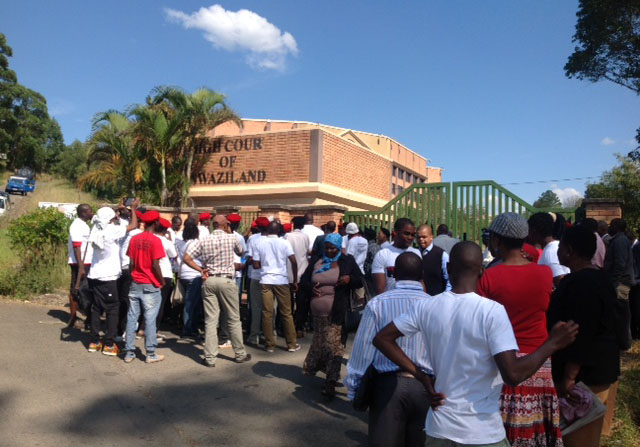
The ICJ, in collaboration with other organizations, has dispatched a team of lawyers to attend the bail hearing of prominent lawyer and human rights defender, Thulani Maseko and journalist, Bheki Makhubu on 25 March 2014.
The ICJ is working with the SADC Lawyers Association, the Southern Africa Litigation Centre, the Zimbabwe Lawyers for Human Rights and the Southern Africa Human Rights Defenders Network.
Maseko and Makhubu were jointly charged on 18 March 2014 and remanded to appear on 25 March for a bail hearing.
Their lawyer was not allowed to make submissions when the accused appeared for initial remand, in contravention of regional and international standards guaranteeing the right to be represented by a lawyer in legal proceedings.
The accused were arrested after Chief Justice Ramodibedi issued a warrant for their arrest on charges of criminal contempt of court.
The charges arise from articles allegedly written by Maseko and Makhubu in February and March 2014, in which they questioned circumstances surrounding the arrest of government vehicle inspector, Vincent Gwebu.
The vehicle inspector had been arrested and charged with contempt of court after he had arrested the driver of a High Court Judge.
They questioned the integrity, impartiality and independence of the Swaziland judiciary in the way they handled the Gwebu case.
The legality of the arrest, detention and charges is likely to be challenged at the bail hearing.
The ICJ trial observer team of lawyers will assess the compliance of the trial proceedings with international standards of fair trial, including those of the African Union.
The ICJ has previously expressed initial concern that the arrest and detention appear to be arbitrary, and carried out in retribution for their exercise of their right to freedom of expression.
The ICJ also previously expressed further initial concern that the lawyer for the two was not allowed the legitimate exercise of his professional functions as a lawyer when the two appeared before the Chief Justice for the initial remand.
The team of trial observers consists of the following lawyers: Arnold Tsunga, Director, ICJ Africa Regional Programme; Martin Okumu-Masiga, Deputy Director, ICJ Africa Regional Programme; Andrew Makoni, Board member, Zimbabwe Lawyers for Human Rights; and Emilia Siwingwa, Deputy Director, SADC Lawyers Association.
Contact
For further information contact Arnold Tsunga or Martin Okumu-Masiga on +27 11 024 8268, +27 73 131 8411 or +27 78 234 9125.
Mar 20, 2014 | News
Thailand’s caretaker government must remove emergency measures throughout the country following the lifting of the Emergency Decree in the capital Bangkok and its surrounding provinces this week, the ICJ said today.
On 18 March, the caretaker government voted to lift the Emergency Decree (effective 19 March) that had been in place in Bangkok and surrounding provinces since 21 January 2014 in response to protests led by the People’s Democratic Reform Committee (PDRC).
At least 20 people have died in protest-related violence and hundreds have been injured.
The Emergency Decree was replaced by the Internal Security Act (ISA), which also does not fully comply with international standards, but provides better remedies for victims of human rights violations than the Decree.
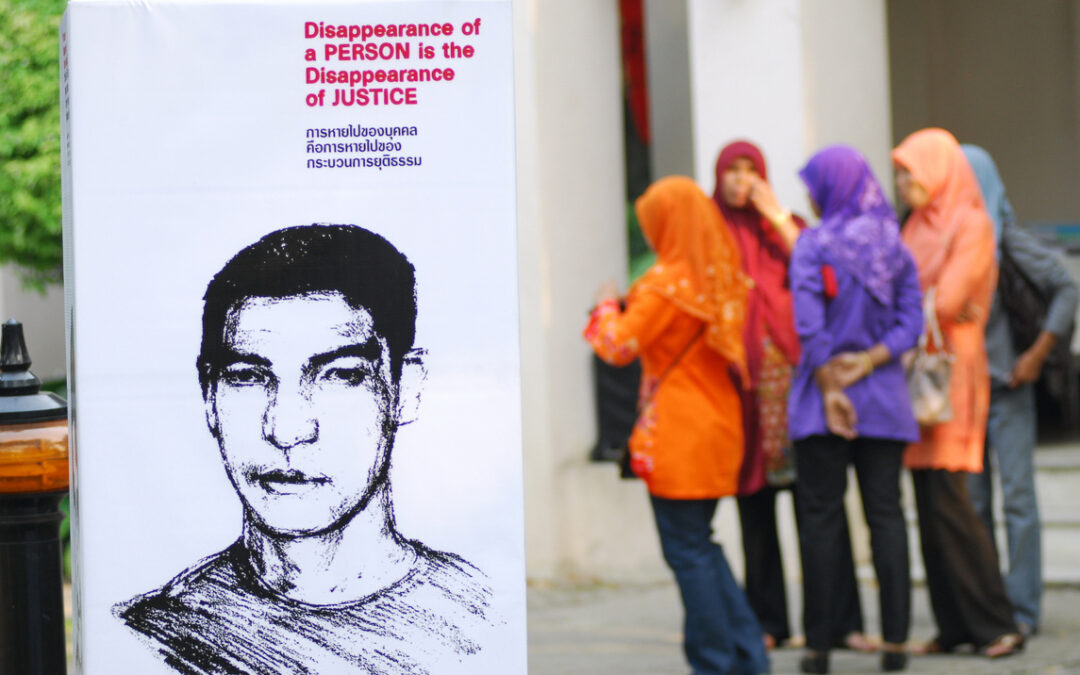
“The imposition of the Emergency Decree creates an environment conducive to abuse of power and human rights violations such as arbitrary arrest and detention, torture and enforced disappearance,” said Sam Zarifi, ICJ’s Regional Director for Asia and the Pacific. “Lifting the Emergency Decree in Bangkok is a positive step, but it is crucial that the authorities remove the Emergency Decree and other measures of emergency rule, including martial law, that are in force in all or parts of at least 30 of Thailand’s 77 provinces.”
These measures should be replaced by law and action that are consistent with international human rights standards, Zarifi said, adding that martial law should not be used as a political tool.
The caretaker government must respond to demonstrations, unrest and emergencies in a manner which complies with its obligations under the International Covenant on Civil and Political Rights (ICCPR), and other international standards, including the Code of Conduct for Law Enforcement Officials, adopted by the UN General Assembly in 1979, and the Basic Principles on the Use of Force and Firearms by Law Enforcement Officials, adopted by the UN Congress on the Prevention of Crime and Treatment of Offenders in 1990.
These standards set out the circumstances in which resort to necessary and proportional force may be lawfully exercised. Article 8 of the Basic Principles on the Use of Force and Firearms states that “exceptional circumstances such as internal political instability or any other public emergency may not be invoked to justify any departure from these basic principles.”
In order to safeguard the rule of law and enhance the protection of human rights in Thailand, the ICJ calls on the caretaker government to repeal the Emergency Decree and other emergency measures including martial law, and to ensure accountability for violent acts through the thorough and effective investigation of criminal acts and prosecution of those reasonably suspected of committing them, in the course of fair, human rights-compliant criminal proceedings.
CONTACT: Sam Zarifi, ICJ Asia-Pacific Regional Director, (Bangkok), t:+66 807819002, e-mail: sam.zarifi(a)icj.org
Craig Knowles, ICJ Media & Communications, (Bangkok), t:+66 819077653, e-mail: craig.knowles(a)icj.org
For further reading on ICJ’s work on emergency laws in Thailand see: Thailand’s Internal Security Act, Risking the Rule of Law? (2010) https://www.icj.org/thailands-internal-security-act-risking-the-rule-of-law/ Implementation of Thailand’s Emergency Decree (2007) https://www.icj.org/thailand-implementation-of-thailand%C2%B4s-emergency-decree/ More Power, Less Accountability: Thailand’s New Emergency Decree (2005) https://www.icj.org/more-power-less-accountability/