Oct 2, 2013 | News
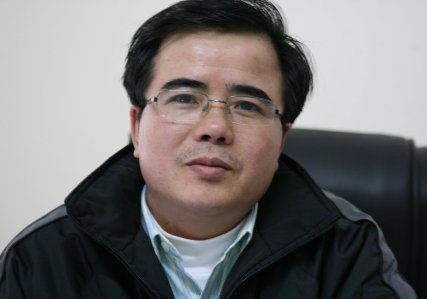
The ICJ said the conviction today of Le Quoc Quan, a lawyer and human rights defender in Vietnam, violated international standards governing the right to a fair trial.
Judge Le Thi Hop of the People’s Court of Hanoi convicted and sentenced Le Quoc Quan to 30 months imprisonment with time served since late December 2012 to be taken into account.
His company was ordered to pay the unpaid tax amount of 645 million VND (approximately USD 30,000) and fine of 1.3 billion VND (approximately USD 60,000) for the offence of tax evasion under section 161 of the Vietnamese Penal Code.
One of Le Quoc Quan’s accountants, Phuong, was sentenced to eight months imprisonment.
Edmund Bon, a prominent Malaysian attorney and the ICJ’s appointed trial observer, was denied entry into court.
Police barricaded the courthouse to keep out hundreds of demonstrators protesting the perceived harassment of Le Quoc Quan.
“The court did not dispel the widespread belief that this case is political in nature and intended to silence a government critic,” Edmund Bon said. “The verdict was delivered after a 30-minute deliberation and the judge took about an hour to read the written grounds of judgment.”
The hearing was originally scheduled for 9 July 2013, but was postponed at the very last minute due to the judge’s illness.
On 17 September 2013, the court issued a notification informing that the trial had been rescheduled to 2 October 2013 and that the trial would be a public one.
Nevertheless, on the day of trial, only a handful of foreign diplomats who had obtained an invitation and pass from the Ministry of Foreign Affairs were allowed to enter a room to observe the proceedings through a television screen.
Le Quoc Quan’s wife was the only family member who was permitted to observe the trial.
No independent journalists were allowed to enter the courtroom except for a reporter with the police and government media personnel.
The trial before a judge and two jurors started at 8.00am and ended at 2.30pm with a 15-minute recess in between. Six witnesses gave evidence. Counsel for the prosecution and defence took approximately one hour to make legal submissions.
“Le Quoc Quan’s trial and verdict raise serious questions regarding Vietnam’s commitment to ensure fair criminal trials that are to be open to public scrutiny, as it required to do as a party to the International Covenant on Civil and Political Rights,” said Edmund Bon.
The ICJ also notes that the court had breached Le Quoc Quan’s right to a speedy trial.
Section 194 of the Vietnamese Criminal Procedure Code specifically provides that, upon a postponement, courts that hear first-instance trials have to set a new hearing date within 30 days.
Here, the court took almost two months to do so.
“The court’s failure to reschedule the case within a timely manner is a clear violation of Le Quoc Quan’s rights to be tried within a reasonable time and without undue delay, as stipulated under articles 9 and 14 of the ICCPR respectively,” Bon added.
Since his arrest on 27 December last year, Le Quoc Quan has already spent a total of more than nine months in prison, awaiting trial.
“Le Quoc Quan should have instead been granted bail when his wife had filed an application for his release as there was no reason to believe that he would have had absconded the country,” said Edmund Bon.
The lawyers of Le Quoc Quan are expected to appeal the court’s decision within 15 days.
Contact
Sam Zarifi, ICJ Asia-Pacific Regional Director, Bangkok, tel. no. +66 8078 19002 or sam.zarifi(a)icj.org

Oct 2, 2013 | Events
The ICJ today welcomed the launch of the OSCE/FBA Handbook for Monitoring Administrative Justice as a tool able to contribute to the open administration of justice.
Noting that trends throughout the world see administrative cases dealt with in a manner that lacks transparency and fails to comport with the open administration of justice, the ICJ expressed the hope that the tool will be used by practitioners and officials to make an impact on the ground. The ICJ pointed to several reasons why the open administration of justice, in all forms of proceedings, is important to human rights and the rule of law:
- As a starting point, it is widely recognised, including by the UN Human Rights Committee in its General Comment on the right to a fair trial, that the open and transparent administration of justice is an important safeguard for the interests of both the individual and society at large.
- The conduct of administrative and other proceeds in an open and transparent manner helps to ensure the integrity of such proceedings and protect against potential abuse.
- Publicly accessible documentation, including timely and reasoned decisions, protects individuals from being subject to arbitrary decisions.
- Transparency and openness contributes to accountability by enabling parties to determine the viability of any appeal or review, including the possibility of taking a case to regional or international mechanisms.
- In all these ways, the open administration of justice also helps guarantee the right of individuals and society to access justice, including remedies and reparation.
The Handbook is a publication arising from a joint initiative of the Folke Bernadotte Academy (FBA) Rule of Law Unit and the OSCE Office for Democratic Institutions and Human Rights. Work began on the Handbook in May 2011. The ICJ participated in expert meetings on the development of the Handbook in 2011 and 2012.
OSCE/FBA Handbook for Monitoring Administrative Justice

Oct 2, 2013 | News
The ICJ welcomes the endorsement today by the Parliamentary Assembly of the Council of Europe of the Tshwane Principles on National Security and the Right to Information.
The ICJ was one of a number of civil society groups and government representatives who contributed to the development of the Principles.
Headline stories such as the Bradley Manning, Edward Snowden, and David Miranda cases, and the large number of other similar cases and situations around the world that do not necessarily receive the same media attention, demonstrate the timeliness and relevance of the Principles.
The ICJ hopes that the precedent set by the PACE will now be followed by other inter-governmental organisations at the global and regional levels, recognizing and endorsing the Principles.
Links to the resolution and recommendation by the PACE:
http://assembly.coe.int/nw/xml/XRef/Xref-DocDetails-EN.asp?fileid=20190&lang=EN
http://assembly.coe.int/nw/xml/XRef/Xref-DocDetails-EN.asp?fileid=20194&lang=EN
Global-Tshwane Principles on right to information-position paper-2013 (full text in pdf)
Oct 1, 2013 | News
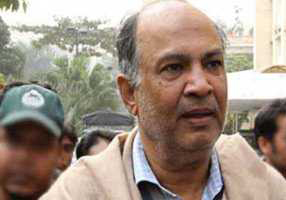
The ICJ denounces the death penalty handed down today by the International Crimes Tribunal (ICT) to Salauddin Quader Chowdhury, a member of the Bangladesh Nationalist Party, the main opposition party.
If carried out, the sentence would violate Bangladesh’s international law obligations to protect the right to life and freedom from cruel, inhuman, or degrading punishment, the ICJ states.
The International Crimes Tribunal convicted Chowdhury (photo) on nine of 23 charges, including murder and genocide, and sentenced him to death.
“The Bangladesh Tribunal is one of very few transitional justice mechanisms that have imposed the death penalty,” said Sam Zarifi, ICJ’s Asia-Pacific Director. “It is unfortunate that Bangladesh seeks to punish human rights violations by committing rights violations itself.”
The ICJ considers the death penalty in all cases to constitute a violation of the right to life and the right not to be subjected to cruel, inhuman or degrading punishment.
This is the seventh verdict delivered by the International Crimes Tribunal. Death sentences have been handed out in all but one case.
”Bangladeshi law as well as international human rights standards require that death penalty cases receive a fair and thorough review, so it is crucial that appellate review of these cases proceed properly, without undue political pressure or a timeline established by impending elections in or before January 2014,” Zarifi said.
“Those responsible for the horrific war crimes and crimes against humanity during Bangladesh’s war of liberation in 1971 should be brought to justice in processes that are fair, and seen to be fair, instead of being subjected to vengeance,” he added.
Contact
Sam Zarifi, ICJ Asia-Pacific Regional Director, (Bangkok), t:+66 807819002; email: sam.zarifi(a)icj.org

Sep 30, 2013 | News
Last week the ICJ concluded a series of five workshops organized in collaboration with the National Human Rights Commission of the Federation of Bar Associations of Venezuela and states bar associations.
The workshops, that were held in five cities of Venezuela in the course of 2013, provided participants with a space for free reflection and debate on issues of judicial independence and the functioning of rule of law institutions.
The themes discussed in the workshops included human rights in legal education; the role of bar associations in promoting and strengthening an independent, competent and integral legal profession; human rights litigations; professional, civil and criminal responsibility of lawyers; and the role of the Supreme Court and the Office of Public Prosecution in a democratic society.
Participants to the workshops included representatives of bar associations, former Supreme Court justices and senior judges, practicing lawyers and members of Venezuelan civil society.
***
SPANISH TEXT:
La CIJ concluye serie de 5 talleres sobre independencia judicial en Venezuela
La semana pasada la Comisión Internacional de Juristas concluyó una serie de cinco talleres organizados en colaboración con la Comisión Nacional de Derechos Humanos de la Federación de Colegios de Abogados de Venezuela y los Colegios de Abogados de varios Estados en Venezuela.
Los talleres, que tuvieron lugar en cinco ciudades de Venezuela en el transcurso de 2013, ofrecieron a los participantes un espacio de reflexión libre y de debate sobre temas relativos a independencia judicial y el funcionamiento de las instituciones del Estado de derecho.
Los temas tratados en los talleres incluyeron la importancia de la formación en derechos humanos de los abogados; el papel de los Colegios de Abogados en la promoción y fortalecimiento de una profesión independiente, competente e integral; los litigios en materia de derechos humanos; la responsabilidad profesional, civil y penal de los abogados; y el papel del Tribunal Supremo de Justicia y del Ministerio Público en una sociedad democrática.
Los participantes en los talleres incluyeron a representantes del gremio, ex jueces del Tribunal Supremo y jueces de tribunales superiores, abogados en ejercicio y miembros de la sociedad civil venezolana.
Venezuela-CIJ Programa Seminario Barquisimeto-agenda-2013-spa (full text in pdf)
Venezuela-CIJ Programa Seminario Coro-agenda-2013-spa (full text in pdf)
Venezuela-CIJ Programa Seminario Puerto Ayacucho-agenda-2013-spa (full text in pdf)
Venezuela-CIJ Programa Seminario San Cristobal-agenda-2013-spa (full text in pdf)
Venezuela-CIJ Seminario Caracas-Programa-agenda-2013-spa (full text in pdf)
Sep 26, 2013 | News
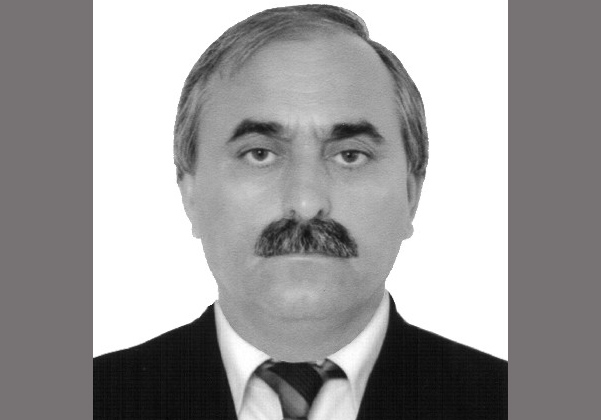
The ICJ today expressed grave concern over the shooting of a Supreme Court judge of Dagestan and his son.
The ICJ calls on the federal and local authorities to ensure prompt, independent, impartial and thorough investigation of the shooting of Judge Mukhtar Shapiyev (photo) and his son.
Those reasonably suspected of responsibility for this crime should be identified and brought to justice in fair and transparent proceedings, where the rights of all the parties, including the victims and the accused are respected.
The ICJ recalls that Mukhtar Shapiyev is the third judge to be killed in Dagestan this year.
On 15 January, Magomed Magomedov, a Supreme Court judge of Dagestan, was shot and died as a result of the attack and, on 9 March, federal judge Akhmed Radzhabov, was shot to death near his house.
“When judges’ security is not guaranteed, and when they face a real and constant risk to their lives, the justice system and the very rule of law are undermined,” Temur Shakirov, Legal Adviser of the ICJ Europe Programme, said. “The UN Basic Principles on the Independence of the Judiciary clarify that it is the obligation of the State to ensure that those who are entrusted with the power to take judicial decisions are effectively protected.”
Reports indicate that Mukhtar Shapiyev and his son, Kamil Shapiyev, were shot at by at least two persons near their home in the capital Makhachkala at about 20:45 on Wednesday 25 September. Both victims later died in hospital.
Judge Shapiyev previously worked as the Prosecutor of one of the districts in Dagestan. In January 2012, he was appointed as a Supreme Court judge of Dagestan and worked in the collegium on civil cases.
Urgent measures, which the ICJ calls for to guarantee that the security of judges in Dagestan is effectively protected, include ensuring effective security against attempts on their lives and lives of their family members.
CONTACTS
Róisín Pillay, Director, ICJ Europe Programme, roisin.pillay(a)icj.org
Temur Shakirov, Legal Adviser, ICJ Europe Programme, temur.shakirov(a)icj.org
Russia-Judge killed in Dagestan-news-web story-2013-rus (full text in pdf)