Jun 2, 2013 | Multimedia items, News, Video clips
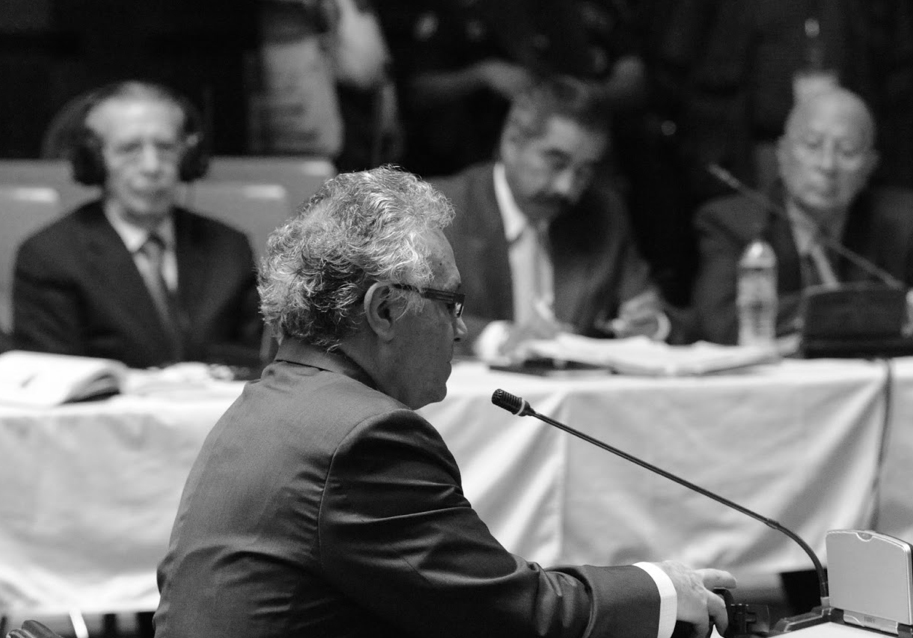
Judges from Central America met in Guatemala on 4-5 June at the International Conference on Impunity and Independence of the Judiciary.
The conference was followed by a public debate on the role of judges in confronting the phenomenom of impunity.
The event was organized with the support of the Canton de Genève, Dan Churchaid and medico international.
Below, listen (in Spanish) to Ramón Cadena, ICJ Regional Director for Central America, who talks about the importance of this conference, and to judges Rubenia Galeano (Honduras), Juan Antonio Durán (Salvador), Carlos Oviedo (Nicaragua), Haroldo Vásquez (Guatemala) and Adriana Orocú (Costa Rica) who talk about impunity and the independence of the judiciary in their respective countries.
Ramón Cadena habla de la Conferencia Regional sobre Independencia Judicial y fenómeno de la impunidad en Centroamérica.
Rubenia Galeano (Honduras) habla del fenómeno de la impunidad y de la situación de la independencia judicial en su país
Juan Antonio Durán (Salvador) habla del fenómeno de la impunidad y de la situación de la independencia judicial en su país
Carlos Oviedo (Nicaragua) habla del fenómeno de la impunidad y de la situación de la independencia judicial en su país
Haroldo Vásquez (Guatemala) habla del fenómeno de la impunidad y de la situación de la independencia judicial en su país
Adriana Orocú (Costa Rica) habla del fenómeno de la impunidad y de la situación de la independencia judicial en su país

May 31, 2013 | Agendas, Events
Some 30 judges from the highest national courts from 16 countries in Asia and the Pacific will meet in Bangkok, Thailand on 2-4 June to discuss the role of the judiciary in the AIDS response.
The meeting is convened by the Joint United Nations Programme on HIV/AIDS (UNAIDS), the United Nations Development Programme (UNDP) and the ICJ as part of efforts to address concerns that legal environments, including laws and policies, law enforcement practices and access to justice across the Asia and the Pacific do not consistently protect people most at risk of HIV infection and those living with HIV from violations of their human rights including health, privacy, non-discrimination and freedom from violence.
The judges’ discussions will be supported by experts and resource people from communities living with HIV, representatives of sex workers and men who have sex with men, people who use drugs and transgender people and United Nations entities.
The ICJ has always believed that an independent judiciary is essential in delivering justice to vulnerable populations, including those living/infected with HIV.
As Mr. Sam Zarifi, Regional Director for Asia and the Pacific, said: “The judiciary has a crucial role to play in establishing a legal environment that assists the struggle against the spread of HIV. In Asia and the Pacific, those most at risk of contracting HIV are often among those with the least access to justice. An independent judiciary can help protect at-risk populations from discriminatory laws, negative stereotypes, and misguided policies.”

May 30, 2013 | Agendas, Events
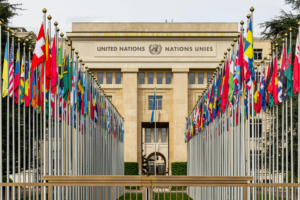
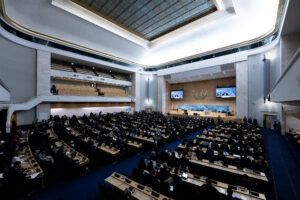
The event will be held Friday, 31 May 2013, from 16.00 to 18.00, in Geneva, Palais des Nations, Room XXVII. It marks the 5th anniversary of the HR Council adoption of the Framework “Protect, Respect and Remedy”.
It also promotes the publication of the ICJ Report on “Corporate complicity in international crimes”. It will highlight the fact that the business and human rights agenda in the Human Rights Council remains unfinished, especially in the critical areas of access to justice and accountability, as well as the need for bold Council action to provide States and other actors with the necessary tools to ensure remedy and justice to victims of serious human rights abuses committed by or with the complicity of corporations in home and host countries.
HR Council-UN SIDE EVENT Business-Event-2013 (full text in pdf)

May 30, 2013 | Agendas, Events
On Wednesday 29 May 2013, the ICJ co-sponsored a parallel event with Human Rights Watch and other NGOs during the Human Rights Council’s 23rd regular session held in Geneva.
The event, held in Room IX of the Palais des Nations, addressed key issues concerning the independence of judges and lawyers within the Russian Federation. The event was chaired by Róisín Pillay, Director of ICJ’s Europe Programme. Panelists were Gabriela Knaul, the UN Special Rapporteur on the independence of judges and lawyers; Tamara Morshchakova, ICJ Commissioner and former Deputy Chair of the Russian Consitutional Court; and Karinna Moskalenko, ICJ Commissioner and founder of the International Protection Centre.

May 29, 2013 | Agendas, Events
On Tuesday 28 May 2013, the ICJ co-sponsored a parallel event with TRIAL and the Missions of Botswana, Costa Rica, Estonia and Switzerland during the Human Rights Council’s 23rd regular session held in Geneva.
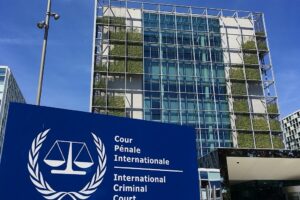
The event, held in Room XXV of the Palais des Nations, addressed key issues concerning accountability and human rights. The event was chaired by Professor Paola Gaeta from the Geneva Academy of International Humanitarian Law and Human Rights. Panelists were Tiina Intelmann, President of the Assembly of the States Parties to the ICC Statute; Mothusi Bruce Rabasha Palai, Ambassador of Botswana; Ian Seiderman, Director of the ICJ’s Law and Policy Office; and Gabriella Citroni, Senior Legal Adviser at TRIAL (Swiss association against impunity).
Panelists agreed that accountability is intimately linked to the enjoyment of human rights. It was stated that – under State responsibility – States are, or should be, held responsible for acts involving any violation of international law, including international human rights law and international humanitarian law. Accountability is thus not only about criminal justice, but also about ensuring reparations and guarantees of non-recurrence.
Recommendations made under the Universal Periodic Review (UPR) mechanism were seen as having been partly successful in bridging gaps, although there remains a lack of proper follow-up on the progress of implementation between UPR cycles. Panellists observed that States often fail to refer to standards enunciated by the High Commissioner for Human Rights and by the Special Procedures. Regarding the accountability of non-State actors for conduct involving human rights abuses and violations, the ‘Ruggie Principles’ were referred to as a representing good progress but still failing to be as comprehensive as they should be.
Concerning future steps by Human Rights Council mechanisms, panellists proposed that resolutions, statements and Special Procedures should more directly and frequently refer to accountability. The need for greater political pressure on the International Criminal Court was expressed, with the aim of supporting the domestic capacity of States parties to the Rome Statute. Concerning domestic capacity to strengthen accountability more generally, panellists and participants agreed on the need to improve linkages between the work of persons dealing with development and those working on accountability.
HR Council-Strengthening accountability-event-2013 (event flyer in pdf)
May 28, 2013 | News, Publications
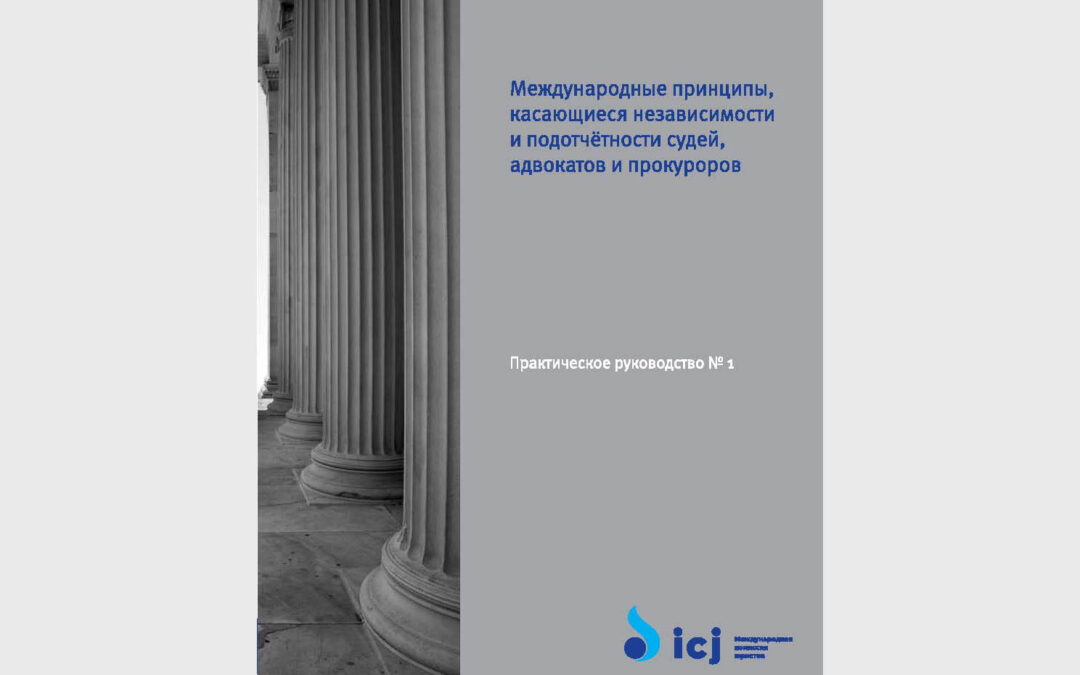
The ICJ has now published a translation of its Practitioner’s Guide, International Principles on the Independence and Accountability of Judges, Lawyers and Prosecutors.
This is the first comprehensive analysis of the existing standards and compilation of universal and regional instruments published in Russian. The Guide outlines the roles to be played by a strong legal profession, an independent judiciary and an impartial and objective prosecuting authority. References to international decisions, reports, texts of treaties and other international standards allow the Guide to be used as a reference book by legal practitioners and policy makers.
International-Principles-on-the-Independence-and-Accountability-of-Judges-Lawyers-and-Procecutors-(No.1)-Practitioners’ Guide series-2013-Rus (full text in pdf)