Oct 17, 2013 | Events
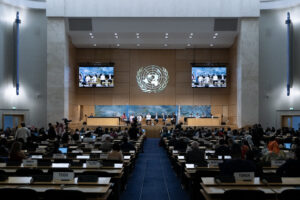
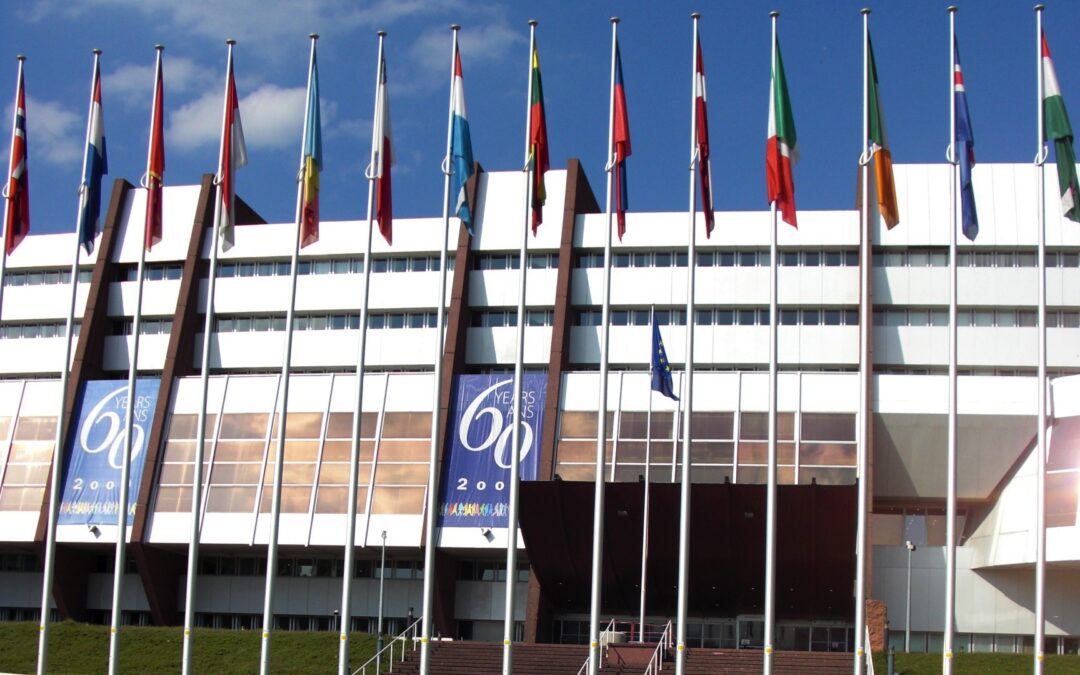
The ICJ participated in a meeting of experts within the Council of Europe’s Steering Committee on Human Rights (CDDH) in Strasbourg on 14-16 October 2013.
The Drafting Group on Human Rights and Business of the Steering Committee on Human Rights (CDDH-CORP) has drafted a Declaration of support to the Guiding Principles on Human Rights and Business for consideration by the Committee of Ministers. The ICJ expresses satisfaction at the progress made during the meeting and hopes that the draft declaration will be finally approved by Ministers and that this expert group will be able to move on to drafting a non-binding instrument on access to justice in the context of business activities.
Steering Committee meeting page (for agenda and report, including the draft Declaration)
Photo credit: © notfrancois (the author has no involvement in nor does support this submission)
Sep 26, 2013 | News
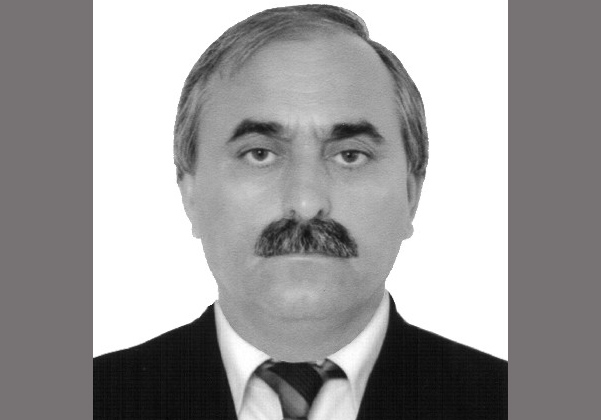
The ICJ today expressed grave concern over the shooting of a Supreme Court judge of Dagestan and his son.
The ICJ calls on the federal and local authorities to ensure prompt, independent, impartial and thorough investigation of the shooting of Judge Mukhtar Shapiyev (photo) and his son.
Those reasonably suspected of responsibility for this crime should be identified and brought to justice in fair and transparent proceedings, where the rights of all the parties, including the victims and the accused are respected.
The ICJ recalls that Mukhtar Shapiyev is the third judge to be killed in Dagestan this year.
On 15 January, Magomed Magomedov, a Supreme Court judge of Dagestan, was shot and died as a result of the attack and, on 9 March, federal judge Akhmed Radzhabov, was shot to death near his house.
“When judges’ security is not guaranteed, and when they face a real and constant risk to their lives, the justice system and the very rule of law are undermined,” Temur Shakirov, Legal Adviser of the ICJ Europe Programme, said. “The UN Basic Principles on the Independence of the Judiciary clarify that it is the obligation of the State to ensure that those who are entrusted with the power to take judicial decisions are effectively protected.”
Reports indicate that Mukhtar Shapiyev and his son, Kamil Shapiyev, were shot at by at least two persons near their home in the capital Makhachkala at about 20:45 on Wednesday 25 September. Both victims later died in hospital.
Judge Shapiyev previously worked as the Prosecutor of one of the districts in Dagestan. In January 2012, he was appointed as a Supreme Court judge of Dagestan and worked in the collegium on civil cases.
Urgent measures, which the ICJ calls for to guarantee that the security of judges in Dagestan is effectively protected, include ensuring effective security against attempts on their lives and lives of their family members.
CONTACTS
Róisín Pillay, Director, ICJ Europe Programme, roisin.pillay(a)icj.org
Temur Shakirov, Legal Adviser, ICJ Europe Programme, temur.shakirov(a)icj.org
Russia-Judge killed in Dagestan-news-web story-2013-rus (full text in pdf)
Sep 13, 2013 | News
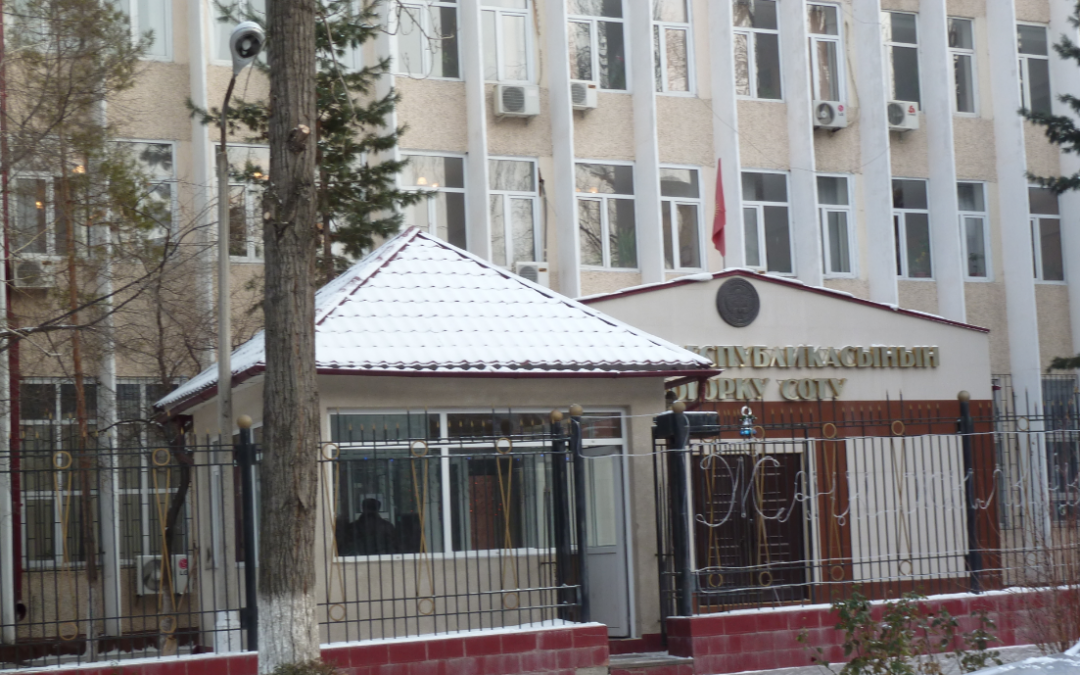
The ICJ welcomes the decision of the Osh Regional Court to overturn an intermediate ruling to initiate disciplinary proceedings against two lawyers representing the interests of a victim of sexual assault.
The ICJ sent a mission to observe today’s hearing. The mission raised no issues of concern regarding the conduct of the proceedings observed.
On 3 July 2013, the Osh City Court issued an intermediate ruling to initiate disciplinary proceedings against two lawyers, Valerian Vakhitov, Khusanbai Saliyev, for taking procedural steps provided for under Kyrgyzstan law, including filing motions to the upper judicial instances or filing motions to recuse the judge during and not before the trial.
Today, the Osh Regional Court upheld lawyers’ appeal and overturned the decision to initiate disciplinary proceedings against the lawyers.
The case concerns charges against a teacher in a religious institution for sexual acts with one of his students, a nine-year-old boy.
The representatives of the defendant alleged that he is not criminally responsible by reason of insanity – a proposition contested by the lawyers of the victim. The main trial is ongoing.
The trial was observed by an ICJ trial observation mission: Oleg Levytskyy (Ukraine) and Almaza Osmanova (Kyrgyz Republic).
The observers met with the court, the prosecutor, representatives of the victims and the defendant.
“We welcome the decision to overturn the ruling to initiate disciplinary proceedings against these lawyers,” said Róisín Pillay, Director of the ICJ Europe Regional Programme. “In accordance with international standards, it is the lawyers’ duty to assist their clients in every appropriate way and take legal action to protect their interests. Therefore punishing lawyers for their diligent work would run contrary to the obligation of the state to guarantee that lawyers can carry out their functions without intimidation, hindrance, harassment or improper interference.”
Contacts
Róisín Pillay, Director, ICJ Europe Programme, roisin.pillay(a)icj.org
Temur Shakirov, Legal Adviser, ICJ Europe Programme, temur.shakirov(a)icj.org
Kyrgyzstan-Osh_Lawyers_Trial Observation-news-web story-2013-rus (full text in pdf)

Sep 3, 2013 | News
The ICJ today expressed its serious concern at the continued detention of lawyer Zinaida Mukhtorova in a psychiatric facility.
In its statement, the ICJ expressed concern that this detention may amount to an act of harassment or reprisal for Zinaida Mukhtorova’s legitimate exercise of her professional functions. Furthermore, the ICJ is concerned at reports that her detention may have been extended today as a reprisal for her challenging the detention through the courts.

Aug 21, 2013 | News
The ICJ today called on the government of the Kyrgyz Republic to take urgent measures to prevent repeated attacks on lawyers.
The call followed reliable reports of an assault on two lawyers in a court in the south of the country.
On 20 August 2013, lawyers Dinara Medetova and Kubanychbek Zhoroyev were physically attacked following a hearing in the Osh Regional Court.
This is the latest in a series of such attacks, which have threatened the lives and safety of lawyers, have hindered lawyers in defending the rights of their clients, and have undermined the fairness of trials.
The ICJ understands that the Ministry of Interior has denied that the attack on the lawyers took place. However this attack is confirmed by the accounts of reliable witnesses.
The ICJ is concerned that, in the face of repeated attacks of this kind, the government and law enforcement authorities have consistently failed to take effective measures to prevent them, or to ensure that they are effectively investigated and the perpetrators brought to justice.
“Denying that these attacks take place can only perpetuate the problem,” said Róisín Pillay, Director of the ICJ Europe Regional Programme. “What is needed is an independent, impartial and thorough investigation into the incident.”
“The government must work with the law enforcement authorities to ensure that the safety of lawyers, witnesses and defendants in criminal trials is ensured throughout the country, and that the Krygyz Republic protects the right to a fair trial, as required by its international legal obligations,” she added.
The two lawyers were defending Makhamatkir Bizurukov, an ethnic Uzbek, in a trial related to the 2010 ethnic clashes in the south of the country.
According to information available to the ICJ, the lawyers were repeatedly interrupted, insulted and threatened by members of the public in the course of the hearing, creating an atmosphere of intimidation which prevented the lawyers from effectively defending their client.
During the hearing, the lawyers also received death threats to which the judge did not respond.
After the hearing, reports indicate that around ten women, supporters of the victims in the case, physically attacked the lawyers.
“If it hadn’t been for my colleague who helped me to escape, I could have been very seriously injured or even dead”, lawyer Medetova told the ICJ. The lawyer later returned to Bishkek due to her fear of further attacks.
This attack took place despite an earlier written request by the defence lawyers in the case submitted to the local Police Department, President of the Court and the Osh Regional Prosecutor that security measures be taken during the hearing, in light of attacks on the accused, witnesses and lawyers at a previous hearing in the same case.
The ICJ understands that the head of the Police Department and the Prosecutor had assured lawyer Medetova that measures would be taken to guarantee the safety of the lawyers.
In the event however, the police took no action to prevent or halt the attacks on the lawyers in the courtroom.
Following the attack, the police reportedly told the lawyers that they could not protect them, as the supporters of the victim would consider such protection as bias in favour of the accused.
The ICJ recalls that international standards, including the UN Basic Principles on the Role of Lawyers, require that “where the security of lawyers is threatened as a result of discharging their functions, they shall be adequately safeguarded by the authorities”.
The ICJ urges the government to unequivocally and publicly condemn these attacks and to ensure that effective measures are taken to investigate them and bring those responsible to justice.
CONTACTS:
Róisín Pillay, Director, ICJ Europe Programme, roisin.pillay(a)icj.org
Temur Shakirov, Legal Adviser, ICJ Europe Programme, temur.shakirov(a)icj.org
Kyrgyzstan-Attack on lawyers-news-press release-2013-ENG (full text in pdf)
Kyrgyzstan-Attack on lawyers-news-press release-2013-RUS (full text in pdf)
Jul 9, 2013 | News
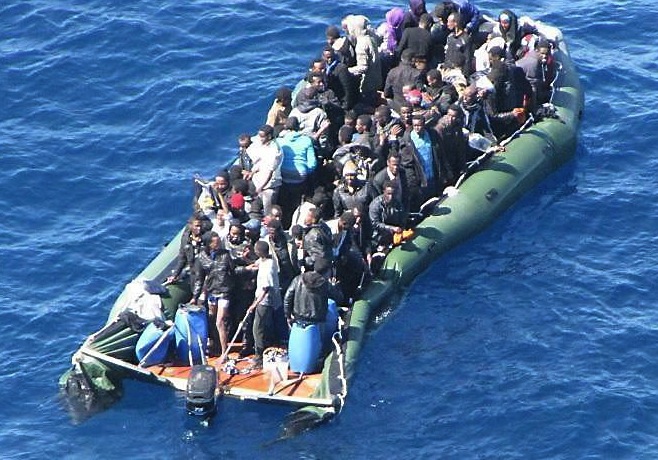
The International Commission of Jurists (ICJ) today called on the Government of Malta to refrain from forcibly transferring a number of Somali nationals to Libya, where they are alleged to be at real risk of human rights violations and further transfer to Somalia.
According to media reports, the persons at risk of transfer are part of a group of some 102 persons, including 41 women and two babies, who arrived in Malta this morning.
The ICJ expresses its grave concern at the possibility that Somali nationals, who are alleged to be considered at risk of being subject to ill-treatment or persecution if sent back to Somalia, would first be sent back to Libya. According to the office of the United Nations High Commissioner for Refugees, in Libya, migrants face a “constant risk of exploitation, arrest and indefinite detention”.
The ICJ stresses that the European Court of Human Rights has ruled, in the judgment Hirsi Jamaa and others v. Italy, that sending back potential asylum seekers, including of Somali origin, to Libya, without individual assessment of their situation and access to asylum procedures, violates the European Convention on Human Rights, in particular the principle of non-refoulement, the prohibition of collective expulsion and the right to an effective remedy for violations of human rights.
The ICJ therefore calls on the Maltese Government to refrain from expelling or otherwise transferring to Libya any of the Somali citizens who arrived on Maltese shores today. The migrants must be fully informed of their right to apply for international or humanitarian protection under EU and Maltese law; and each of their cases must be examined on its individual merits.
Statement-ExpulsionSomalis-2013-Malta (download the statement)
Contact:
Massimo Frigo, ICJ Legal Adviser of the Europe Programme, tel: 41 22 979 38 05, e-mail: massimo.frigo(a)icj.org
Róisín Pillay, ICJ Director of the Europe Programme, e-mail : roisin.pillay(a)icj.org