
JUSTICE journal : essential learning for all interested in human rights and law reform
JUSTICE (the British section of the International Commission of Jurists) has launched the JUSTICE Journal which is a new six-monthly publication.

JUSTICE (the British section of the International Commission of Jurists) has launched the JUSTICE Journal which is a new six-monthly publication.

Global efforts to protect individuals from torture were dealt a blow this week by the UK Court of Appeal.
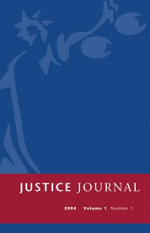
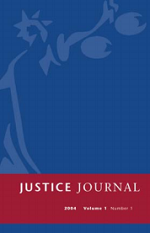 JUSTICE (the British section of the ICJ) has launched the JUSTICE Journal which is a new six-monthly publication. It aims to promote debate on topical issues relating to human rights and the rule of law.

The ICJ called for an independent and impartial investigation into the treatment of detainees and the whole process of arresting and detaining people in Iraq to be swiftly set up by the Coalition Forces.The call came as the first court martial of a US soldier involved in the abuse of Iraqi detainees concluded in Baghdad today.

The ICJ condemns the decision of the Ankara State Security Court to find Leyla Zana and her co-defendants, all Kurdish former parliamentarians guilty of “membership in an armed gang.”

A return to the old practice of exerting insidious political influence over the judiciary, compounded by ill-considered legislation, threatens to undermine the gains of Moldova’s legal and judicial reform process.
 Human Rights Council concludes its 62nd session with action on country crises and key human rights challenges
 Montenegro: Defence Minister must end campaign of intimidation against lawyer Veselin Radulovic
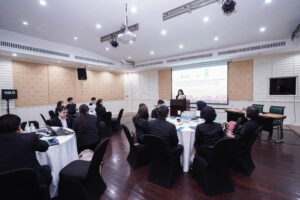 Thailand: Judges convene to advance a gender-responsive approach to justice, building on the Bangkok General Guidance
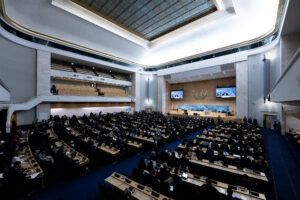 HRC62: Joint Statement Urging States to Act with Urgency to Protect Civilians in El Obeid