Jun 4, 2020 | News
The ICJ today urged the country’s authorities to take immediate measures to fully reconstitute the Zimbabwe Human Rights Commission (ZHRC) after its operations were effectively suspended following the expiry of the terms of office of four of its Commissioners on 7 May 2020.
One Commissioner had already resigned in 2018 meaning that the ZHRC no longer has the constitutionally required quorum for it to make certain decisions that are fundamental to the protection of human rights in Zimbabwe.
“The inability by the ZHRC to fully execute its constitutional mandate has serious implications on the ability of individuals -in particular victims of human rights violations -to access justice,” said Arnold Tsunga, Director of the ICJ Africa Programme.
“The role of ZHRC, as Zimbabwe’s national human rights institution is critical in providing an avenue for redress to victims of human rights violations and the general public,” he added.
Zimbabwe has been witnessing an escalation of human rights violations requiring investigation by a fully functioning and effective Commission.
This spate of human rights violations has had a disproportionate impact on the poor and economically vulnerable in the context of the Covid-19 lockdown measures.
There have been an increase in targeting of human rights defenders, civil society leaders and political opposition, which have included acts of enforced disappearance and torture and other ill-treatment.
The ICJ underlined that while redress for such violations required strong and independent judiciary as a guarantor of human rights, the role of fully functional ZHRC was critical to complement that of the judiciary.
The ICJ called upon the authorities in Zimbabwe, and in particular the Parliamentary Committee on Standing Rules and Orders, to act expeditiously to ensure that the vacant positions are filled without any further delay to enable the ZHRC effectively perform and discharge its constitutional mandate.
The ICJ said that failure by the responsible authorities to act expeditiously to fill the vacant positions violated the core values and principles the Constitution of Zimbabwe, in particular section 324 of the Constitution which provides that “all constitutional obligations must be performed diligently and without delay”.
In addition, the President to fill in any vacant position within three months of death or resignation of a Commissioner. The position of Commissioner Khombe became vacant on the 30 October 2018, and has not been filled to date.
Additional Information
The ZHRC is established as an independent institution under Chapter 12 of the Zimbabwe constitution with the general objective to “support and entrench human rights and democracy; to promote constitutionalism; to promote transparency and accountability in public institutions; to secure the observance of democratic values and principles by the State and all institutions and agencies of government, and government-controlled entities; and to ensure that injustices are remedied.”
On 26 May the Chairperson of the ZHRC, Dr. E.H Mugwadi, wrote a letter notifying “partners and stakeholders” of the retirement of four Commissioners, namely Dr Ellen Sithole (former Deputy Chairperson), Dr Joseph Kurebwa, Kwanele M. Jirira and Japhet Ndabeni-Ncube with effect from 7 May. The Chairperson noted that the retirement had left the Commission lacking the quorum to fulfil its constitutional obligations, particularly with respect to make policy resolutions and the adoption of monitoring and investigation reports. The Commission had also been unable to adopt Commission reports its activities.
International standards for effective and credible National Human Rights Institutions (NHRIs) are contained in the United Nations Principles relating to the Status of National Institutions (Paris Principles), which provide that NHRIs must be adequately resourced with sufficient institutional capacity to perform and discharge their responsibilities.
Contact:
Arnold Tsunga, ICJ Africa Director, t: +263 777 283 249; e-mail: arnold.tsunga(a)icj.org
Blessing Gorejena, ICJ Senior Legal Adviser, t: +263 772 151 989, e-mail: Blessing.Gorejena(a)icj.org
Jun 2, 2020 | Advocacy, News
At a webinar hosted on 26 May, the ICJ heard from women human rights defenders (WHRDs) from Asia, Africa, and the Middle East discussed the adverse impact on women of lockdowns and other measures imposed by governments around the world as a response to the COVID-19 pandemic.
Reports from around the world indicate a rise in the number of cases of domestic violence and new challenges faced by women victims in accessing justice.
“Support or assistance for women experiencing domestic violence was not classified as an essential service that may continue when the country went on lockdown,” said Nonhlanhla Dlamini who is the Director of Swaziland Action Group Against Abuse (SWAGAA) in Eswatini. Still, SWAGAA and other NGOs in Eswatini persisted in their work to lobby the government to classify their work as an essential service. The government later provided authorization to allow SWAGAA’s staff to move more freely in order to assist women experiencing gender-based violence during the lockdown.
Theresia Iswarini, Commissioner of Indonesia’s National Commission on Violence Against Women (KOMNAS Perempuan), observed that because of the limited movement during the lockdown, NGOs are having a hard time reaching women experiencing domestic violence who do not have phones or any devices to access the internet.
NGOs also face the challenge of placing these women in safehouses because they need to first present a certificate that they are COVID-free before they are accepted in the safehouse and such certificates are almost impossible to secure during the pandemic.
The WHRDs assisting women experiencing gender-based violence often also need psychosocial support, as “they also have to deal with the additional burdens of overseeing the homeschooling of their children and caring for family members who may have also fallen ill.”
In Sri Lanka, Mariam Dawood who is the Legal Adviser from Women in Need (WIN), noted that “women in Sri Lanka have always faced this problem and [of being] ignored when they report gender-based violence to police authorities.”
She also shared that while courts had started to operate on a limited basis in the country, women in maintenance cases risk being exposed to infection because they have to appear in court at least every month to get an order from the judge to compel their spouses to pay alimony or child support.
These orders were not automatically renewable and must be obtained by women every month from the court.
ICJ Commissioner and Member of the UN Committee on the Elimination of Discrimination against Women Nahla Haidar asked participants to think about how civil society could mobilize other stakeholders in pandemics to give an ethical call on how behaviors can change at home.
“Who is responsible? We have been trying to speak to faith leaders, especially women faith leaders [in the MENA region]. I am wondering how these channels can be used, as well as within traditional leadership channels in Africa,” Haidar said.
ICJ Senior Legal Adviser, Emerlynne Gil, noted that many of the issues raised showed that even during the pandemic, governments reproduced patriarchal approaches to public polices which effectively saw women as subordinate to men.
“This inequality underlines many of the actions taken by governments around the world to curb the pandemic,” said Emerlynne Gil. She added: “This means that it is all the more important for groups like the ICJ to continue its work eliminating gender stereotypes and discriminatory practices in the work of justice actors around the world.”
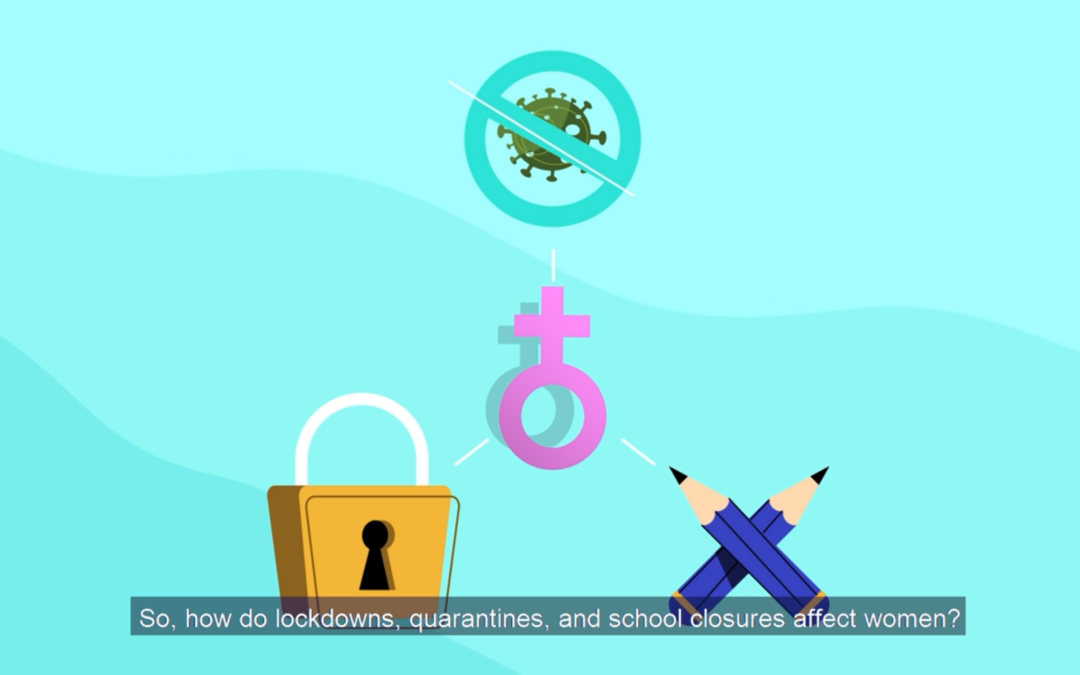
During the webinar, the ICJ launched an animation calling on States to adopt gender-sensitive responses to the COVID-19 pandemic. Watch the animation here:
The webinar was live streamed on ICJ Asia’s facebook. Watch the livestream here:
May 1, 2020 | Advocacy, News
The ICJ today condemned the recent decisions of the governments of the Republic of Benin and Côte d’Ivoire to withdraw their respective declarations that gave individuals and nongovernmental organizations the right to directly bring cases of human rights violations against those States, before the African Court on Human and Peoples Rights.
The ICJ called on the authorities of both States to reconsider and rescind these decisions.
Coming after a similar withdrawal by Tanzania in November 2019, these withdrawal decisions serve to deprive the inhabitants of these countries access to a judicial remedy at the regional level for human rights violations, and undermine the effective of the African regional human rights system.
The ICJ stressed that withdrawal decisions serve to undermine Aspiration 3 of the African Union’s AGENDA 2063, by which the AU aims at “[a]n Africa of good governance, democracy, respect for human rights, justice and the rule of law.”
Both States have offered vague and unsubstantiated rationales for their decisions, but their actions follow their dissatisfaction with the outcomes of particular cases against them. Responses of this kind are effectively an attack on the independence of the Court and can serve to undermine the integrity of the Court itself.
The ICJ recalls that in February 2020, the Executive Council of the African Union called on African States to accede to the Protocol Establishing the African Court and to make the declaration required under article 34(6) of the Protocol. These decisions of the governments of Benin and Côte d’Ivoire to withdraw their article 34(6) declarations fly in the face of this call by the Executive Council of the African Union and greatly threaten the progress that has been made towards protection of human rights in Africa.
Background
Article 34(6) of the Protocol to the African Charter on Human and Peoples’ Rights establishing the African Court on Human and Peoples’ Rights requires that State Parties to the Protocol make a separate declaration in order to allow direct access to individuals and non-governmental organizations to bring cases against them before the African Human Rights Court. Benin which deposited its declaration on 8 February 2016 announced its withdrawal of the declaration on 23 April 2020. Benin claimed that its decision is based ‘dysfunctions and slip-ups’ it has increasingly observed in the work of the African Human Rights Court, allegedly resulting in the Court’s increasing departure from its mandate and core area of competence. Benin cited the earlier withdrawals of Rwanda and Tanzania as further justification for its decision.
Côte d’Ivoire, which deposited its declaration on 23 July 2013 and announced its withdrawal on 29 April 2020, says that its decision was based on what it considers to be ‘the serious and intolerable actions that the African Court has allowed itself’ and which ‘not only undermines the sovereignty of the state of Côte d’Ivoire … but are also likely to cause serious disruption to the internal legal order of states’.
Contact:
Arnold Tsunga, ICJ Africa Director, C: +27716405926, or +254 746 608 859 E: arnold.tsunga@icj.org
Solomon Ebobrah, Senior Legal Advisor, ICJ Africa, C: +234 8034927549; E: Solomon.ebobrah@icj.org
Full text, in PDF: Ivory-Coast-Statement-Advocacy-ENG-2020
Apr 28, 2020 | Advocacy, News, Open letters
The ICJ today called on the South African government to take measures to ensure access to justice and the full fulfillment of the economic, social and cultural rights of all in the country.
The South African authorities must also remove legal hurdles in accessing just compensation for rights violations occurring during nationwide lockdown, the ICJ said.
The call comes as South Africa enters its final week of a lockdown period, which initially began on 26 March 2020. Since the beginning of the lockdown period the ICJ has been working closely with a broad coalition of local civil society organizations and movements called the C19 People’s Coalition.
“The ICJ applauds South Africa on its announcement that it will commit 10% of its GDP to a social relief and economic support package addressing poverty and in inequality which has been exacerbated by COVID-19,” said Arnold Tsunga, ICJ Africa Director.
“However we note with concern the high levels of repression and human rights abuses committed by enforcement officers enforcing Lockdown Regulations and the inadequacy of social assistance measures to ensure an effective elimination of poverty in accordance with South Africa’s international and domestic human right obligations.”
- Repression and human rights abuses by enforcement officers during Lockdown
Both the Disaster Management Act and Lockdown Regulations enacted in terms of it create doubt about whether victims of violations of human rights in the enforcement of lockdown will be able to claim compensation for such violations.
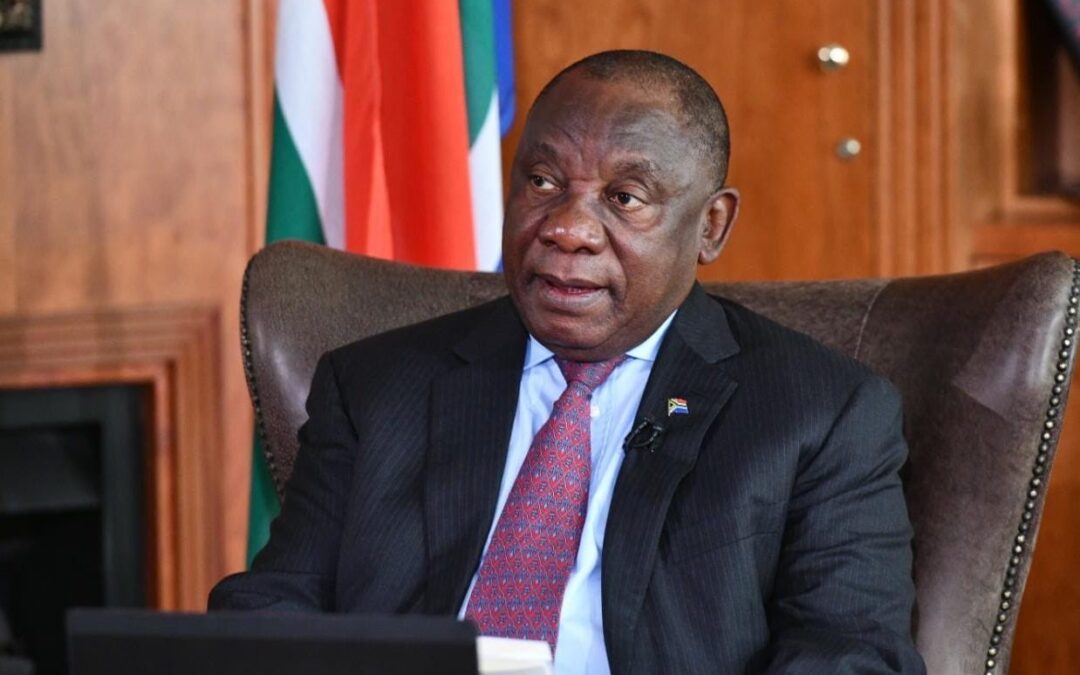
The ICJ has therefore written to President Cyril Ramaphosa (photo) and Speaker of the National Assembly Thandi Modise calling on the authorities to make the necessary legal amendments required to ensure the full protection of the right to access to justice, which includes the right to effective remedies and reparation.
The ICJ calls on authorities to ensure the amendment of the National Disaster Act and Lockdown Regulations to ensure that victims of human rights abuses have full and effective access to the right to remedy and reparation including compensation.
- Inadequate Social Assistance provided
Despite the large stimulus package announced by President Ramaphosa on 21 April, the C19 People’s Coalition has correctly argued that the new COVID-19 social grant of R350 ($18.44 USD) per month for unemployed persons is less than a third of the R1227 ($64.65) that government itself estimates individuals require to be lifted out of poverty.
In addition, the increase of the Child Support Grant of R500 ($26.35) per month appears, contrary to what the President’s announcement suggested, to be allocated per caregiver not per child thus drastically reducing its potential impact.
The ICJ calls on authorities to ensure the full provision of a social safety net to all in South Africa by: 1) raising the levels of all non-contributory social assistance benefits to a level that ensures an adequate standard of living for recipients and their families; and 2) ensuring that those between the ages of 18 and 59 with little or no income have access to social assistance.
These two measures were among those specified in the Concluding Observations of the Committee on Economic, Social and Cultural Rights to South Africa.
South Africa declared a moratorium on all evictions during the lockdown period on 26 March after local organizations and the ICJ had called for such a move.
Later amendments to Lockdown Regulations made it a criminal offence for any person to evict any other person. Despite this, evictions continue in some places unabated as is illustrated by statements of Abahlali BaseMjondolo and Abahlali BaseMjondolo Women’s League late last week.
These evictions have sometimes been violent and accompanied by serious allegations of attempted murder of community members and human rights defenders.
The ICJ calls on authorities to ensure the immediate cessation of all evictions. The President of South Africa and the Parliament of South Africa must make sure that police officers, security and other companies and government officials participating in evictions are clearly, decisively and publicly held to account.
Those carrying out evictions should be prosecuted in accordance with Lockdown Regulations. The police and prosecuting authorities should also investigate and where sufficient evidence exists pursue prosecution of those found to have committed crimes of violence or similar offences against those who are subjected to or defend against such evictions.
“The continued violent attacks experienced by human rights defenders and those simply trying to retain their homes is unacceptable. The time has come for the President of South Africa and Parliament of South Africa to intervene directly to prevent any further such attacks generally, but in particular with regard to Abahlali BaseMjondolo settlements in KwaZulu-Natal,” added Arnold Tsunga, ICJ Africa Director.
Contact:
Tim Fish Hodgson, ICJ Legal Adviser, t: +2782871990 ; e: tim.hodgson(a)icj.org
Shaazia Ebrahim, ICJ Media Officer, t: +27716706719 ; e: shaazia.ebrahim(a)icj.org
Apr 7, 2020 | News
As South Africa enters into its second week of a 21-day lockdown, the ICJ calls on national, provincial and local government authorities to urgently implement measures to prevent sexual and gender-based violence (SGBV) and protect women and children from it.
The country has been under lockdown since 26 March, with the population remaining at home, physically isolated in an attempt to ‘flatten the curve’ of transmission of the Covid-19 virus.
However, the lockdown means that some are trapped in their homes with their oppressors.
“A lockdown impacts women differently. For some women, being forced into lockdown with an already abusive partner heightens the risk of abuse and violence. It also means less support and fewer chances to seek help,” ICJ Senior Legal Adviser Emerlynne Gil said.
On 3 April, Police Minister Bheki Cele said that the South African Police Services had received 87,000 SGBV complaints violence during the first week of the national Covid lockdown.
Among the complainants was the wife of a police officer who reported that her husband had raped her. The officer has since been arrested.
The South African authorities have taken some steps to enhance women’s access to protection from SGBV during this lockdown, including by ensuring that women have access to courts for urgent civil matters, such as protection orders, as well as ensuring that there is an SMS line through which they can seek help.
Social services and shelters have also been made available. However, the authorities can and should go further in ensuring that these services are widely publicized, and that women have effective access them during the lockdown.
“Under international human rights law, States are legally obliged to take measures to prevent, address and eliminate SGBV,” ICJ Legal Associate Khanyo Farisè said.
“The South African authorities should do more, in particular, by raising awareness about GBV and providing comprehensive multi-sectoral responses to victims.”
Under international human rights law binding on South Africa, such as the Convention on the Elimination of All Forms of Discrimination against Women, States are obligated to take all appropriate measures to eliminate violence against women of any kind occurring within the family, at the work place or in any other area of social life.
In a previous statement, the ICJ also called on States to ensure that measures to tackle Covid-19 are gender responsive.
The ICJ calls on South African authorities to:
- Widely publicize health and legal services, safe houses and social services and police services available to victims of SGBV, including the hotline 0800-428-428 or *120*786#
- Effectively respond to reported cases of SGBV and provide protection to victims through a multi-sectoral approach involving all relevant stakeholders.
- Investigate the causes of SGBV, including the surge of this scourge in the South African context during the COVID19 pandemic, and identify further measures to protect women against SGBV that are specifically required during pandemics.
- Implement “pop-up” counseling centres in mobile clinics or in pharmacies to support women who experience SGBV.
- Include the work of domestic violence professionals as an essential service and provide emergency resources for anti-domestic abuse organizations to help them respond to increased demand for services.
Contact
Khanyo Farisè, ICJ Legal Associate, e: nokukhanya.Farise(a)icj.org
Shaazia Ebrahim, ICJ Media Officer, e: shaazia.ebrahim(a)icj.org