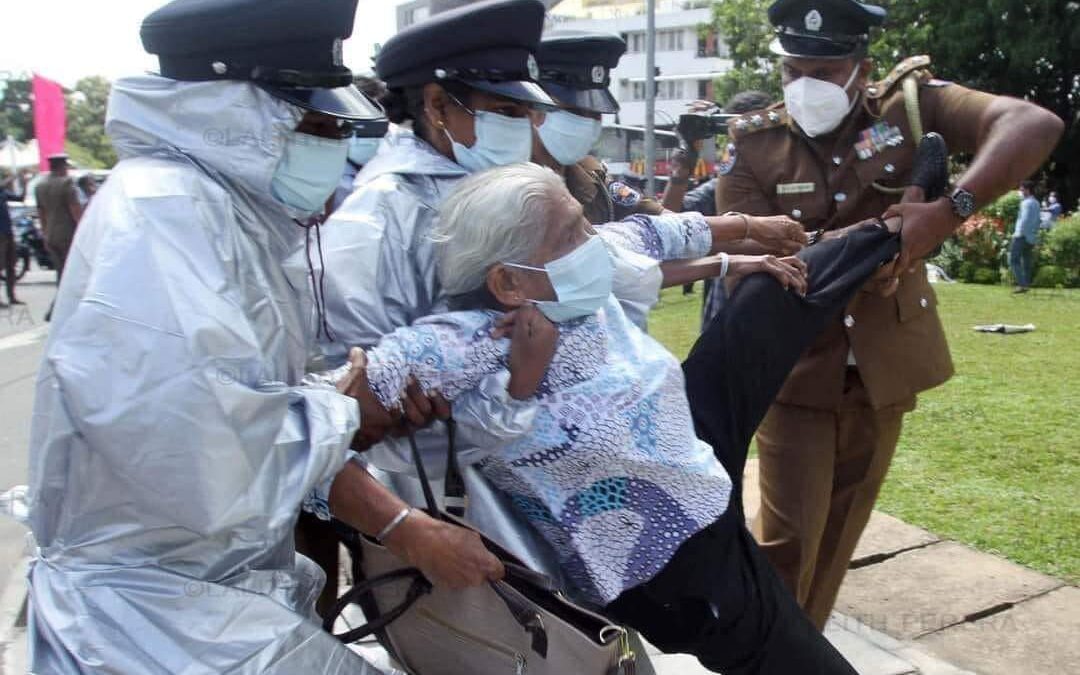
Sri Lanka: Immediately release peaceful protesters detained under Covid-19 quarantine
Sri Lankan authorities must immediately release protesters who were arbitrarily detained and taken to quarantine, the ICJ said today.

Sri Lankan authorities must immediately release protesters who were arbitrarily detained and taken to quarantine, the ICJ said today.
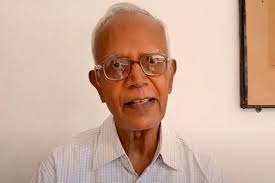
ICJ and seven other international human rights organizations are deeply saddened by the death in custody of Fr. Stan Swamy, 84 year-old Jesuit priest and human rights defender, on 05 July 2021.
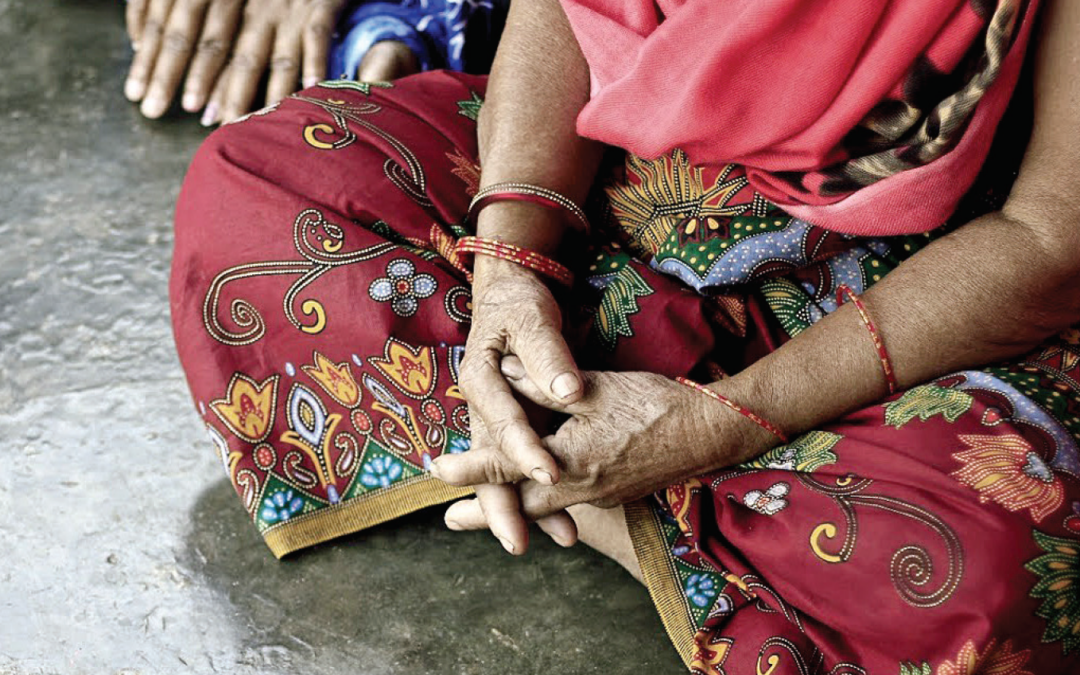
Victims of sexual and gender-based violence during Nepal’s 10-year-long civil war still face major obstacles to justice, concluded the participants of a virtual consultation on 19 June 2021, on the occasion of the International Day for the Elimination of Sexual Violence in conflict.
The consultation was organized by the International Commission of Jurists (ICJ), in collaboration with the Conflict Victim Women National Network (CVWN), to address “Enhancing Access to Justice for Survivors of Conflict-Related Sexual Violence”. The Nepali version of ICJ Briefing Paper on “Nepal: Transitional Justice Mechanisms with Gender Perspective” was also launched as part of the consultation.
The ICJ consultation with stakeholders highlighted Nepal’s obligation under international law to ensure right to an effective remedy to the victims of sexual and gender-based violence of Nepal’s decade-long armed conflict, which came to a close with a peace accord in 2006.
Around 80 participants, including human rights defenders and conflict victims from different parts of the country attended the consultation. The participants expressed particular concern at lack of attention to gender issues in the context of Nepal’s transitional justice process since its very beginning, and urged that gender considerations be mainstreamed in the transitional justice process.
Ms. Shrijana Shrestha, Chairperson of the CVWN, underscored the lack of government data on victims of conflict-related sexual violence, and denounced the hurdles victims face in seeking justice, due to social and cultural taboos, lack of a support system, and the current statute of limitation to register complaints of sexual violence.
Ms. Mandira Sharma, ICJ Senior Legal Adviser, highlighted that, as a party to various international human rights instruments, Nepal has an obligation to ensure victims’ right to an effective remedy. Further, she expressed concern about the lack of political will since the beginning of the peace process to address the needs of women victims, in particular of victims of conflict-related sexual violence. She emphasized the need to amend the Truth and Reconciliation (TRC) Act in consultation with victims of the armed conflict.
Similarly, Dr. Susan Risal, human rights activists, emphasized the need to develop strong strategies to deal with conflict-related sexual violence in Nepal, taking into consideration the best practices of different countries.
Ms. Laxmi Pokharel, ICJ Legal Adviser, pointed out that the ICJ Briefing paper (“Nepal: Transitional Justice Mechanisms with Gender Perspective”) has analyzed the TRC legislation comprehensively, and can therefore be of use as a powerful advocacy tool for legal reform. She summarized the main findings of the briefing paper and its recommendations, including:
During the discussions, the participants highlighted the following major concerns:
The event was organized under the ‘Enhancing Access to Justice for Women in Asia and the Pacific’ project funded by the Swedish International Development Cooperation Agency (SIDA). Due to the COVID–19 pandemic, the webinar was conducted virtually via Zoom and broadcasted live on Facebook. The webinar was conducted in Nepali with simultaneous English translation.
Contact
Laxmi Pokharel, ICJ Legal Adviser – Nepal, e: laxmi.pokharel(a)icj.org
Download
Briefing paper on “Nepal: Transitional Justice Mechanisms with Gender Perspective” in English and Nepali.
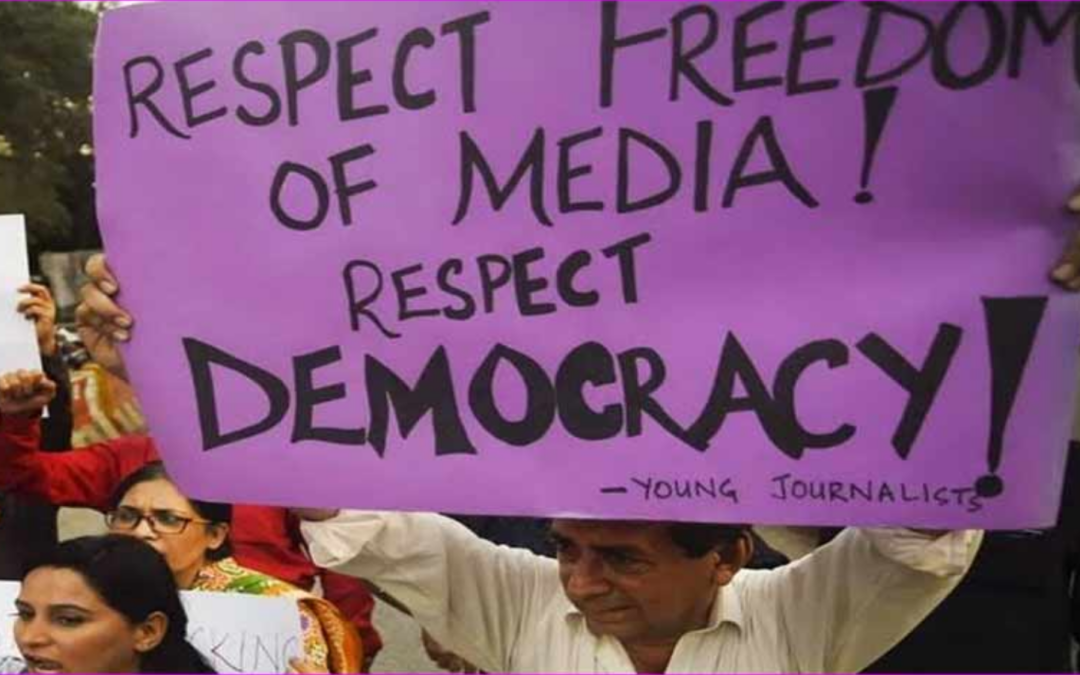
A recent series of attacks and growing pressure on journalists who criticize the Pakistan government is a cause for serious concern, Human Rights Watch, Amnesty International and the ICJ said today. Those suspected of criminal responsibility should be promptly and fairly prosecuted.
The Pakistan government should conduct prompt, impartial and effective investigations into the recent number of attacks on journalists. The government should rescind official policies that protect the authorities from criticism and instead promote space for public debate and free expression, in the face of threats from extremist groups and government officials.
“The frequency and audacity with which journalists are being attacked in Pakistan is appalling,” said Brad Adams, Asia director at Human Rights Watch. “The Pakistani authorities should bring those responsible for these attacks to justice and ensure that all journalists can do their jobs without fear of intimidation or reprisals.”
On May 25, 2021, Asad Ali Toor, a journalist, was assaulted by three unidentified men who forcibly entered his apartment in Islamabad. They bound and gagged Toor and severely beat him. Toor said that they identified themselves as being from a security agency, interrogated him about the “source of his funds,” and took away his cell phone and other electronic devices. The government ordered an investigation into the incident. In September 2020, the authorities charged Toor with sedition for comments made on social media “maligning state institutions.” A court later dismissed the charges.
On April 20, an unidentified assailant shot and wounded Absar Alam, a television journalist, outside his house in Islamabad. Alam has been a prominent critic of the government. In September 2020, the authorities charged Alam with sedition and “high treason” for using “derogatory language” about the government on social media.
On July 21, 2020, an unidentified assailant abducted another journalist, Matiullah Jan, in Islamabad the day before he was to appear before the Supreme Court for allegedly “using derogatory/contemptuous language and maligning the institution of judiciary.” Jan was released after a few hours. He alleged the abduction was an attempt to intimidate him. A criminal case was registered for Jan’s abduction, but, no suspects have been arrested.
“It is disturbing to see the space for dissent and providing information of public importance rapidly shrink in Pakistan, with journalists as well as human rights defenders particularly at risk of censorship, physical violence, and arbitrary detention,” said Sam Zarifi, secretary general of the ICJ.
Pakistani journalists have long faced serious obstacles to their work, including harassment, intimidation, assault, arbitrary arrest and detention, abduction, and death. As these threats have escalated, Pakistani authorities have also increasingly pressured editors and media owners to shut down critical voices. On May 29, the news channel, Geo, “suspended” Hamid Mir, one of Pakistan’s best-known television talk show hosts, after Mir spoke at a protest in solidarity with Asad Toor.
Other media outlets have come under pressure from authorities not to criticize government institutions or the judiciary. In several cases in recent years, government regulatory agencies blocked cable operators and television channels that had aired critical programs. In 2020, Pakistan ranked ninth on the Committee to Protect Journalist’s annual Global Impunity Index, with at least 15 unsolved killings of journalist since 2010.
In July 2020, the Pakistan Electronic Media Regulatory Authority (PEMRA) ordered 24NewsHD, a television news channel, off the air indefinitely for the alleged “illegal transmission of news and current affairs content.” Journalists and opposition activists alleged that the channel was being punished for airing criticism of the government.
In August 2020, a group of leading women journalists issued a statement condemning a “well-defined and coordinated campaign” of social media attacks, including death and rape threats against women journalists and commentators whose reporting has been critical of the government.
“If the authorities are committed to uphold their human rights obligations, they must take decisive steps against censorship, harassment and violence against journalists,” said Dinushika Dissanayake, South Asia deputy regional director at Amnesty International. “For that, continued impunity must be dismantled.”
Contact
In Brussels, for Human Rights Watch, Patricia Gossman: +32-472-982-925; or +1-347-322-8638 (WhatsApp); or gossmap@hrw.org. Twitter: @pagossman
In Geneva, for the International Commission of Jurists, ICJ Asia-Pacific Communications Officer, asiapacific(a)icj.org
In London, for Amnesty International, Michael Parsons: michael.parsons@amnesty.org
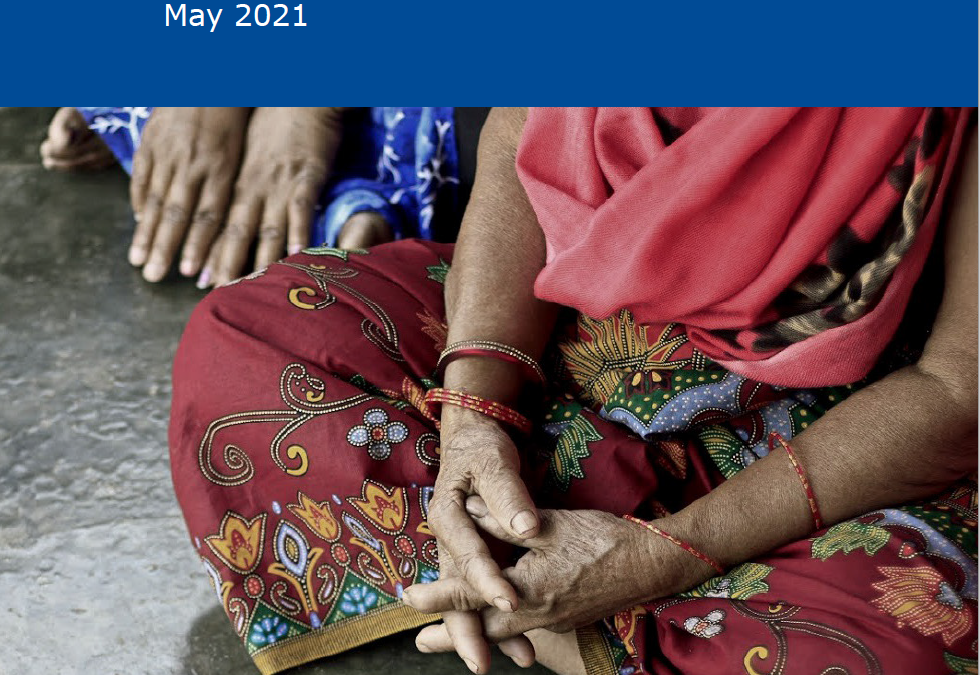
The ICJ launched a new briefing paper Nepal: Transitional Justice Mechanisms with Gender Perspective in a webinar held on 12 May 2021.
The discussion included the need to give practical effect to Nepal’s obligation under international law to ensure the right to an effective remedy to the victims, including women victims of sexual and gender-based violence during the country’s internal armed conflict (1996 – 2006). Participants focused in particular on the need to ensure that gender issues are incorporated in the transitional justice mechanism.
The Honourable Kalyan Shrestha, former Chief Justice of the Supreme Court of Nepal and ICJ Commissioner, stressed the importance of the role of the Supreme Court of Nepal in establishing landmark jurisprudence on transitional justice.
Justice Shrestha explained how despite the fact that the country had established a progressive Constitution and amended legislation to provide for equality, non-discrimination and access to justice, women victims and survivors of a decade long armed conflict continued to face real barriers to justice. These including short periods of statute of limitations preventing the filing rape and sexual violations cases and lack of support mechanisms for women, which compounded existing economic pressure and social obstacles.
Bandana Rana, Member of the UN Committee on the Elimination of Discrimination against Women (CEDAW), addressed the situation of sexual and gender – based violence against women in Nepal during the armed conflict. She said that Nepal was bound by clear international legal obligations, including under the CEDAW and other treaties. Yet the Nepali government has not taken effective measures to ensure access to justice and the right to an effective remedy to the victims of SGBV during the conflict.
Laxmi Pokharel, ICJ Legal Adviser, summarized the ICJ’s briefing paper on “Nepal: Transitional Justice Mechanisms with Gender Perspective”. The Paper’s major recommendations, to the Government of Nepal, are:
The webinar was jointly organized by ICJ in collaboration with the United Nation’s Office of the High Commissioner for Human Rights (OHCHR) and UN Women. This event was organized under the ‘Enhancing Access to Justice for Women in Asia and the Pacific’ project funded by the Swedish International Development Cooperation Agency (SIDA). Due to the COVID – 19 pandemic the webinar was conducted virtually and live broadcasted on Facebook. It was conducted in English language and simultaneous translation in Nepali language was also available.
Contact
Laxmi Pokharel, ICJ Legal Adviser – Nepal, email: laxmi.pokharel(a)icj.org
Download
Briefing paper on “Nepal: Transitional Justice Mechanisms with Gender Perspective” (full report in PDF)
 El Salvador: Crimes against humanity within the framework of public security policy
 HRC61: Joint oral statement of The ICJ in the interactive dialogue with the Special Rapporteur on Counter-terrorism and Human Rights
 A Human Rights-Based Approach to Decriminalizing Conduct Associated with Poverty and Status
 HRC61: Oral statement of The ICJ in the interactive dialogue with the Special Rapporteur on the Rights of Persons with Disabilities