Nov 3, 2020 | News
The government of Nepal should act without delay to carry out the National Human Rights Commission’s recommendations, particularly those concerning Nepal’s obligation to investigate and, where justified by the evidence, prosecute those accused of serious abuses, Human Rights Watch and the ICJ said today.
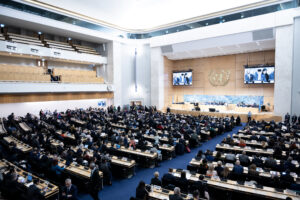
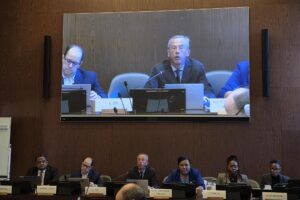
On October 15, 2020, the National Human Rights Commission (NHRC) published 20 years of data, naming 286 people, mostly police officials, military personnel, and former Maoist insurgents, as suspects in serious crimes. In particular, the information relates to cases where its investigators concluded there is evidence warranting investigation and prosecution for abuses including torture, enforced disappearance, and extrajudicial killing.
In addition to domestic use, the data should provide important guidance to the United Nations in vetting Nepali security forces for peacekeeping missions, and to other countries for efforts to ensure international justice, including in their obligations to prosecute or extradite individuals suspected of responsibility for crimes under international law. They will also be of use to the United States in carrying out vetting requirements under the “Leahy laws” that prohibit military assistance to military and security forces implicated in serious human rights abuses.
“The National Human Rights Commission has taken an important step in publishing this information, which will be an essential tool for the UN and foreign governments in their engagement with Nepali security forces,” said Meenakshi Ganguly, South Asia director at Human Rights Watch. “The report highlights just how little progress there has been to establish meaningful human rights protections to address conflict era violations and ongoing abuses.”
The culture of impunity in Nepal is contributing to ongoing serious human rights abuses, the groups said. There have been numerous credible allegations of extrajudicial executions, torture, and ill-treatment, sometimes resulting in custodial deaths, and deaths resulting from the unlawful and excessive use of force in policing demonstrations in recent years. In many such cases, the authorities have refused even to register complaints, much less carry out effective investigations or prosecutions.
International and foreign authorities, including prosecutors and judicial authorities, should be aware of the commission’s data when considering targeted sanctions for people accused of serious violations, or preparing criminal cases under the principal of universal jurisdiction against those allegedly responsible for crimes such as torture and enforced disappearances, Human Rights Watch and the International Commission of Jurists said.
Particularly serious violations and abuses were committed between 1996 and 2006 during an armed conflict between government security forces and Maoist rebel forces. The former Maoist party in now part of the government. Since the conflict ended, the former enemies have effectively joined ranks to successfully shield their supporters from accountability, fostering a culture of impunity that continues to protect those responsible for ongoing extrajudicial killings and deaths in custody allegedly resulting from torture.
The NHRC said in its report that the government had mostly failed to act against suspects, despite being informed of the commission’s findings. Human Rights Watch and the International Commission of Jurists have not independently investigated all the cases documented, but the Nepal government is under an obligation to thoroughly and impartially investigate the allegations in the report with a view to bringing those responsible for these crimes to justice. Altogether the NHRC has recommended action against 98 police officers, 85 soldiers, and 65 members of the former Communist Party of Nepal (Maoist).
The NHRC presented and analyzed its findings and recommendations spanning two decades, since its establishment in 2000. It has registered 12,825 complaints and reached conclusions in 6,617 cases, making 1,195 recommendations to the government. The recommendations have been carried out fully in only 13 percent of cases, partially carried out in 37 percent, and not carried out at all in the remaining 50 percent. The government has often carried out recommendations to make payments to victims or their families but has very rarely investigated or prosecuted abuses.
In a March 6, 2013 ruling, the Supreme Court decided that the NHRC has the authority to refer these cases to the attorney general and prosecutors for investigation and prosecution, yet the NHRC has been unwilling to use that authority. The NHRC has also chosen not to use its prerogative to name those allegedly responsible for the abuses until now, waiting until the last days of the outgoing commissioners’ terms to publish the report.
“While releasing this report is an important step toward addressing entrenched impunity in Nepal, it has exposed the fact that the commission has struggled with a lack of investigative capacity, failing in many cases to summon alleged perpetrators or demand documentation,” said Mandira Sharma, senior international legal advisor at the International Commission of Jurists. “Had the NHRC used its authority to request prosecution from the attorney general where it has gathered sufficient evidence, it would have made a real contribution in tackling impunity and in addressing police failures in investigating ongoing cases of rights violations.”
The NHRC has long been dogged by political interference in the appointment of commissioners, and a widely perceived reluctance to confront the government or other powerful institutions, such as the army and political parties, that oppose accountability for rights abuses. In 2019 the government proposed amendments to the 2012 National Human Rights Commission Act that would further undermine its independence.
To download the full statement with additional information, click here. (PDF)
Contact
For International Commission of Jurists, in Nepal, Mandira Sharma (Nepali, English): +977-9851048475 (mobile); or mandira.sharma@icj.org.
Oct 27, 2020 | News
The ICJ today condemned the adoption of amendments to the Sri Lankan Constitution, which serve to expand the powers of the President, while encroaching on the powers of the parliament and courts.
The 20th Amendment to the Constitution was passed into law on 22 October, with 156 of the 225 parliamentarians voting in favour of the amendment, after a mere two-day debate, overruling the Opposition’s request for at least four days of deliberation.
The ICJ noted that the Amendment undoes most of the reforms brought about by the 19th Amendment adopted only in 2015. Critically, it introduces judicial appointment procedures which are incompatible with principles of the justice by reintroducing the Parliamentary Council, consisting only of political actors.
That body serves to merely advise the President, regarding appointments to the judiciary and other key public institutions.
The 20th amendment gives the President sole and unfettered discretion to appoint all judges of the superior courts. Under international standards, appointments to the judiciary should not be vested solely with the executive.
Given the gravity of the constitutional changes, the ICJ expressed regret that the Government had suspended Standing Order 50 (2), which requires every bill to be referred to the relevant Sectoral Oversight Committee for consideration prior to being debated in parliament.
“It is appalling that Constitutional amendments with such far reaching consequences on the constitutional governance of the country were rushed through in such haste, especially at a time Sri Lanka battles with its largest COVID-19 outbreak to date,” said Ian Seiderman, ICJ’s Legal and Policy Director.
The ICJ welcomes the alteration made to some of the problematic provisions of the 20th Amendment Bill during Committee Stage, particularly in relation to presidential immunity and the time period within which the president can dissolve Parliament.
The ICJ nonetheless is particularly concerned with the decision of the Minister of Justice to introduce entirely new provisions at Committee Stage, particularly in relation to the increase of the number superior court judges. The Supreme Court Bench will be increased from 11 to 17 and Court of Appeal from 12 to 20. These substantive amendments were not part of the gazetted 20th Amendment bill, the provisions of which were challenged before the Supreme Court by as many as 39 petitioners.
“While an increased number of judges may reduce court delays and expedite the judicial process, introducing substantive amendments such as this at Committee Stage is problematic at multiple levels,” Seiderman added.
“Sneaking in substantial changes at the last stage of the legislative process where there is no opportunity for public comment or judicial review is not consistent with democratic processes under the rule of law.”
Sep 30, 2020 | News
Today, the ICJ joined fourteen other human rights organizations in condemning the Indian government’s actions against Amnesty India and pledged to continue support for local human rights defenders and organizations against the recent crackdown.
Amnesty International India announced that it is halting its work in the country after the Indian government froze its bank accounts in an act of reprisal for the organization’s human rights work.
The Indian government’s actions against Amnesty India are part of increasingly repressive tactics to shut down critical voices and groups working to promote, protect, and uphold fundamental rights, said the Association for Progressive Communications, Global Indian Progressive Alliance, International Commission of Jurists, International Federation for Human Rights (FIDH), CIVICUS: World Alliance for Citizen Participation, Front Line Defenders, FORUM-ASIA, Foundation the London Story, Hindus for Human Rights, Human Rights Watch, International Service for Human Rights, Minority Rights Group, Odhikar, South Asians for Human Rights (SAHR), and World Organisation Against Torture (OMCT) in the framework of the Observatory for the Protection of Human Rights Defenders.
The Hindu nationalist Bharatiya Janata Party (BJP)-led government has accused Amnesty India of violating laws on foreign funding, a charge the group says is politically motivated and constitutes evidence “that the overbroad legal framework is maliciously activated when human rights defenders and groups challenge the government’s grave inactions and excesses.”
The BJP government has increasingly cracked down on civil society, harassing and bringing politically motivated cases against human rights defenders, academics, student activists, journalists, and others critical of the government under sedition, terrorism, and other repressive laws.
These actions increasingly mimic that of authoritarian regimes, which do not tolerate any criticism and shamelessly target those who dare to speak out. With growing criticism of the government’s discriminatory policies and attacks on the rule of law, the authorities seem more interested in shooting the messenger than addressing the grievances. Women’s rights activists and indigenous and minority human rights defenders have been especially vulnerable. The recent action against Amnesty India highlights the stepped-up pressure and violence felt by local defenders on the ground, regardless of their profile.
The authorities have repeatedly used foreign funding regulations under the Foreign Contribution Regulation Act (FCRA), a law broadly condemned for violating international human rights law and standards, to target outspoken groups. United Nations experts on human rights defenders, on freedom of expression, and on freedom of association have urged the government to repeal the law, saying it is “being used more and more to silence organisations involved in advocating civil, political, economic, social, environmental or cultural priorities, which may differ from those backed by the Government.”
Yet, the Indian parliament amended the FCRA this month, adding further onerous governmental oversight, additional regulations and certification processes, and operational requirements that would adversely affect civil society groups and effectively restrict access to foreign funding for small nongovernmental organizations.
A robust, independent, and vocal civil society is indispensable in any democracy to ensure a check on government and to hold it accountable, pushing it to do better. Instead of treating human rights groups as its enemies, the government should work with them to protect the rights of all people and ensure accountability at all levels of government.
Contact
Ian Seiderman, ICJ Law and Policy Director: ian.seiderman@icj.org
Sep 24, 2020 | News
Today the ICJ condemned the adoption by both Houses of Parliament of the Indian Foreign Contribution (Regulation) Amendment Bill 2020 (FCRA 2020).
Sep 14, 2020 | News
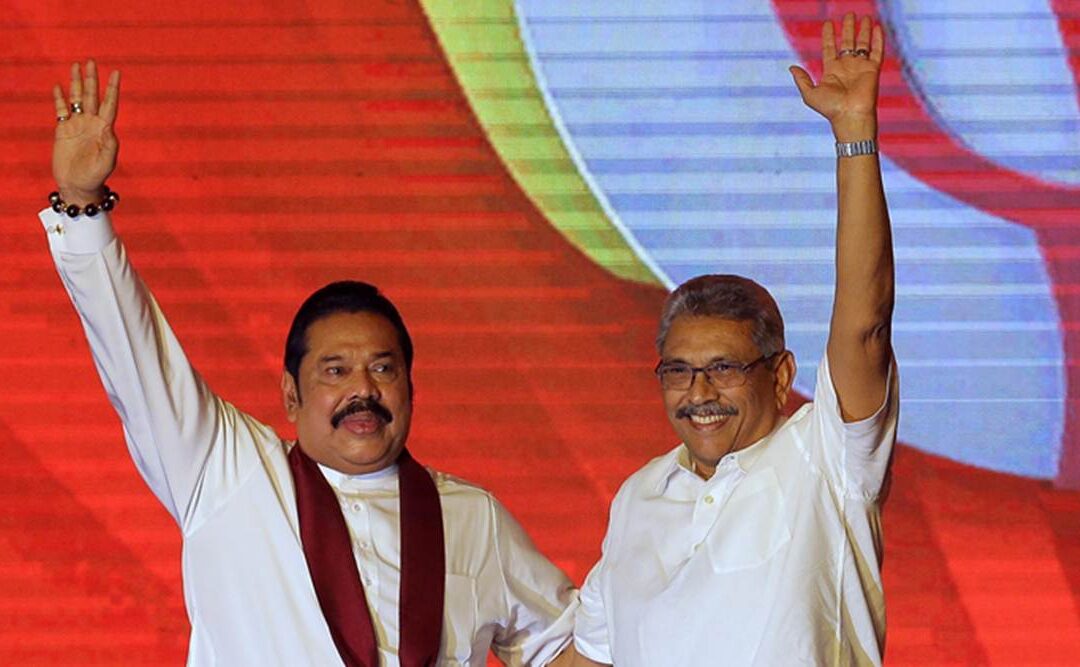
The Sri Lankan parliament should reject the Sri Lankan Government’s efforts to amend the country’s constitution to provide unfettered powers to the President while encroaching on the powers of the legislature and infringing upon the independence of the judiciary, said the ICJ today.
“The proposed 20th Amendment, which bestows an already powerful executive president with additional powers with no effective checks on him, essentially placing him above the law,” said Sam Zarifi, ICJ’s Secretary General. “These amendments would tilt the balance of State power heavily on the side of the executive and in particular on a single person.”
The proposed 20th Amendment to the Constitution bill rolls back most of the reforms brought about by the 19th Amendment to the Constitution, the passage of which the UN Human Rights Council welcomed as “promoting democratic governance and oversight of key institutions”.
The 19th amendment, adopted in 2015, had imposed certain limits to the Executive President’s authority and powers, including in respect of terms of the office of President, the capacity to dissolve Parliament and to fast-track legislation. It also removed the blanket immunity the President enjoyed from legal proceedings. Critically, it had established a Constitutional Council which restrained the President’s discretion in appointing key governmental actors including in the judiciary, the Attorney General and the Inspector General of Police.
The ICJ notes that the 20th amendment appears to reproduce much of the regressive features of the old 18th amendment, which the 19th amendment had been brought about to correct.
“Sri Lanka’s Executive branch has a poor record of respecting human rights and the rule of law, and the 19th Amendment was an effort to impose the checks and balances necessary for the rule of law,” said Sam Zarifi. “The constitutional changes being proposed would take the country back to the dark days of Executive impunity.”
“We are particularly concerned that these changes would undermine the independence of the judiciary, as the President would have unfettered discretion to appoint the superior judiciary, including the Chief Justice, the President and Judges of the Court of the Appeal, and to control the Judicial Service Commission,” said Sam Zarifi.
The JSC is the body entrusted with the power to appoint, promote, transfer exercise disciplinary control and dismiss judicial officers of the subordinate courts. The changes would also grant the President the power to nominate members of the Judicial Service Commission (JSC) other than its Chairman which is ex officio, the Chief Justice.
The UN Basic Principles on the Independence of the Judiciary states that “Any method of judicial selection shall safeguard against judicial appointments for improper motives.”
Under international standards and recommendations of the UN Special Rapporteur on the Independence of the Judiciary, appointments to the judiciary should not be vested solely with the executive.
A judicial appointment process which gives the President full discretion would inevitably result in the significant erosion of the independence and impartiality of the Sri Lankan judiciary.
Moreover, several checks placed on the President’s powers by the 19th Amendment have also been removed while giving him greater legal immunity. The President would also be granted sole power to appoint the cabinet, assign to himself any cabinet portfolio and been given unfettered discretion in relation to the appointment and dismissal of the Prime Minister. The President would also retain the power to dissolve the Parliament within one year.
Contact
For questions and clarifications: Osama Motiwala, Communications Officer – osama.motiwala(a)icj.org