Feb 27, 2020 | News
The ICJ today condemned the Sri Lankan Government’s announced “withdrawal” of support for the process under UN Human Rights Council (UNHRC) Resolutions 30/1, 34/1 and 40/1.
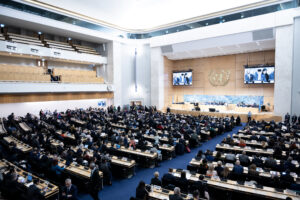
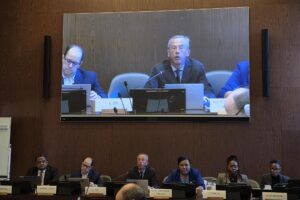
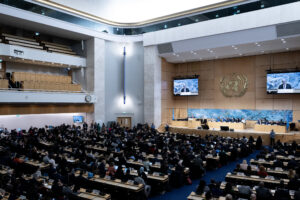
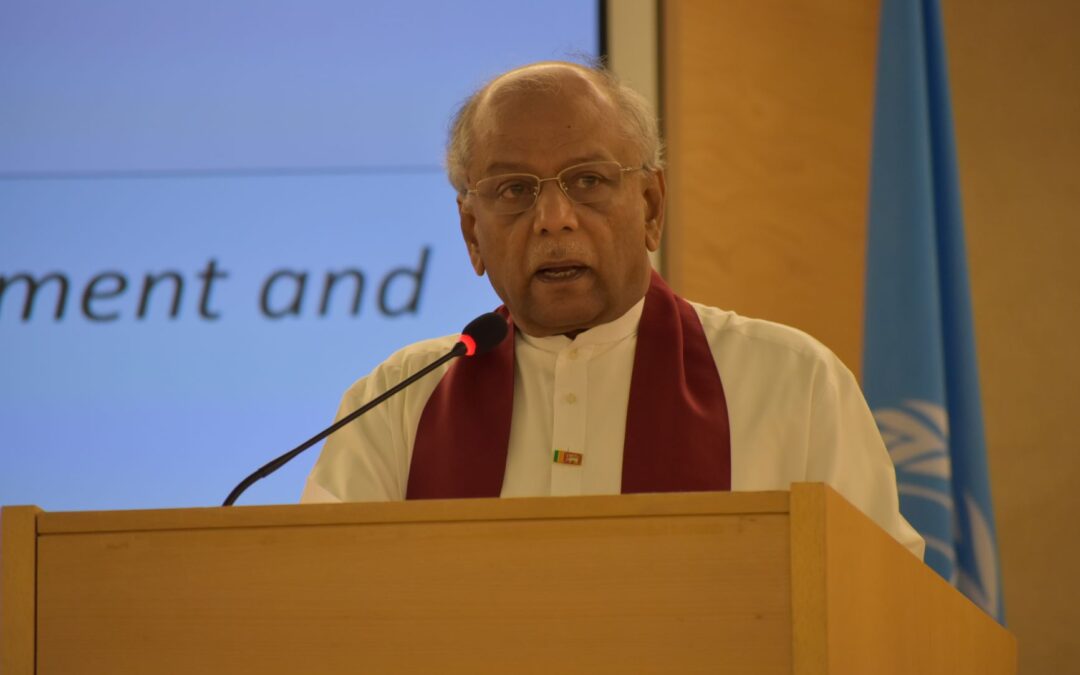
Minister of Foreign Affairs, Dinesh Gunawardane, formally announced the decision on 26 February at a High-Level Segment of the 43rd session of the UNHRC in Geneva.
“The Government of Sri Lanka’s refusal to implement effective measures for truth, justice, accountability and reconciliation, including as set out in the resolutions of the Human Rights Council, places it in violation of its obligations under international law,” said Frederick Rawski, ICJ’s Regional Director for Asia and the Pacific. “Holding perpetrators of human rights violations accountable at the international level now appears to be the only real option – including referral to the International Criminal Court, the creation of an ad hoc international mechanism, and the exercise of universal jurisdiction.”
Gunawardane stated that the Government of Sri Lanka would instead “achieve sustainable peace through an inclusive, domestically designed and executed reconciliation and accountability process, including through the appropriate adaptation of existing mechanisms, in line with the Government’s policy framework.”
“It is the Sri Lankan Government’s failure to initiate a credible and comprehensive approach to transitional justice in the aftermath of the war that led to the intervention of the international community in the first place,” said Rawski. “Sri Lanka’s domestic legal system has repeatedly demonstrated that it is unable to address systemic and entrenched impunity for crimes under international law perpetrated by the military and security forces,” he added.
Pronouncements by the President, on protecting military personnel from any accountability measures coupled with appointments to senior command positions individuals credibly accused of serious human rights violations indicate that the long history of impunity of security forces in Sri Lanka is set to continue.
The ICJ is deeply concerned that the Government’s official refusal to implement the UN resolutions comes at a time when the human rights situation in Sri Lanka is rapidly deteriorating. It threatens to undermine even the meagre progress made over the past few years, which albeit slow and wholly insufficient, has been primarily due to the continued engagement of the Council, OHCHR and international community. The UNHRC process is also the only forum at the global level where Sri Lankan civil society and victim groups have had the opportunity to engage openly in dialogue with the Government and other States on human rights concerns in Sri Lanka.
The validity of adopted resolutions of the Council does not depend on their acceptance by the government concerned. Reporting and discussion of Sri Lanka’s implementation or failure to implement them will take place this year and in 2021 at the Council regardless of the Government’s position.
Contact
Frederick Rawski, ICJ’s Asia Pacific Regional Director, t: +66 2 619 84 77; e: frederick.rawski(a)icj.org
Jan 25, 2020 | News
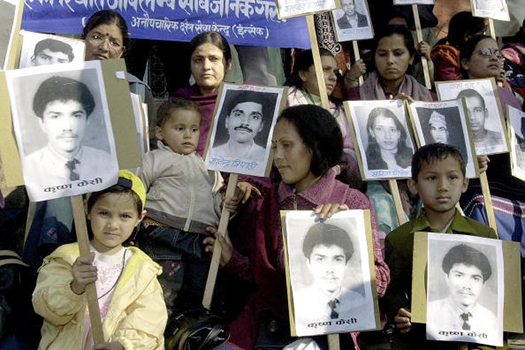
Recent steps taken by the government are a serious setback on Nepal’s transitional justice process, the ICJ, Amnesty International, Human Rights Watch and TRIAL International said today.
The organizations expressed concern about the decision to appoint commissioners to the two transitional justice commissions without adequate consultations, and without amending the legal framework to make it consistent with international human rights law and Supreme Court of Nepal rulings.
“Nepal’s political leaders know that a transparent process is essential to ensure justice and accountability for egregious rights violations during the conflict, but they keep trying to protect those responsible for the abuses,” said Meenakshi Ganguly, South Asia director at Human Rights Watch. “If the political leadership continues to evade responsibility, they leave little choice but for victims to approach courts outside the country.”
On January 18, 2020, a five-member committee formed by the government to recommend names for commissioners for the Truth and Reconciliation Commission (TRC) and the Commission on the Investigation of Enforced Disappeared Persons (CIEDP) submitted its nominations. The committee sent the names forward despite longstanding demands by victims’ groups and civil society for the government to first amend the transitional justice legal framework to ensure that it complies with Nepal’s international obligations and is responsive to victims’ concerns.
Instead, the Ministry of Law, Justice and Parliamentary Affairs on January 13 hastily convened provincial consultations on the transitional justice laws lasting just three hours, which allowed little time for meaningful participation by victims’ groups and civil society.
“The government’s decision to carry out another rushed and secretive set of consultations fails to give due respect to the long-standing demands of victims and civil society,” said Frederick Rawski, ICJ’s Asia-Pacific Director. “It also makes it very difficult to take seriously the statements of political leaders that they are committed to supporting a victim-centred and human rights compliant process.”
Victims’ groups and human rights organizations have rejected these appointments and consultations, and have reiterated that they will not support a transitional justice process that is opaque, non-consultative, and undermines the victims’ right to truth, justice and reparations.
In addition, in its secretariat meeting earlier this week, the Nepal Communist Party (NCP) nominated Agni Sapkota as the speaker of the Federal Parliament. Sapkota, a member of parliament and the party standing committee, has been accused of responsibility for the abduction and killing of Arjun Lama in 2005 in Kavre. The case is the subject of proceedings including before the Supreme Court of Nepal.
NCP should reconsider Sapkota’s nomination as speaker of the parliament until there is a thorough and independent investigation, the organizations said.
“Nepal authorities should not appoint to high office people that are under investigation for human rights abuses, when they could interfere with that investigation,” said Audrey Oettli, Program Manager at TRIAL International. “Such appointments are yet another illustration of the government’s unwillingness to demonstrate a basic commitment to holding perpetrators of conflict-era rights abuses accountable.”
In March 2008, the Supreme Court directed the police to register a case against Sapkota for abducting and killing Lama and to carry out an investigation. The police did not comply. In 2010, Australia and the US rejected visa applications from Sapkota in light of the allegations of serious human rights violations.
When Sapkota was appointed information communication minister in May 2011, the UN Office of the High Commissioner for Human Rights issued a statement expressing concern, saying that states have a responsibility “to ensure that the name of a person is fully cleared following a thorough investigation before any appointment to a high public office is announced.”
The ICJ, Amnesty International, Human Rights Watch and TRIAL International have repeatedly expressed concern about the transitional justice process. An effective transitional justice system requires strong legal foundations consistent with international law and standards, and the political will to address the demands of victims of the conflict, the organization said.
Concerns raised about the legal framework include: disparities between the definitions of specific crimes under international law and human rights obligations and violations under national, and international law; inadequate provisions to ensure that serious crimes under international law are subject to criminal accountability, including punishment proportionate to the seriousness of the crimes; and a reliance on compensation at the expense of other forms of reparation and remedy for conflict survivors and their families.
The government should amend the the 2014 Transitional Justice Act to make it consistent with the Supreme Court’s rulings and international human rights standards, the groups said. It should initiate a genuine consultative and transparent process for the appointment of commissioners. And it should conduct credible and impartial investigations instead of appointing people accused of conflict-era crimes to high public offices.
“The government and the political parties in Nepal are increasingly showing that they are unwilling and incapable to deliver truth, justice and reparations to the conflict victims domestically,” said Biraj Patnaik, South Asia Director at Amnesty International. “Their signal of impunity will further push the victims and activists to seek justice internationally under universal jurisdiction. Instead of putting those suspected of criminal responsibility into positions of power, the government should bring them to justice in fair trials.”
To download the statement in Nepali, click here.
Contact
- Frederick Rawski, ICJ Asia-Pacific Director, e: frederick.rawski(a)icj.org, +66 644781121
- Biraj Patnaik, Amnesty International, South Asia Director, e: biraj.patnaik(a)amnesty.org, t: +94 716123280
- Meenakshi Ganguly, HRW, South Asia Director, e: gangulm(a)hrw.org
- Audrey Oettli, TRIAL International, Program Manager, e: a.oettli(a)trialinternational.org
Jan 24, 2020 | News
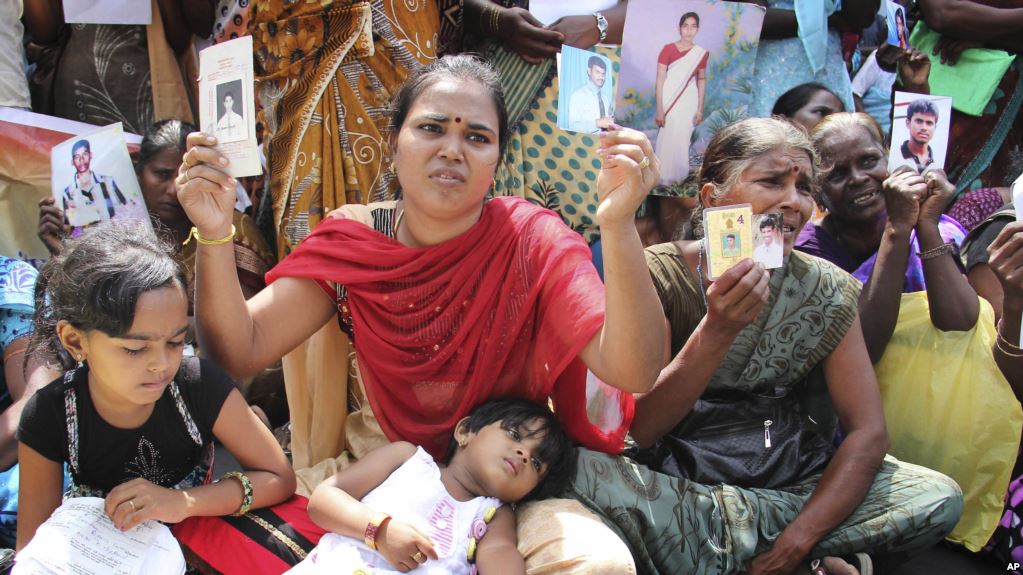
The ICJ expressed alarm about comments made by Sri Lankan President Gotabaya Rajapaksa which offensively mischaracterized the situation of “missing persons” in Sri Lanka, many of whom have been the victims of the crime of enforced disappearances.
According to a statement released by the President’s office after President Rajapaksa’s meeting with UN Resident Coordinator, Hanaa Singer, on 17 January 2020, the President had “explained that these missing persons are actually dead” and that “most of them had been taken by the LTTE or forcefully conscripted. The families of the missing attest to it. However, they do not know what has become of them and so claim them to be missing.”
“It is appalling to hear such callous declarations from the Office of the President, particularly given that no credible investigations have been conducted into the cases of those who have gone missing during the armed conflict,” said Frederick Rawski, Asia Pacific Director for the International Commission of Jurists.
The fate and whereabouts of some 20,000 people were reportedly unaccounted for in the immediate aftermath of the armed conflict in Sri Lanka. Many of these people are suspected to have been subjected to enforced disappearance, unlawful killings and/or other crimes under international law.
The Report of the UN Secretary-General’s Panel of Experts on Accountability in Sri Lanka (2011) and the reports of the State-led Commissions of Inquiry on Lesson Learnt and Reconciliation (2011), and Presidential Commission of Inquiry into Complaints of Abductions and Disappearances (2015) found that at least some of those who had surrendered to the Sri Lankan military at the end of the war in 2009 remain unaccounted for to date, and that many cases remain unresolved.
According to the same statement, Rajapaksa further informed the UN Resident Coordinator that, “after necessary investigations, steps would be taken to issue a death certificate to these missing persons. Afterwards their families would be given the support they need to continue with their lives.”
Under international law and standards, allegations of enforced disappearances and unlawful killings must be investigated, promptly, thoroughly, impartially. Those responsible must be brought to justice in fair trials, and the victims and their families are entitled to effective remedy and reparation.
“The President’s statement appears to disregard the purpose of the Office of Missing Persons. Any attempt to provide ‘closure’ to the relatives of the missing without following the necessary legal procedure to establish the truth is unacceptable,” said Rawski. “Their families have waited for ten years or longer to find out the fate of their loved ones. The response of the State should be to help facilitate the existing process, not to disrupt or obstruct it,” he added.
The previous government adopted the Office of Missing Persons Act in August 2016 and established the Office of Missing Persons (OMP) in February 2018, in light of its commitments to the UN Human Rights Council under Resolution 30/1. According to Section 13 (1) (a) (ii) of the OMP Act, a certificate of death shall be issued only upon the conclusion of an investigation and the issuing of a report to the relative of such missing person to such effect. However, as an interim measure, the OMP is empowered to facilitate the provision of certificates of absence to family members of a missing person. A certificate of absence legally recognizes that a person is missing and allows the family to conduct transactions as though the person is dead.
The ICJ urges the Government of Sri Lanka to desist from any measures that would derail from the established legal procedure to search and trace the “disappeared” and other missing persons in Sri Lanka. ICJ instead calls upon the Government to support the Office of Missing Persons to speed up the investigation process in establishing the truth, accountability, and reparation.
Contact
Frederick Rawski, ICJ’s Asia Pacific Regional Director, t: +66 2 619 84 77; e: frederick.rawski(a)icj.org
Jan 15, 2020 | News
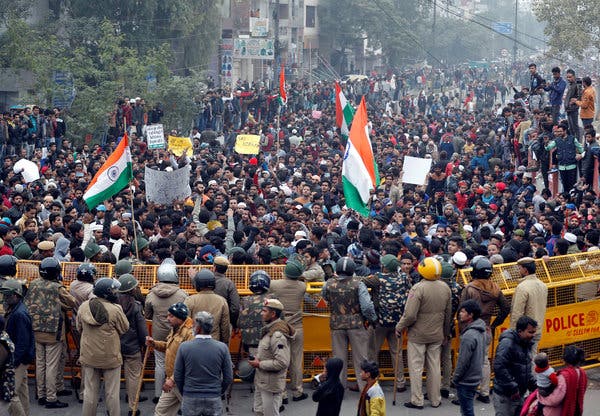
The Indian government must investigate the use of excessive and unlawful force by Uttar Pradesh police against demonstrators protesting the imposition of a discriminatory new law, the International Commission of Jurists said today in a briefing paper.
The briefing paper, based in part on firsthand interviews with witnesses and victims, documents the unnecessary, excessive and indiscriminate use of force in the state of Uttar Pradesh that have led to more than 19 deaths and several more critical injuries since 11 December 2019 as a result of use of firearms as well as teargas, water cannons, and baton charging by the police in response the ongoing protests against the Citizenship (Amendment) Act, 2020.
Section 144 of the Code of Criminal Procedure, which restricts right to assembly of more than 4 persons, has been imposed in Uttar Pradesh since December 19, 2019, thereby effectively preventing people from protesting. However, protests broke out in several cities in Uttar Pradesh despite the ban. While police authorities claim that the protestors initiated the violence, firsthand interviews with victims and witnesses and numerous other credible reports indicate that the police used force on peaceful protestors including lathis, teargas, bullets.
“The high death toll of peaceful protestors in Uttar Pradesh highlights the use of excessive force by the police, in contravention of international standards of policing and human rights. The state and federal governments must investigate any death or injury that occurs during protests by law enforcement officials and to ensure access to justice to victims and their families,” Sam Zarifi, ICJ Secretary General said.
Individuals reported that they had not been able to get their medico-legal certificates and victims’ families reported inability to access postmortem reports.
The right to life and freedom from ill treatment is protected under international law including the International Covenant on Civil and Political Rights to which India is a party and requires that when arbitrary deprivation of life occurs, there is accountability and reparation for victims.
The Allahabad High Court is hearing Shree Ajay Kumar v. State of Uttar Pradesh starting 16 January 2020, wherein it has taken suo moto cognizance of a letter sent by Ajay Kumar a lawyer in Bombay and has treated it as a basis for the commencement of a public interest litigation. The letter alleges that “the situation in the State of Uttar Pradesh is antithetical to core constitutional values and warrants interference of this Court.”
“A ruling that the Uttar Pradesh police violated protestors right to life by use of firearms and indiscriminate use of batons, teargas will serve as an important reminder to the police and the Indian State to respect the rights to life, freedom from ill-treatment and freedom of assembly and expression of protestors and that the use of such force against peaceful protestors will not be condoned by the State” said Sam Zarifi.
To download the full statement with additional background information, click here.
Contact
Sam Zarifi, ICJ Secretary General , e: sam.zarifi(a)icj.org
Maitreyi Gupta, International Legal Adviser for India, t: +91 7756028369 ; e: maitreyi.gupta(a)icj.org
Read also
ICJ Press Release: India: Discriminatory citizenship law passed by Parliament violates international and constitutional law, December 11, 2019
ICJ Press Release: India: Authorities must cease the excessive use of force and ill-treatment of Citizenship (Amendment) Act 2019 protestors, December 16, 2019
Dec 16, 2019 | News
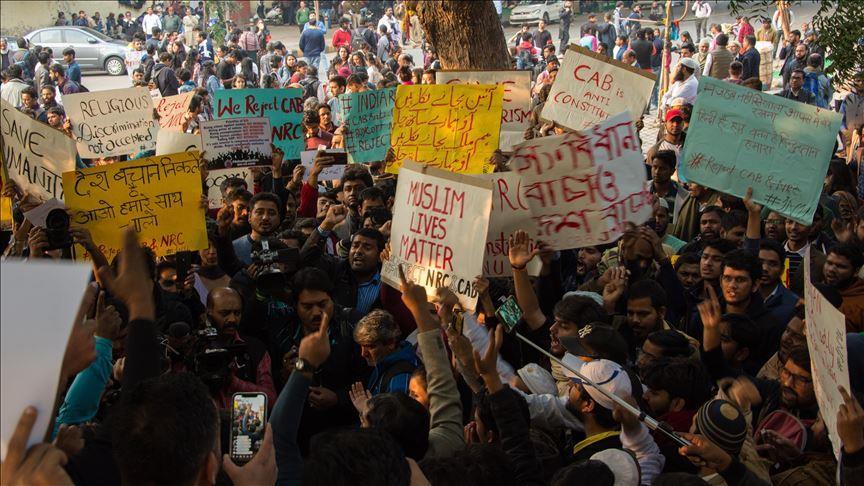
The Indian Police Service and the paramilitary Central Reserve Police Force must desist from the use of unlawful force and ill-treatment against demonstrators protesting the Citizenship (Amendment) Act, the ICJ said today.
The Indian authorities must also hold police and other public officials accountable for the human rights violations arising from these police actions, the ICJ added.
“The violent tactics that police have used over the past several days in Delhi, Uttar Pradesh, and other Indian states must cease and the government must address the legitimate concerns raised by the public about the discriminatory impacts of both the Citizenship Amendment Act and National Register of Indian Citizenship,” said Frederick Rawski, ICJ Asia Pacific Director.
“Any officials who use excessive force, including the unlawful or disproportionate use of pellet guns or tear gas cannons against unarmed student protestors, must be fully and impartially investigated and held accountable for their actions,” he added.
In its operations policing the demonstrations, the ICJ called on the authorities to abide by Indian Constitutional guarantees and international legal obligations on human rights.
These protect persons from torture and ill-treatment and the rights to freedom of expression, association and assembly.
They also require that police refrain from using unnecessary and disproportionate force and never use potentially lethal force unless to protect against an imminent threat to life.
The ICJ also called on the authorities to ensure that any person detained not be subjected to torture or other ill-treatment; have prompt and confidential access to counsel; and that those injured or otherwise provided with access to medical services.
“The police need to respond to prevent acts of violence, but they must use force only when strictly necessary. Potentially lethal force is only justifiably employed in self-defence or in defence of others against an imminent threat of death or serious injury,” said Rawski.
“If arrests need to be made, they must be done without exception in accordance with the law, respecting the rights of detainees to have access to legal counsel, to be free of torture and other ill-treatment of any kind, and to receive needed medical treatment,” he added.
The ICJ said that the authorities must undertake prompt, independent, impartial and thorough investigation of all allegations of unlawful use of force, with a view to holding accountable any responsible authorities and providing an effective remedy and reparation to victims.
Background
In response to the passage of the Citizenship (Amendment) Act, 2019, protests erupted all over the country, including in Assam, Tripura, Meghalaya, Arunachal Pradesh, Delhi, West Bengal, Kerala, and Hyderabad.
In Delhi and Uttar Pradesh, yesterday, members of the police and Central Reserve Police Force forced their way onto the campuses of Jamia Milia University and the Aligarh Muslim University in response to protests against the Citizenship (Amendment) Act, 2019.
At Jamia Milia University, the police and Central Reserve Police Force used tear gas cannons upon students who had been reportedly protesting peacefully. Police entered the university library and beat students who were there studying for their exams. The police detained (and subsequently released) some 50 students. Some reported being beaten while in detention, held for over six hours in a locked police station, and denied access to lawyers and family. Medical attention was also reportedly denied to some injured students.
At Aligarh Muslim University, the police and Central Reserve Police Force reportedly demolished the gates, and used tear gas, pellet guns, and lathi (wooden sticks) charge. They were said to have entered student hostels, wherein they reportedly caused damage to one room which had students inside it. According to a lawyer at the University, at least one’s student whereabouts is unknown and some 50 students and others have reported been injured, some severely. Some were reportedly taken to the hospital by the police.
The Citizenship (amendment) Act, 2019 amends the Citizenship Act, 1955, which governs questions of citizenship and aspects of lawfulness of migration status in India. The Act gives protected status to Hindu, Sikh, Jain, Parsi, Buddhist and Christian migrants from Pakistan, Afghanistan and Bangladesh, all Muslim-majority countries, who entered India on or before 31 December 2014. Similarly situated Muslims are categorized as “illegal migrants”.
The Bill provides to the above-mentioned religious communities and countries an expedited route of citizenship giving them the opportunity to be eligible for citizenship by naturalization if they have lived or worked in India for six years, as opposed to twelve years, as otherwise required. The Bill controversially excludes from its ambit certain ethnic and religious groups, such as Muslims, in violation of international law and standards protecting against discrimination.
To download the full statement with additional background information, click here.
Contact
Maitreyi Gupta, ICJ India Legal Adviser, t: +91 77 560 28369 e: maitreyi.gupta(a)icj.org
Frederick Rawski, ICJ Asia-Pacific Director, t: +66 64 478 1121; e: frederick.rawski(a)icj.org