May 13, 2016 | News
Nepal’s leading political parties should not bargain away justice for victims of serious human rights abuses as part of an agreement to form a new coalition government, the ICJ, Human Rights Watch, and Amnesty International said today.
A new agreement between the ruling parties threatens to entrench impunity for those who planned and carried out killings, enforced disappearances, torture, and other crimes in Nepal’s civil war, just as the country’s long delayed transitional justice process is finally about to get under way.
On May 5, 2016, presumably in a bid to retain the support of the United Communist Party of Nepal (Maoist) (UCPN-M) for the Communist Party of Nepal-Unified Marxist Leninist (CPN-UML) coalition government of Prime Minister K.P. Sharma Oli, the two ruling coalition partners agreed to a nine-point deal containing provisions that aim to shield perpetrators of abuses in Nepal’s decade-long civil war.
Provision 7, which directs the authorities to withdraw all wartime cases before the courts and to provide amnesty to alleged perpetrators, is particularly problematic.
“This political deal between the ruling parties is extremely damaging to the credibility of an already deeply politicized and flawed transitional justice process in the eyes of Nepal’s victims,” said Sam Zarifi, ICJ Asia-Pacific Director.
“Moreover, it flies in the face of Nepal’s international human rights obligations and the rulings of its own Supreme Court by trying to wash away the crimes of the conflict by attempting to coopt pending criminal cases and provide blanket amnesty to alleged perpetrators,” he added.
The Supreme Court of Nepal has in several instances reaffirmed the principle under international law that amnesties are impermissible for serious international crimes.
However, Nepal authorities have consistently ignored the orders from the country’s highest court.
Nepal has an obligation under international law to investigate and, where sufficient evidence exists, prosecute crimes under international law, including torture and other ill-treatment, enforced disappearance, extrajudicial executions, war crimes, and crimes against humanity.
Article 2 of the International Covenant on Civil and Political Rights (ICCPR) and Article 14 of the Convention against Torture and Other Cruel, Inhuman and Degrading Treatment or Punishment (CAT) – both treaties to which Nepal is a party – require states to ensure the right to an effective remedy and reparation for victims of human rights violations.
“The political deal by the ruling parties to grant amnesty to those responsible for conflict-era human rights abuses is a callous attempt to disregard Nepal’s international treaty obligations by violating victims’ right to an effective remedy,” said Brad Adams, Asia Director at Human Rights Watch. “Nepal’s political deal jeopardizes the war victims’ last best hope for justice and accountability.”
The applicability of this international obligation under Nepali law was reaffirmed by the Nepal Supreme Court in its 2015 decision in the Suman Adhikari case, striking down provisions of the Investigation of Disappeared Persons, Truth and Reconciliation Commission Act, 2014 (TRC Act) that it ruled were inconsistent with international law and ordering the government to amend the TRC Act, the May 2014 legislation creating the two transitional justice mechanisms, the Commission on Investigation of Disappeared Persons (COID) and the Truth and Reconciliation Commission (TRC).
The Supreme Court ruled in the same decision that criminal cases already before the judiciary could not be transferred to the two commissions, confirming that the judiciary and not the commissions had the authority to determine the criminality of conflict-era human rights violations.
“Nepal’s ruling parties cannot bargain away victims’ rights to truth, justice, and reparation by using the commissions as a substitute for their legal obligations to investigate and prosecute human rights abuses through the criminal justice system,” said Champa Patel, South Asia Regional Office Director at Amnesty International.
The ICJ, Human Rights Watch, and Amnesty International, along with Nepali civil society, victims’ groups, the United Nations, and the international diplomatic community, have consistently called for the Nepal government to amend the TRC Act in line with Nepal’s international obligations as well as the Supreme Court’s jurisprudence, in order to ensure a credible transitional justice process that safeguards victims’ rights and conforms to rule of law principles.
In a flagrant display of deliberate disregard for the rule of law, however, the ruling parties’ deal to amend the TRC Act by attempting to reinforce the same amnesty provision that has been repeatedly struck down by the Supreme Court ignores both the country’s international legal obligations and the binding judgments of its own apex court, and further threatens the prospects for post-war justice and accountability in Nepal.
The ICJ, Human Rights Watch, and Amnesty International therefore call upon the Nepal government to take immediate and effective steps to safeguard victims’ rights to truth, justice, and reparation through a credible transitional justice process that is free of any political interference or any forms of pressure or intimidation.
Contact
Sam Zarifi, ICJ Asia-Pacific Director, t: +66-807-819-002; e: sam.zarifi(a)icj.org
Nikhil Narayan, ICJ Senior Legal Adviser, t: +977-981-318-7821 (mobile); e: nikhil.narayan(a)icj.org

May 9, 2016 | News
Bangladesh President Abdul Hamid must stay the execution of opposition political leader Motiur Rahman Nizami, said the ICJ today.
On 5 May 2016, the Supreme Court of Bangladesh dismissed a petition by Motiur Rahman Nizami to review its previous decision confirming his death sentence.
He is now at imminent risk of execution.
“Bangladesh must stay this execution, and end its continued and unlawful use of the death penalty,” said Sam Zarifi, ICJ’s Asia-Pacific Director. “The death penalty is not justice and is the ultimate form of cruel and inhuman punishment.”
Motiur Rahman Nizami, a leader of the Jamaat-e-Islami party, was found guilty of crimes committed during the 1971 war for independence in Bangladesh, including genocide, torture, and the murder of intellectuals, and sentenced to death by the International Crimes Tribunal (ICT) in October 2014.
The Supreme Court confirmed this decision and sentence on appeal earlier this year, following which Motiur Rahman Nizami filed his review petition.
Thus far, four individuals have been executed based on convictions by the Bangladesh International Crimes Tribunal: Salahuddin Quader Chowdhury and Ali Ahsan Mohammad Mujahid were executed in November 2015; Muhammad Kamaruzzaman was executed in April 2015; and Abdul Qader Mollah was executed in 2013. Several others have been sentenced to death.
“The perpetrators of the atrocities committed during the 1971 war for independence must be brought to justice and held to account for their crimes,” said Zarifi.
“However, another execution on the basis of a flawed trial that is inconsistent with international human rights standards undermines justice, and must be stopped,” he added.
Bangladesh is party to most of the principal human rights treaties, including the International Covenant on Civil and Political Rights, which obliges it to respect the right to a fair trial.
The ICJ has previously raised concerns that trials before the ICT are not in compliance with Bangladesh’s international legal obligations, and international standards for fair trials.
According to the ICJ, there are serious procedural flaws at all stages: pre-trial release has been routinely and arbitrarily denied; witnesses have been abducted and intimidated; and there have been credible allegations of collusion between the Government, prosecutors and judges.
Background information
In a statement on 8 April 2016, the UN Office of the High Commission of Human Rights reaffirmed that trials before the ICT in Bangladesh did not met international standards of fair trial and due process, and that the imposition of a death sentence in such circumstances constitutes a violation of the right to life.
The ICJ opposes capital punishment in all cases without exception. The death penalty constitutes a violation of the right to life and the right not to be subjected to cruel, inhuman or degrading punishment.
In December 2014, the UN General Assembly adopted a resolution, for the fifth time since 2007, emphasizing that that the use of the death penalty undermines human dignity and calling on those countries that maintain the death penalty to establish a moratorium on its use with a view to its abolition.
A majority of 117 UN Member States voted in favor of a worldwide moratorium on executions as a step towards abolition of the death penalty.
Apr 15, 2016 | News
The Nepal government should immediately stop all intimidation and harassment of the National Human Rights Commission (NHRC) and its staff and respect its independence in line with international standards, the ICJ and other rights groups said today.
The attempts to intimidate the NHRC are a direct contradiction of the United Nation’s Principles relating to the Status of National Institutions (the Paris Principles) as well as Nepal’s constitution, the ICJ Amnesty International and Human Rights Watch said.
According to the commissioners and confirmed by independent media accounts, on April 3, 2016, Prime Minister K.P. Sharma Oli summoned the National Human Rights Commission chair, Anup Raj Sharma, and other commissioners to question them about the NHRC’s statement delivered by Commissioner Mohna Ansari during the Universal Periodic Review (UPR) of the human rights situation in Nepal before the UN Human Rights Council in Geneva in March.
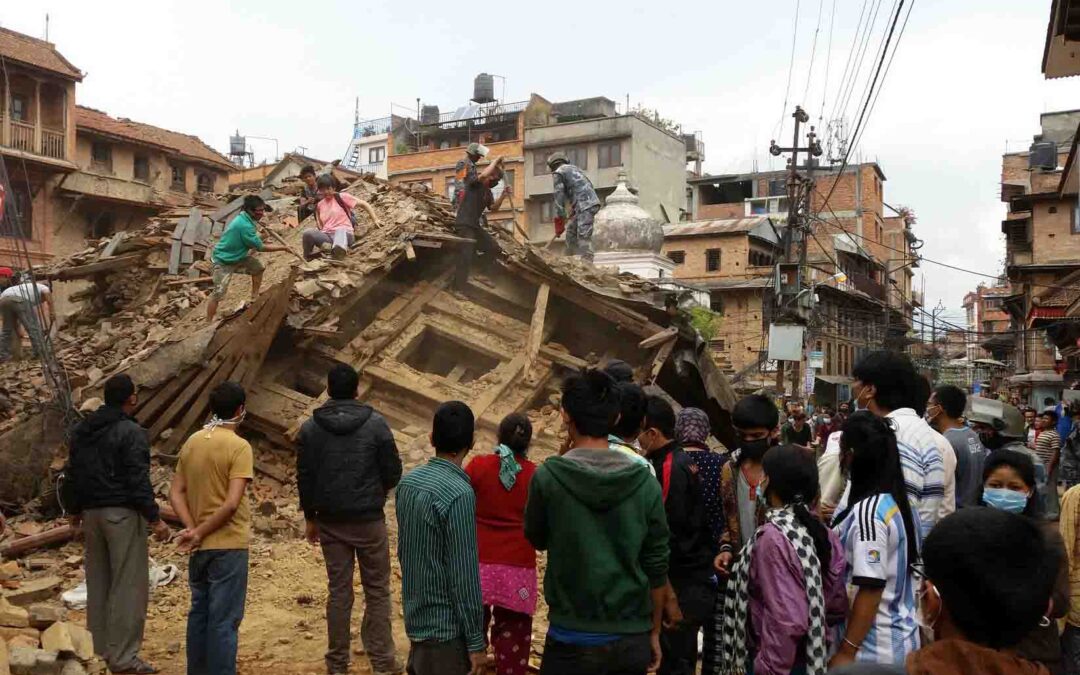
In its statement, the commission highlighted various ongoing human rights concerns, including discriminatory citizenship provisions in the new constitution, the continued failure to properly investigate alleged unlawful killings and excessive use of force during protests in the Terai region in 2015, violations of the economic, social, and cultural rights of earthquake victims (photo), and the need for credible transitional justice for conflict victims.
“As the principal independent constitutional body mandated to promote and protect human rights in the country, the NHRC plays a vital role in ensuring governmental accountability, and was well within its authority under both the Nepali Constitution and international standards when it delivered its submission to the UN Human Rights Council during the UPR,” said Nikhil Narayan, ICJ’s South Asia Senior Legal Adviser.
“The PM’s blatant attempt to intimidate the NHRC members for that submission is a flagrant violation of the government’s basic obligation to ensure the NHRC’s ability to carry out its work independently and without undue interference,” he added.
While it is entirely appropriate for the prime minister, like other stakeholders, to consult with the NHRC, such exchanges should be conducted with due respect for the legitimate exercise of the institution’s constitutional mandate, independently and free of undue interference or intimidation, the rights organizations said.
NHRC members present at the meeting uniformly expressed the sentiment that Oli, through his aggressive questioning and reprimanding of the commissioners over the contents of certain sections of its submission, was trying to intimidate the commission and in particular Commissioner Ansari, at whom the questioning appeared exclusively directed.
“The line and manner of questioning, including insinuations of bias and a lack of neutrality, particularly those aimed at Commissioner Ansari, the public face of the NHRC in Geneva, revealed an intent not of clarification, but intimidation that seeks to limit the role and effectiveness of the NHRC,” said Champa Patel, director of the South Asia Regional Office at Amnesty International.
Based on media accounts, discussions between the commissioners and the prime minister reflected an apparent attempt by the prime minister to discredit the commission’s statement by portraying it as the personal views of Commissioner Ansari alone or those of a nongovernmental organization.
Sharma promptly rebutted this characterization in a public statement on April 10, clarifying that “the statement delivered by NHRC Spokesperson Ansari at the UPR session was that of the commission and not her own,” and that “[i]mpunity has affected the overall promotion and protection of human rights.”
Amnesty International, Human Rights Watch, and the ICJ have consistently and repeatedly highlighted rights concerns similar to those the commission expressed in its UPR submission. The prime minister and government of Nepal should implement without delay the commission’s recommendations concerning discriminatory constitutional provisions, impunity for perpetrators of Terai violence on all sides, ensuring justice in the process of transition, and protecting the rights of earthquake victims.
The prime minister and the government of Nepal must publicly state that they will respect and guarantee the independence and integrity of the National Human Rights Commission, as the principal constitutionally mandated human rights body in the country, in accordance with international standards.
“The prime minister overstepped his authority, and his attempts to intimidate and intervene in the work of the NHRC contravene the Paris Principles, which clearly provide for the establishment of autonomous and independent institutions,” said Meenakshi Ganguly, South Asia director at Human Rights Watch. “The prime minister seems unwilling to recognize that the NHRC acts independently and is not an arm of the executive, subject to governmental dictates.”
Contact:
Nikhil Narayan, ICJ’s South Asia Senior Legal Adviser, t: +97-7-981-318-7821 ; e: nikhil.narayan(a)icj.org
Sam Zarifi, ICJ’s Asia Director, t: +66-807-819-002 ; e: sam.zarifi(a)icj.org
Additional information:
The Paris Principles set out internationally agreed upon standards designed to guide the work of national human rights institutions in a credible, independent and, effective manner. Crucially, the Paris Principles define the role, composition, status, and functions of these bodies, which include engaging with the UN and regional institutions and states’ obligation to ensure their real independence through a broad mandate, adequate funding, and an inclusive and transparent appointment process.
Furthermore, the UN Declaration on the Right and Responsibility of Individuals, Groups and Organs of Society to Promote and Protect Universally Recognized Human Rights and Fundamental Freedoms (Declaration on Human Rights Defenders) reaffirms the right of human rights defenders and institutions to advocate for human rights at the national and international level, including by engaging with the UN and other intergovernmental organizations.
Mar 31, 2016 | News
A Delhi Court acquitted human rights defender Irom Sharmila of an “attempt to commit suicide” charge. The government of Manipur must in turn immediately drop the charges against her, said the ICJ today.
Irom Sharmila, was charged under section 309 the Indian Penal Code.
She has been on a continuous hunger strike for over 15 years, demanding repeal of the Armed Forces Special Powers Act (AFSPA).
“This order is a welcome recognition that Irom Sharmila’s hunger strike is a form of peaceful dissent and protest protected by the right to freedom of expression,” said Sam Zarifi, ICJ’s Asia Director.
This week, Iron Sharmila was acquitted of the charges against her in Delhi. The case against her in Manipur is, however, still on-going.
The decision of the Delhi court is not binding on the courts in Manipur, but the charges are analogous, and similar reasoning should prevail, the ICJ says.
“The government of Manipur should drop the other charges under section 309 against her, and release her immediately and unconditionally,” said Zarifi.
On at least two occasions previously, courts in Manipur have directed that Irom Sharmila be released, saying that charges under section 309 were not applicable.
“The use of section 309 against Sharmila highlights the outdated and absurd nature of this law,” Zarifi said.
“The government should expedite the repeal of 309 and, instead of criminalizing Irom Sharmila’s protest, focus on the reason behind it and repeal the AFSPA,” he added.
The AFSPA gives armed forces a range of “special powers” in “disturbed areas”, which include the power to arrest without warrant, to enter and search any premises, and in certain circumstances, “fire upon or otherwise use force, even to the causing of death”.
Furthermore, under the AFSPA, governmental permission, or sanction, is required before any member of the armed forces can be prosecuted for crimes in a civilian court.
These provisions are inconsistent with a range of human rights, including the right to life and right to remedy.
They have also facilitated torture, rape and enforced disappearances in areas where operational, the ICJ notes.
“This law is inconsistent with India’s human rights obligations, and has led to human rights violations, wide-spread impunity, and immense grief and suffering in the areas where it operates”, Zarifi said.
“It is high time that it was taken off the books”.
Background
Irom Sharmila began a hunger strike in November 2000, calling for the repeal of the AFSPA, following the unlawful killing of 10 civilians by security forces purportedly acting under it in Malom.
She was arrested by the Manipur government in 2000 under section 309 of the Indian Penal Code, which prohibits an “attempt to commit suicide”.
Irom Sharmila has been in custody almost continuously since her initial arrest, and has continued her hunger strike.
She is fed through a nasal tube at the Jawaharlal Nehru hospital in Imphal where she is usually held.
The Delhi government also charged her on similar grounds with respect to an incident from 2006, when she held a protest in their jurisdiction.
In 2014, a Manipur court quashed charges under section 309 against Irom Sharmila, saying “The agitation of Irom Chanu Sharmila is a political demand through lawful means of repealing a valid statute. … she may continue with the fast till her demand is met politically by the Government”.
However, since she continued her hunger strike, she was immediately re-arrested on the same grounds.
In its 210th report, the Indian Law Commission has recommended that section 309 be repealed. In 2011, the Supreme Court said: “the time has come when [section 309] should be deleted by Parliament as it has become anachronistic.”
In 2014, the government announced that it was in the process of repealing 309.
The AFSPA applies to “disturbed areas” in the states of Arunachal Pradesh, Assam, Manipur, Meghalaya, Mizoram, Nagaland and Tripura.
An almost identical law is also applicable in Jammu and Kashmir.

Mar 21, 2016 | News
The Maldives must stop undermining the independence and integrity of the judiciary through arbitrary and politically motivated actions against judges, the ICJ said today.
“The ICJ visited the Maldives last month for the second time in a year, and we were dismayed to see that the Maldives government has continued to erode the rule of law and weaken the independence of the judiciary,” said Nikhil Narayan, ICJ’s Senior Legal Adviser for South Asia.
“The government must immediately stop targeting judges and other public officials with arbitrary criminal proceedings, threats, intimidation and harassment,” he added.
On 7 February, Magistrate Judge Ahmed Nihan was arrested, along with former Prosecutor General and former Criminal Court Judge Muhthaz Muhsin, in connection with an alleged ‘forged’ arrest warrant against President Yameen.
“The arrest of a judge for issuing a warrant, a function which is well within the ordinary powers and responsibilities of the judiciary, clearly violates basic principles of judicial independence,” Narayan further said. “The fact that the alleged warrant was against the President further suggests that Judge Nihan’s arrest was politically motivated.”
“Moreover, the severity of a charge of ‘terrorism’ for such an act, even if taken at face value, cannot reasonably be viewed as proportionate to the alleged offense,” he added.
On 16 March, more than a month after his arrest, Judge Nihan was charged under sections 4(a)(1)-(2) and 5(a)(2) of the Prevention of Terrorism Act, for attempting to unduly influence the state, attempting to create fear among the public, and attempting to forcefully disappear or hold a person hostage.
The Constitution of the Maldives does not provide immunity for the president from criminal accountability even while still in office.
The ICJ was also concerned to find during its visit that Maldivian authorities have continued to undermine the independence of the judiciary by using the threat of transfer or removal of judges as a tactic of political retribution, harassment and intimidation.
On 14 February, former Criminal Court Chief Judge Abdullah Mohamed was abruptly transferred from the Criminal Court to the Family Court following a sudden and late night meeting of the Judicial Service Commission (JSC), without being given an opportunity to appear on his own behalf during the meeting.
While the JSC has given no reasons for its decision, lawyers, human rights defenders and former government officials with whom the ICJ spoke suggested that the transfer had been taken in retaliation for Judge Abdullah’s failure to remand former Prosecutor General Muhsin following his arrest.
It was also suggested by those interviewed that a further motivation for the transfer was to ensure that Judge Abdullah could not indirectly influence the three-judge bench hearing the former Vice President’s criminal case in favor of the defendant. Judge Abdullah was reported to have close ties with both defendants.
In June 2015, Judge Azmiralda Zahir, one of only three female judges in the entire Maldivian judiciary and the only woman on the High Court, was arbitrarily and unexpectedly transferred by the Supreme Court from the Malé appellate bench to the southern regional bench, a transfer that amounts to a demotion, without formal notice or opportunity to challenge her transfer.
The Supreme Court has neither established clear criteria for its decision-making process in such matters nor informed Judge Zahir of the reasons for her transfer, of which she learned through media reports, despite repeated requests by her to both the Supreme Court as well as the JSC, the ICJ says.
“President Yameen’s government must quickly take genuine steps to restore the rule of law, strengthen the independence and integrity of the judiciary and restart the democratic transition process,” said Narayan.
Contact:
Nikhil Narayan, ICJ Senior Legal Adviser for South Asia, t: +977 9813187821 ; e: nikhil.narayan(a)icj.org
Read also:
Maldives: political crisis erodes rule of law and human rights
Maldives: arrest of Judge Ahmed Nihan further erodes judicial independence