Jul 22, 2015 | News
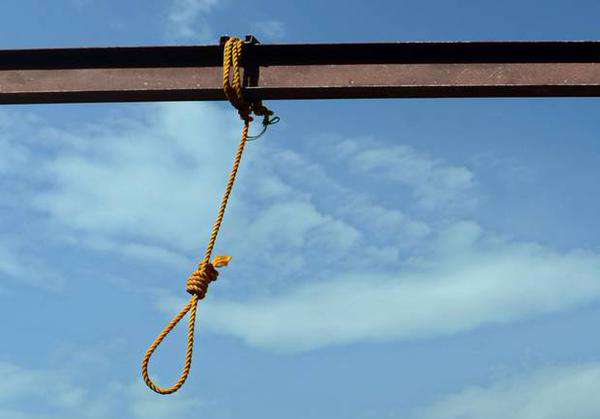
The Indian government should stay the imminent execution of Yakub Memon and commute his death sentence, said the ICJ today. The call comes after the Supreme Court dismissed his curative petition on 21 July.
Yakub Memon was convicted and sentenced to death for a range of offences, including conspiracy to commit terrorist acts, in connection with the deadly terrorist attacks in Mumbai in 1993, which killed more than 250 people and injured more than 700.
A court has authorized his execution for 30 July 2015, although Memon has submitted another mercy petition, according to media reports.
“The 1993 terrorist attacks in Mumbai were heinous criminal acts that devastated the lives of the victims and their families, and amounted to massive human rights abuses,” said Sam Zarifi, ICJ Director for Asia and the Pacific.
“But the death penalty is itself a denial of the right to life and the freedom from cruel and inhuman punishment. Executing Memon only adds to the sum total of inhumanity,” he added.
Yakub Memon was initially sentenced to death by a court set up under the Terrorist and Disruptive Activities Prevention Act, 1987 (TADA) in July 2007.
Yesterday’s Supreme Court decision was the latest in a series of denials of relief.
The Indian Supreme Court confirmed his conviction and sentence on appeal in March 2013.
Memon then filed a mercy petition before the Indian president, who denied it in April 2014.
He subsequently filed a review petition challenging his sentence before the Indian Supreme Court, which rejected the petition on 9 April 2015.
A court set up under the TADA convicted Yakub Memon for his involvement in the terror attacks in Mumbai in 1993.
The Indian government repealed the TADA in 1995, after sustained national and international criticism for its compatibility with human rights law, particularly the right to fair trial.
Provisions of the TADA defined offences vaguely and broadly; reversed the presumption of innocence in certain instances; allowed for long periods of pre-charge detention; made certain “confessions” to specific police officials admissible as evidence; and limited the right to appeal by only allowing appeals to the Supreme Court.
Several provisions of the TADA were later included in the Prevention of Terrorism Act (POTA), which was introduced in 2002 and repealed in 2004.
Subsequent amendments introduced some provisions of the POTA and TADA into the Unlawful Activities (Prevention) Act, which remains in force.
Yakub Memon was tried under provisions of the TADA as it was the law in force in 1993, when the terrorist attacks in Mumbai occurred.
India is a party to the International Covenant on Civil and Political Rights, which guarantees the right to a fair trial as well as the right to life and freedom from cruel, inhuman, or degrading treatment or punishment.
“India, consistent with its international legal obligations, may not impose the death penalty in situations where important safeguards to ensure a fair trial have not been met,” Zarifi said.
The UN Human Rights Committee, the supervisory authority for the ICCPR, has emphasized: “In cases of trials leading to the imposition of the death penalty scrupulous respect of the guarantees of fair trial is particularly important. The imposition of a sentence of death upon conclusion of a trial, in which the provisions of article 14 of the Covenant have not been respected, constitutes a violation of the right to life.”
The ICJ expresses its solidarity with the victims of the 1993 attack, and their families.
The ICJ opposes capital punishment in all cases without exception.
The death penalty constitutes a violation of the right to life and the right not to be subjected to cruel, inhuman or degrading punishment.
In line with the present international trend, the ICJ calls on India impose an official moratorium on the death penalty, with a view to abolishing the death penalty.
India resumed executions in 2012, after a gap of eight years. Since November 2012, two people have been executed, Ajmal Kasab and Afzal Guru. They were both charged and convicted for their role in terrorist attacks.
In December 2014, the UN General Assembly adopted a resolution, for the fifth time since 2007, emphasizing that the use of the death penalty undermines human dignity and calling on those countries that maintain the death penalty to establish a moratorium on its use with a view towards its abolition.
Some 117 UN Member States, a wide majority, voted in favor of a worldwide moratorium on executions as a step towards abolition of the death penalty.
Contact:
Sam Zarifi, ICJ Asia Pacific Regional Director (Bangkok), t: +66 807819002; email: sam.zarifi(a)icj.org

Jun 25, 2015 | News
While welcoming the recent momentum towards finalizing the drafting of a new Constitution, the ICJ said that the Constituent Assembly in Nepal must ensure strong and effective protections for all human rights, consistent with its international human rights obligations.
In addition, they also must ensure that the drafting process is fully inclusive and participatory,
After seven years of political impasse, the devastating earthquake of 25 April 2015 provided Nepali political leaders an opportunity to restore public faith in public authority by reinvigorating the constitutional process.
The country’s four major political parties have now apparently reached agreement on some previously contentious issues and developed a fast-tracked process for the adoption of a new democratic Constitution.
“The horrific earthquake and the government’s response to it has led to a renewed sense of urgency about finalizing and adopting a Constitution that will help create a stable, representative government structure in Nepal consonant with rule of law principles”, Sam Zarifi, ICJ’s Asia director. “The country’s political leaders have a unique responsibility, and opportunity, to adopt a strong, progressive and human rights-compliant constitutional text”.
International law and standards require meaningful public consultation through a transparent and inclusive process. However, the lack of transparency in the current fast-tracked process, combined with the accelerated timeframe, risks undermining people’s ability to participate effectively in the development of the Constitution.
“None of Nepal’s previous Constitutions were the result of meaningful consultation and public participation”, Zarifi said. “The current government must take immediate steps to consult and ensure the participation of all stakeholders, including marginalized groups and minorities”.
The new Constitution must serve to implement the full range of human rights guaranteed under international law. Specifically, while drafting the new constitution, the ICJ urges the Government of Nepal to ensure, among other things, that:
- The new constitution guarantees all of Nepal’s international human rights obligations;
- Permissible limitations on human rights and provisions derogating from rights during emergencies in the new Constitution comply with international human rights laws;
- There is no impunity for gross violations of human rights and serious violations of international humanitarian law committed during the armed conflict, and criminal law is applicable to acts committed at the time;
- The right to effective remedies and reparation for all human rights is recognized;
- Economic, social and cultural rights are recognized as justiciable; and
- Judicial independence is reinforced.
Contact
Nikhil Narayan, ICJ Senior Legal Advisor (Kathmandu), t: +977 9851061167; Email: nikhil.narayan(a)icj.org

Jun 8, 2015 | News
While the constitution of Pakistan’s first National Commission for Human Rights is welcome, the Commission risks being toothless unless its powers are extended to investigate human rights violations allegedly committed by the security agencies, the ICJ warned today.
The ICJ was informed that members of the National Commission for Human Rights were notified on 20 May 2015, three years after the National Commission for Human Rights Act was passed in June 2012.
“The establishment of a national human rights commission is a much-needed step for the promotion and protection of human rights in Pakistan,” said Sam Zarifi, ICJ’s Asia Director. “But for the new Commission to be able to assist the people of Pakistan, who face tremendous violations of their rights in terms of civil, political, social, economic, and cultural rights, it must be able to address the conduct of the country’s powerful military and security agencies.”
Under the National Commission for Human Rights Act, the Commission’s powers include investigating human rights violations, suo motu or on petition; visiting detention centers to ascertain the legality of the detention of detainees and ensure detainees are treated according to law; reviewing and suggesting amendments to Pakistan’s constitutional and legal framework on human rights; making recommendations for the effective implementation of international human rights treaties; and developing a national plan of action for the promotion and protection of human rights.
The law provides that while inquiring into complaints under the Act, the Commission shall have all powers of a civil court, including summoning and ensuring attendance of witnesses, receiving evidence on affidavits; and discovery and production of documents.
However, the Commission’s mandate is very limited where the armed forces or security agencies are accused of committing human rights violations, the ICJ says.
The law specifically states that “the functions of the Commission do not include inquiring into the act or practice of the intelligence agencies”.
Where the armed forces are accused of human rights violations, the Commission is only authorized to seek a report from the Government and make recommendations.
“The Commission’s restricted mandate over the armed forces, and especially the intelligence agencies, is of grave concern given that Pakistan’s military and intelligence services are accused of perpetrating gross human rights violations, including enforced disappearances, extrajudicial killings, and torture and ill-treatment,” Zarifi said. “A human rights commission that does not have jurisdiction over abuses by these actors risks being toothless and ineffective – and worst, a cover for continuing government inaction in response to these violations.”
“With these exceptions in place, it seems questionable that the Commission will get accreditation by the International Coordinating Committee of NHRIs, which is a requirement for a National Human Rights Institution to be recognized internationally,” he added. “The Pakistani government should ensure that the Commission complies with international standards so it can help protect and promote the rights of all people in Pakistan.”
Additional Information:
Justice (r) Ali Nawaz Chohan was appointed as the Chairperson of the Commission. Other members include one representative from each province; one representative each from the Islamabad Capital Territory and the Federally Administered Tribal Areas; the Chairperson of the National Commission on the Status of Women; and a member belonging from a religious minority community.
The UN Principles relating to the Status of National Institutions (Paris Principles) provide the minimum standards required by national human rights institutions to be considered credible and effective, and get accreditation by the International Coordinating Committee of NHRIs. Section 3 (a) (ii) of the Paris Principles states that a NHRI should have the power to hear a matter without higher referral over “any situation of violation of human rights which it decides to take up”.
Section 4 of the National Commission on Human Rights Act, 2012, provides the following procedure for appointment of members of the Commission: the Federal Government invites nominations for commissioners through public notice; the Prime Minister and Leader of the Opposition scrutinize the nominations; and the Prime Minister and Leader of the Opposition forward three names for each member of the commission to a parliamentary committee for confirmation. The law provides that the parliamentary committee would comprise of two members of the National Assembly (lower house) and two members of the Senate (upper house) –with two members each from the government and two from the opposition.
Contact:
Sam Zarifi, ICJ Asia Pacific Regional Director (Bangkok), t: +66 807819002; e: sam.zarifi(a)icj.org
Reema Omer, ICJ International Legal Adviser for South Asia (London), t: +44 7889565691; e: reema.omer(a)icj.org
May 21, 2015 | News
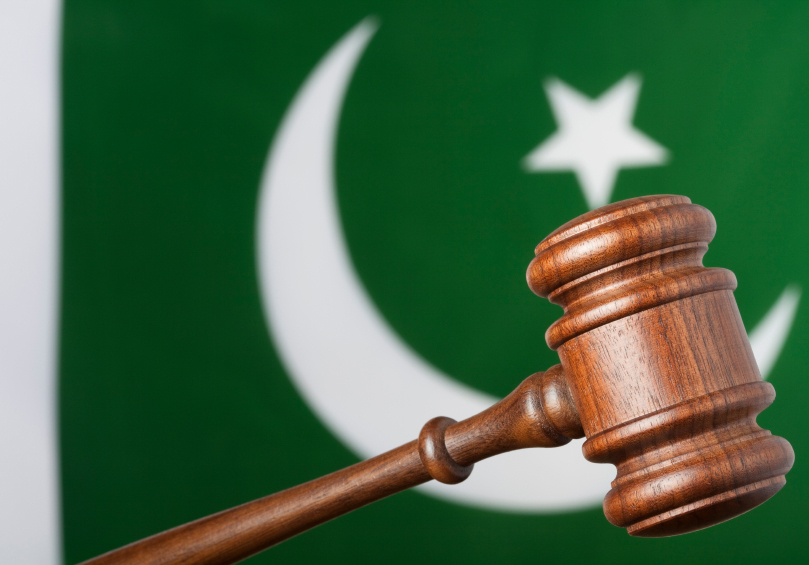
The ICJ and the Human Rights Commission of Pakistan (HRCP) have expressed deep concern that following the 21st amendment, juveniles suspected of committing offences related to terrorism could end up being tried by the newly constituted military courts.
Apr 11, 2015 | News
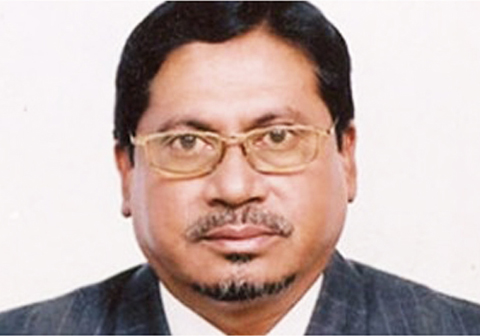
The ICJ today condemned the execution of Muhammad Kamaruzzaman following an unfair trial. The ICJ repeated its call for the authorities in Bangladesh to institute an immediate moratorium on executions with a view to abolishing the death penalty in the country.
Muhammad Kamaruzzaman (photo), a senior leader of the Jamaat-e-Islami party, was hanged today in Dhaka Central jail.
He had been sentenced to death by the Bangladesh International Crimes Tribunal (ICT) in 2013 for his role in the atrocities committed during the 1971 war for independence in Bangladesh.
His conviction and sentence were confirmed on appeal in 2014.
The government established the ICT in 2010, after amending the International Crimes (Tribunals) Act 1973.
The ICT has jurisdiction to try crimes against humanity, crimes against peace, genocide, violations of the Geneva conventions and any other crimes under international law.
The ICJ has previously raised concerns that trials before the ICT do not comply with international standards for fair trials.
According to the ICJ, there are serious procedural flaws at all stages: pre-trial release has been routinely and arbitrarily denied; witnesses have been abducted and intimidated; and there have been credible allegations of collusion between the Government, prosecutors and judges.
“This execution constitutes a violation of the right to life and freedom from cruel, inhuman and degrading punishment,” said Sam Zarifi, the ICJ’s Director for Asia and the Pacific. “The fact that this execution was based on a trial that was procedurally and substantively flawed is all the more regrettable and a perversion of justice.”
On 6 April 2015, the Supreme Court rejected Muhammad Kamaruzzaman’s petition for a review of his sentence.
The UN High Commissioner for Human Rights has denounced the death sentence, noting that his review petition was summarily rejected without consideration on merits.
Government officials have reported that Muhammad Kamaruzzaman decided to not seek a presidential pardon for his sentence, following the rejection of his review petition.
After Abdul Qader Mollah in 2013, Kamaruzzaman is the second individual to be executed after being sentenced to death by the ICT.
“The ICJ supports the rights of all victims of the atrocities committed during the 1971 war for independence in Bangladesh to truth and justice. But the death penalty is not the answer,” Zarifi added. “Bangladesh should impose an official moratorium on the death penalty, with a view to abolishing it outright.”
The ICJ opposes capital punishment in all cases without exception. The death penalty constitutes a violation of the right to life and the right not to be subjected to cruel, inhuman or degrading punishment.
In December 2014, the UN General Assembly adopted a resolution, for the fifth time since 2007, emphasizing that that the use of the death penalty undermines human dignity and calling on those countries that maintain the death penalty to establish a moratorium on its use with a view to its abolition.
A majority of 117 UN Member States voted in favor of a worldwide moratorium on executions as a step towards abolition of the death penalty, with only 37 opposed.
Contact:
Sam Zarifi, ICJ Asia Pacific Regional Director (Bangkok), t: +66 807819002; email: sam.zarifi(a)icj.org