Dec 17, 2020 | News
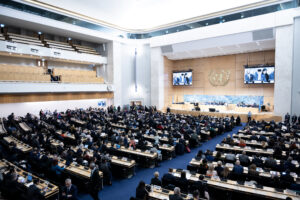
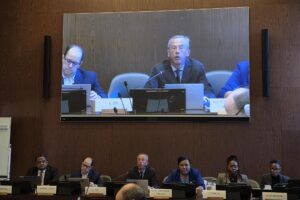
The ICJ and the Human Rights Joint Platform released today a joint statement, calling attention to a variety of obstacles faced by those seeking access to justice for human rights violations in Turkey.
The statement includes 13 recommendations to the Turkish government to ensure the justice system can uphold human rights.
In Turkey, victims of human rights violations remain unable to access justice, particularly effective remedies and reparation for violations of their rights, and there is little accountability of the State or State authorities for what are often serious violations.
Access to Justice has suffered by the immense damage done to the justice system in Turkey in recent years. The systematic undermining of judicial independence, and of the work of prosecutors and lawyers, through the widespread practice of arbitrary arrest and detention, unfounded prosecutions and dismissals of legal professionals as well as other human rights defenders, have fatally undermined the capacity of the justice system to provide reliable protection for human rights.
The Joint Statement is the fruit of three years of intensive work on access to justice for human rights violations in Turkey by the ICJ and IHOP.
During the last three years, the two organizations had the opportunity to gather the views of a wide range of stakeholders, including civil society, judges, lawyers, prosecutors, government officers, international experts, international organizations, human rights defenders and victims of human rights violations. The conclusions by ICJ and IHOP are a reflection of these opinions.
Drawing on this work and their decades-long experience in access to justice, the ICJ and IHOP have outlined the measures needed to begin to restore effective access to justice in Turkey.
The Joint Statement is part of the REACT project: implemented jointly by ICJ and IHOP, this project seeks to support the role of civil society actors in turkey in ensuring effective access to justice for the protection of human rights. This project is funded by the European Union. The views portrayed here do not necessarily reflect the opinion of the EU.
ICJIHOP-JointStatement-2020-ENG (download the statement in English)
ICJIHOP-JointStatement-2020-TUR (download the statement in Turkish)
Dec 15, 2020 | Agendas, Events
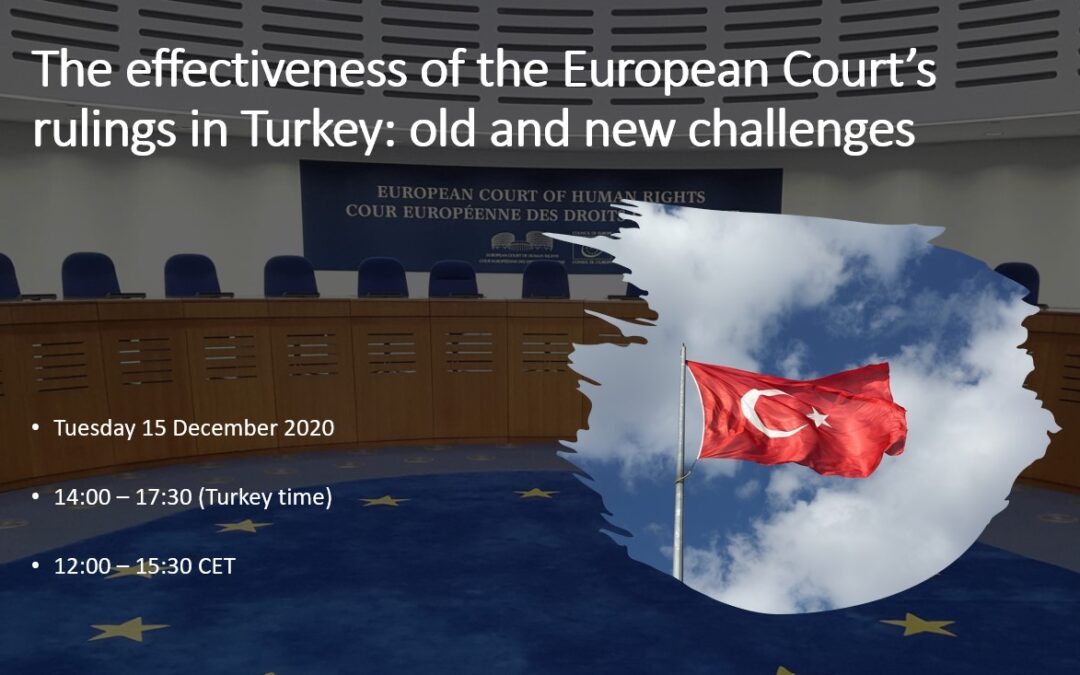
Join ICJ and IHOP in this online conference in which Turkish and international experts will discuss the current challenges in Turkey to promptly and fully implement the judgments of the Court and how to improve the execution of judgments in the Turkish national system.
Turkey is the Council of Europe member state with the third highest number of European Court of Human Rights judgments awaiting execution, after the Russian Federation and Ukraine. As a Party to the European Convention on Human Rights and founding member of the Council of Europe, Turkey has committed to implement all rulings of the Strasbourg Court, yet the results of this commitment are far from clear.
Implementation of the European Court judgments is a key indicator in Europe of a country’s commitment to human rights and the rule of law, and failure to implement judgments fundamentally undermines access to justice for victims of human rights violations by watering down the impact of their litigation before the Court.
Failure to implement judgments through general implementation measures reforming laws, policies and practices, also leads to persistent, repeated violations of the States’ obligations under the European Convention on Human Rights. This problem has existed for many years in Turkey, leaving long-standing systemic human rights problems unsolved. Recently civil society has denounced the Turkish authorities’ attempts to circumvent the general application of certain new key rulings of the European Court.
In this conference, Turkish and international experts will discuss the current challenges in Turkey to promptly and fully implement the judgments of the Court and how to improve the execution of judgments in the Turkish national system:
– Justice Egbert Myjer, Former Judge at the European Court of Human Rights and Commissioner of the ICJ,
– Prof. Philip Leach, Professor of Human Rights Law at Middlesex University
– George Stafford, Director at European Implementation Network
– Emma Sinclair-Webb, Turkey Director, Human Rights Watch
– Kerem Altıparmak, ICJ Legal Consultant
– Ayşe Bingöl Demir, Turkey Human Rights Litigation Support Project Co-Director, Lawyer
– Prof. Başak Çalı, Professor of International Law, Co-Director of the Centre for Fundamental Rights at the Hertie School
The event will be introduced and moderated by Feray Salman, General Coordinator of the Human Rights Joint Platform (IHOP), Roisin Pillay, Director of the ICJ Europe and Central Asia Programme, and Massimo Frigo, Senior Legal Adviser of the ICJ Europe and Central Asia Programme.<
TO REGISTER WRITE TO: ihop@ihop.org.tr
IHOPICJ-ZoomConference-ExecutionECtHRTurkey-Agenda-2020-ENG (download the agenda in English)
IHOPICJ-ZoomConference-ExecutionECtHRTurkey-Agenda-2020-TUR (download the agenda in Turkish)
The event is part of the REACT project: implemented jointly by ICJ and IHOP, this project seeks to support the role of civil society actors in turkey in ensuring effective access to justice for the protection of human rights. This project is funded by the European Union. The views expressed in the event do not necessarily reflect the opinion of the EU.
Nov 23, 2020 | Agendas, Events, News
The International Commission of Jurists and the Human Rights Joint Platform (IHOP) invite you to a Zoom workshop where Turkish and international experts will discuss the plight of violence against women in Turkey in light of the Council of Europe’s Istanbul Convention.
To participate, please register by writing an email to ihop@ihop.org.tr (the Human Rights Joint Platform).
Join our great panel of speakers:
– Dame Silvia Cartwright, ICJ Commissioner, former Governor-General and High Court judge of New Zealand, former CEDAW member
– Prof. Dr. Feride Acar, former Member of CEDAW, former Chair of GREVIO
– Zuzanna Warso, Lawyer, Helsinki Foundation for Human Rights of Poland
– Hülya Gülbahar, Women rights activist, Lawyer
– Nebahat Akkoç, Chair of KAMER Foundation
– Yasemin ÖZ, Lawyer, Kaos GL
– Feray Salman, General Coordinator of the Human Rights Joint Platform (IHOP)
– Massimo Frigo, ICJ Senior Legal Adviser
IHOPICJ-ZoomConference-WomenAccess2Justice-Agenda-2020-ENG (download the agenda in English)
IHOPICJ-ZoomConference-WomenAccess2Justice-Agenda-2020-TUR (download the agenda in Turkish)
The event is part of the REACT project: implemented jointly by ICJ and IHOP, this project seeks to support the role of civil society actors in turkey in ensuring effective access to justice for the protection of human rights. This project is funded by the European Union. The views expressed in the event do not necessarily reflect the opinion of the EU.

Nov 20, 2020 | News
The ICJ expressed today its deep concern at the arrest of some 26 lawyers and the investigation of around 100, including lawyers active in the defence of human rights, in South East Turkey.
The arrests and investigations are on charges of “establishing organizations in favour of an illegal organisation”, an offence often used to arrest human rights defenders in Turkey.
Around 26 lawyers were arrested this morning, 20 November, at around 5 a.m. and taken to the Anti-Terror Branch of the Police in Diyarbakır in South East Turkey as part of an investigation against the Democratic Society Congress. The ICJ understands that around 100 lawyers are concerned by this investigation that also concerns the Lawyers Association for Freedom (ÖHD).
“We are concerned that these lawyers have been arrested under vague charges that are often used in Turkey to target human rights defenders ,” said Roisin Pillay, Director of the ICJ Europe and Central Asia Programme,
“Unless law enforcement officers and prosecutors promptly substantiate such charges with adequate evidence, as well as demonstrating valid grounds for their detention, the lawyers must be released immediately.”
The ICJ will follow the case closely to ascertain whether international law and standards are respected in any action against the lawyers concerned.
“Lawyers are often subject to bogus charges in Turkey to curb their work, including in defence of human rights, and the exercise of their freedom of expression,” added Roisin Pillay.
The ICJ stressed that lawyers should never be subject to arrest for the legitimate exercise or defence of human rights or for the exercise of their professional functions. In the event that any of the lawyers arrested on 20 November are subject to charges for cognizable crimes consistent with Turkish and international law, they must be brought promptly before a court to further consider whether specific grounds exist to justify their continued detention. If charged, they must be ensured the right of fair trial by an independent and impartial court.
Background
It is understood from documents shared by unofficial sources that lawyers’ houses in Diyarbakır have been raided as a part of an ongoing investigation conducted against the Democratic Society Congress (“DSC”). DSC was established in 2007 and continued its work at the premises of Diyarbakır municipality in between 2011-2014. Its members included deputies, mayors, and councillors. The Speaker of the Parliament of the time, officially invited the DSC to the meetings of the Constitutional Reconciliation Commission in 2012. However, following the state of emergency declared in July 2016 a criminal investigation against the DSC was initiated. In 2018, the building of the DSC was raided under this investigation and information about the Congress was gathered during that operation. It is understood that the arrests were made based on information obtained in that search. In the search warrant issued by the public prosecutor today, security forces were asked to look for “organisational documents” such as books, journals, articles, newspapers etc. as evidence. From this warrant, it is clear that the operation conducted against lawyers are not related to acts of violence.
The detained lawyers and human rights defenders are: Lawyers Association for Freedom co-chair Av. Bünyamin Şeker, İHD Adıyaman branch head av. Bülent Temel, ÖHD and İHD member lawyers Abdulkadir Güleç, Eshat Aktaç, Serdar Talay, İmran Gökdere, Diyar Çetedir, Serdar Özer, Feride Laçin, Gamze Yalçın, Gevriye Atlı, Resul Tamur, Cemile Turhallı Balsak, Ahmet Kalpak, Devrim Barış Baran, Neşet Girasun, Sedat Aydın, Mahsum Batı, Şivan Cemil Özen and Haknas Sadak, former TTB Central Council Member and still Honorary Board member Dr. Şehmus Gökalp, HRFT Diyarbakır Representation Office employee, Social Service Expert Serkan Delidere, MED Prisoner and Convict Families Association of Legal and Solidarity Associations Federation (TUHAD-FED) executive Diyar Dilek Özer and federation member Leyla Ayaz, DİVES member Süleyman Okur, Bağlar Municipality Council member Panayır Çelik,
Contact:
Roisin Pillay, e: roisin.pillay(a)icj.org
Massimo Frigo, e: massimo.frigo(a)icj.org
Nov 12, 2020 | Agendas, Events, News
The International Commission of Jurists and the Human Rights Joint Platform (IHOP) invite you to a Zoom workshop where Turkish and international experts will discuss the legacy of the 2016-2018 state of emergency in Turkey for access to justice today.
To participate, please register by writing an email to ihop@ihop.org.tr (the Human Rights Joint Platform)
Join our great panel of speakers:
– Professor Sarah Cleveland, ICJ Commissioner
– Dr. Dilet Kurban, Hertie School
– Lawyer Ziynet Özçelik, Ankara Bar Association
– Dinçer Demirkent, Human Rights School
– Roisin Pillay, Director of ICJ Europe and Central Asia Programme
– Kerem Altiparmak, ICJ Turkey Legal Adviser
The workshop will address how state of emergency measures, such as dismissals and closures of legal entities, still impact on the human right of people in Turkey today.
The experts will discuss whether the remedies set up by Turkish authorities are up to standard with Turkey’s international human rights law obligations.
IHOPICJ-ZoomWorkshop-StateofEmergency-Agenda-2020-ENG (download the agenda in English)
IHOPICJ-ZoomWorkshop-StateofEmergency-Agenda-2020-TUR (download the agenda in Turkish)
The event is part of the REACT project: implemented jointly by ICJ and IHOP, this project seeks to support the role of civil society actors in turkey in ensuring effective access to justice for the protection of human rights. This project is funded by the European Union. The views expressed in the event do not necessarily reflect the opinion of the EU.