
Joint General Recommendation No. 31 of CEDAW and General Comment No. 18 of CRC on harmful practices, CEDAW/C/GC/31-CRC/C/GC/18, 14 November 2014
VI. Causes, forms and manifestations of harmful practices 17. The causes of harmful practices are multidimensional and include stereotyped sex- and gender-based roles, the presumed superiority or inferiority of either of the sexes, attempts to exert control over the...
ICJ presentation on access to justice to OECD Public Governance Committee
The ICJ’s Director of International Law and Protection Programmes, Alex Conte, will speak next week on access to justice at a meeting of the OECD Public Governance Committee.
The meeting Fostering Inclusive Growth and Trust in Justice Institutions: Access, Performance and Alternatives, will be held in Paris on 12 November 2014.
The ICJ’s presentation will focus on the key components of access to justice as a means of ensuring access by all to legal institutions capable of rending independent, impartial, binding and enforceable decisions.
It will also address the question of how, when such components are adhered to, trust in justice institutions is attained, from the perspective of the rule of law and public governance, from individuals’ perspectives and from investment and international perspectives.
ICJ convenes second expert roundtable on asylum claims based on sexual orientation and/or gender identity
Today, the International Commission of Jurists (ICJ) held its second expert roundtable on asylum claims based on sexual orientation and/or gender identity.
Participants included asylum judges, lawyers, and academics, as well as officials from the Office of the UN High Commissioner for Refugees and staff members from a number of civil society organizations.
Prof. Hathaway, Director of the Program in refugee and asylum law at the University of Michigan Law School, Prof. Anker, Director of the Harvard Law School’s Immigration and Refugee Clinical Program, and Judge Lars Bay Larsen, judge of the Court of Justice of the European Union, were the main speakers at the roundtable. Each delivered a presentation focussing on different normative aspects of asylum claims based on sexual orientation and/or gender identity.
The programme of the second expert roundtable, including a list of all participants, can be downloaded here.
This roundtable forms part of a broader ICJ’S project on international protection claims based on sexual orientation AND/OR gender identity. The programme of the first roundtable organised in Brussels last June can be downloaded here. The ICJ’s commentary on the related CJEU judgment in X, Y and Z v. the Netherlands can be downloaded here.
Resolutions on sexual orientation, civil society, adopted as Human Rights Council session ends
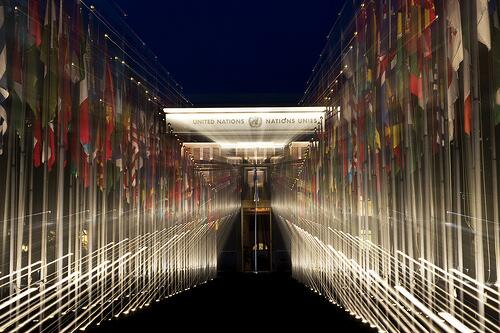
As the UN Human Rights Council approached the conclusion of its 27th regular session tonight, it adopted resolutions including on the topics of violence and discrimination on the basis of sexual orientation or gender identity and the protection of civil society space.
The resolutions on civil society space, and on non-violence and non-discrimination on grounds of sexual orientation or gender identity, were adopted after a series of hostile amendments were defeated.
The resolution on sexual orientation and gender identity, led by Brazil, Chile, Colombia and Uruguay, recognizes the worldwide problem of violence and discrimination, and builds on a resolution on the same subject from 2011. It calls for the High Commissioner for Human Rights to update the report produced under the 2011 resolution.
The States that supported the resolution on sexual orientation and gender identity overcame a series of amendments brought by Congo, Djibouti, Egypt, Malaysia, Nigeria, South Sudan, Uganda, and United Arab Emirates. The amendments would have among other things deleted all references to sexual orientation and gender identity from the resolution text, fundamentally changing its purpose, and perpetuating a complete denial of the very real violence and discrimination inflicted on lesbian, gay, bisexual, transexual and intersex people in all regions of the world.
The civil society space resolution, which was led by Chile, Ireland, Japan, Sierra Leone, Tunisia, draws on discussions at a Panel convened by the Council earlier in the year. It affirms the valuable contribution made by civil society in countries around the world, expresses concern about the threats and challenges faced by civil society, and requests the High Commissioner for Human Rights to produce practical recommendations for addressing these threats and concerns.
The texts of the resolutions (in the final draft form on which they were adopted – the official final versions are not yet available) are available here: Civil Society Resolution Sexual Orientation Gender Identity Resolution
A joint NGO press release on the resolution on sexual orientation and gender identity is available here.
The ICJ maintains databases of jurisprudence, legislation and UN action on the topic of sexual orientation and gender identity.
Recent News
 HRC61: ICJ Statement on attacks against the rule of law and independent legal professionals — highlighting situations in Afghanistan and Guatemala02 Mar 2026
 Iran/United States/Israel: Unlawful attacks must cease01 Mar 2026
 The Use of Anti-Terrorism Courts to Suppress Dissent in Venezuela27 Feb 2026
 South Sudan: Extend UN Investigations Amid Deteriorating Human Rights Crisis19 Feb 2026