Dec 12, 2017 | News
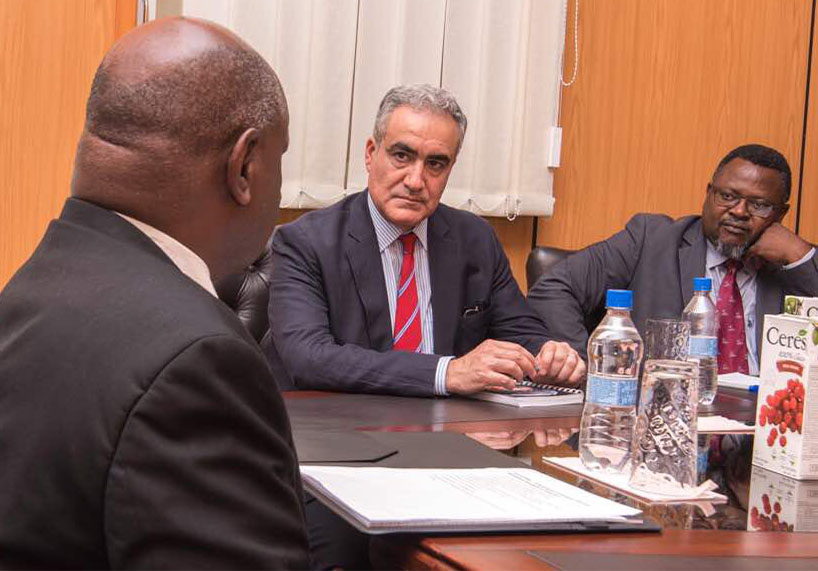
Zimbabwe’s new government must urgently restore the rule of law and ensure free and fair elections, said the ICJ at the conclusion of a visit by its Secretary General Sam Zarifi to the country.
After the recent military intervention in Zimbabwe that led to the ouster of former President Robert Mugabe, the government headed by Emmerson Mnangagwa is expected to remain in office until new elections, currently scheduled to be held before August 2018.
“The change in leaders in Zimbabwe presents an opportunity to reverse decades of damage to the rule of law and respect for human rights in the country,” said Zarifi, ICJ’s Secretary General.
“As an immediate matter, the new government must take concrete steps that demonstrate it is committed to observing the country’s obligations under international law, as well as the human rights protections of Zimbabwe’s own constitution,” he added.
The ICJ calls on the government of Zimbabwe to:
- ensure free and fair elections are held as scheduled, and the country’s electoral laws comply with the Constitution and international standards;
- accelerate measures to ensure compliance of all relevant laws with the country’s constitution and its international legal obligations;
- ensure the independence of the judiciary and the legal system;
- ensure all those arrested and detained during the military intervention are identified and brought immediately before an independent and impartial tribunal, and, where charged with recognized crimes, are given fair trials;
- investigate all allegations of unlawful deaths, torture or ill-treatment, and arbitrary arrest and detention;
- ensure the military acts within strict legal bounds, operates under civilian control, and does not engage in arrest and detention of civilians;
- ensure all security forces, including the police and the military, are subject to accountability and receive proper and adequate training in performing their duties in conformity with international human rights standards; and
- provide credible mechanisms to combat corruption in all branches of government, and ensure that anti-corruption efforts are not politicized.
“Zimbabwe’s military has played a central role in the country’s affairs for decades, while civilian institutions have suffered under intense political pressure, at great cost to the people of the country,” Zarifi said.
“Zimbabwe should grasp this opportunity to demonstrate that it can and will strengthen the rule of law and respect for human rights in order to improve the lives of all people in the country.”
Contact
Arnold Tsunga, ICJ-Director: Africa Regional Programme, t: +27716405926, e: arnold.tsunga(a)icj.org
Nov 24, 2017 | News
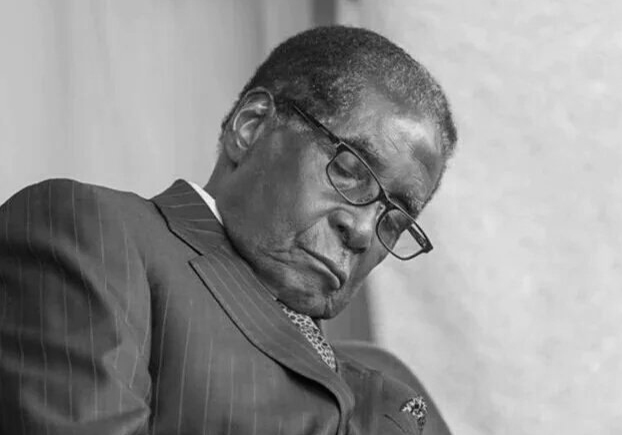
As Zimbabwe prepares to swear in Emmerson Mnangagwa following the resignation of long time Zimbabwe President Robert Mugabe, the ICJ today called on the incoming authorities to immediately act to restore the rule of law and ensure the full observance of human rights in the country.
“As the events of the past few days propel Zimbabwe away from decades of authoritarian rule replete with human rights violations, the incoming administration must side with the people of Zimbabwe and seize this unique opportunity to ground its governance in the rule of law,” said Arnold Tsunga, Director of ICJ’s African Regional Programme.
The ICJ indicated that it is particularly concerned at the intrusion of armed forces in the political process and governance, which is prohibited by the Zimbabwean Constitution and contravenes core rule of law principles concerning the respective functions of the military and civilian authorities.
Emphasizing that the rule of law and respect for the national Constitution remain paramount even as Zimbabweans decide on their future, the ICJ called on the Zimbabwean National Army (ZNA) to refrain from any further activity that intrudes into functions of governances that are within the proper purview of civilian authorities.
“It amounts to setting a dangerous precedent for Zimbabwe and the region to allow or excuse such incursions at the whim of armed forces,” Tsunga added.
Under the African Charter on Democracy, Elections, and Governance adopted by African Union Member States, Zimbabwe is required to “institutionalize constitutional civilian control over the armed and security forces to ensure the consolidation of democracy and constitutional order”.
The ICJ further expressed concern at emerging reports of usurpation of police duties by the ZNA, which has allegedly carried out a series of arbitrary arrests and detention of civilians.
“Due process guarantees and fair trial rights are particularly vulnerable when armed forces decide to assume police functions,” Tsunga said.
Recalling that international law does not allow or encourage impunity for serious human rights violations that constitute crimes, such as torture and extra-judicial killings, the ICJ stressed the importance of ensuring accountability for human rights violations as Zimbabwe transits to into a new era of governance.
Contact:
Arnold Tsunga, ICJ-Director Africa Regional Programme, t: +27716405926, or +254 746 608 859 ; e: arnold.tsunga(a)icj.org
Solomon Ebobrah, Senior Legal Advisor, ICJ Africa Regional Programme, t: +234 8034927549 ; e: Solomon.ebobrah(a)icj.org

Jul 25, 2017 | News
The ICJ is concerned with the passing of Constitutional Amendment no. 1 of 2017 by the House of Assembly of Zimbabwe on 25 July 2017.
The House of Assembly voted with over two-thirds majority for the amendment of the Zimbabwean Constitution.
The amendment grants the President the right to appoint to office, the Judge President of the High Court, the Deputy Chief Justice and the Chief Justice of Zimbabwe.
Before this amendment the Judicial Services Commission (JSC) spearheaded the process of selection and appointment of judges with the President merely appointing from candidates recommended to him by the JSC.
The enactment of this Bill to law is likely to have a negative effect on the public’s perception of the judiciary. It also has the potential to affect the impartiality and the independence of the judiciary.
“The amendment to the 2013 Constitution will negatively affect public confidence in the judiciary. Not only is this a departure from a position that was in line with international standards and best practices; the amendment is likely to have a ripple effect on the judiciary,” said Arnold Tsunga, the ICJ Africa Director.
“In the short term the executive now has a carrot, which it can dangle in front of judicial officers. If a judge wants to be promoted to Judge President, Deputy Chief Justice or Chief they may have to align themselves with the thinking of the executive. Over time, given the central roles that these three office bearers play in the appointment process and thought leadership, Zimbabwe is likely to have a very executive minded bench,” he added.
To this end the ICJ calls upon the government of Zimbabwe to reconsider its decision to amend the Constitution in the manner proposed in the bill.
The procedure in section 180 of the constitution had distinguished Zimbabwe’s appointment procedures as exemplary in the region.
It is unfortunate that through this amendment the country has failed to consolidate this leadership position.
The amendment would be regressive and poses a real risk of undermining the essential role of the judiciary in securing the rule of law in Zimbabwe.
Zimbabwe-Constitutional Amendment-News-web stories-2017-ENG (full statement, in PDF)
Mar 21, 2017 | News
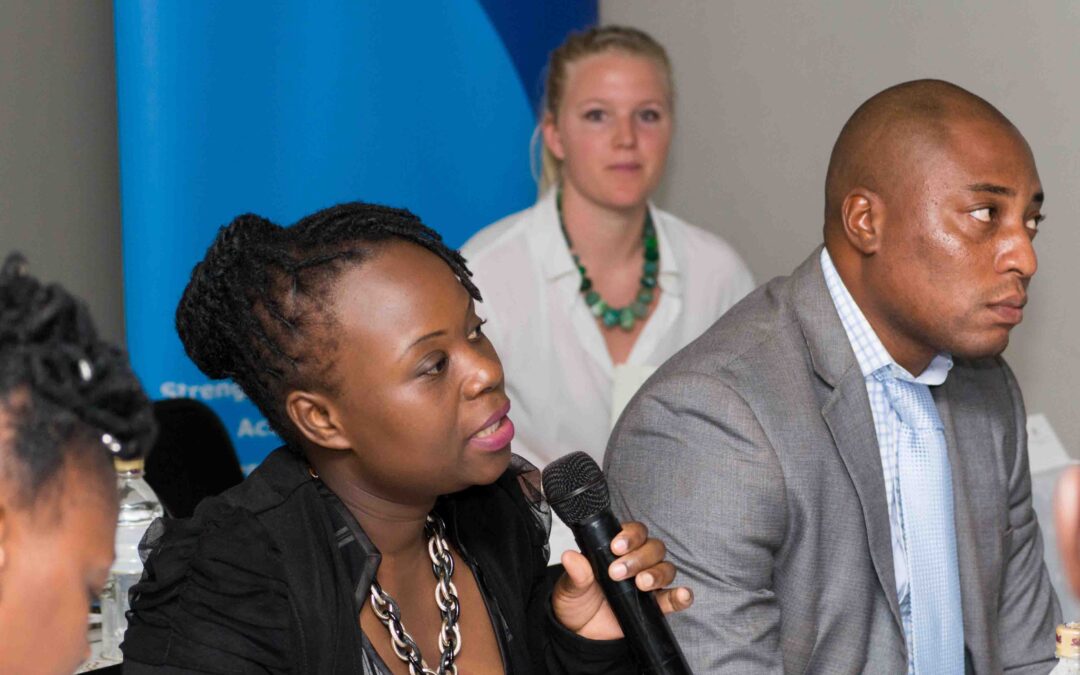
The National Prosecuting Authority (NPA) held a consultation conference on case and docket management system in Harare on 21 March 2017. The ICJ provided technical support.
The consultation conference was intended to validate findings of the field and desk research conducted in respect of case management in Zimbabwe.
The ICJ engaged consultants reviewed the case and docket management system as it relates to other justice actors such as the judiciary, police, prisons and legal aid providers.
The case and docket management assessment was measured against regional and international comparative standards.
The assessment focused on how case and docket management systems address the rights of vulnerable groups’ including women, unrepresented minors, juveniles and persons with disabilities.
From these consultations and field work, the NPA will be supported with a comprehensive, specific and detailed proposal with practical steps for adopting an improved case and docket management system.
Further, the findings will make recommendations on strengthening the case management system in Zimbabwe and how to address the needs and interests of the various justice sector stakeholders.
The consultation conference was attended by the Acting Prosecutor General, Deputy Prosecutor General, National Director of Public Prosecutions, senior law officers, senior magistrates, clerks (criminal courts), representatives from Zimbabwe Prisons and Correctional Services (ZPCS), Zimbabwe Republic Police (ZRP), and Zimbabwe Human Rights Commission (ZHRC).
Civil society representatives included directors and senior staffers from Zimbabwe Human Rights NGO Forum, Zimbabwe Lawyers for Human Rights (ZLHR) among others.
This consultation was held with financial support from the Foreign Commonwealth Office (FCO) Magna Carta Fund, through the British Embassy in Harare.
Contact
Arnold Tsunga, ICJ Regional Director for Africa, t: +27 716 405 926, e: arnold.tsunga(a)icj.org

Dec 17, 2016 | News
The ICJ jointly convened a two-and-a-half day training workshop with the Raoul Wallenberg Institute.
The meeting congregated lecturers from the four law schools from around the country to look into options for the development of clinical legal education programmes.
One of the objectives of the meeting was to acquaint and equip law schools with the various models and approaches to clinical legal education.
To that end the workshop covered issues including: an overview of clinical legal education programmes and models for law clinics; developing clinical legal education curricula; clinical/interactive teaching methods; and practical placement of students with local, regional and international organizations.
This initiative was a first step in a Clinical Legal Education Programme which is a response by the ICJ to concerns from judicial officers on the quality of legal graduates.
The clinical legal education programme is part of a broader ICJ intervention, which is looking to better equip and motivate lawyers to effectively contribute to the maintenance of the rule of law and preservation of human rights.
The process was jointly facilitated by Professor David Mcquoid-Mason (President, Commonwealth Legal Education Association) and Alex Conte of the ICJ and the University of Sussex.
The 17 participant academics (ten males and seven females) who attended the meeting where drawn from the four law schools in Zimbabwe: the Faculty of Law from the University of Zimbabwe; the Herbert Chitepo Law School at the Great Zimbabwe University; the Zimbabwe Ezekiel Guti University; and the Midlands State University.
Additional participants where drawn from the Institute for Peace, Leadership and Governance, at Africa University.
The workshop was held with the support of the European Union Delegation to Zimbabwe (EU).

![Smoke rises after an Israeli air strike on the village of Taybeh in southern Lebanon [Source: Al Jazeera]](https://www.icj.org/wp-content/uploads/2026/03/Screenshot-2026-03-20-at-15.56.24-300x200.png)