Oct 22, 2016 | Advocacy
South Africa’s announced withdrawal from the International Criminal Court (ICC) is a slap in the face for victims of the most serious crimes and should be reconsidered, African groups and international organizations with a presence in Africa said today.
The groups urged other African countries to affirm their commitment to the ICC, the only court of last resort to which victims seeking justice for mass atrocities can turn.
“South Africa’s intended withdrawal from the ICC represents a devastating blow for victims of international crimes across Africa,” said Mossaad Mohamed Ali of the African Center for Justice and Peace Studies. “As South Africa is one of the founding members of the court, its announcement sends the wrong message to victims that Africa’s leaders do not support their quest for justice.”
South Africa publicly announced on October 21, 2016, that it has notified the United Nations secretary-general of its intent to withdraw from the ICC.
However, there are significant questions as to whether South Africa abided by its domestic law in withdrawing without approval of its own parliament, the groups said.
“Modern day South Africa is testament to the importance of struggle for international justice, given the history of people of South Africa supported by the international community in defeating the scourge of apartheid and systematic racism. It is inconceivable that this country is now at the forefront of efforts aimed at undermining the international framework to tackle impunity,” said Arnold Tsunga, Director of ICJ’s Africa Regional Programme.
“We call on the government of South Africa to reconsider taking this enormous backwards step in the struggle for justice and to restore its place as a leader in promoting accountability for the most serious crimes and human rights abuses,” he added.
“South Africa’s purported withdrawal – without parliamentary approval or public debate – is a direct affront to decades of progress in the global fight against impunity,” said Stella Ndirangu, from the Kenyan section of the International Commission of Jurists.
“We call on the South African government to reconsider its rash action and for other states in Africa and around the world to affirm their support for the ICC.”
“We do not believe that this attempt to withdraw from the ICC is constitutional and it is a digression from the gains made by South Africa in promoting human rights on the continent,” said Jemima Njeri of the Institute for Security Studies’ International Crime in Africa Program.
“The South African government is sending a signal that it is oblivious to victims of gross crimes globally.”
South Africa’s announcement that it will withdraw from the ICC comes after the country’s court of appeal concluded the government violated its international and domestic legal obligations in not arresting ICC fugitive Sudanese President Omar al-Bashir in June 2015, when he visited South Africa.
A government appeal was pending, but on October 21, 2016, the government indicated that it has withdrawn the appeal.
“The decision by Pretoria to withdraw from the Rome Statute is a response to a domestic political situation,” said George Kegoro of the Kenya Human Rights Commission.
“Impervious to the country’s political history and the significance of the ICC to African victims and general citizenry, the South African leadership is marching the country to a legal wilderness, where South Africa will be accountable for nothing.”
South Africa is the first country to notify the UN secretary-general of withdrawal from the ICC.
Contact:
Arnold Tsunga, Director of ICJ’s Africa Regional Programme, t: +27-716-405-926 ; e: arnold.tsunga@icj.org
south-africa-withdrawal-of-icc-advocacy-2016-eng (full text in PDF)
Oct 16, 2016 | News
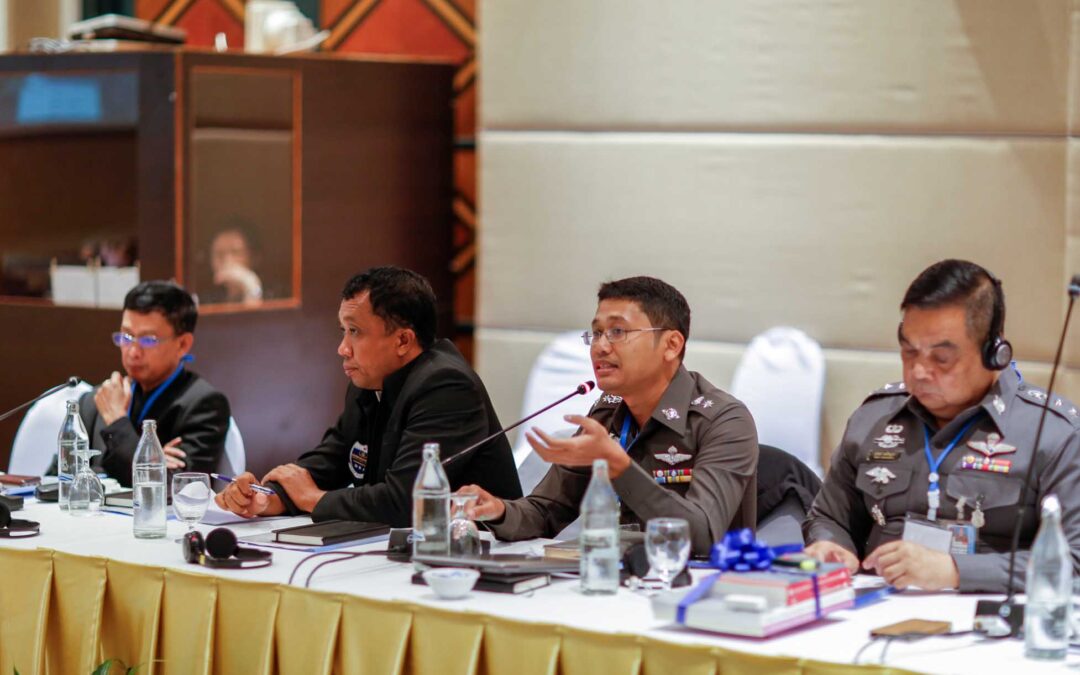
On 15-16 October 2016, the ICJ held a Workshop for justice sector actors in Thailand’s deep South on “the Use of Telecommunication Evidence in Criminal Cases” for police, special investigators, prosecutors and lawyers.
The attendees included 30 public prosecutors, police and Department of Special Investigation (DSI) officials, 15 defense lawyers, and observers from the Thailand Institute of Justice (TIJ) and the Asia Foundation.
This is the sixth ICJ workshop related to strengthening the administration of justice in the deep South since 2011.
The objective of the workshop, held in Hat Yai, was to discuss how telecommunication information may be used as part of an effective criminal investigation, and the ways in which prosecutors, lawyers and judges should consider approaching the use of this kind of information as evidence at trial.
The Workshop observed a moment of silence for the passage of the late King Rama IX.
Kingsley Abbott, ICJ Senior International Legal Adviser, opened by saying that the use of telecommunication evidence is one tool that can be used in an effective investigation of serious criminal and security related cases followed by fair trials.
However, it is important to ensure that the acquisition and use of this information as evidence fully respects the right to privacy guaranteed by the International Covenant on Civil and Political rights (ICCPR) to which Thailand is a State Party.
The ICJ firmly believes that respect for human rights and the rule of law must be the bedrock in countering terrorism and violent crime.
Speakers at the Workshop included Judge Wasupatchra Jongpermwattanapol, Chief Judge of the Office of the Chief Justice Region 9; Mr Sophon Tipbamrung, Executive Director of the Special Office of Criminal Litigation 3, Region 9; Lt. Col. Thatphichai Chanwaranon, Deputy Superintendent of the Investigation Bureau, Southern Border Provinces Police Operation Center and national expert on the use of telecommunication evidence; and Mr Nigel Povoas, a British Barrister with experience leading high profile international serious and organized crime cases and an expert in the use of telecommunication evidence.
Background
Previous ICJ workshops in the deep South have included:
- The Protection of Victims in Criminal Cases (2015)
- The Principle of Inadmissibility of Evidence Obtained by Unlawful Means and Hearsay Evidence: International Standards Compared to Thai Law (2014)
- Rule of Law and Strengthening the Administration of Justice in the Context of Habeas Corpus in the Southern Border Provinces (2012)
- Rule of Law and Strengthening the Administration of Justice in the Context of Bail in the Southern Border Provinces (2012)
- Rule of Law and Strengthening the Administration of Justice in the Context of the Application of Emergency Laws in the Southern Border Provinces (2011)
Oct 16, 2016 | News
The ICJ today condemned the execution of Asadul Islam, leader of Jamayetul Mujahideen Bangladesh (JMB), a banned Islamist group.
Asadul Islam was hanged on Sunday for his alleged role, along with seven other JMB leaders, in a 2005 bus bombing that killed two lower court judges.
He was tried and convicted in absentia in 2005, later detained in July 2007, and had been in prison since that time. In August 2016, the Bangladesh Supreme Court dismissed his final appeal, paving the way for his execution this week.
“The death penalty is the ultimate form of cruel and inhuman punishment, and does not serve the interests of justice,” said Sam Zarifi, Asia-Pacific Regional Director for the ICJ.
“While Bangladesh authorities have an obligation to bring to justice perpetrators of such terror attacks, this must be done through fair trials and the rule of law,” he aded.
The International Covenant on Civil and Political Rights (ICCPR), to which Bangladesh is a party, protects the right to life and the right to a fair trial.
As the UN Human Rights Committee has emphasized, because of its irreversible nature it is particularly important that all applicable fair trial standards be scrupulously observed in capital punishment cases.
Failure to respect such standards constitutes a violation of both the right to life (ICCPR article 6) and the right to a fair trial (ICCPR article 14).
The ICJ is particularly concerned that his trial in absentia impaired Islam’s right to a fair trial, as the right to be present at trial and present a defence are critical elements of a fair trial.
The ICJ opposes capital punishment in all cases without exception.
The ICJ considers that the death penalty constitutes a violation of the right to life and the right not to be subjected to cruel, inhuman or degrading treatment.
In December 2014, the UN General Assembly by an overwhelming margin adopted a resolution, for the fifth time since 2007, emphasizing that the use of the death penalty undermines human dignity and calling on those countries that maintain the death penalty to establish a moratorium on its use with a view towards its abolition.
“Especially where the death penalty is concerned, the State must take extra care to ensure that the trial process meets the highest standards of fairness and due process under international law, as there is no possibility of reversal once carried out,” Zarifi said.
“Bangladesh has an unfortunate record of administering unfair trials in terrorism cases, including those involving the death penalty,” he added. “Asadul Islam’s case raises serious concerns that the Bangladesh authorities once again failed to meet their fair trial obligations under international law, and therefore this death sentence should not have been carried out.”
The ICJ calls on Bangladesh to impose an official moratorium on the death penalty and take prompt measures towards its abolition.
Contact
Sam Zarifi, ICJ Asia Pacific Regional Director (Bangkok), t: +66 807819002; email: sam.zarifi(a)icj.org
Oct 15, 2016 | News
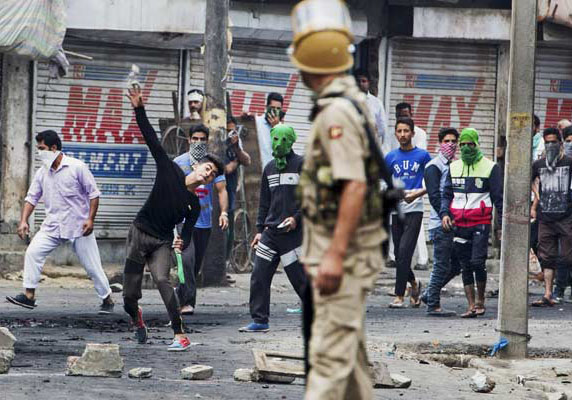
Authorities in Jammu and Kashmir should end the use of the Jammu and Kashmir Public Safety Act (PSA) to arbitrarily detain people, including children, the ICJ, Amnesty International India and Human Rights Watch said today.
The PSA violates international due process standards and should be repealed, the groups said.
“The use of the PSA to detain people, particularly children, violates a range of human rights, and its increasing use in recent weeks undermines the rule of law and further entrenches impunity in Kashmir,” said Sam Zarifi, ICJ Asia Director.
“Police should end the use of the PSA; if people are suspected of committing offences, they should be properly charged and given fair trials,” he added.
The PSA is an administrative detention law that allows detention without charge or trial for up to two years in some cases.
Following an amendment in 2012, the PSA expressly prohibits the detention of anyone under 18.
Between 9 July – when protests and violent clashes broke out in the state following the killing of a leader of the armed group Hizbul Mujahideen – and 6 October, authorities have detained over 400 people, including children, under the PSA, according to media reports.
“The government has a responsibility to address violence during protests, but indefinitely detaining people without charge only adds to the lawlessness,” said Meenakshi Ganguly, South Asia Director, Human Rights Watch. “Detaining children under the PSA is not only unlawful, but could have negative repercussions for years.”
On 16 September, Rayees Ahmad Mir, who is 16 years old according to his school records, was arrested in Baramulla district under ordinary criminal procedure for allegedly throwing stones at security forces.
Two days later, an executive official passed an order to detain him under the PSA, to preclude his release on bail.
The order incorrectly stated that he was 18 years old. Rayees Mir’s family challenged the order before the Jammu and Kashmir High Court, producing documents that proved he was only 16.
On 7 October, the court stated that Rayees Mir should be treated according to juvenile justice rules, as there was prima face evidence that he was a minor, and ordered his transfer to a juvenile home. The PSA detention order has not yet been quashed.
An official at the Kot Bhalwal jail said on 14 October that the prison authorities had not yet transferred Rayees Mir, as they had not received a copy of the court order.
Mir Shafqat Hussain, a lawyer representing many PSA detainees, said: “In a number of cases the families have not been informed about the grounds of detention. Arresting minors and booking them under PSA is definitely going to have an effect on their psyche. From schools and colleges, these boys end up in jails where they will be kept together with adults. It is definitely going to have an adverse effect on them.”
On 18 August, Waheed Ahmed Gojree, who is 16 according to his school records, was arrested in Kupwara district and detained at a police station.
According to his family, the police at first told them he would be released the next day, but then said that he had been detained under the PSA.
He was first taken to a jail in Baramulla, and then to the central jail in Jammu.
An official at the central jail confirmed that he had been detained under the PSA.
The family has not yet received a copy of the detention order, or been formally informed about the grounds of Waheed Gojree’s detention.
The authorities appear to have not taken his age into account before issuing his detention order.
“The central and state governments have spoken about following the principle of insaniyat, or humanity, in dealing with the crisis in Jammu and Kashmir,” said Aakar Patel, Executive Director at Amnesty International India. “But detaining children under the PSA is neither humane nor lawful.”
Amnesty International India, Human Rights Watch and the ICJ believe that anyone detained under the PSA must either be charged promptly with a recognizable criminal offence or prosecuted in a fair trial, or else be released.
Not prosecuting people suspected of committing offences can also violate the human rights of the victims of these offences.
Contact
Sam Zarifi, ICJ Asia & Pacific Regional Director (Bangkok), t: +66 807819002; email: sam.zarifi(a)icj.org
india-joint-statement-psa-news-press-release-2016-eng (full text of statement, in PDF)
Oct 13, 2016 | News, Publications
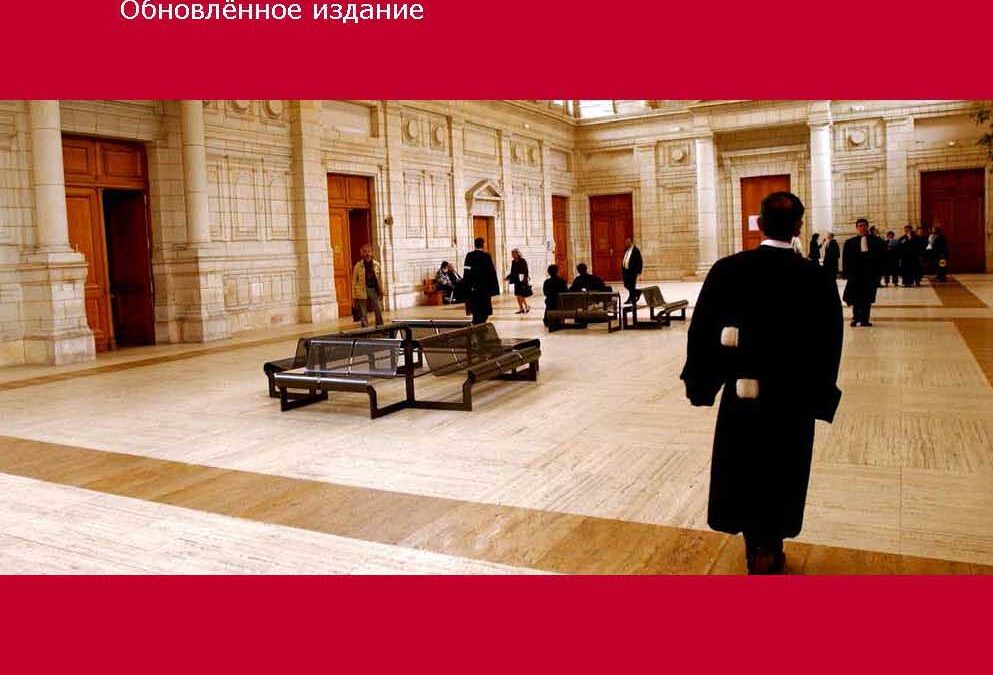
The ICJ published today a Russian translation of its Practitioners Guide no. 6 on Migration and International Human Rights Law.
This updated edition of the Practitioners Guide analyses the protection afforded to migrants by international law and the means to implement it at national and international levels.
The ICJ Guide synthesizes and clarifies international standards on key issues, in particular:
- the rights and procedures connected to the way migrants enter a country and their status in the country of destination;
- human rights and refugee law constraints on expulsion;
- the human rights and refugee law rights linked to expulsion procedures;
- the rights and guarantees for administrative detention of migrants;
- rights connected to work and labour; and
- rights to education, to the highest attainable standard of health, to adequate housing, to water, to food, and to social security.
universal-pg-6-migration-publications-practitionners-guides-series-2016-rus (full guide in Russian, PDF)