Jan 18, 2018 | News
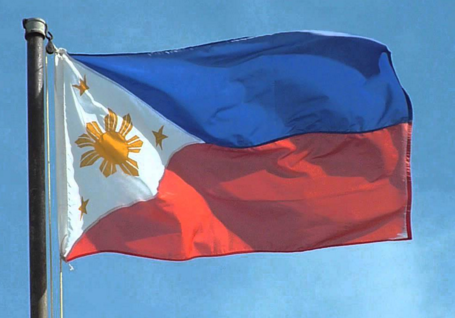
The ICJ today expressed concern about the impacts on freedom of expression of a decision by the Securities and Exchange Commission (SEC) that would shut down Rappler, an online news source in the Philippines.
On 11 January, after a year-long investigation, the SEC of the Philippines revoked the Certificate of Incorporation of Rappler, Inc.
The ICJ is concerned that the decision to target Rappler may have been retaliatory and politically motivated.
The investigation was initiated by a letter transmitted by the Solicitor General to the SEC requesting the latter to investigate allegations of foreign ownership of Rappler, Inc.
“The cancellation of the Certificate of Incorporation of Rappler, Inc. constitutes a significant restriction on freedom of expression,” said Emerlynne Gil, ICJ’s Senior International Legal Adviser.
“The Courts must give rigorous scrutiny both to the specific basis the authorities offer for the decision concerning Rappler, Inc., and the scope and application of the foreign equity provision more generally, including an inquiry whether the law is being applied in a proportionate and non-discriminatory manner,” she added.
If such restrictions on freedom of expression are enforced with the actual aim of punishing or preventing critical political expression, or are enforced only against some political or other opinions and not others, this would violate the rights to freedom of expression and non-discrimination under the Philippine Constitution and international human rights law, the ICJ adds.
Further, under international human rights law any restriction on freedom of expression must be limited to what is necessary and proportionate both in relation to the legitimate aim it pursues and in relation to its impacts.
For instance, it would not be consistent with international human rights law to prohibit all foreign ownership of mass media or mass-media-owning entities, unless the government was able to demonstrate that the same legitimate aim could not reasonably be achieved by prohibiting only majority foreign ownership.
Contact
Emerlynne Gil, ICJ Senior International Legal Adviser for Southeast Asia, t: +662 619 8477 (ext. 206) ; e: emerlynne.gil@icj.org
Philippines-Rappler-News-Web stories-2018-ENG (Full text in PDF)
Jan 16, 2018 | News
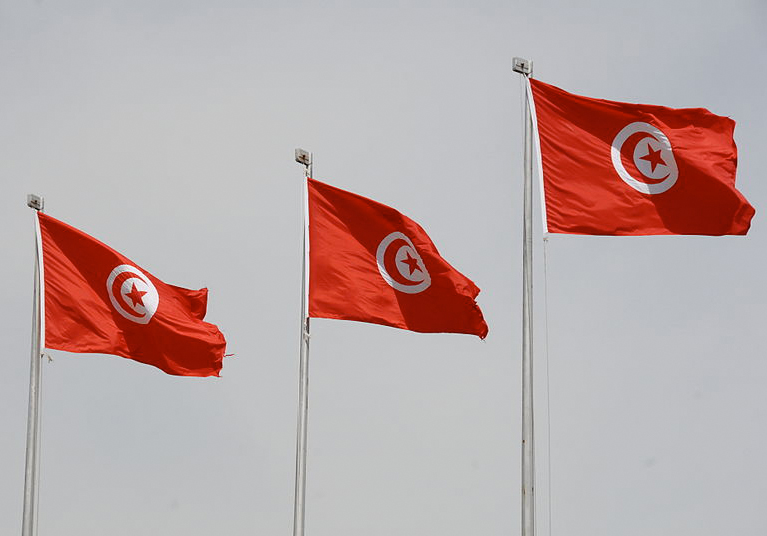
Tunisian authorities must respect and protect the right to freedom of assembly and of expression of everyone in Tunisia, the ICJ said today.
They also must regulate the use of force against protestors according to international law standards, and ensure that those who are arbitrarily deprived of their liberty, including as a result of the legitimate and peaceful exercise of these rights, are immediately released, the ICJ added.
Over the past week, protesters took to the streets challenging the government’s recentausterity measures, including a rise in prices and tax increases.
Sporadic cases of violence, looting and vandalism occurred, including incidents that targeted police stations.
Over 800 people were subsequently arrested. Further, one protestor died on Monday 8 January 2018 in Tebourba, 30km west of Tunis.
“The acts of sporadic violence committed by a few people do not justify the scale or character of interference with the freedom of peaceful assembly of others,” said Said Benarbia, Director of the ICJ Middle East and North Africa Programme.
“The Tunisian authorities must immediately release those arrested for peacefully exercising their right to freedom of assembly, and provide due process guarantees to those allegedly responsible for punishable acts,” he added.
In policing public assemblies, Tunisian authorities should comply with their obligations under international human rights law, including not only the freedoms of expression, association and peaceful assembly, but also those relating to the rights to life, to be free from torture or other cruel, inhuman or degrading treatment or punishment, and the right to liberty and security of person (and to be free from arbitrary arrest or detention).
To that end, security forces should use force in accordance with the principles of necessity, proportionality, and precaution, and in a manner that respects and ensures people’s lives and safety.
The ICJ expresses its concern that violations of human rights of this kind would take place now despite the many reform efforts during the seven years since the revolution.
Contact
Said Benarbia, Director of the ICJ Middle East and North Africa Programme, tel: +41 798783546, e-mail: said.benarbia(a)icj.org
PR Recent Events in Tunisia ARA (Arabic version in PDF)
Jan 8, 2018 | Advocacy, Cases, Legal submissions, News
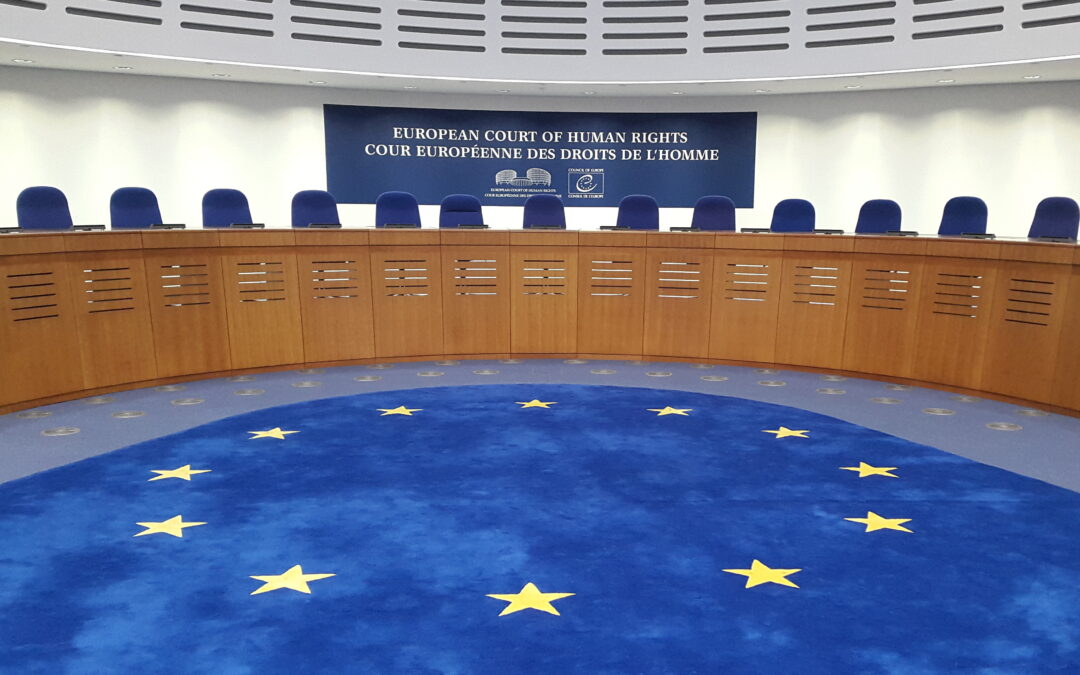
The ICJ and other organizations have intervened today before the European Court of Human Rights challenging expulsions of asylum seekers from Hungary to Serbia.
The International Commission of Jurists (ICJ), the European Council on Refugees and Exiles (ECRE) and the Dutch Council for Refugees have submitted today a third party intervention before the Grand Chamber of the European Court of Human Rights in the case of Ilias and Ahmed v. Hungary.
The case challenges the systematic practice by the Hungarian authorities to send back to Serbia foreign nationals asking for asylum under the pretention that Serbia is a safe third country in which to ask for international protection.
The intervening organizations have argued before the Court that:
- a removal that exposes an applicant to the risk of refoulement and deprives them of protections under international and EU law, is prohibited regardless of whether the decision was taken on the basis of the safe third country concept or the country was included in a “safe third country” list.
- International law requires, inter alia, a rigorous scrutiny of the applicant’s arguable claim of potential prohibited treatment, access to an effective remedy following a negative decision, and access to the rights under the 1951 Refugee Convention.
- Application of the safe third country concept for EU Member States is contingent on the applicant being admitted to the territory and having effective access to a fair asylum procedure in the safe third country
- An assessment of whether restrictions on the freedom of movement of migrants, imposed in a border or international zone, amount to deprivation of liberty under Article 5 ECHR must be based on the impact of these measures on the individuals concerned.
Hungary-ECtHR-amicusbrief-cases-Ilias&Ahmed-ICJ&others-2018-ENG (download the third party intervention)
Background
Ilias Ilias and Ali Ahmed, both Bangladeshi nationals, fled their home country in arrived at the Hungarian-Serbian border on 15 September 2015 after having briefly crossed through Serbia during their trip.
Having asked immediately for asylum in Hungary, they were confined for days in a transit zone, a ” a confined area of some 110 square metres, part of the transit zone, surrounded by fence and guarded by officers”.
Their applications were rejected on the very same day of their application on the grounds that they could have asked for asylum in Serbia, considered by Hungary a safe third country, and appeals were rejected.
They were removed to Serbia on 8 October 2015.
Dec 15, 2017 | Advocacy, Cases, Legal submissions
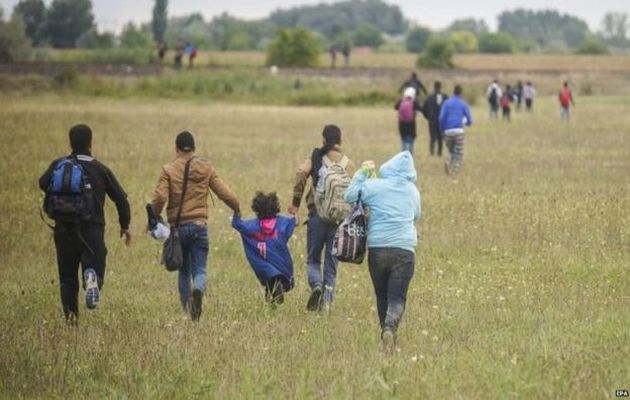
The ICJ, together with other NGOs, intervened before the European Court of Human Rights in MA v Poland, concerning interim measures to protect applicants for asylum at the Polish-Belarus border.
The case concerned a family of asylum seekers who sought to apply for international protection in Poland, at a border crossing with Belarus, but were repeatedly turned away by border guards. The European Court granted interim measures indicating that the applicants should not be returned from Poland to Belarus, and that their asylum application should be examined by the Polish authorities. These interim measures were not complied with.
In their third party intervention in the case, the ICJ, ECRE, AIRE Centre and the Dutch Council for Refugees emphasised the binding nature of the obligation to comply with interim measures of the European Court of Human Rights, supported by the jurisprudence of the Court and by comparative standards of other international human rights mechanisms.
They further submitted that, where interim measures relate to children, irrespective of whether the children are applicants in the case, the State must abide by the measure indicated with special diligence and take the appropriate protective measures which the age, level of maturity, environment and experiences of the children require.
Poland-MA-ECtHR-amicus-ICJ&others-final-eng-2017 (download the intervention)
Dec 13, 2017 | News
The ICJ today urged the Government of Singapore to end the harassment of human rights defender Jolovan Wham and to amend laws used to restrict his work and the work of other human rights defenders.
Jolovan Wham is to appear at a pre-trial conference on seven criminal charges today. Jolovan Wham is a well-known human rights defender in Singapore who previously worked for a group that advocates for the rights of migrant workers and plays a leading role against the death penalty and the promotion of freedom of expression.
“These charges are not only an impermissible attack on Jolovan Wham individually, but human rights work more generally in Singapore,” said Sam Zarifi, Secretary General of ICJ.
“It is an unmistakable message to other human rights defenders that they may face the same harassment and intimidation if they continue their work,” he added.
Jolovan Wham was charged in connection with facilitating a Skype conference with Hong Kong human rights defender, Joshua Wong Chi-Fung, on “civil disobedience and democracy in social change”.
Other charges relate to his organizing peaceful public assemblies, allegedly without permits, to protest the death penalty and to commemorate the day when 16 individuals were arrested by Singapore authorities in 1987 and detained without trial under the country’s Internal Security Act (ISA).
He was also charged for refusing to sign statements prepared by police authorities when he was taken in for investigation on 28 November 2017.
Most of the charges against Jolovan Wham were for alleged violations of Section 7 of the Public Order Act, which makes an offence the holding of a public assembly or public procession without a permit.
The ICJ considers that aspects of Section 7, particularly as applied to the charges against Jolvan Wham, may serve to impermissibly restrict the exercise of the right to freedom of peaceful assembly in Singapore, which is protected under international standards.
“Singapore should immediately act to amend the Public Order Act with a view to ensuring that it is consistent with international human rights law and standards, particularly as they relate to the exercise freedoms of expression and assembly,” Zarifi said.
Under international law and standards, prior authorization of assemblies is generally inconsistent with the right to freedom of peaceful assembly, except for narrow exceptions.
The UN Special Rapporteur on the rights to freedom of peaceful assembly and association, in a 2012 report, clarified that prior authorization should generally not be necessary.
At most, it should require notification that is not unduly burdensome, so as allow the authorities to facilitate the exercise of the right to peaceful assembly and to take measures to protect public safety and public order and the rights and freedoms of others.
The Declaration on the Right and Responsibility of Individuals, Groups and Organs of Society to Promote and Protect Universally Recognized Human Rights and Fundamental Freedoms (Declaration on Human Rights Defenders), emphasizes the right of human rights defenders “to meet or assemble peacefully” and “to study, discuss, form and hold opinions on the observance, both in law and in practice, of all human rights and fundamental freedoms, and through these and other appropriate means, to draft public attention to those matters
Contact:
Emerlynne Gil, ICJ Senior International Legal Adviser, t: +66 840923575 ; e: emerlynne.gil(a)icj.org
Singapore-Wham harrassment-News-Press releases-2017-ENG (full story with additional info, in PDF)