Apr 12, 2017 | News
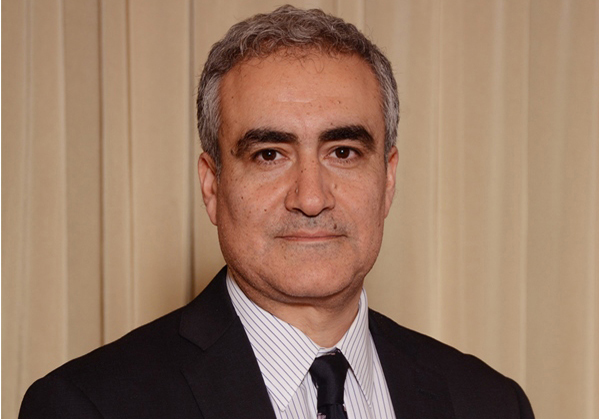
Saman Zia-Zarifi is the new Secretary General of the ICJ. He replaces Wilder Tayler who retired in March, the Geneva-based organization announced today.
An Iranian-American lawyer, Zarifi joined the ICJ in 2012 as Regional Director for the Asia & Pacific Region based in Bangkok, Thailand. Prior to joining the ICJ, he served as Amnesty International’s director for Asia and the Pacific from 2008 to 2012, and before that worked at Human Rights Watch from 2000.
“Wilder Tayler masterfully guided the ICJ for the past 10 years and expanded its reach across the world in perilous times,” said Prof Robert Goldman, the ICJ’s Acting President.
“The Commission is fully confident that Sam Zarifi will build on this legacy by bringing to the ICJ as a whole the energy and vision he deployed so successfully in the Asia Pacific region.”
The ICJ, founded in Berlin in 1952, is one of world’s oldest human rights organizations.
Composed of 60 accomplished jurists from all regions of the world, the ICJ has for 65 years devoted itself to promoting the observance of the rule of law and the legal protection of human rights.
The ICJ Secretary General leads the implementation of the Commission’s objectives through the ICJ’s International Secretariat.
The International Secretariat operates in locations around the world including Guatemala, Zimbabwe, South Africa, Tunisia, Belgium, Switzerland, Lebanon, Pakistan, India, Nepal, Myanmar, and Thailand.
“There is an urgent need to stand up against the recent attacks on the concept of rule of law and the international human rights legal framework that the ICJ was instrumental in building,” said Zarifi.
“We will challenge human rights violations and work with lawyers, judges and human rights defenders around the world to bring perpetrators to account and ensure victims receive justice,” he added.
The ICJ currently works globally and in all regions to protect human rights, defend the rule of law and strengthen the independence and accountability of judges and lawyers.
“Around the world, authoritarian rulers and demagogues are cynically using fearmongering and discriminatory language to justify erosion of the rule of law and weaken an independent judiciary,” Zarifi said.
“An increasing number of powerful politicians around the world attack international law when it suits them as a means of gaining more authority and hurting the most vulnerable segments of society.”
“The international legal framework has failed to address some very serious human rights crises and it has allowed gross economic inequalities to develop, but the answer is to fix the system and improve it, not just destroy it and allow the most powerful to rule without any legal restrictions,” Zarifi added.
The ICJ has been instrumental in developing many of the key universal and regional human rights legal standards, ranging from treaties on torture and enforced disappearances, the right to remedy and reparation, and most recently, seeking accountability for abuses by business entities.
It has provided both conceptual depth and practical advance to questions such as the justiciability of economic, social and cultural rights; human rights in states of emergency and other crises; and the fight against impunity.
“The ICJ’s experience over the past six decades has clearly shown that countries that respect the rule of law and protect human rights benefit from greater security and more sustainable economic development,” Zarifi said.
“There is greater demand than ever for the ICJ’s factual, law-based analysis of human rights problems and most important, how to improve the situation.”
Sam Zarifi was born and raised in Tehran, Iran. He moved to the United States in 1983 and completed a BA from Cornell University in 1990 and a Juris Doctor from Cornell Law School in 1993, and after a stint as a corporate litigator in Los Angeles, an Ll.M. in Public International Law from New York University School of Law in 1997.
He was Senior Research Fellow at Erasmus University Rotterdam from 1997 to 2000, where he co-edited Liability of Multinational Corporations under International Law (Kluwer 2000) as well as several other publications on the subject.
Contact
Sam Zarifi, ICJ Secretary General, t: +41 22 979 3825, c: +41 79 726 44 15 ; e: sam.zarifi@icj.org

Mar 28, 2017 | News
Legislation adopted today by the Pakistani Parliament allowing civilians to be tried by military tribunals in secret proceedings is a serious blow to human rights and rule of law in the country, the ICJ said.
“The nationwide concern at a number of recent attacks in the country seems to have once again been misdirected toward a seriously flawed counter terrorism strategy that weakens the rule of law and the struggle for justice,” said Sam Zarifi, ICJ’s Asia director.
“Pakistan must reject this counter productive strategy and instead strengthen its judicial process and law enforcement in line with its domestic law and international obligations,” he added.
The Pakistani Parliament voted to amend the 1973 Constitution and the Army Act, 1952, to again allow military tribunals to try civilians who allegedly belong to “a terrorist group or organization misusing the name of religion or a sect” and are suspected of committing a number of offences, including: abducting any person for ransom; raising arms of waging war against Pakistan; causing any person injury of death; using or designing vehicles for terrorist attacks; creating terror or insecurity in Pakistan; and attempting, aiding or abetting any of these acts.
The use of military courts to try civilians is inconsistent with international standards.
The ICJ has also documented serious fair trials violations in the operation of military courts from January 2015 to January 2017, including: denial of the right to counsel of choice; failure to disclose the charges against the accused; denial of a public hearing; failure to give convicts copies of a judgment with evidence and reasons for the verdict; and a very high number of convictions based on “confessions” without adequate safeguards against torture and ill treatment.
“Militarizing the judicial process will not lead to justice and it will not effectively counter terrorism; this is the lesson from around the world,” Zarifi said. “It has not proven to do so in Pakistan in the past, and there is nothing to indicate that it will do so now.”
“Instead, secret military trials of civilians that flout even basic fair trial guarantees will further erode the rule of law and weaken the government’s role in providing justice and protecting the rights of people in Pakistan,” he added.
Contact
Sam Zarifi, ICJ Asia Pacific Regional Director (Bangkok), t: +66 807819002; e: sam.zarifi(a)icj.org
Reema Omer, ICJ International Legal Adviser for Pakistan (London), t: +447889565691; e: reema.omer(a)icj.org
Background
Military courts constituted under the 21st Amendment convicted 274 people in the two years during which they were in operation, from 7 January 2015 to 6 January 2017.
Of those 274 convictions, 161 people were sentenced to death and 113 people were given prison sentences. At least 21 people given death sentences have been executed by hanging.
The enabling legislation for these courts lapsed on 6 January 2017 pursuant to a two-year sunset clause.
The ICJ opposes the use of the death penalty under any circumstances as a violation of the right to life and freedom from cruel, inhuman or degrading treatment.
Jan 25, 2017 | News
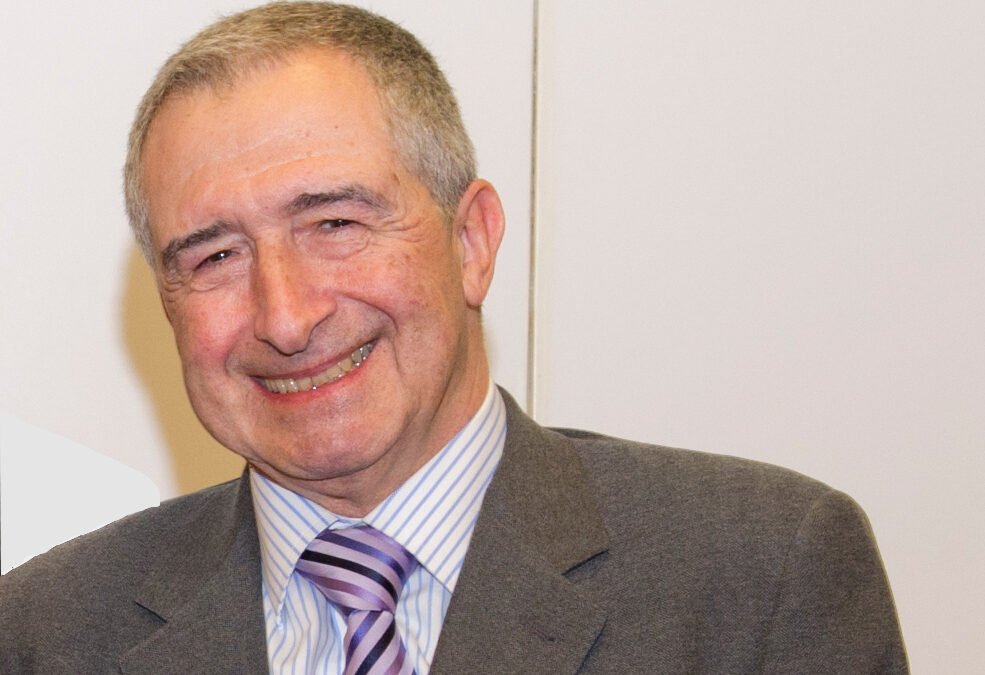
The ICJ President Professor Sir Nigel Rodley passed away today in Colchester (UK) at the age of 75, following a short illness.
Elected President of the ICJ in 2012, he was serving his third term as such. He had been first elected to the Commission in 2003 and re-elected in 2008 and 2013. He served as a member of the Executive Committee from 2004-2006.
He was also a Council member of JUSTICE, the British Section of the International Commission of Jurists.
Professor Sir Nigel Rodley was a towering figure in the area of international human rights, playing many roles as an educator, as an academic, as an activist and as an advocate.
He established and expanded the first human rights law department at Amnesty International in the 1970s and 1980s, leading the organization’s work on the development and promotion on international legal standards.
He spent eight years, from 1993 to 2001, as the United Nations’ Special Rapporteur on Torture, visiting dozens of countries and working tenaciously toward the eradication of torture worldwide.
From 2001 to 2016 he served on the UN Human Rights Committee, including a period as it Chairman, where he often served as the intellectual author of the Committee’s most prominent accomplishments.
Thousands of students of international human rights law – many of today’s leading human rights defenders – were mentored by him at the University of Essex.
He published extensively in the human rights field, and was one of the world’s leading experts on the question of torture and the treatment of prisoners under international law.
“Sir Nigel was a stalwart of the human rights movement and his firm commitment to the promotion of human rights and rule of law has had a deep and lasting impact that will continue in his absence,” said Wilder Tayler, the ICJ Secretary General.
Jan 11, 2017 | News
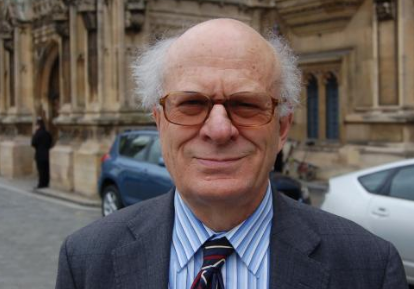
It is with great sadness that the ICJ mourns the loss of Honorary Member Lord William Goodhart QC who passed away on 10 January at the age of 83.
Lord Goodhart, from the United Kingdom, was a long-serving friend of the ICJ, having served as a Commissioner from 1993-2007, on the Executive Committee and also as ICJ Vice-President. from 2007-2009 Lord Goodhart also served as the Chairman of JUSTICE, the ICJ’s independent UK Section.
Lord Goodhart was a Liberal Democrat peer of the UK House of Lords, a Member of the All Party Parliamentary Humanist Group and an eminent human rights barrister. He was knighted in 1989 and made a Life Peer in 1997 as Baron Goodhart of Youlbury.
Our thoughts and condolences are with his family and many friends.
Jan 5, 2017 | News
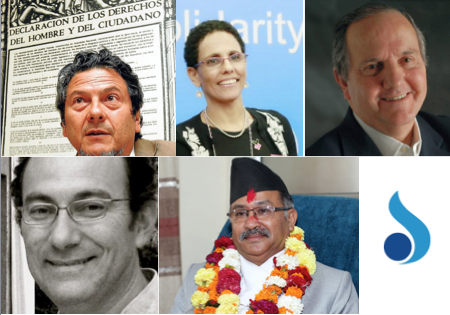
Mr Reed Brody (United States), Ms Roberta Clarke (Barbados/Canada), Professor Juan Mendez (Argentina), Mr Alejandro Salinas Rivera (Chile) and Justice Kalyan Shrestha (Nepal) have recently been elected to join the ICJ.
The new Commissioners were elected by a ballot of existing Commissioners, which took place between November and December 2016.
Mr Reed Brody (United States) has 25 years on the cutting edge of the human rights movement. Mr Brody has worked, amongst other things, as a freelance activist, New York Assistant Attorney General, Director of the ICJ’s Centre for the Independence of Judges and Lawyers, Executive Director of the International Human Rights Group (now Global Rights), Director of the Human Rights Division of the UN Observer Mission in El Salvador, Deputy Director of the UN Secretary General’s Investigative Team in the Democratic Republic of Congo and at Human Rights Watch, including on such cases as those against the former Chilean dictator, Augusto Pinochet, and the former dictator of Chad, Hissène Habre.
Ms Roberta Clarke (Barbados/Canada) has an extensive background in working on human rights issues, particularly in relation to women’s rights and social and economic rights. Ms Clarke has held a number of Academic roles including Research Assistant, Junior Research Fellow, Assistant Lecturer and now Visiting Fellow at the University of West Indies. Ms Clarke has also worked as an Attorney in private practice and in a number of civil society and intergovernmental organization roles including as the Project Coordinator of the Women and the Law Project with the Caribbean Association for Feminist Research and Action in Trinidad and Tobago, Social Affairs Officer on the Gender and Development Programme for the UN Economic Commission for Latin America and the Caribbean, Regional Programme Director for UNIFEM/UN Women’s Caribbean Office and then for UN Women’s Regional Office for Asia and the Pacific.
Professor Juan Méndez (Argentina) is currently the UN Special Rapporteur on Torture and Other Cruel, Inhuman and Degrading Treatment or Punishment, having been appointed in November 2010 and then having had his mandate renewed in 2014. Professor Méndez is also a Professor of Human Rights Law in residence at the Washington College of Law. Previously Professor Méndez has worked in a number of human rights roles including as general counsel of Human Rights Watch, Executive Director of the Inter-American Institute of Human Rights in Costa Rica, Professor of Law and Director of the Center for Civil and Human Rights at the University of Notre Dame in Indiana, President of the Inter-American Commission on Human Rights of the Organization of American States, Special Advisor to the Prosecutor of the International Criminal Court, as Co-Chair of the International Bar Association Human Rights Institute, as President of the International Center for Transnational Justice (ICTJ) and as Kofi Annan’s Special Advisor on the Prevention of Genocide.
Mr Alejandro Salinas Rivera (Chile) is a lawyer from Chile with expertise in international issues and cooperation, mining and labour law. Alejandro has collaborated with and ran leading national and international human rights organizations. He has worked as a consultant and adviser for the ICJ as well as for the Ministry of Foreign Affairs, the International Parliamentary Union and the Presidential Advisory Commission for human Rights Policy. He has been the head of a number of Departments and Units in various government agencies including the Ministry of Foreign Affairs, as Director of the Human Rights Department; the Attorney General’s Office as Chief of the Unit of International Affairs; and at the Public Defender’s Officer as Chief of Staff of the National Defender, Head of the Evaluation, Control and Claims Department and Head of the International Cooperation Unit.
Justice Kalyan Shrestha (Nepal) was Chief Justice of the Nepalese Supreme Court from 2005 until his retirement in 2016. Prior to this he served in a number of judicial roles including as Chief Judge of the Appellate Court Jumla, a Judge of various Zonal, District and Appellate courts, Under Secretary in the Ministry of Justice and Law and as a Section Officer for the Supreme Court and Government of Nepal. Justice Shrestha has also held a number of senior roles in judicial bodies including as Chairperson of the Constituent Assembly Court, President of the South Asian Association for Regional Co-operation in Law, President of the Judges Society Nepal and as a Member of the Judicial Services Commission.
In addition to the election of five new members the following Commissioners have also been elected in the following capacity:
- Professor Carlos Ayala (Venezuela) – elected for a second term as Commissioner and a third term on the Executive Committee
- Justice Azhar Cahcalia (South Africa) – elected for a third term on the Executive Committee
- Professor Andrew Clapham (United Kingdom) – elected to the Executive Committee
- Professor Robert Goldman (United States) – elected for a second term as Vice-President
- Ms Hina Jilani (Pakistan) – elected for a second term on the Executive Committee
- Professor Sir Nigel Rodley (United Kingdom) – elected for a third term as President
- Professor Marco Sassòli (Switzerland) – elected for a second term as alternate to the Executive Committee
- Justice Stefan Trechsel (Switzerland) – elected for a second term as alternate to the Executive Committee