Oct 25, 2016 | Advocacy
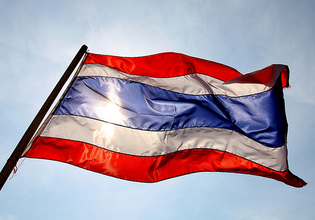
The ICJ, Amnesty International, FIDH, Fortify Rights and Lawyers’ Rights Watch Canada urge Thailand’s National Legislative Assembly (NLA) to reject currently proposed amendments to the 2007 Computer-Related Crime Act (CCA).
The full text of their statement can be dowloaded here:
thailand-cca-amendments-advocacy-2016-eng (in PDF)
thailand-cca-amendments-advocacy-2016-tha (Thai, in PDF)
Oct 13, 2016 | News, Publications
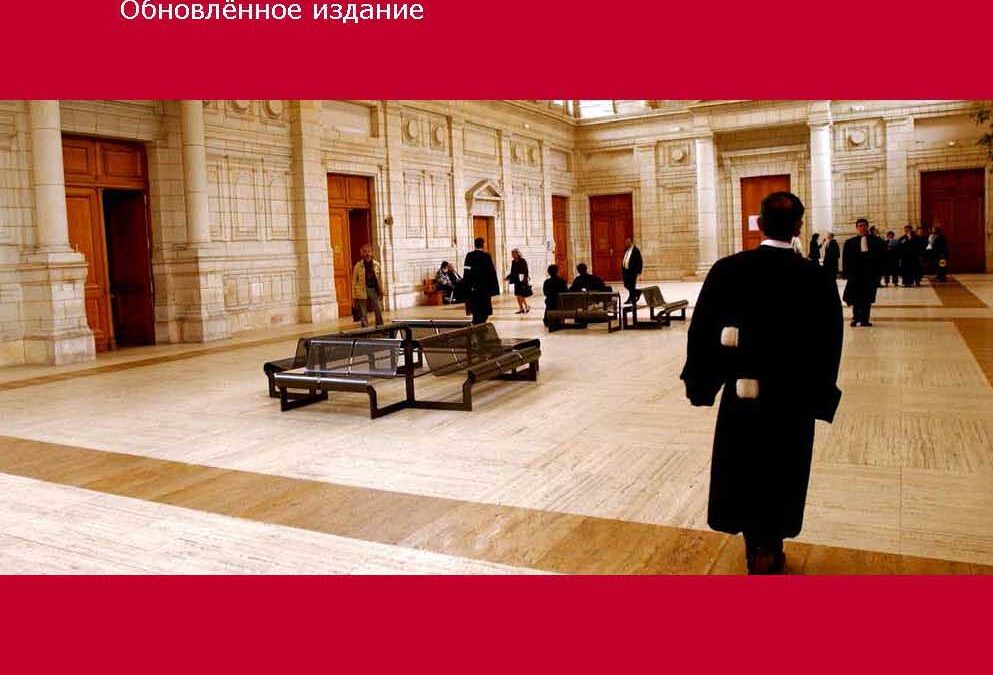
The ICJ published today a Russian translation of its Practitioners Guide no. 6 on Migration and International Human Rights Law.
This updated edition of the Practitioners Guide analyses the protection afforded to migrants by international law and the means to implement it at national and international levels.
The ICJ Guide synthesizes and clarifies international standards on key issues, in particular:
- the rights and procedures connected to the way migrants enter a country and their status in the country of destination;
- human rights and refugee law constraints on expulsion;
- the human rights and refugee law rights linked to expulsion procedures;
- the rights and guarantees for administrative detention of migrants;
- rights connected to work and labour; and
- rights to education, to the highest attainable standard of health, to adequate housing, to water, to food, and to social security.
universal-pg-6-migration-publications-practitionners-guides-series-2016-rus (full guide in Russian, PDF)

Oct 13, 2016 | News
The ICJ expressed disappointment in the adjournment of Asia bibi’s blasphemy appeal and urged the Supreme Court to set a new hearing date as soon as possible.
“Asia bibi has been on death row for six years under a bad law that has been improperly applied,” said Sam Zarifi, ICJ’s Asia Director. “The Supreme Court has previously held that people accused of blasphemy in Pakistan ‘suffer beyond proportion or repair’ – such delays in proceedings are one reason why.”
The hearing was adjourned because Justice Iqbal Hameed-ur-Rahman, one of the three judges to hear the case, recused himself from the bench on the day of the hearing, reportedly because of a “conflict of interest”.
“The date and bench for the hearing had been fixed nearly a week ago – it is difficult to understand why Justice Hameed-ur-Rahman’s decision to recuse himself was announced only at the hearing, with no alternative arrangements having been made,” added Zarifi.
Justice Hameed-ur-Rahman’s recusal is related to Salmaan Taseer’s murder case.
In 2011, Salmaan Taseer, the former Governor of Punjab, was killed by his bodyguard, Mumtaz Qadri.
Qadri claimed he killed Taseer for questioning the merits of the blasphemy proceedings against Asia bibi and calling for reform of the blasphemy laws to prevent their misuse.
Mumtaz Qadri was convicted and sentenced to death for the killing in October 2011.
Qadri challenged the conviction and sentence before the Islamabad High Court, where Justice Hameed-ur-Rahman was one of the two judges who admitted his appeal for hearing.
Extremist Islamist groups have frequently held demonstrations calling for Asia bibi to be hanged.
A day before the Supreme Court was scheduled to hear Asia bibi’s appeal, an Islamist group publicly threatened it would take to the streets if Asia bibi was acquitted.
Asia bibi’s lawyer, Saif-ul-Malook, has also stated he has received threats for pursuing her case.
Under Pakistani and international standards, judges have a right and a duty to decide cases before them according to the law, free from fear of reprisals.
Governments must also ensure that lawyers are able to perform all of their professional functions without intimidation, hindrance, harassment or improper interference from any person.
In a report published last year, the ICJ documented a pattern of threats and violence in blasphemy cases in Pakistan.
Judges who hear blasphemy cases are often harassed and threatened by those who demand that the suspect be convicted.
Some judges have reported receiving letters and phone calls warning them of attacks against themselves and their families if defendants in blasphemy cases are acquitted.
Where hearings are public, courtrooms are often packed with hostile crowds, chanting slogans against the accused. Often, these crowds are linked to violent Islamist groups.
The Government should take notice of this pattern of threats and reprisals and ensure the judges and lawyers in Asia bibi’s case are given adequate security to perform their duties independently and impartially, said the ICJ.
Contact:
Sam Zarifi, ICJ Asia Pacific Regional Director (Bangkok), t: +66 807819002; e: sam.zarifi(a)icj.org
Reema Omer, ICJ International Legal Adviser for Pakistan (London), t: +44 7889565691; e: reema.omer(a)icj.org
Additional Information
Asia Noreen (Asia bibi) has been on death row since 2010, when a trial court convicted her of “defaming the Prophet Muhammad” and sentenced her to death. The Lahore High Court upheld her conviction and confirmed her death sentence in 2014.
In a briefing paper published on Wednesday, the ICJ assessed the fair trial violations in Asia bibi’s trial and appellate hearing.
The ICJ found glaring omissions both in the appraisal of evidence as well as the application of laws that brought her conviction into question.

Oct 12, 2016 | News
In a briefing paper released today, the ICJ provides answers to key questions regarding the blasphemy case against Asia Noreen (Asia bibi), a 45-year old Christian woman convicted and sentenced to death for “defaming the Prophet Muhammad” in 2010.
Tomorrow, on Thursday 13 October 2016, the Supreme Court of Pakistan is scheduled to hear Asia bibi’s appeal challenging her conviction and death sentence for blasphemy.
The Lahore High Court had upheld her conviction and sentence in October 2014.
“Asia bibi has been on death row for six years under a bad law that has been improperly applied,” said Sam Zarifi, ICJ’s Asia Director.
“The Supreme Court has previously held that people accused of blasphemy in Pakistan ‘suffer beyond proportion or repair’– Asia bibi’s case is an illustration of that injustice and suffering,” he added.
If the Supreme Court upholds her conviction, Asia bibi will be at the risk of execution, with only limited options of filing for a review of the judgment and making a mercy petition to the President of Pakistan.
The Supreme Court has so far not upheld any convictions for blasphemy under section 295-C of the Penal Code (defamation of the Prophet Muhammad).
The briefing paper explains the allegations against Asia bibi and assesses the violations of Pakistani and international fair trial standards during her blasphemy trial and high court appeal.
“This is the first blasphemy appeal being heard by the Supreme Court since 2002,” Zarifi said.
“All eyes are on the Court to see if it will provide justice to Asia bibi, and whether it will try to clean up some of the manifest injustices of the blasphemy law and how it’s being applied today,” he addedd.
The ICJ opposes laws that criminalize the exercise of freedom of expression as protected by international law and standards, including in relation to religion, and opposes capital punishment in all circumstances.
The death penalty constitutes a violation of the right to life and the right not to be subjected to cruel, inhuman or degrading punishment.
Contact:
Sam Zarifi, ICJ Asia Pacific Regional Director (Bangkok), t: +66 807819002; e: sam.zarifi(a)icj.org
Reema Omer, ICJ International Legal Adviser for Pakistan (London), t: +44 7889565691; e: reema.omer(a)icj.org
Additional Information:
In November last year, the ICJ published a report documenting in detail systematic and widespread violations of the right to a fair trial in proceedings related to blasphemy offences in Pakistan, particularly in trial courts. The report confirmed concerns raised by the Supreme Court of Pakistan that individuals accused of blasphemy ‘suffer beyond proportion or repair’ in the absence of adequate safeguards.
The ICJ also made a number of recommendations to the Pakistani executive, legislative and judicial branches to address violations caused by application of the blasphemy laws, whether due to the legislative provisions themselves or at the investigative, prosecutorial, procedural, administrative and judicial levels highlighted in the report, including to ensure that those accused of blasphemy have a fair chance at defending themselves.
pakistan-asia-bibi-qa-advocacy-2016-eng (full Q & A, in PDF)

Sep 28, 2016 | News
The conviction of Member of Parliament Tian Chua under the 1948 Sedition Act increases already severe restrictions on freedom of expression in Malaysia, said the ICJ today.
The Malaysian government should drop all charges filed under this law and remove or amend this colonial era law to ensure compliance with international human rights law and standards, the ICJ added.
The Sessions Court in Kuala Lumpur convicted Tian Chua (photo) today under Section 4(1)(b) of the 1948 Sedition Act for allegedly uttering “seditious words.”
The allegedly “seditious words” spoken by Tian Chua were calling on Malaysians to “stand up and fight against racism and corruption.”
Tian Chua spoke these words at a public forum on 13 May 2013 at the Kuala Lumpur and Selangor Assembly Hall.
“Prime Minister Najib Razak promised in 2012 to abolish the 1948 Sedition Act, but until now, this promise has not been fulfilled,” said Emerlynne Gil, ICJ’s Senior International Legal Adviser.
“It now appears that the Malaysian government is holding on to this law to silence political opponents and human rights defenders who express critical views about what is happening in the country today,” she added.
Tian Chua received a penalty of three months’ imprisonment plus a fine of RM1,800 (approximately US$435).
Although he will still be entitled to keep his seat as Batu’s representative to the Malaysian Parliament, his conviction sends a clear and dangerous message that politically critical comments or dissenting opinions from anyone, including a Member of Parliament, will not be tolerated by the government, the ICJ says.
Several other people were also charged for sedition for their speeches at the same public forum where Tian Chua spoke: activists Adam Adli, Hishamuddin Md. Rais, Haris Fathillah Mohamed Ibrahim, and Safwan Anang.
All of them have already been convicted in the past few months under the same provision of the Sedition Act.
“By its very terms, the 1948 Sedition Act contemplates restrictions on the exercise of freedom of expression that are grossly overbroad and inconsistent with the basic rule of law and human rights principles,” said Gil.
The lawyers of Tian Chua, Latheefa Koya and N. Surendran, have confirmed that they will be seeking a stay order on the basis that they will be appealing the sentence and conviction.
The ICJ has repeatedly expressed its concerns regarding the restrictive effect the 1948 Sedition Act has on freedom of expression in the country.
The law criminalizes speech and publications considered to have “seditious tendencies”, a term that is very ambiguously and vaguely defined.
Last year, the ICJ expressed alarm over amendments made by the Malaysian Parliament strengthening the law and broadening its scope, making the “promotion” of hatred between religions an offence.
Contact:
Emerlynne Gil, ICJ’s Senior International Legal Adviser for Southeast Asia, t: +66840923575 ; e: emerlynne.gil(a)icj.org