Sep 20, 2016 | News
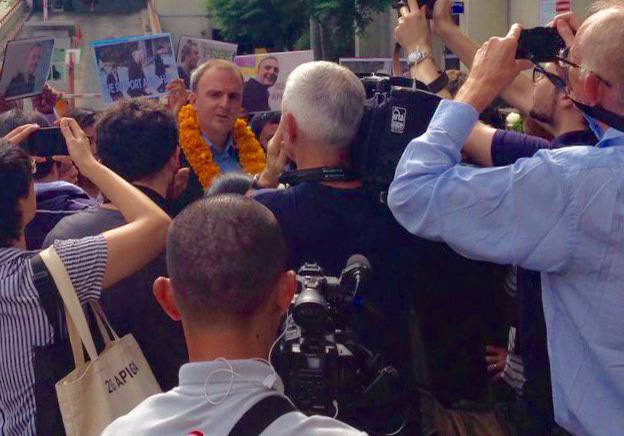
The ICJ expresses its disappointment with today’s verdict criminalizing the work of human rights defender, Andy Hall, and calls upon Thailand to decriminalize defamation and amend the Computer Crime Act in line with international standards protecting freedom of expression.
This morning, Thailand’s Southern Bangkok Criminal Court found Andy Hall guilty of defaming a Thai fruit processing company under Article 328 of the Thai Criminal Code and violation of Article 14(1) of the Computer Crime Act, and sentenced him to a fine of THB 200,000 (USD$ 5,700) reduced to THB 150,000 (USD $4,300); and four years imprisonment, reduced to three years and suspended for two years.
Andy Hall has said he will appeal the verdict.
“Human rights defenders such as Andy Hall have the right to exercise freedom of expression in advocating for the protection and realization of human rights – a right that Thailand has a duty to protect,” said Kingsley Abbott, Senior International Legal Adviser at the ICJ.
“Unfortunately, there are numerous examples of criminal defamation and the Computer Crime Act being used against human rights defenders in Thailand, a practice that must end, including through a substantial reform of these laws,” he added.
The ICJ and Lawyers Rights Watch Canada submitted a joint amicus curiae brief in the proceedings, arguing that the imposition of harsh penalties such as imprisonment or large fines on a human rights defender risk having a ‘chilling effect’ on the exercise of freedom of expression, which Thailand is bound to protect pursuant to its international legal obligations.
The ICJ anticipates the arguments contained in the joint amicus will be considered on appeal.
“It is also disappointing that the Court did not appear to take into account the recent decision of the Phuket Provincial Court in the Phuketwan case, which found that the Computer Crime Act was not intended to be used in cases of alleged defamation,” said Abbott.
On 1 September 2015, the Phuket Provincial Court acquitted two journalists of criminal defamation and violations of the Computer Crime Act after the Royal Thai Navy complained the journalists defamed it when, on 17 July 2013, the journalists reproduced a paragraph from a Pulitzer prize-winning Reuters article that alleged “Thai naval forces” were complicit in human trafficking.
The criminal defamation proceedings brought against Andy Hall are among several that have been brought against human rights defenders in Thailand in recent years.
Others examples include the charges laid against activists Pornpen Khongkachonkiet, Somchai Homloar and Anchana Heemina in July 2016 for raising allegations of torture in the deep South; and those brought against activists protesting various development projects in Thailand which are allegedly having an adverse impact on communities.
Background
Today’s case is one of four criminal and civil proceedings (two criminal and two civil) a Thai fruit processing company, Natural Fruit Company Ltd., has brought against Andy Hall in relation to the report of a Finnish NGO, Finnwatch, published in January 2013, called Cheap Has a High Price.
Andy Hall’s research was included in the report which alleged that labour rights violations were taking place at Natural Fruit Company Ltd., whose employees included migrant workers from Myanmar.
In September 2015, a Thai Appeal Court upheld the dismissal of the other criminal defamation proceeding Natural Fruit Company Ltd. brought against Andy Hall. That proceeding is currently before the Supreme Court. Two civil proceedings are also before the Thai courts but have been suspended pending resolution of the two criminal proceedings.
The use of criminal defamation laws, carrying penalties of imprisonment, against human rights defenders reporting on alleged human violations, constitutes a violation of Thailand’s obligations under the International Covenant on Civil and Political Rights (ICCPR), to which it is a state party.
thailand-verdict-andy-hall-case-news-press-release-2016-eng (full text in PDF)
thailand-verdict-andy-hall-case-news-press-release-2016-tha (full text in Thai, PDF)
Contact
Sam Zarifi, ICJ Asia Pacific Regional Director (Bangkok), t: +66 807819002; e: sam.zarifi(a)icj.org
Kingsley Abbott, ICJ Senior International Legal Adviser, t: +66 9 4470 1345, e: kingsley.abbott(a)icj.org
Jul 29, 2016 | News
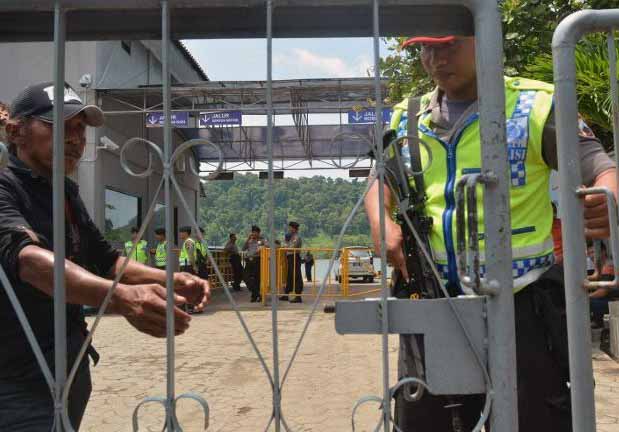
The ICJ condemns the executions of four persons in Indonesia. The ICJ vigorously calls on the Government of Indonesia to impose an immediate moratorium and take steps towards the abolition of the death penalty in the country.
“The execution of these four persons is reprehensible. Indonesia should stop further executions,” said Sam Zarifi, ICJ’s Regional Director for Asia and the Pacific.
“These executions damage Indonesia’s standing in the international community since they go against the growing international consensus around the world to abolish the death penalty,” he added.
The individuals executed shortly after midnight today were Freddy Budiman (Indonesia), Seck Osmane (Nigeria), Michael Titus Igweh (Nigeria), Humphrey Jefferson Ejike Eleweke (Nigeria).
Indonesia is a current member of the United Nations Human Rights Council, having been first elected in 2006.
The General Assembly resolution that created the Council specifically provides that “members elected to the Council shall uphold the highest standards in the promotion and protection of human rights” (res 60/251, 2006, para 9).
According to the ICJ, one of the persons executed – Michael Igweh – was allegedly tortured by law enforcement authorities to extract his confession.
The Geneva-based organization, on several occasions, has called the Government of Indonesia’s attention to its violations of Article 14 of the International Covenant on Civil and Political Rights (ICCPR), which guarantees the right to a fair and public hearing by a competent, independent, and impartial tribunal established by law. Any reliance on confessions extracted by torture would be a gross violation of the fairness of the trials.
“Because of the irreversible nature of the death penalty, trials in capital cases must scrupulously respect all international and regional standards protecting the right to a fair trial,” Zarifi further said.
The ICJ opposes capital punishment without exception and emphasizes the impact of the executions on the families of those who were executed.
The four persons executed were on a list of 14 people set to be executed soon. The other individuals are: Merri Utami (Indonesia), Zulfiqar Ali (Pakistan), Gurdip Singh (India), Frederick Luttar (Zimbabwe), Agus Hadi (Indonesia), Pujo Lestari (Indonesia), Eugene Ape (Nigeria), Okonkwo Nonso Kingsley (Nigeria), Ozias Sibanda (Nigeria) and Obinna Nwajagu (Nigeria).
The ICJ strongly urges the Government of Indonesia to stop any further executions, immediately impose a moratorium, and take steps towards the abolition of the death penalty.
In December 2014, the UN General Assembly adopted resolution 69/189, affirming for the fifth time that the use of the death penalty undermines human dignity and calling for countries that still maintain capital punishment to establish a moratorium on its use with a view to its abolition.
Contact
Emerlynne Gil, Senior International Legal Adviser of the ICJ, t: +66 840923575 ; e: emerlynne.gil(a)icj.org
Jun 9, 2016 | News
The Thai military must immediately withdraw its abusive criminal complaints against three leading human rights defenders for raising allegations of torture in Thailand’s restive deep South, said the ICJ today.
“It is simply astonishing that the Thai government is lodging these complaints at a time when Thailand has just promised to adopt important anti-torture legislation and has publicly reaffirmed its commitment to protect human rights defenders,” said Sam Zarifi, ICJ Asia Regional Director.
“The military must immediately withdraw its complaints and instead ensure all allegations of torture and ill-treatment are promptly and effectively investigated in line with Thailand’s international legal obligations,” he added.
On 10 February 2016, three Thai organizations, the Cross Cultural Foundation (CrCF), Duay Jai Group (Hearty Support Group), and the Patani Human Rights Organization (HAP), issued a report that documented 54 cases of alleged torture and ill-treatment by the Thai authorities in the deep South since 2004.
On 17 May 2016, the Internal Security Operations Command (ISOC) Region 4, responsible for national security operations in the Southern Border Provinces, responded to the report by filing complaints of criminal defamation and violations of the Computer Crime Act B.E. 2550 (2007) against the report’s three co-editors, Somchai Homlaor and Pornpen Khongkachonkiet of CrCF, and Anchana Heemmina of Hearty Support Group.
Criminal defamation carries a maximum penalty of two years imprisonment and a fine of up to 200,000 Baht (USD $5,600). Violation of article 14(1) of the Computer Crime Act, carries a maximum penalty of five years imprisonment or a fine of up to 100,000 Baht (USD $2,800), or both.
It is the second time since 2014 that the Thai military has filed criminal defamation complaints against Pornpen Khongkachonkiet and Somchai Homlaor for raising allegations of torture in the deep South.
“The Thai military should also take heed of the recent decision of the Phuket Provincial Court in the Phuketwan case, which found that the Computer Crime Act was not intended to cover allegations of defamation,” said Zarifi.
On 1 September 2015, the Phuket Provincial Court acquitted two journalists of criminal defamation and violations of the Computer Crime Act after the Royal Thai Navy complained the journalists defamed it when, on 17 July 2013, the journalists reproduced a paragraph from a Pulitzer prize-winning Reuters article that alleged “Thai naval forces” were complicit in human trafficking.
The use of criminal defamation laws, carrying penalties of imprisonment, against human rights defenders reporting on alleged human violations, constitutes a violation of Thailand’s obligations under the International Covenant on Civil and Political Rights (ICCPR), to which it is a state party.
As affirmed in the UN Declaration on Human Rights Defenders, “Everyone has the right, individually and in association with others:… freely to publish, impart or disseminate to others views, information and knowledge on all human rights and fundamental freedoms.”
Background
On 17 December 2015, Thailand joined 127 other states at the UN General Assembly in adopting a UN Resolution on human rights defenders. The Resolution calls upon states to refrain from intimidation or reprisals against human rights defenders.
Last month, Thailand informed the Human Rights Council during its Universal Periodic Review that the Cabinet was considering a draft Act on Prevention and Suppression of Torture and Enforced Disappearance. It was reported that the Cabinet approved the draft law on 24 May 2016.
At the conclusion of the review, Thailand also adopted several recommendations to protect human rights defenders and investigate reported cases of intimidation, harassment and attacks against them.
The right to an effective remedy against torture and other ill-treatment and to have complaints promptly, fully and impartially investigated is guaranteed under international treaties to which Thailand is party, including the Convention against Torture and Other Cruel, Inhuman or Degrading Treatment or Punishment and the ICCPR.
Thailand has an obligation under both treaties to conduct such investigations where there are allegations of torture and ill-treatment and to bring to justice those responsible in fair criminal proceedings.
Thailand was criticized in May 2014 for its failure to address violations when the United Nations Committee Against Torture expressed its concern “at the numerous and consistent allegations of serious acts of reprisals and threats against human rights defenders, journalists, community leaders and their relatives, including verbal and physical attacks, enforced disappearances and extrajudicial killings, as well as by the lack of information provided on any investigations into such allegations.”
The Committee recommended that Thailand “should take all the necessary measures to: (a) put an immediate halt to harassment and attacks against human rights defenders, journalists and community leaders; and (b) systematically investigate all reported instances of intimidation, harassment and attacks with a view to prosecuting and punishing perpetrators, and guarantee effective remedies to victims and their families.”
Contact:
Sam Zarifi, Asia Regional Director, t: +66 80 781 9002; e: sam.zarifi(a)icj.org
Kingsley Abbott, Senior International Legal Adviser, t: +66 94 470 1345; e: kingsley.abbott(a)icj.org
Thailand-Retaliation HRDs-News-web stories-2016-ENG (full story in Thai, PDF)

Jun 2, 2016 | News
The ICJ is alarmed by the intimidation and harassment experienced by bloggers in Singapore recently, perpetrated by police authorities.
In the last few days, the homes of four bloggers were raided and their phones and laptops confiscated, without the legal process or justification required by international standards.
The ICJ strongly urges the Government of Singapore to stop this harassment and ensure that bloggers are protected against such unjustified interference with or reprisals for the exercise of their right to freedom of expression.
“By resorting to this kind of harassment and intimidation of bloggers, Singapore is showing complete disregard for human rights and the rule of law,” said Sam Zarifi, ICJ’s Regional Director for Asia and the Pacific.
“The Government of Singapore must stop intimidating citizens who express their political opinions openly. The actions taken by the Singaporean police against the four bloggers do not only constitute an attack on freedom of opinion and expression in the country, but also clearly violates their right to privacy,” he added.
On 27 May 2016, the Election Department of Singapore filed police reports alleging that bloggers Roy Ngerng and Teo Soh Lung, and The Independent Singapore, an independent news website, violated the rules against election advertising ahead of polling day.
Under Singapore’s election rules, campaigning is prohibited 24-hours prior to polling day, which is called the “Cooling-Off Day”.
Roy Ngerng and Teo Soh Lung were alleged to have written posts on their social media accounts expressing support for the opposition candidate, Mr. Chee Soon Juan.
The Independent Singapore, on the other hand, was alleged to have published articles that amount to election advertising.
The ICJ considers that provisions or interpretations of Singapore’s election laws that would impose a sweeping ban on all political expression in relation to particular candidates in a 24-hour period prior to polling day, including the expression of opinions by private individuals without remuneration, cannot constitute a demonstrably justified and proportionate restriction on freedom of opinion and expression under international standards.
Early this year, the delegation representing the Government of Singapore said as it went through the 2nd cycle of the Universal Periodic Review that “no one in Singapore is prosecuted for criticizing the government or its policies.”
The delegation emphasized that Singapore’s Constitution guarantees the right to freedom of expression.
The Government of Singapore also accepted recommendations made by other States at the Universal Periodic Review to “ensure the full enjoyment of the right to freedom of expression”.
It also accepted the recommendation to protect bloggers from persecution and harassment for the exercise of their human rights.
The ICJ urges the Government of Singapore to remain true to the commitments it made during the recent Universal Periodic Review and respect the right to freedom of expression of bloggers.
Contact:
Emerlynne Gil, ICJ’s Senior International Legal Adviser for Southeast Asia, t: +668 4092 3575 ; e: emerlynne.gil(a)icj.org
Additional information
On 6 May 2016, The Independent Singapore published two articles: 5 Highlights of DPM Speech and Workers’ Party and the Bukit Batok by-election – what WP members said.
The first article reported about the speech of the Deputy Prime Minister of Singapore at the rally of the ruling party, the People’s Action Party (PAP), wherein he expressed support for the PAP candidate.
The second article reported statements made by the Workers’ Party (WP) members on key issues relating to the elections.
On 7 May 2016, it published the article Tan Cheng Bock Denies involvement in posting by irrational group of PAP fans, where it reported on how the former Member of Parliament, Dr. Tan, disavowed statements he allegedly made and that were posted on the Facebook group which favor the ruling party.
On 31 May 2016, Roy Ngerng and Teo Soh Lung were interrogated for three hours by police. The two were interrogated separately. Teo Soh Lung was accompanied by her lawyer, while Roy Ngerng was not.
After the interrogation, the police accompanied the bloggers back to their respective homes. The police searched their homes without warrants or their consent, and confiscated their mobile phones, laptops, and hard disks. After the search, Roy Ngerng was taken back to the police station and interrogated for another few hours.
At the police station, law enforcement authorities intimidated Roy Ngerng into logging in and out of his social media accounts and his blog, The Heart Truths, in their full view and presence.
The publisher and editor of The Independent Singapore were likewise interrogated separately by the police, on 31 May 2016 and 1 June 2016. Their mobile phones and laptops were also confiscated by the police after their interrogation.
May 13, 2016 | News
The ICJ and other human rights organizations condemn the imminent executions of Kho Jabing in Singapore and at least 15 individuals which apparently includes, 4 Chinese nationals, 2 Nigerians, 2 Zimbabweans, 1 Senegalese, 1 Pakistani and 5 Indonesian nationals in Indonesia.
The organizations call on the authorities of the two countries to halt the impending executions.
On 12 May 2016, the family of Kho Jabing, a Malaysian national on death row in Singapore, received a letter from the Singapore Prisons informing them that he would be executed on 20 May 2016. Kho Jabing was convicted of murder in 2011.
Of particular concern is the fact that there was a lack of unanimity in sentencing Kho Jabing to death, which demonstrates that reasonable doubt exists as to whether he deserved the death penalty.
As regards the imminent executions that will be taking place in Indonesia, Indonesia would contravene her own international obligations under the International Covenant on Civil and Political Right by executing these individuals.
The Association of South East Asian Nations Member States (“ASEAN”), including Singapore and Indonesia, have continuously emphasized the importance of the rule of law and the protection of rights.
The death penalty therefore stands out as an aberration.
In December 2014, the United Nations General Assembly adopted its latest resolutions calling on all States to adopt a moratorium on the use of the death penalty, with a view towards abolition.
A record number of 117 Member States supported the Resolution.
Regrettably, Indonesia abstained and Singapore voted against the Resolution.
The ASEAN Member States must use the opportunity presented by this Resolution to align themselves with the global movement towards abolition.
Singapore has recently undergone its second Universal Periodic Review in January 2016.
The continued use of the death penalty was one of the key highlights of the review, with Singapore receiving over 30 recommendations related to the death penalty, including recommendations to abolish the death penalty.
In 2015, Indonesia, a United Nations Human Rights Council Member until 2017, executed 14 individuals convicted of drug-related offences amid strong international opposition.
The imminent executions would further damage Indonesia’s human rights record and erode her standing in the international community.
The death penalty has no place in the 21st Century.
Not only is there a real possibility of wrongful executions, it deprives inmates of their life and dignity, and creates new classes of victims.
We strongly urge the governments of Singapore and Indonesia to halt the upcoming executions, immediately impose a moratorium on the use of the death penalty and take meaningful steps towards its eventual abolition.
List of signatories:
Anti-Death Penalty Network Asia (ADPAN)
Center for Prisoner’s Rights Japan (CPR)
Community Action Network (CAN, Singapore)
Free Community Church (Singapore)
Function 8 (Singapore)
MADPET (Malaysians Against Death Penalty and Torture)
Maruah (Singapore)
International Commission of Jurists (ICJ)
Journey of Hope
Legal Aid Community (LBH Masyarakat, Indonesia)
Murder Victims’ Families for Human Rights (MVFHR)
Ocean
Pusat Studi Hukum dan Kebijakan Indonesia (The Indonesian Center for Law and Policy Studies)
Reprieve Australia
Sayoni (Singapore)
Singapore Anti-Death Penalty Campaign (SADPC)
Suara Rakyat Malaysia (SUARAM)
Taiwan Alliance to End the Death Penalty (TAEDP)
The Commission for the Disappeared and Victims of Violence (KontraS, Indonesia)
The Indonesian Center for Law and Policy Studies (PSHK, Indonesia)
The Institute for Criminal Justice Reform (ICJR, Indonesia)
The Institute for Policy Research and Advocacy of Indonesia (ELSAM)
The National Human Rights Society, Malaysia (HAKAM)
Think Centre Singapore
We Believe in Second Chances (WBSC, Singapore)
Contact:
Sam Zarifi, ICJ Asia-Pacific Director, t: +66-807-819-002; e: sam.zarifi(a)icj.org