Nov 18, 2015 | Events, News
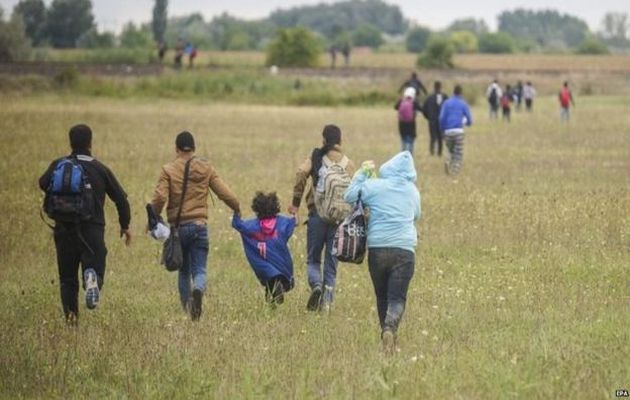
The ICJ, OSCE and Group 484 are holding a training on migration and international human rights law starting on Tuesday 17 November in Vrnjačka Banja (Serbia).
The training has been organised by the Organisation for Security and Cooperation in Europe (OSCE) and the Serbian NGO “Group 484” and will be given by the International Commission of Jurists.
It will focus on international protection of migrants and asylum seekers, access to territory and asylum and the principle of non-refoulement, in light of the current migrants and refugee crisis and drawing from the jurisprudence of the European Court of Human Rights, of the UN human rights systems and from EU law.
The training will be centred on the ICJ Practitioners Guide no. 6: Migration and International Human Rights Law.
Serbia-JointTrainingMigrationHR-Events-2015-ENG (download the agenda in English)

Nov 11, 2015 | News
While welcoming the Maldives government’s revocation of the emergency yesterday, the arbitrary manner in which the emergency was first imposed and then suddenly revoked within the span of a week reflects a deeper erosion of the rule of law in the country, the ICJ said today.
On 10 November, a week after declaring a 30-day state of emergency, the Maldives lifted the emergency reportedly because authorities had arrested several people in connection with an alleged plot to “use dangerous weapons and explosives”, thereby neutralizing the purported national security threat cited as the grounds for the emergency.
Maldivian authorities have not provided any information as to who or how many individuals were arrested or the nature of the charges.
“The imposition of a state of emergency is not a political tool to be used willy-nilly as a matter of convenience to suspend human rights protections and suppress political opposition,” said Nikhil Narayan, ICJ’s South Asia Senior Legal Adviser.
“A state of emergency that suspends constitutional rights is not to be declared lightly,” he added. “It has serious implications for human rights and the rule of law in the country, and must only be invoked in the most extreme situations and in accordance with international law.”
International law expressly permits derogations of certain human rights only in times of public emergency which threatens ‘the life of the nation’.
“Declaring a 30-day emergency and then suddenly lifting it a week later only reinforces the serious concerns previously raised as to the legitimacy of the emergency in the first place, and speaks to the larger rule of law crisis in the country,” Narayan said.
The emergency decree issued by the Maldives government last week suspended several constitutional rights, including the right to freedom of peaceful assembly, and reduced the constitutionally mandated period for the vice president to respond to impeachment charges from 14 to 7 days.
The opposition Maldivian Democratic Party (MDP) had planned a public anti-government demonstration for 6 November, two days prior to which the emergency was declared.
Meanwhile, the vice president was removed from his post the day after the emergency decree, 5 November, in a swift and seemingly arbitrary impeachment hearing.
“The circumstances surrounding events in the Maldives this past week clearly suggest that the government was using the emergency as a ploy to prevent the planned opposition rally and to eliminate the vice president as a political threat,” said Narayan.
The emergency also granted sweeping powers of search, arrest and detention without warrant to the police, who reportedly raided several buildings and arrested an unknown number of individuals under its emergency powers over the past week.
“The Maldives government cannot flout international law by invoking emergency powers as a means to deny the due process rights of the vice president and others arrested or detained for alleged crimes,” added Narayan. “The government must ensure that the individuals arrested during the emergency are afforded their full fair trial and due process rights in accordance with international law.”
Additional Information:
The ICJ previously raised concerns that the alleged grounds for the emergency did not appear to establish a threat to the life of the as required by the high threshold set by international law, and could not in any event justify the complete suspension of constitutional rights.
In August 2015, following a joint fact-finding mission to the Maldives, the ICJ and South Asians for Human Rights (SAHR) documented the breakdown of the rule of law and human rights in the Maldives in a 35-page report, Justice Adrift: Rule of Law and the Political Crisis in the Maldives.
Contact:
Nikhil Narayan, ICJ Senior Legal Adviser for South Asia, t: +977 9813187821 ; e: nikhil.narayan(a)icj.org

Nov 3, 2015 | News
The ICJ and 26 other civil society organizations called today upon the Vietnamese government to comprehensively revise the draft Law on Religion to conform with the country’s obligations under international human rights law.
The groups are concerned that Vietnam’s draft Law on Belief and Religion is inconsistent with the right to freedom of religion or belief.
In its current form, the draft Law places limitations on freedom of religion or belief that extend beyond those permitted under international human rights law that is binding on Vietnam, they say.
Article 18(3) of the International Covenant on Civil and Political Rights (ICCPR), to which Vietnam is a state party, requires the authorities to ensure that the freedom to manifest one’s religion or belief is subject only to such limitations as are prescribed by law and are necessary and proportionate to protect public safety, order, health, or morals or the fundamental rights and freedoms of others.
While the draft Law purports to acknowledge “the right to freedom of religion and belief” and proclaims that the “government respects and protects the freedom of religion and belief of everyone,” the provisions of the draft Law, if passed, would act as a powerful instrument of control placing sweeping, overly broad limitations on the practice of religion or belief within Vietnam, perpetuating the already repressive situation.
Contact:
Kingsley Abbott, ICJ International Legal Adviser, (Bangkok), t:+66 944701345, e-mail: kingsley.abbott(a)icj.org
Vietnam-Draft Law on Religion-Advocacy-2015-ENG (full statement, in PDF)

Oct 29, 2015 | News
The Singaporean government should halt the imminent execution of Kho Jabing and commute his death sentence, said the ICJ today.
In 2010, Kho Jabing was convicted and sentenced to death, after having been found guilty of murder.
Amendments made to its laws on the death penalty in 2012 allowed for persons who had been subjected to the death penalty the option to elect to be considered for re-sentencing under the new rules.
Kho Jabing, under this process, was re-sentenced to life imprisonment and 24 strokes of the cane.
The prosecution, however, appealed the re-sentencing, and the case was brought to the Court of Appeal.
On 14 January 2015, the Court of Appeal decided to reinstate the death penalty in the case.
Kho Jabing filed a clemency appeal and the Court of Appeal rejected this on 19 October 2015.
The authorities have not released the date of Kho Jabing’s execution, but it is believed that he is likely to be executed during the first week of November 2015.
“Singapore has obscured the extent and nature of its execution practices and its record on respect for the right to life”, said Sam Zarifi, ICJ’s Regional Director for Asia and the Pacific.
“Failure to be transparent about its use of the death penalty, flies in the face of international human rights standards,” he added.
The ICJ opposes the death penalty in all circumstances and considers the imposition of the death penalty to constitute a denial of the right to life and a form of cruel, inhuman and degrading punishment.
The view that the death penalty is never justifiable is shared by the overwhelming majority of States, United Nations institutions, and numerous civil society organizations.
In December 2014, the UN General Assembly, by a very wide majority, adopted a Resolution repeating its call for all States retaining the death penalty to institute a moratorium on the practice, with a view to abolition.
The ICJ has also received information that Singapore carried out two executions in October 2015. The authorities, however, have not issued an official statement regarding these executions.
To date, the Singapore government has not released the exact number of executions undertaken in the country.
In 2004, UN Special Rapporteur on extrajudicial, summary, or arbitrary executions emphasized the importance of transparency wherever the death penalty is applied.
According to the UN Special Rapporteur, “Secrecy as to those executed violates human rights standards.”
In addition, a “full and accurate reporting of all executions should be published, and a consolidated version prepared on at least an annual basis.”
The ICJ calls on the Singapore government:
- to stop the execution of Kho Jabing and commute his sentence, to one that does not include caning, which constitutes a form of cruel, inhuman or degrading punishment
- to institute an immediate moratorium on executions
- to take all necessary measures to abolish the death penalty in law
- to make public a full and accurate report of all executions in the country
Contact:
Emerlynne Gil, ICJ Senior International Legal Adviser for Southeast Asia, (Bangkok), t: +66840923575, e: emerlynne.gil(a)icj.org

Oct 26, 2015 | News
The Government of Bangladesh should withdraw the Foreign Donations Regulation Bill 2015 (FDRB), the ICJ said today.
The provisions of the FDRB are unduly restrictive and inconsistent with Bangladesh’s international legal obligations to respect the right to freedom of association, the ICJ said, and if not withdrawn, the Parliament should reject it.
“The provisions of the Foreign Donations Regulation Bill are clearly designed to restrict and harass human rights defenders in Bangladesh,” Sam Zarifi, ICJ Asia-Pacific director said. “If passed, this law will enable the Bangladeshi executive to control the space for civil society even more than it does now”.
Read the full story here:
Bangladesh-Foreign Donations-News-Web Story-2015-ENG (full text in PDF)