Jul 13, 2015 | News
The ICJ today condemned the approval by the Cambodian Peoples’ Party (CPP) of a law which aims to pose obstacles to and restrictions on the activities of non-governmental organizations (NGOs) in order to be officially registered in the country.
In June and July 2015, the ICJ and other international human rights groups sent joint letters to the Government of Cambodia, including to Prime Minister Hun Sen and the President of the National Assembly, urging for the withdrawal of the draft law.
“It is extremely disappointing that the Government has chosen to ignore widespread national and international criticism of the draft LANGO and calls for it to be withdrawn,” said Kingsley Abbott, International Legal Adviser for the ICJ.
“There is no doubt that the draft law’s restrictions on freedom of association and expression, in contravention of international law and standards, will severely impair civil society’s ability to carry out its vital work,” he added.
Today, the Cambodian National Assembly unanimously approved the draft Law on Associations and Non-Governmental Organizations (draft LANGO) promoted by the Cambodian Peoples Party (CPP) after 55 members of the opposition party, Cambodia National Rescue Party, decided to boycott the vote.
All 68 members of the CPP, including Prime Minister Hun Sen, attended the plenary session of the National Assembly and voted in favor of the draft law.
The draft LANGO will still have to be adopted by the Senate, and thereafter, receive the assent of the Cambodian King before it becomes law.
The ICJ calls on the Senate to reject the draft LANGO.
“The fact that the legislation was passed without genuine consultation with civil society tends to suggest that the Government’s intention is to weaken the impact of NGOs, including human rights defenders,” Abbott said.
The draft law’s most problematic provisions include:
- excessive documentation required for the registration of both domestic and international associations and NGOs;
- arbitrary powers of the Ministry of Interior and Ministry of Foreign Affairs to deny or revoke registration on the grounds of “public security, stability and order, or generate a threat to national security, national unity or the culture, traditions and customs of Cambodian national society”;
- the requirement that associations “adhere to a stance of neutrality vis à vis political parties”, and provisions that allow for the suspension and dissolution of groups that violate this requirement;
- the requirement that NGOs report to several ministries and to submit an annual report summing up work activities and finances; and
- the inclusion of sweeping provisions for the suspension and dissolution of domestic and international associations and NGOs.
Background
The draft LANGO, if ultimately adopted and implemented, would bring Cambodia into non-compliance with international law and standards.
As a party to the International Covenant on Civil and Political Rights (ICCPR), Cambodia must guarantee the rights to freedom of expression and association and ensure that no restrictions are put in place except under the strict conditions set out in articles 19(3) and 22(2) of the ICCPR. These conditions clearly have not been met under the terms of the draft LANGO.
In addition, Article 2 of the UN Declaration on Human Rights Defenders provides that each “State has a prime responsibility and duty to protect, promote and implement all human rights and fundamental freedoms, inter alia, by adopting such steps as may be necessary to create all conditions necessary in the social, economic, political and other fields, as well as the legal guarantees required to ensure that all persons under its jurisdiction, individually and in association with others, are able to enjoy all those rights and freedoms in practice.
Article 8 states that everyone “has the right, individually and in association with others, to have effective access…to participation in the government of his or her country and in the conduct of public affairs…[including] the right, to submit to governmental bodies and agencies and organizations concerned with public affairs criticism and proposals for improving their functioning and to draw attention to any aspect of their work that may hinder or impede the promotion, protection and realization of human rights and fundamental freedoms.”
Contact:
Kingsley Abbott, ICJ’s International Legal Adviser, t: +668 4092 3575 ; e: kingsley.abbott(a)icj.org
Jul 9, 2015 | News
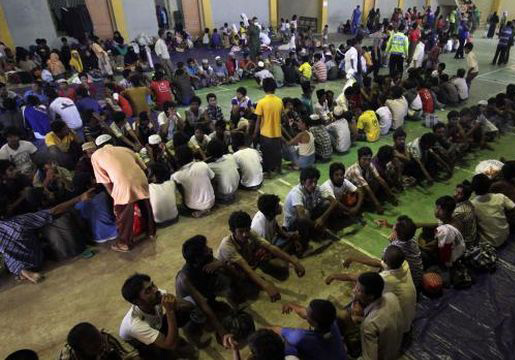
In a letter sent today, the ICJ and seven other human rights organizations urge the Thai Government to drop criminal charges against two journalists from the online news outlet Phuketwan who are about to go on trial for writing about the trafficking of the Rohingya.
The letter was sent to the General Prayuth Chan-ocha, Prime Minister of Thailand.
The trial, which is set to start on 14 July, revolves around criminal charges brought by the Royal Thai Navy against Alan Morison and Chutima Sidasathian for reproducing one paragraph from a Pulitzer Prize-winning article written by Reuters news agency implicating the Navy in the smuggling of the Rohingya off the coast of Thailand.
“Thailand must drop these charges immediately and unconditionally,” said Sam Zarifi, ICJ’s Regional Director for Asia and the Pacific.
“Criminal prosecution of speech is a violation of international law, and the Thai Navy’s relentless pursuit of this case seems even more misguided as it comes at a time when journalists have played a vital role in uncovering mass graves on the Thailand-Malaysia border and thousands of migrants and refugees, including Rohingya, left stranded on boats in the Andaman Sea,” he added.
On 16 December 2013, the Royal Thai Navy lodged complaints of criminal defamation and offences against Thailand’s Computer Crimes Act (CCA) against the journalists.
On 17 April 2014, the journalists were charged with criminal defamation under articles 326 and 328 of the Thai Criminal Code, which carry a maximum penalty of two years imprisonment and a fine of up to 200,000 Baht (USD $6,000); and violation of article 14(1) of the CCA, which carries a maximum penalty of five years imprisonment and a fine of up to 100,000 Baht (USD $3,000).
“The absurdity of these prosecutions was emphasized when the Office of Thailand’s Prime Minister recently asked one of the two journalists, Chutima Sidasathian, who is working towards a Ph.D. on the Rohingya, to suggest a solution to the ‘boat people’ crisis,” Zarifi further said.
“It is not too late to follow that request with an unconditional withdrawal of all charges as an official recognition of the important work by Alan Morison and Chutima Sidasathian in raising these issues and as a concrete gesture of Thailand’s purported commitment to addressing them,” he added.
Contact:
Sam Zarifi, ICJ Asia Pacific Regional Director (Bangkok), t: +66 807819002; e: sam.zarifi(a)icj.org
Background:
Article 19 of the International Covenant on Civil and Political Rights (ICCPR), to which Thailand is a State Party, guarantees the right to freedom of expression, which includes the right to impart information. The UN Human Rights Committee, which monitors State compliance with the ICCPR, has expressed its concern at the misuse of defamation laws to criminalize freedom of expression and has said that such laws should never be used when expression is made without malice and in the public interest.
The ICJ, an increasing number of governments, the Human Rights Committee and other international authorities, believe that criminal defamation laws should be abolished. Such laws are inherently incompatible with the ICCPR and other international laws and standards on freedom of expression. Criminal penalties are always a disproportionate means to protect against reputational harm and pose an impermissibly severe impediment to the exercise of free expression.
Thailand was criticized in May 2014 when the United Nations Committee Against Torture expressed its concern “at the numerous and consistent allegations of serious acts of reprisals and threats against human rights defenders, journalists, community leaders and their relatives, including verbal and physical attacks, enforced disappearances and extrajudicial killings, as well as by the lack of information provided on any investigations into such allegations.”
The Committee recommended that Thailand “should take all the necessary measures to: (a) put an immediate halt to harassment and attacks against human rights defenders, journalists and community leaders; and (b) systematically investigate all reported instances of intimidation, harassment and attacks with a view to prosecuting and punishing perpetrators, and guarantee effective remedies to victims and their families.”
Thailand-Letter to PM Prayuth re Phuket Wan-Advocacy-open letters-2015-ENG (full text of the letter, in PDF)
Thailand-Phuketwan cases-News-Press release-2015-THA (full text of press release in PDF, Thai)
Thailand-Letter to PM Prayuth re Phuket Wan-Advocacy-open letters-2015-THA (full text of the letter, in PDF, Thai)
Jun 26, 2015 | Advocacy, Cases, Legal submissions, News
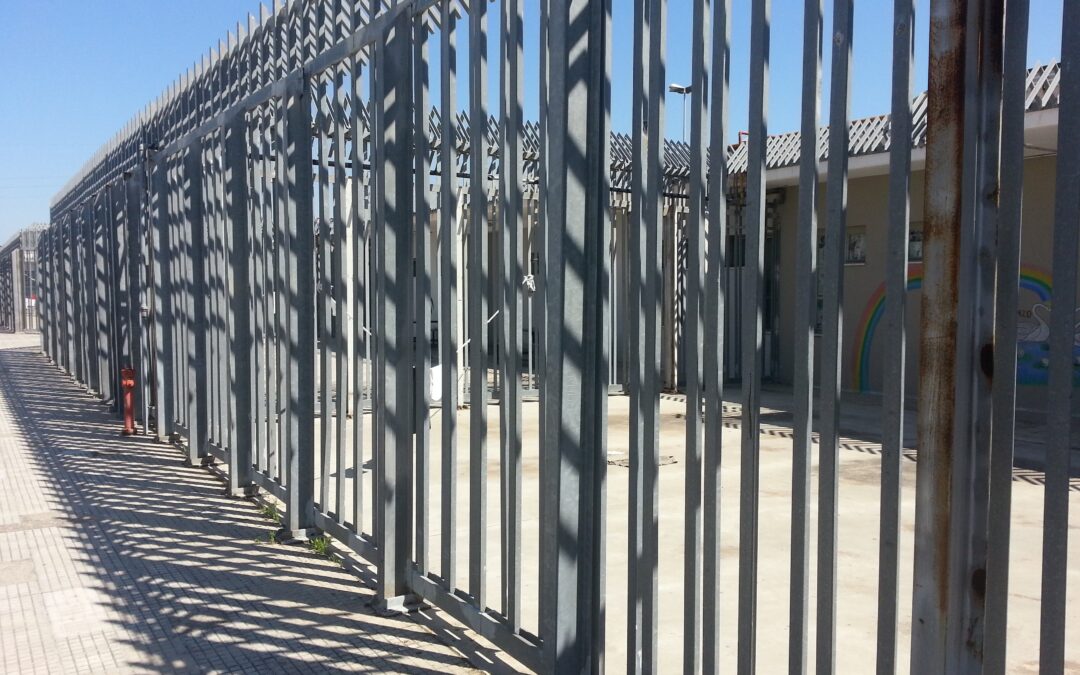
The ICJ submitted today a third party intervention before the European Court of Human Rights in the case of Richmond Yaw and others v. Italy regarding the detention of four migrants in Italian Centres for Identification and Expulsion.
The case raises issues related to the lawfulness of their detention in immigration centres, and the compliance of the mechanisms of judicial review and compensation for unlawful detention with the European Convention on Human Rights.
Taky Berko Richmond Yaw, Yaw Ansu Matthew, Darke Isaac Kwadwo, and Dominic Twumasi, nationals of Guinea, had been detained in the Centre for Identification and Expulsion of Ponte Galeria (Rome).
In these submissions, the ICJ presented the Court with a summary of its findings regarding the law and practice of detention of migrants and the related judicial guarantees in Italy, in its 2014 report, “Undocumented” Justice for Migrants in Italy.
Furthermore, the ICJ presented an analysis of the principles that apply in regard to arbitrary detention of persons detained for the purposes of immigration control under article 5.1.f. ECHR, in particular:
- The principle of legality, including the fact that the basis, procedures and conditions for detention must be provided by law, and the principle that detention must be carried out in good faith; and the due process guarantees related to these principles;
- The requirement that detention be undertaken only pursuant to the permitted purposes of article 5.1.f ECHR, and the need for strict construction of this requirement, and ongoing scrutiny of compliance with it, in particular in the context of long periods of detention;
- The requirements of access to an effective judicial mechanism to secure the right to habeas corpus and review of the legality, necessity and proportionality of the detention of migrants, under article 5.4. ECHR;
- The requirements of an effective remedy and reparation mechanism for unlawful deprivation of liberty under article 5.5 ECHR.
ECtHR-AmicusBrief-Yaw&others v Italy-Advocacy-Legal Submission-2015-ENG (download the third party intervention)

Jun 21, 2015 | News
Today, one year on from the arrest and detention of human rights lawyer Yara Sallam and 22 peaceful demonstrators, the ICJ calls for their immediate and unconditional release.
On 21 June 2014, Yara Sallam, together with 22 others, was arrested and detained in the context of a peaceful demonstration in Heliopolis, Cairo.
“The Egyptian authorities must end their campaign to silence human rights defenders and all those suspected of opposing the military and the government through politically motivated prosecutions and trials,” said Said Benarbia, Director of the ICJ Middle East and North Africa Programme.
To this end, they must immediately and unconditionally release Yara Sallam and the 22 other detainees,” he added.
The demonstrators were calling for the revocation of Law No. 107 of 2013, on public meetings, processions and protests, and the release of all those detained under it.
They were forcibly dispersed by security forces and men in civilian clothes.
The ICJ has previously noted that this law is contrary to Egypt’s obligations under international law.
It imposes overly restrictive limitations on the exercise of the right to freedom of assembly and it grants sweeping powers to security forces to disperse non-violent protests, including authorizing the use of lethal force when it is not strictly necessary to protect lives, the Geneva-based organization says.
On 26 October 2014, the 23 accused were convicted by the Heliopolis Misdemeanour court and sentenced to three years in prison and three years of police monitoring on charges of, among other things, “participating in a procession of more than five people that put public safety in danger with the aim of committing the crimes of assault on people and property and influencing public authorities in their duties by using force and violence.”
Two months later, the Court of Appeal upheld the convictions, while reducing the sentence to two years imprisonment and two years of police monitoring. A challenge before the Court of Cassation is pending.
The trial of the 23 defendants violated their rights to a fair and public hearing under international law, including the International Covenant on Civil and Political Rights, a key human rights treaty ratified by Egypt in 1982.
Their lawyers were prevented from cross-examining witnesses. Members of the public, including family members, were prohibited from entering the courtroom, without any valid reason.
Further, based on its review of the case file and court judgments, the ICJ is also concerned that both courts convicted the accused in the absence of any substantial or credible evidence of the guilt of any of the 23 defendants, and without seeking to establish the personal criminal responsibility of each individual accused.
Contact:
Alice Goodenough, Legal Adviser of the ICJ Middle East and North Africa Programme, t: +44 7815 570 834 ; e: alice.goodenough(a)icj.org
Nader Diab, Associate Legal Adviser of the ICJ Middle East and North Africa Programme, t: +41 78 89 41 877 ; e: nader.diab(a)icj.org
Egypt-Release Yara-News-Press release-2015-Arabic (full text in PDF, Arabic)
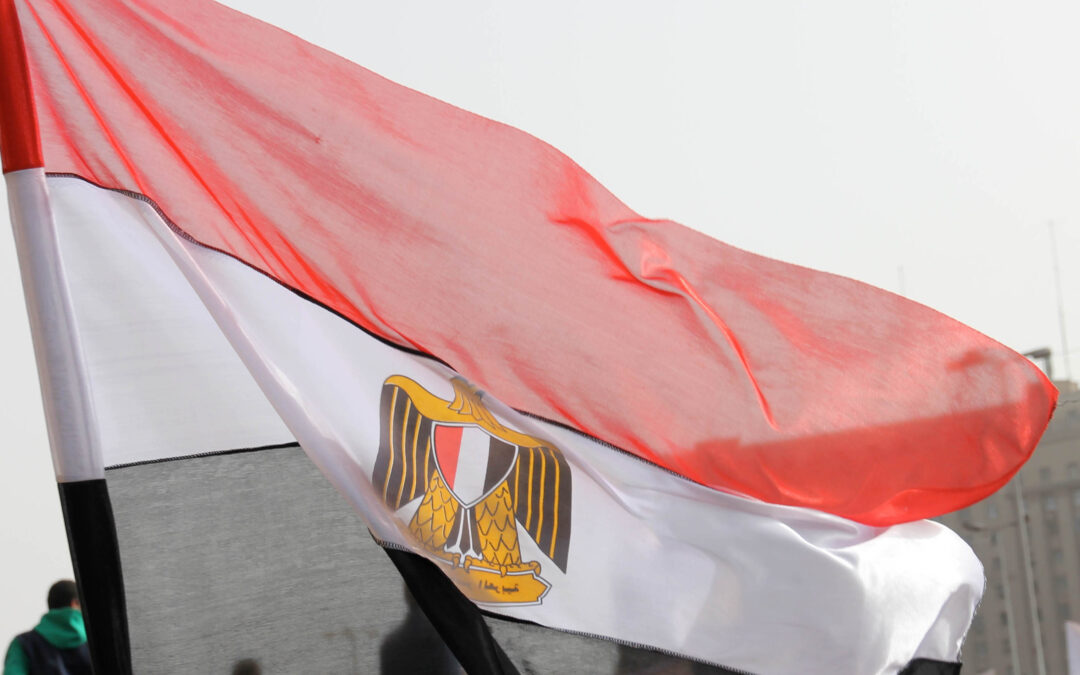
Jun 16, 2015 | News
The ICJ deplores the decision of the Cairo Criminal Court to confirm the death sentences for over 100 persons following a grossly unfair trial.
The ICJ is calling upon the Egyptian authorities to desist from carrying out the executions and to provide an effective remedy for the human rights violations.
On 16 May, the Cairo Criminal Court had already recommended deaths sentences for more than 120 accused persons.
Today, having received the opinion of the Grand Mufti of Egypt (whose secret, non-binding opinion must be sought in all death sentence cases before they are confirmed) the Cairo Criminal Court confirmed the death sentences of more than 100 accused, including former President Mohamed Morsi and numerous other senior officials from the outlawed opposition group, the Muslim Brotherhood.
“Egypt must immediately end the imposition of mass death sentences and halt all executions of all individuals sentenced to death following unfair trials,” said Said Benarbia, Director of the ICJ’s Middle East and North Africa Programme.
“Egyptian judges are once again contributing to egregious violations of the right to life instead of protecting against, preventing and punishing arbitrary deprivation of life,” he added.
The sentence was imposed following convictions on various charges in two separate cases, including “murder”, “carrying out acts that compromise the independence of the country”, “abduction of police officers”, “collusion with a foreign organization to carry out terrorist activities in Egypt” and “carrying heavy weapons to resist the Egyptian state”.
As previously noted by the ICJ, the trial of the convicted persons violated numerous basic fair trial guarantees.
Many of the accused were denied access to counsel during detention, with some being held incommunicado for months.
Defendants had rights of defence violated, including denial of the right to call and to cross-examine witnesses.
The accused were convicted despite a lack of substantial and credible evidence of proof beyond reasonable doubt of the individual guilt of each accused.
Furthermore, the accused will not have the opportunity to have their conviction and sentence reviewed by a higher tribunal.
Under Egyptian law decisions of felonies courts can only be challenged before the Cassation Court, which examines the proper application of the law by the lower court only and cannot review the merits of the case.
This decision is one of a string of cases in which mass death sentences have been meted out against perceived opponents of the regime. Other cases are ongoing.
The Cairo Criminal Court is currently hearing the “Ansar Beit Al Maqdis” case in which more than 200 accused are charged with serious crimes, including the murder of 50 police officers, the attempted assassination of the interior minister and espionage on behalf of the foreign organization Hamas.
According to one of the defence lawyers, the majority of the accused were held incommunicado for between four and six months and were denied access to counsel.
Information allegedly extracted using torture and other ill-treatment has been relied on as evidence in court. If found guilty, the accused could be sentenced to death.
Egypt has carried out the death sentence against at least 12 people in 2015 despite calls by the African Commission on Human and Peoples’ Rights to refrain from carrying out the death penalty.
The recent issuance of mass death sentences in the country has been condemned by UN human rights experts, who called them “a profound disgrace”.
The ICJ opposes the use of the death penalty in all circumstances as a violation of the right to life and a form of cruel, inhuman and degrading punishment.
The UN General Assembly has called repeatedly, by a large majority, for all retentionist States to impose a moratorium on the use of the death penalty, with a view to abolishing the practice. The ICJ urges the Egyptian authorities to heed this call and desist from carrying out further executions.
Contact:
Alice Goodenough, Legal Adviser of the ICJ Middle East and North Africa Programme, tel: 44 7815 570 834, e-mail: alice.goodenough(a)icj.org
Nader Diab, Associate Legal Adviser of the ICJ Middle East and North Africa Programme, tel: 41 229 793 804, e-mail: nader.diab(a)icj.org
Egypt-Morsi confirmation of sentence-News-Press release-2015-ENG (full text of press release, Arabic)