Mar 3, 2015 | Advocacy
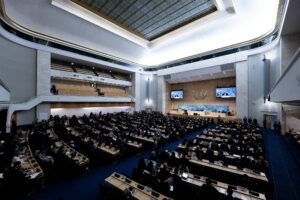
In advance of the Brussels Conference on implementation of the European Convention on Human Rights, our shared responsibility, the ICJ and nine other NGOs issued a statement on the Conference’s draft Declaration.
The statement welcomes a number of aspects of the draft Declaration, which addresses the need for more effective implementation of the Convention and the full, rapid execution of European Court of Human Rights judgments.
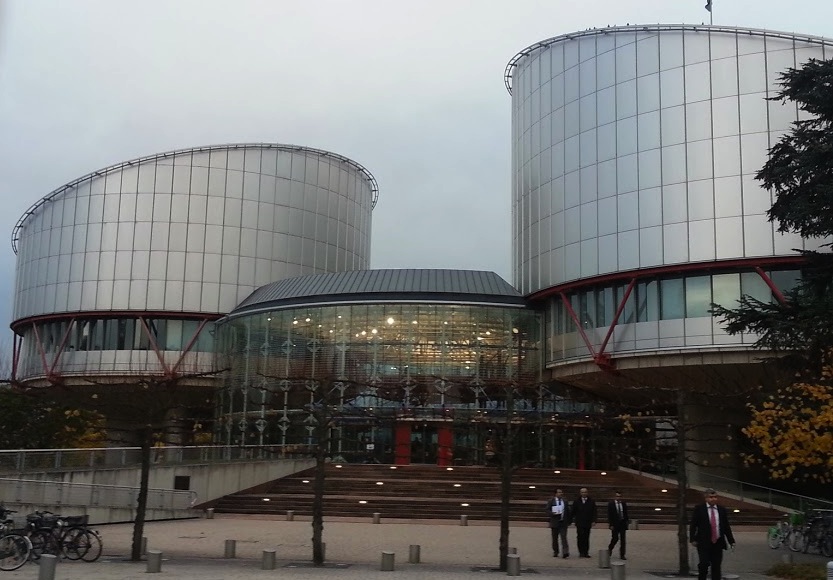
It raises concerns at several elements of the draft Declaration, including recommendations to the Court which could undermine its independence, and the lack of recognition of the role of civil society in the effective execution of judgments of the European Court of Human Rights (photo).
Europe-NGO Statement on Brussels Draft Declaration-Advocay-2015-ENG (full text in PDF)
Mar 3, 2015 | Advocacy
Thirteen human rights organizations, including the ICJ, call on the United Arabe Emirates government to release the activists jailed following the UAE 94 trial.
On the second anniversary of the start of the mass “UAE 94” trial that imprisoned dozens of government critics and reform activists in the United Arab Emirates (UAE), including prominent human rights defenders, judges, academics, and student leaders, a coalition of 13 organizations calls on the UAE government to release immediately and unconditionally all those imprisoned solely for peacefully exercising their rights to freedom of expression and association following this grossly unfair trial, as well as those who remain detained or imprisoned for publicizing concerns about it.
The organizations also call on the authorities to ensure that the allegations of torture and other ill-treatment that the individuals were subjected to prior to and following their trial are promptly, independently, impartially and thoroughly investigated, that those responsible are held to account, and that the victims have access to effective remedies and to reparation.
The organizations share the serious concerns raised since 2011 by several UN human rights bodies and human rights organizations regarding the UAE government’s continuing pattern of harassment, secret, arbitrary and prolonged incommunicado detention, torture and other ill-treatment, enforced disappearances, and unfair trials targeting activists and those critical of the authorities, as well as its increasing use of national security as a pretext to clamp down on peaceful activism and to stifle calls for reform.
The space for dissent in the UAE is increasingly shrinking. The repression has been entrenched with the enactment in 2012 of the cybercrimes law, which the government has used to silence social media activists and others who support and defend freedom of expression online, and the enactment of the 2014 counter-terror law.
The vague and overly broad definition of terrorism in the 2014 law, which treats a wide range of activities, including those protected by human rights standards, as amounting to terrorism, may be used to sentence human rights defenders or critics of the government to lengthy prison terms or even death.
The organizations call on the UAE government, which currently is a member of the UN Human Rights Council, to adhere to its obligations to uphold human rights at home, including respecting the rights to freedom of opinion and expression, and to freedom of association and peaceful assembly.
The full statement can be found here in English and Arabic:
United Arab Emirates-Release activists convicted at the UAE94 trial-Advocacy-2015-ENG (full text in PDF)
United Arab Emirates -Release activists convicted at the UAE94 trial-Advocacy-2015-ARA (full text in PDF)
Read also:
UAE: Fear that Anti-Terrorism Law will be used to curtail human rights and target human rights defenders, Gulf Centre for Human Rights, Front Line Defenders, Cairo Institute for Human Rights Studies, Arabic Network for Human Rights Information, 13 December 2014,
Mass convictions following an unfair trial: The UAE 94 case, an ICJ report, October 2013,
United Arab Emirates: ICJ condemns blatant disregard of the right to a fair and public trial, ICJ, 12 March 2013
Feb 27, 2015 | News
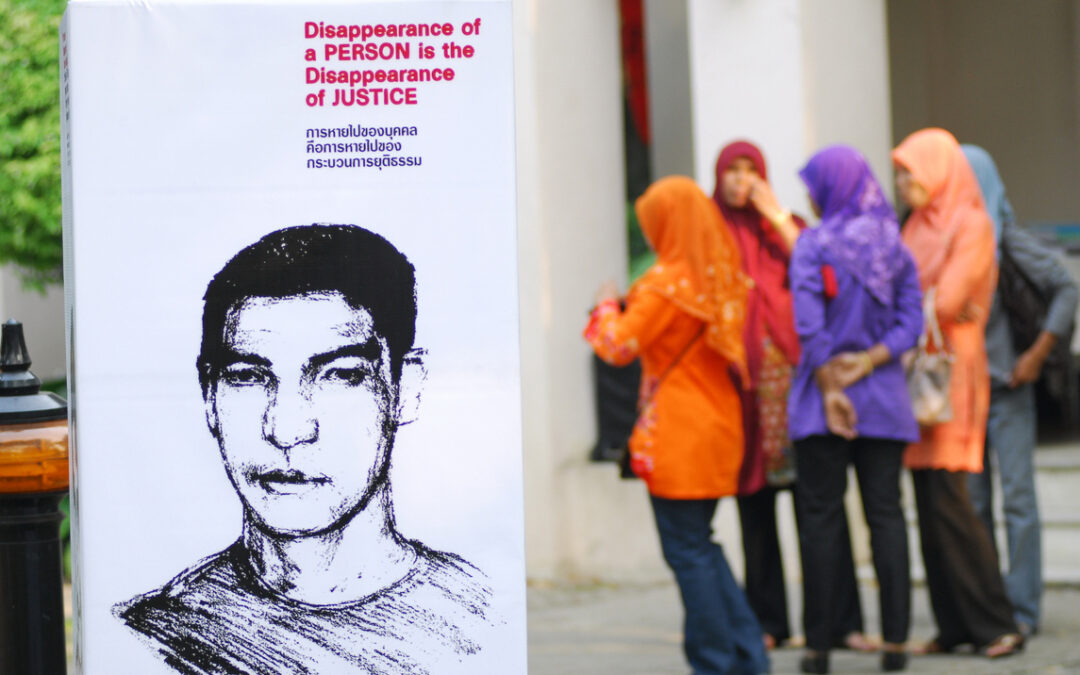
The Nepali government must fully implement yesterday’s decision of the Supreme Court rejecting the possibility of amnesties for perpetrators of serious human rights abuses during the country’s civil war, said today the ICJ.
The decision, by a three-person special constitutional bench, composed of Justice Kalyan Shrestha, Justice Baidhya Nath Upadhyay and Justice Cholendra Shumsher JB Rana, struck down the amnesty provision of the Commission on Investigation of Disappeared Persons, Truth and Reconciliation Act 2014 (TRC Act) promulgated last May 2014.
The Court also ruled that only the judiciary, and not the Commissions established by the TRC Act, can determine the criminality of any violations committed in the context of the country’s decade-long conflict.
“Nepal’s Supreme Court has once again firmly reasserted the right of the victims of human rights violations to seek justice,” said Sam Zarifi, ICJ’s Asia Director. “This bold and principled decision should finally end the cynical attempts by politicians from all Nepal’s major parties, as well as the military, to legislate impunity and shield themselves from accountability.”
The decision distinguished between the jurisdiction of the courts and the criminal justice system, and the non-judicial reconciliation and truth-seeking mechanisms established by the TRC Act.
In the months before the decision, the government had essentially frozen the prosecution of claims already before various courts, and had blocked the filing of First Information Reports (FIRs) by victims trying to lodge new complaints.
“Now, the government must not only remove obstacles to these cases, it must commit itself to prosecuting such claims,” Zarifi added. “The Government must immediately take all necessary steps to implement the court ruling including to ensure criminal investigation of FIRs, and address the concerns raised by the victims on the formation of the Truth and Reconciliation Commission and Commission of Inquiry on Enforced Disappearance.”
This is the second time that the Nepali Supreme Court has rejected the amnesty scheme introduced by the Nepali government.
On 2 January 2014, the Supreme Court had declared unconstitutional the Ordinance on the Truth and Reconciliation Commission (TRC Ordinance).
However, the Government effectively ignored the Court order and introduced a slightly modified version of the 2013 Ordinance replicating almost all of the provisions of the TRC Ordinance, including many of its problematic aspects, such as the ‘amnesty’ provision.
“The Government, with the help of the international community, must now dedicate itself to meeting the promise of the political parties to provide justice, truth and reparations to the victims and survivors of the conflict,” said Zarifi. “Only doing so will help end the country’s cycle of impunity.”
Contact:
Sam Zarifi, ICJ Asia Pacific Regional Director (Bangkok), t: +66 807819002; email: sam.zarifi(a)icj.org
Feb 19, 2015 | News
The ICJ and other rights groups welcome the decision Africa’s main human rights treaty body has made which recognizes Sudan’s obligation to protect human rights defenders and to ensure that their work promoting and protecting the rights of others is not hindered or frustrated.
The ICJ, the International Federation for Human Rights (FIDH), the World Organisation against Torture (OMCT), the African Centre for Justice and Peace Studies (ACJPS) and REDRESS hail the important decision of the African Commission on Human and Peoples’ Rights (ACHPR), published on 13 February 2015, which called on Sudan to effectively investigate and prosecute the security and intelligence officers alleged to be responsible for the arbitrary arrest, torture and ill-treatment of three prominent human rights defenders; to reopen and unfreeze the bank accounts of a human rights organization shut down in connection with the case and to pay them compensation.
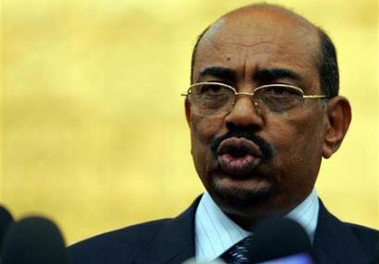
Human rights defenders Monim Elgak, Amir Suliman and the late Osman Hummaida were targeted for their supposed cooperation with the International Criminal Court in a pending case against the President of Sudan Omar Al Bashir (photo) arising from international crimes committed in Sudan’s Darfur region.
The three human rights defenders were arrested on 24 November 2008 by Sudan’s National and Intelligence Services (NISS) and subjected to torture and ill-treatment for three days.
After their release, they were effectively forced to flee Sudan because of their fear of further persecution, given the impunity enjoyed by the security and intelligence services and the inaction of the Sudanese government.
Suliman was Director of the Khartoum Centre for Human Rights and Environmental Development (KCHRED), which in 2009 was shut down by the Sudanese authorities and had its bank accounts frozen.
Hummaida, an ardent advocate for human rights who founded the Khartoum Centre and set up the ACJPS in Uganda, after his release, to ensure continued reporting of the human rights situation in Sudan, died in 2014.
The complainants turned to the ACHPR in 2009. The Commission found their complaint admissible in 2012, agreeing that the Sudanese justice system prevented them from obtaining redress in Sudan.
OMCT and FIDH intervened on their behalf at the ACHPR and the complaint was supported by the ICJ, ACJPS and REDRESS.
Reacting to the decision, Amir Suliman, Legal Programme Coordinator of ACJPS and complainant in the case, said: “The African Commission’s decision is an important recognition of the harm caused not only in our own case but the daily harm caused to the Sudanese people through the actions of the security and intelligence services. It also highlights the lack of effective safeguards against torture and remedies for victims.”
Monim El Jak, complainant in the case and Acting Chairperson of the Commission for the Protection of Civilian and Human Rights in the conflict zones of Southern Kordofan and Blue Nile, said: “We hope this decision will make the Sudanese government stop and reflect on its ongoing crackdown on civil society groups and human rights activists and also helps to put an end to other human rights violations.”
The UN Human Rights Defenders Declaration establishes that states must take effective measures to facilitate the work of human rights defenders and protect their rights.
Gerald Staberock, OMCT Secretary General, added: “The ruling sends a powerful message against torture and for the protection of those who fight torture and impunity in Sudan and in Africa. Sudan has now to fully implement and comply with this ruling providing reparations. It is time for all to recognize the vital role human rights and anti-torture activists play for the benefit of their societies.”
Karim Lahidji, the FIDH President, said: “The decision of the African Commission is significant and comes in a context where Sudanese human rights defenders continue to work in an environment that is marked by extreme insecurity and rampant impunity. Sudan must ensure that reprisals against those advocating for justice and fundamental rights and freedoms are no longer tolerated and unpunished.”
Arnold Tsunga, ICJ Africa Regional Programme Director, said: “The Government of Sudan must now expeditiously comply with the findings of the African Commission to provide reparation to the victims, as well as to ensure guarantees of non-repetition.”
Lutz Oette, REDRESS Counsel, added: “Human rights defenders continue to be harassed, arbitrarily arrested, detained, and prosecuted in Sudan, or driven into exile. The African Commission’s decision is a timely reminder of Sudan’s obligations to protect human rights defenders, and to put a stop to its current practice.”
Contact:
Arnold Tsunga, ICJ Africa Regional Programme Director, t +27 73 131 8411, e arnold.tsunga(a)icj.org
Feb 3, 2015 | News
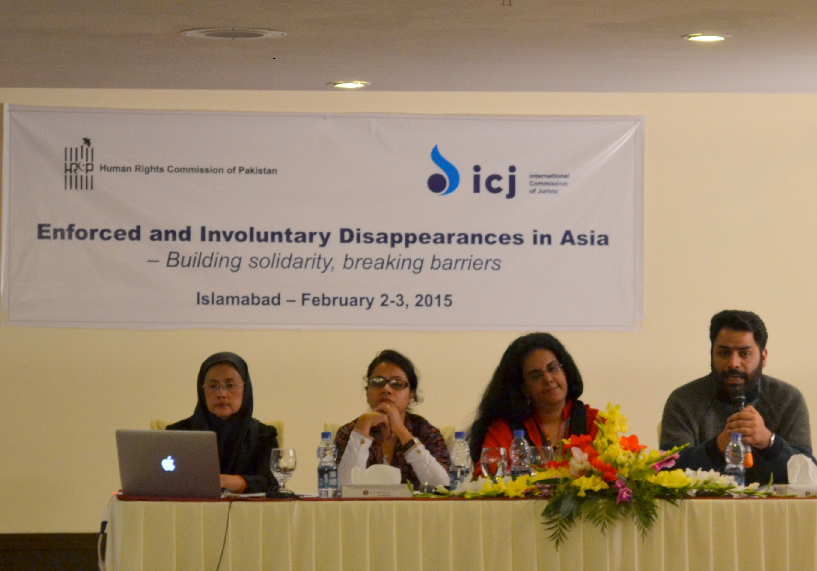
In partnership with the Human Rights Commission of Pakistan (HRCP), the ICJ convened a two-day conference in Islamabad on 2-3 February 2015.
The conference brought together civil society activists, lawyers and journalists from across Asia, including Thailand, the Philippines, Sri Lanka, India, Nepal and Pakistan with experience of working on enforced disappearances in the their national contexts as well as regional and international forums.
The participants expressed alarm at the continuing practice of enforced disappearances in the region and regretted that a culture of moral, political and legal impunity prevented perpetrators to be brought to justice.
They also urged their respective states to promptly ratify the International Convention for the Protection of all Persons from Enforced Disappearance, criminalize enforced disappearances, and meet their obligations under international law to provide remedy and reparations for human rights violations.
At the end of the two-day event, the participants of the conference adopted a resolution (download below) resolving to work together to address the common challenges and hurdles they encounter in their work on enforced disappearances.
Asia-Enforced disappearances Resolution final-Advocacy-2015-ENG (full text in PDF)
Asia-Enforced disappearances Resolution final-Advocacy-2015-URD (full text in PDF)

![Smoke rises after an Israeli air strike on the village of Taybeh in southern Lebanon [Source: Al Jazeera]](https://www.icj.org/wp-content/uploads/2026/03/Screenshot-2026-03-20-at-15.56.24-300x200.png)