Oct 8, 2013 | News
The Joint Mobile Group was selected as the 2013 Laureate Martin Ennals Award. The ICJ is one of the ten members of the jury.
The Award is given by the International Human Rights Community to Human Rights Defenders who have shown deep commitment and face great personal risk.
The aim of the award is to provide protection through international recognition.
Strongly supported by the City of Geneva, the Award was presented here today.
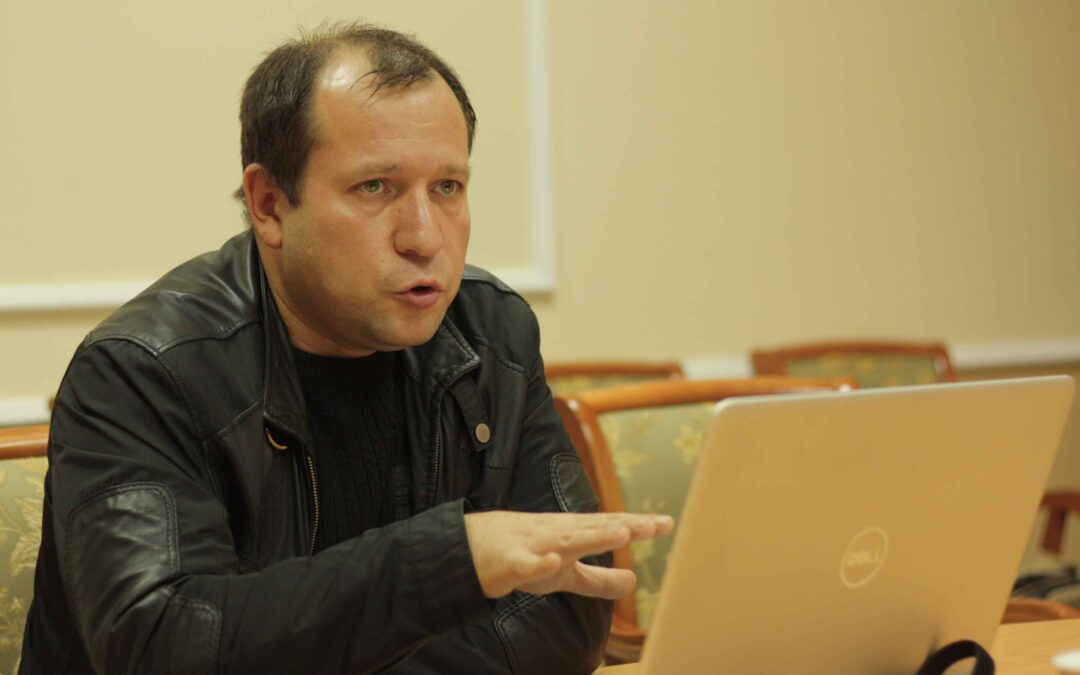
After the murder of several human rights activists working in Chechnya, Igor Kalyapin (photo) started the Joint Mobile Group.
To reduce the risk they send investigators on short missions to Chechnya to document Human Rights abuses.
This information is then used to publicize these abuses to seek legal redress.
Igor Kalyapin speaking of the effect of international publicity said: “When the international community is watching us it is more difficult for the authorities to take steps against us.”
Micheline Calmy-Rey, Chair, Martin Ennals Foundation said: “The choice of the Jury has again shown that human rights defenders are the most crucial actors and can make a difference on the ground.”
The Jury also selected two recipients of the New Martin Ennals Prizes: Mario Joseph, who is referred to as Haiti’s most important Human Rights lawyer and has worked on some of the most important cases in Haiti, including the current case against the former dictator Jean-Claude “Baby Doc” Duvalier; and Mona Seif, from Egypt, core founder of the “No To Military Trials for Civilians” national movement.
The main award of the human rights movement, the Martin Ennals Award for Human Rights Defenders (MEA) is a unique collaboration among ten of the world’s leading human rights organizations to give protection to human rights defenders worldwide. The Jury is composed of the following NGOs: ICJ, Human Rights Watch, Amnesty International, World Organisation Against Torture, FIDH (International Federation for Human Rights), HURIDOCS, Human Rights First, Front Line Defenders, International Service for Human Rights and German Diakonie.
Watch the MEA movie on Joint Mobile Group
Oct 3, 2013 | News
Following Pakistan’s reinstation of its moratorium on the death penalty, the ICJ calls on the Government to make the moratorium permanent and to move to abolish the death penalty in national law.
“This is a step forward for human rights in Pakistan,” said Sam Zarifi, ICJ’s Asia-Pacific Director. “It brings Pakistan closer to the regional and worldwide trend towards abolishment of the death penalty.”
Pakistan has had a moratorium on the death penalty in place since June 2008, with only the exception of Muhammad Hussain’s execution in November 2012 following a court martial.
The newly elected Pakistan Muslim League (Nawaz) Government decided not to renew the moratorium when it expired in June 2013.
The ICJ and other human rights groups denounced the move and urged Pakistan to immediately adopt a moratorium on the death penalty, prompting the Government to reconsider its decision.
According to the Interior Ministry spokesperson, today’s decision was taken to meet Pakistan’s international human rights obligations.
Pakistani Taliban also warned the Government that they would launch retaliatory attacks if any of their members were executed.
“This brave move by the government should be the first step toward reestablishing the rule of law and providing accountability in Pakistan,” Zarifi added. “The Government should now ensure that members of armed groups like the Taliban who have carried out serious human rights abuses like extrajudicial executions and attacks on civilians are held to account.”
The ICJ considers the death penalty in all cases to constitute a violation of the right to life and the right not to be subjected to cruel, inhuman or degrading punishment.
Contact:
Sam Zarifi, ICJ Asia-Pacific Regional Director, (Bangkok), t:+66 807819002; email: sam.zarifi(a)icj.org

Oct 2, 2013 | News
The ICJ welcomes the endorsement today by the Parliamentary Assembly of the Council of Europe of the Tshwane Principles on National Security and the Right to Information.
The ICJ was one of a number of civil society groups and government representatives who contributed to the development of the Principles.
Headline stories such as the Bradley Manning, Edward Snowden, and David Miranda cases, and the large number of other similar cases and situations around the world that do not necessarily receive the same media attention, demonstrate the timeliness and relevance of the Principles.
The ICJ hopes that the precedent set by the PACE will now be followed by other inter-governmental organisations at the global and regional levels, recognizing and endorsing the Principles.
Links to the resolution and recommendation by the PACE:
http://assembly.coe.int/nw/xml/XRef/Xref-DocDetails-EN.asp?fileid=20190&lang=EN
http://assembly.coe.int/nw/xml/XRef/Xref-DocDetails-EN.asp?fileid=20194&lang=EN
Global-Tshwane Principles on right to information-position paper-2013 (full text in pdf)
Oct 1, 2013 | News
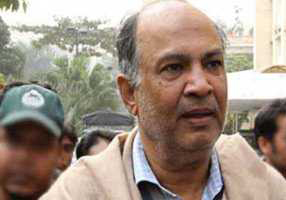
The ICJ denounces the death penalty handed down today by the International Crimes Tribunal (ICT) to Salauddin Quader Chowdhury, a member of the Bangladesh Nationalist Party, the main opposition party.
If carried out, the sentence would violate Bangladesh’s international law obligations to protect the right to life and freedom from cruel, inhuman, or degrading punishment, the ICJ states.
The International Crimes Tribunal convicted Chowdhury (photo) on nine of 23 charges, including murder and genocide, and sentenced him to death.
“The Bangladesh Tribunal is one of very few transitional justice mechanisms that have imposed the death penalty,” said Sam Zarifi, ICJ’s Asia-Pacific Director. “It is unfortunate that Bangladesh seeks to punish human rights violations by committing rights violations itself.”
The ICJ considers the death penalty in all cases to constitute a violation of the right to life and the right not to be subjected to cruel, inhuman or degrading punishment.
This is the seventh verdict delivered by the International Crimes Tribunal. Death sentences have been handed out in all but one case.
”Bangladeshi law as well as international human rights standards require that death penalty cases receive a fair and thorough review, so it is crucial that appellate review of these cases proceed properly, without undue political pressure or a timeline established by impending elections in or before January 2014,” Zarifi said.
“Those responsible for the horrific war crimes and crimes against humanity during Bangladesh’s war of liberation in 1971 should be brought to justice in processes that are fair, and seen to be fair, instead of being subjected to vengeance,” he added.
Contact
Sam Zarifi, ICJ Asia-Pacific Regional Director, (Bangkok), t:+66 807819002; email: sam.zarifi(a)icj.org

Sep 25, 2013 | News
The ICJ continues to be disappointed over the continued arbitrary detention and refusal of bail of Secretary of human rights organization, Odhikar, and Supreme Court Advocate Adilur Rahman Khan.
The ICJ urged the Bangladeshi authorities to drop their opposition to Adilur Rahman Khan’s bail application.
On 25 September 2013, a cyber crimes tribunal in Dhaka refused Adilur Rahman Khan’s bail application. He had earlier been denied bail on 11 August 2013 and 9 September 2013.
“Adilur Rahman Khan is being arbitrarily detained for his lawful exercise of the right to freedom of expression and his legitimate work as a human rights defender,” said Ben Schonveld, ICJ’s South Asia Director. “What we are seeing is a Government crackdown on voices of dissent.”
Under international law, all persons are presumed innocent until proven guilty.
Under Article 9 of the International Covenant on Civil and Political Rights (ICCPR), to which Bangladesh is a party, there is a presumption of pre-trial release.
A person can only be denied pre-trial release where it is reasonable and necessary in all of the circumstances to prevent absconding, interference with evidence or recidivism.
“The Government cannot show that Adilur Rahman Khan poses a flight risk,” Schonveld added. “In fact, he faces a serious threat of torture and ill-treatment during detention, as documented by Odhikar and other human rights organizations.”
The ICJ reiterates its call on Bangladesh to immediately and unconditionally drop all charges against Adilur Rahman Khan and Nasiruddin Elan, ensure Adilur Rahman Khan is treated in accordance with international law in custody, and cease its harassment of Odhikar.
Contact
Ben Schonveld, ICJ South Asia Director (Kathmandu), t: +977 14432651; email: ben.schonveld(a)icj.org

![Smoke rises after an Israeli air strike on the village of Taybeh in southern Lebanon [Source: Al Jazeera]](https://www.icj.org/wp-content/uploads/2026/03/Screenshot-2026-03-20-at-15.56.24-300x200.png)