Jul 9, 2013 | News
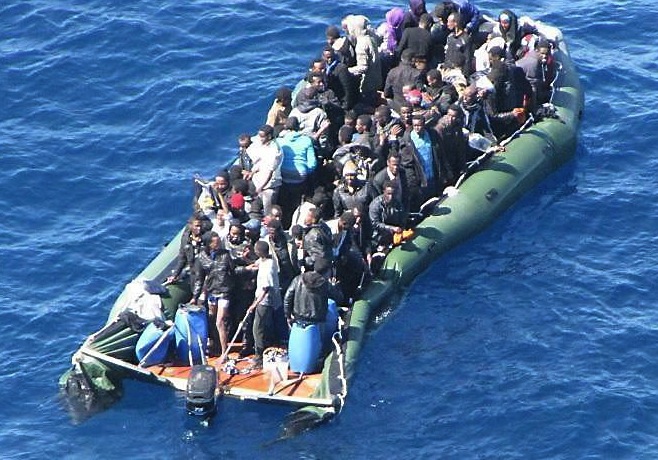
The International Commission of Jurists (ICJ) today called on the Government of Malta to refrain from forcibly transferring a number of Somali nationals to Libya, where they are alleged to be at real risk of human rights violations and further transfer to Somalia.
According to media reports, the persons at risk of transfer are part of a group of some 102 persons, including 41 women and two babies, who arrived in Malta this morning.
The ICJ expresses its grave concern at the possibility that Somali nationals, who are alleged to be considered at risk of being subject to ill-treatment or persecution if sent back to Somalia, would first be sent back to Libya. According to the office of the United Nations High Commissioner for Refugees, in Libya, migrants face a “constant risk of exploitation, arrest and indefinite detention”.
The ICJ stresses that the European Court of Human Rights has ruled, in the judgment Hirsi Jamaa and others v. Italy, that sending back potential asylum seekers, including of Somali origin, to Libya, without individual assessment of their situation and access to asylum procedures, violates the European Convention on Human Rights, in particular the principle of non-refoulement, the prohibition of collective expulsion and the right to an effective remedy for violations of human rights.
The ICJ therefore calls on the Maltese Government to refrain from expelling or otherwise transferring to Libya any of the Somali citizens who arrived on Maltese shores today. The migrants must be fully informed of their right to apply for international or humanitarian protection under EU and Maltese law; and each of their cases must be examined on its individual merits.
Statement-ExpulsionSomalis-2013-Malta (download the statement)
Contact:
Massimo Frigo, ICJ Legal Adviser of the Europe Programme, tel: 41 22 979 38 05, e-mail: massimo.frigo(a)icj.org
Róisín Pillay, ICJ Director of the Europe Programme, e-mail : roisin.pillay(a)icj.org
Jul 5, 2013 | News
The Government of Pakistan should renew the official moratorium on the death penalty, with a view to definitively abolishing the practice in law, says the ICJ.
The Government signaled its intention to resume executions on Thursday, 4 July 2013 when it failed to renew a 2008 Presidential order imposing a moratorium on executions. It is estimated that approximately 8000 people are currently on death row in Pakistan.
“Resuming executions would be a major step backwards for Pakistan in protecting human rights,” says Sheila Varadan, ICJ Legal Advisor for South Asia. “The prospect of lifting the moratorium is all the more alarming given the extraordinarily high number of people on death row.”
The announcement apparently comes as part of the newly elected Government’s strategy to tackle high levels of crime and insecurity in Pakistan.
The ICJ condemns the death penalty as a violation of the right to life and a form of cruel and inhuman punishment. Moreover, it is widely accepted that the practice cannot serve as a deterrent to crime or be administrated without error or discrimination.
More than 150 of the 192 United Nations members States have either abolished the death penalty or imposed a moratorium on its practice.
In December 2012, the United Nations General Assembly adopted its fourth resolution calling on all States retaining the death to place a moratorium on the practice with a view towards abolition.
Of the 186 member States present, 111 member States voting in favour and only 41 member States against, an increase from the previous three resolutions.
“Pakistan is part of a dwindling minority of States who continue to retain the death penalty and carry out executions,” Varadan. “The ICJ urges the newly elected Government of Pakistan to demonstrate its commitment to upholding human rights and to desist from licensing the State deliberately to take the life any person in its custody.”
CONTACT:
Sheila Varadan, ICJ Legal Advisor, South Asia Programme (Bangkok), t: +66 857200723; email: sheila.varadan(a)icj.org
Jul 4, 2013 | News
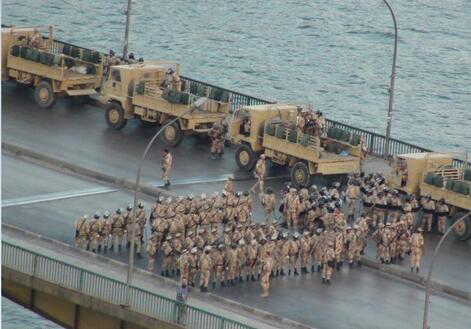
The ICJ called on the Egyptian authorities, including the army, to uphold the rule of law and democratic principles and take immediate and effective measures to prevent the deterioration of the human rights situation.
The statement came as the head of the armed forces, General Abdel Fattah El Sisi, announced on 3 July 2013 the suspension of the Constitution and the removal of President Mohamed Morsi.
The General said that Constitutional Court Chief Justice Adly Monsour would head an interim government until new elections were held.
The ICJ is deeply concerned that the decisions that have been taken by the military are beyond the scope of its constitutional authority and violate basic rule of law principles.
If implemented, these decisions will also set a dangerous precedent, wrongly signaling that the conflicts and challenges in Egypt should be met by military force rather than through political engagement and legal processes, the ICJ said.
“All Egyptian authorities should ensure that any political disagreement or conflict is resolved in compliance with rule of law principles and through legally established channels. Under international law, political divergences cannot be invoked to justify the unlawful seizure of the executive power,” said Wilder Tayler, ICJ Secretary General.
The ICJ is also concerned about reports that President Morsi, his advisers and leaders from the Freedom and Justice Party have been arrested.
Journalists have also been arrested and several television stations linked to the Muslim Brotherhood were taken off air following the Military decisions.
“The army and government authorities should ensure the protection of the rights of those detained in the context of the ouster of President Morsi, including the right to liberty and to security of person. Journalists arrested while exercising their professional duties must be released immediately,” Tayler further said.
The transition process in Egypt, under both the Supreme Council of Armed Forces (SCAF) and President Mohamed Morsi has failed to comply with international rule of law and human rights standards, the ICJ said.
The ICJ is also concerned about of the deterioration of the human rights situation in Egypt over the last few days, including cases of unlawful killings and physical violence against protesters, including sexual assaults against women.
“The Egyptian authorities should ensure that these human rights violations are fully investigated with a view to holding the perpetrators to account. They must also guarantee the rights of all peaceful protesters to security and to the freedoms of assembly and expression,” Tayler added.
Contact:
Said Benarbia, ICJ Senior Legal Adviser of the Middle East and North Africa Programme, tel: 41 22 979 38 17, e-mail: said.benarbia(a)icj.org
Jun 19, 2013 | Multimedia items, News, Video clips
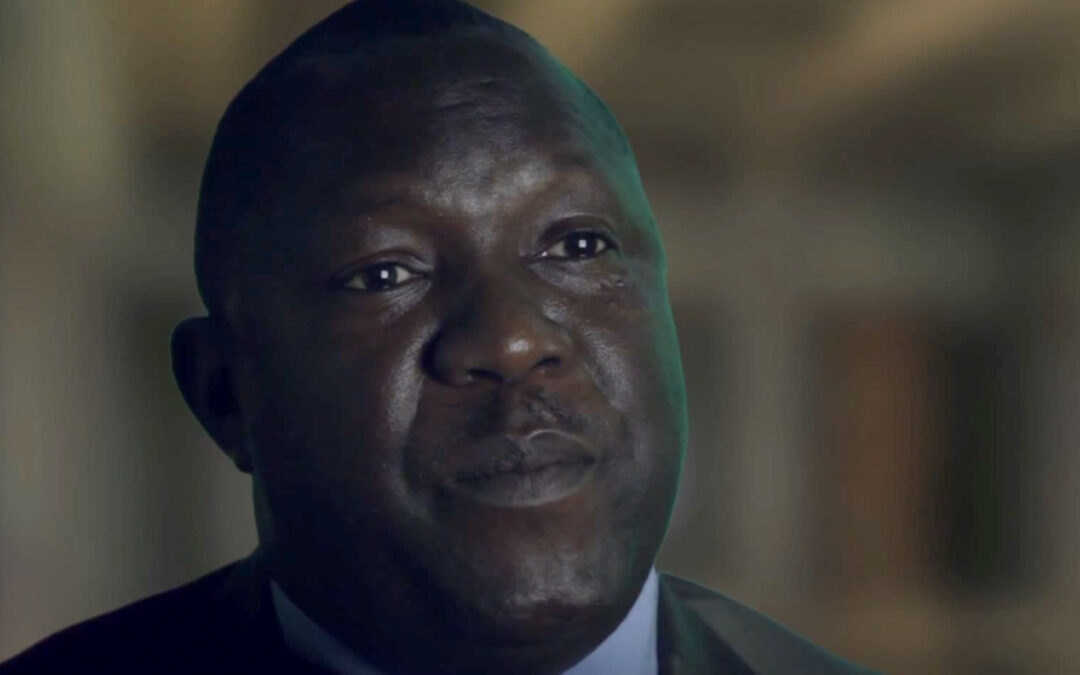
Okay Machisa is the National Director of Zimrights, one of Zimbabwe’s leading human rights organizations, supported by the ICJ. Listen to his video interview.
Jun 12, 2013 | News
The Tshwane Principles on National Security and the Right to Information seek to protect the right to information and to ensure public access to information held by governments, without jeopardizing legitimate efforts to protect people from security threats.

![Smoke rises after an Israeli air strike on the village of Taybeh in southern Lebanon [Source: Al Jazeera]](https://www.icj.org/wp-content/uploads/2026/03/Screenshot-2026-03-20-at-15.56.24-300x200.png)