Nov 13, 2012 | News, Publications, Reports
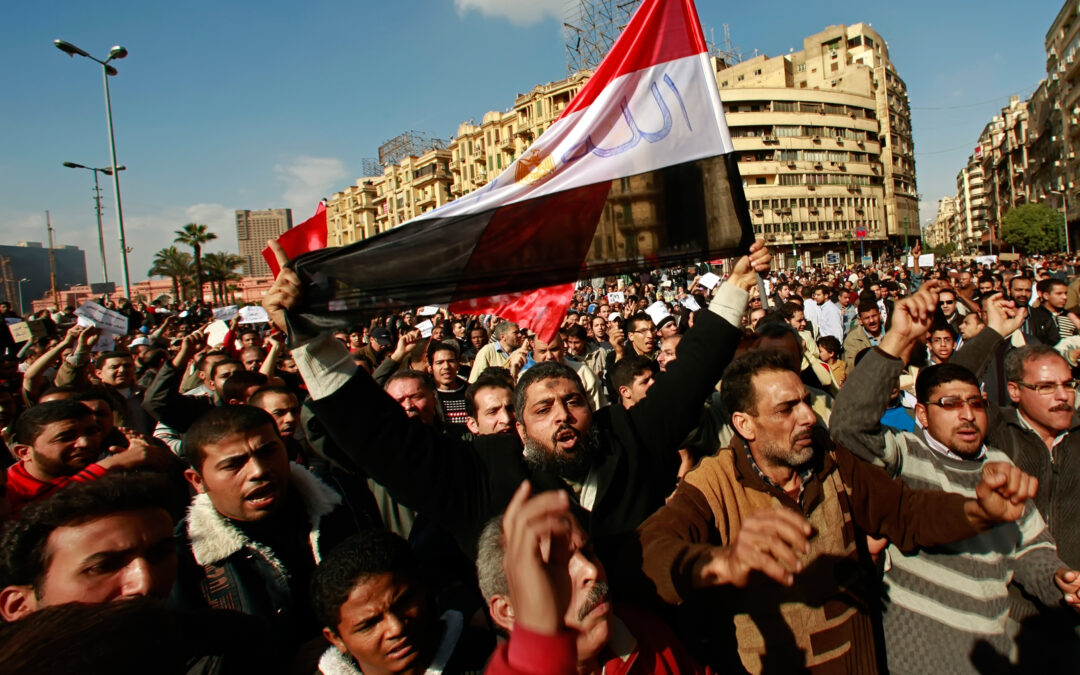
 A new ICJ report shows that the constitutional reform process in Egypt has failed to meet international principles of inclusive participation and transparency, thereby undermining the transition to democracy.
“The Egyptian authorities, including the Constituent Assembly, have failed so far to meet the aspirations of the Egyptian people to adopt a Constitution that establishes the rule of law, recognizes and protects universally accepted human rights without restriction, guarantees the independence of the judiciary in all circumstances, and ensures the effectiveness of democratic institutions,” said Wilder Tayler, ICJ Secretary General.
The ICJ is calling upon the Egyptian authorities to address the challenges currently facing the constitutional reform process, as a matter of urgency; ensure that this process is in full compliance with international standards of inclusive participation and transparency; and guarantee that the new Constitution fully conforms with the rule of law and international law, including human rights standards.
The ICJ report Egypt’s new Constitution: a flawed process; uncertain outcomes details how, in overseeing the process leading to the adoption of a new Constitution, the Supreme Council of Armed Forces (SCAF) failed to ensure the rights of Egyptians to take part in public affairs and to meaningfully participate in the drafting and adoption of a new Constitution.
“Instead of paving the way for a clear and participatory reform process, the SCAF consistently opted for opaque, rushed and non-consensual policies that aimed to shield the armed forces from any form of accountability and that have severely undermined both the legitimacy of the process itself and its outcomes,” Tayler added.
Even though the administration of President Morsi replaced the SCAF on 30 June 2012, the constitution-making process continues to be carried out under the legal framework enacted by the SCAF.
The report also describes how several judicial decisions, in particular the dissolution of the first Constituent Assembly, by a decision from the High Administrative Court, and the dissolution of the People’s Assembly, following a decision by the Supreme Constitutional Court, have contributed to the confusion and uncertainty regarding the drafting of a new constitution.
As a result of this confused process, the draft of the new Constitution, published by the Constituent Assembly on 14 October 2012, has failed to provide for effective guarantees to reinforce the protection of human rights and the supremacy of the rule of law, including by ensuring that the powers of the State are not exercised arbitrarily.
“The draft Constitution does not sufficiently incorporate the rule of law and international law, including human rights standards. This is particularly evident as regards the accountability of the armed forces and their subordination to a legally constituted civilian authority, the content and scope of constitutional human rights, and the compliance of the whole judicial system, including the Office of the Public Prosecutor and the Constitutional Court, with international standards of independence, impartiality and accountability,” said Said Benarbia, ICJ Senior Legal Adviser for the MENA programme.
The report sets out urgent institutional and legal reforms that, together with sufficient political will, may help ensure a clean break with the practices and policies of Mubarak’s regime and the transition to a genuine democracy in Egypt.
Contact:
Saïd Benarbia, Middle East & North Africa Senior Legal Adviser, ICJ, t +41 22 979 3817; e-mail: said.benarbia(at)icj.org
Alice Goodenough, Middle East & North Africa Legal Adviser, ICJ, t +41 22 979 3811; e-mail: alice.goodenough(at)icj.org
Egypt-Flawed constitutional reform process-report-2012
Photo by Reuters

Oct 31, 2012 | News
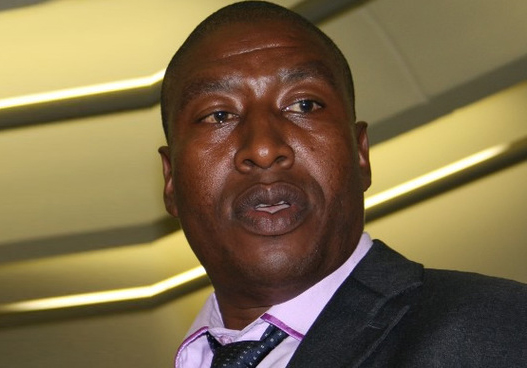 The ICJ welcomed the judgment issued on 24 October 2012 by the Zimbabwe High Court in favour of Farai Maguwu, a human rights defender and director of the Centre for Research and Development.
In September 2011, members of the Central Intelligence Organisation (CIO) confiscated a number of Farai Maguwu’s possessions, including cash, a laptop computer, a camera, and bank cards, at the Harare International Airport while he was about to depart for a human rights conference in Ireland.
The ICJ is concerned that the seizure of property may have been undertaken as an attack on Farai Maguwu for his legitimate human rights work.
According to media reports, Hon. Justice Mathonsi ordered, “the seizure of the applicant’s property by the State agents…be and is hereby declared wrongful, unlawful and unjustified”.
Since the confiscation of his property by the CIO over a year ago, no charges had been brought against Mr Maguwu, neither was his property returned.
Justice Mathonsi affirmed that deprivation of property must only be done in accordance with due process of law. Farai Maguwu had not been advised of the legal basis or reasons for the seizure of his property.
“We congratulate the judiciary of Zimbabwe for this judgment which adheres to the principles of the rule of law, justice and respect for human rights. Furthermore, it is a reminder to State agents that in carrying out their duties they ought to do so within the parameters of the rule of law,” commented Martin Masiga, Deputy Director of the ICJ Africa Regional Programme.
The ICJ calls on the Zimbabwean judiciary to continue to uphold the rule of law and fulfil their responsibility in protecting human rights in Zimbabwe.
Contact:
Martin Masiga, Deputy Director, ICJ Africa Regional Programme, t: +27 11 02482

Oct 15, 2012 | Events
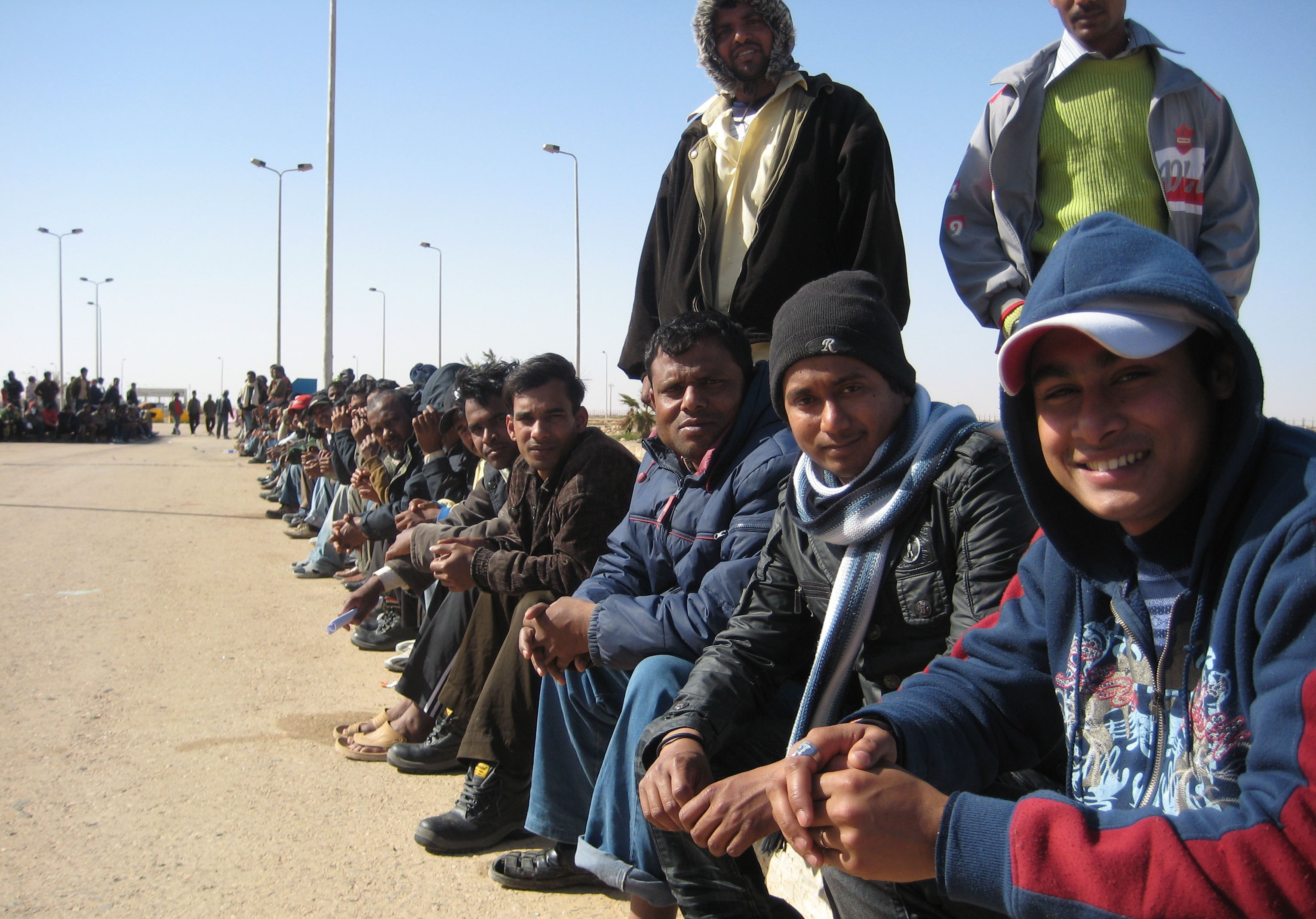 The ICJ, OSCE and Group 484 are holding a training on migration and international human rights law starting on Tuesday 16 October in Kladovo (Serbia).
The training has been organised by the Organisation for Security and Cooperation in Europe (OSCE) and the Serbian NGO “Group 484” and will be given by the International Commission of Jurists. It will focus on international protection of migrants and asylum seekers, the principle of non-refoulement, and human rights in expulsion procedures, drawing from the jurisprudence of the European Court of Human Rights, of the UN human rights systems and from EU law. The training will be centered on the ICJ Practitioners Guide no. 6: Migration and International Human Rights Law.
Serbia-agenda-migration-2012 (download the agenda of the training)
Photo credit: © Stabilisation Unit/DFID (the DFID has no involvement in nor does support this event)
Oct 10, 2012 | News
 On the tenth annual World Day against the Death Penalty, the ICJ urges the President of India to grant clemency to Mohammed Ajmal Amir Kasab.
“There is no doubt that Kasab’s crimes were heinous causing immeasurable suffering but execution is not the answer,” said Sam Zarifi, ICJ Asia Pacific Regional Director. “Putting him to death would be a significant step backwards for India. It would end the eight-year hiatus on executions and disregard the call in repeated UN General Assembly Resolutions that all States should observe an immediate moratorium on the death penalty with a view towards full abolition.”
October 10, 2012 is the World Day against the Death Penalty. The ICJ considers the death penalty to constitute a violation of the right to life and a form of cruel and inhuman punishment.
The ICJ calls on all countries to abolish the death penalty.
“The death penalty violates the inherent dignity of the person,” Zarifi added. “And as we have seen in India as well as all over the world, it is not possible to administer capital punishment without some degree of inconsistency, subjectivity and arbitrariness.”
More than 150 of 192 United Nations member states have either abolished the death penalty or do not practice it.
In South Asia, Nepal abolished the death penalty in its 1997 Constitution and Sri Lanka has not carried out an execution since 1976.
Kasab, a 25-year old Pakistani national, was sentenced to the death for his role in the Mumbai terrorist attack in 2008.
The Supreme Court confirmed Kasab’s death sentence on 29 August 2012, upholding the judgment of the Bombay High Court on 21 February 2011 and the sentence handed down by a lower court in May 2010. On 18 September 2012, Kasab sent a four-line handwritten mercy plea to the President of India.
The Maharashtra Home Ministry recommended rejecting the mercy plea on 24 September 2012 and Governor of Maharashtra, K Sankaranarayan, advised the same on 29 September 2012. The petition has now been forwarded to the Union Government.
CONTACT:
Sam Zarifi, ICJ Asia-Pacific Regional Director, t: +41(0)22 979 38 00; sam.zarifi(at)icj.org
Sheila Varadan, ICJ Legal Advisor, South Asia Programme, t: +66 857200723; sheila.varadan(at)icj.org

Oct 6, 2012 | News
The promotion of colonel Raju Basnet is a slap in the face for the victims of Nepal’s protracted civil war, ICJ and other human rights groups said today.
The Nepali cabinet’s decided on October 4, 2012, to promote colonel Raju Basnet to the rank of brigadier general. Human Rights Watch, Amnesty International, and the International Commission of Jurists say the United Nations and the Nepali National Human Rights Commission compiled credible evidence of systematic enforced disappearances and torture at Bhairabnath Battalion headquarters in Kathmandu under the command of the colonel Raju Basnet in 2003.
On the basis of this evidence, in 2007 Nepal’s Supreme Court ordered an independent investigation and prosecution of these human rights violations. That order includes allegations that Basnet personally committed acts of torture.
“Nepal’s cabinet has thrown the entire idea of holding soldiers accountable for abuses out the door,” said Brad Adams, Asia director at Human Rights Watch. “This cynical and reprehensible decision seriously undermines respect for human rights and contradicts Nepal’s assurances to the international community that it would hold those implicated in wartime crimes to account.”
Basnet’s promotion occurred under the leadership of the United Communist Party of Nepal – Maoist (UCPN-M). During the war, the UCPN-M was itself responsible for enforced disappearances, torture, and unlawful killings, and has not had to answer for a single wartime violation, the groups said. Agni Sapkota, a UCPN-M member, was appointed to a cabinet position even as he was under a court-ordered police investigation for his involvement in a 2005 unlawful killing.
“Despite years of promises, the Maoists and the army have shown themselves united in one crucial aspect: contempt for the notion of accountability for criminal acts and victims’ rights to justice, truth, and reparation,” said Polly Truscott, Amnesty International’s South Asia director.
International law applicable in Nepal obligates the government to investigate and prosecute serious violations of international human rights and humanitarian law. Consistent with international legal principles, officials implicated in serious offenses should be removed or suspended pending completion of full investigations, with full respect for their due process rights.
The Nepali Supreme Court in an August decision directed the government to put in place appropriate legislation and guidelines to ensure that security officials are vetted before they are appointed or promoted to high-level positions.
“With the promotion of Basnet, the denial of justice and accountability has essentially turned into government policy,” said Sam Zarifi, Asia director at the International Commission of Jurists. “This decision is basically the current Nepali government saying it does not care about the rule of law, does not care about its own Supreme Court directives, and indeed, does not care about the best interests of its own citizens. This promotion is a signal to all perpetrators that power trumps justice.”
The rights groups called on the international community to urge the Nepali government to revoke its decision.
“Nepali civil society, with support from the UN and the international community, has spent years seeking to promote justice and accountability,” Adams said. “By promoting Col. Basnet, the government has sent a clear signal to the Nepali people and the country’s international supporters that it not committed to these same goals.”
For more information, please contact:
In Kathmandu, for ICJ, Govinda Sharma: +977-985-106-1167
In Bangkok, for ICJ Asia-Pacific, Sam Zarifi: +66-807-819-002

![Smoke rises after an Israeli air strike on the village of Taybeh in southern Lebanon [Source: Al Jazeera]](https://www.icj.org/wp-content/uploads/2026/03/Screenshot-2026-03-20-at-15.56.24-300x200.png)