Feb 23, 2018 | News
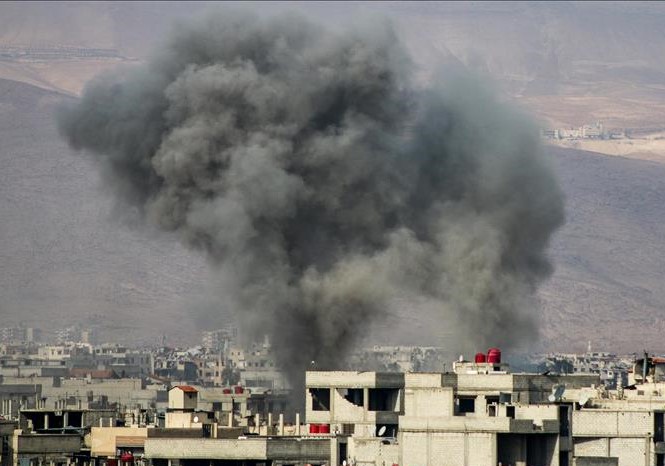
The ICJ today called on the governments of Syria and Russia to cease all attacks on the civilian population in Eastern Ghouta.
Intentionally directing attacks against the civilian population and civilian objects, including hospitals, constitutes a war crime.
All those responsible for such crimes must be held accountable.
“The UN Security Council is blatantly failing to discharge its primary responsibility for maintaining international peace and security. It’s so paralyzed by division that it cannot even enforce its own resolutions on protecting the civilian population in Syria and ensuring unimpeded humanitarian access,” said Said Benarbia, Director of the ICJ Middle East and North Africa Programme.
“After 7 years of shielding the Syrian regime from accountability for its egregious crimes, including the use of chemical weapons, Russia is joining forces with this regime’s cynical enterprise to murder and starve its own people,” he added.
The air and artillery bombing campaign conducted by the Syrian government, with the backing of Russia, have caused hundreds of victims since Sunday.
The destruction of hospitals and the lack of basic supplies and medicines are making the living conditions of the civilian population extremely dire.
Under international humanitarian law, the Syrian government and its ally Russia have obligations to protect the civilian population and to grant rapid and unimpeded passage to humanitarian relief for the residents of Eastern Ghouta.
The UN Security Council imposed a disarmament plan concerning the Syrian chemical arsenal, yet credible reports of government use of chemical weapons against civilians continued to emerge as late as January and February 2018, in particular in Eastern Ghouta and Saraqeb.
In its last report in October 2017, the OPCW-UN Joint Investigative Mechanism established the responsibility of the Syrian government for the use of chemical weapons.
In the same month, Russia vetoed a resolution to renew the Mechanism’s mandate.
“States must act individually and collectively to stop the escalation of horrors we are witnessing in Eastern Ghouta. They must also ensure, including through any means available in their national legal systems, as well as at the regional and international level, that all those responsible for the war crimes, crimes against humanity and other international crimes committed in Syria, irrespective of their nationality, rank or status, are brought to justice,” Benarbia added.
Contact
Said Benarbia, Director of the ICJ Middle East and North Africa Programme, tel: +41 798783546, e-mail: said.benarbia(a)icj.org
Syria – Ghouta Bombing – News – Webstory – 2018 – ARB (Arabic translation in PDF)
Feb 23, 2018 | News
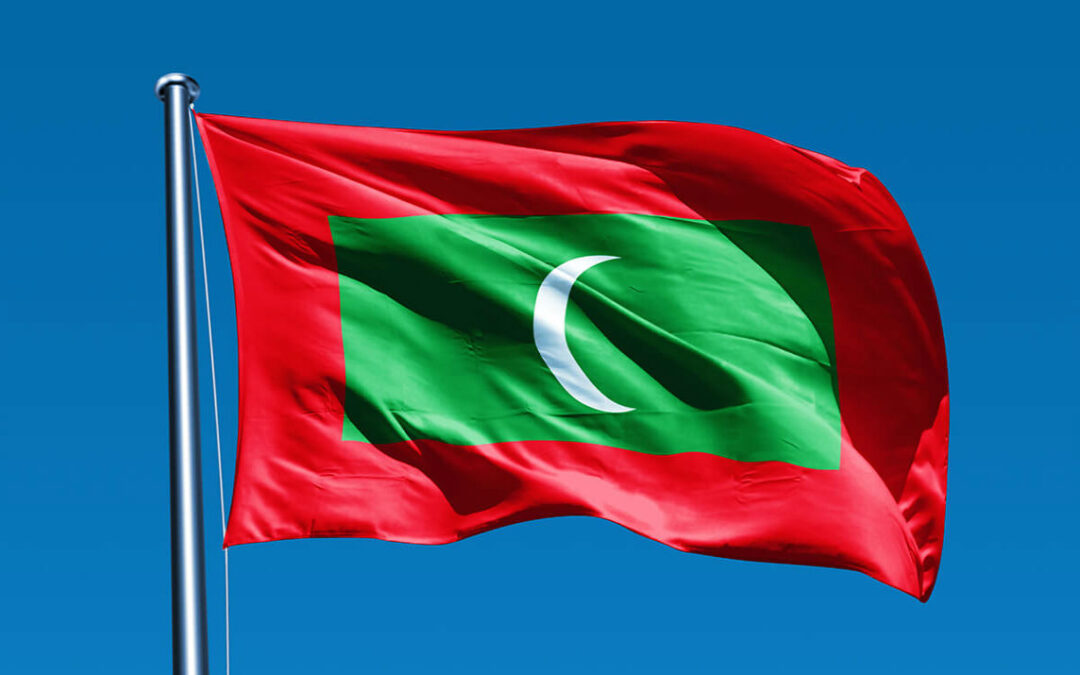
As the assault on the rule of law and human rights under the state of emergency in the Maldives continues, the ICJ expressed concerned about government reprisals taken against lawyers for performing their legitimate professional functions.
The ICJ urged the Maldivian authorities to stop obstructing the work of lawyers and respect the independence of the legal profession.
The ICJ called on the government to immediately lift the state of emergency, revoke the “suspension” of human rights protections, release judges of the Supreme Court and persons detained for political reasons, and ensure the independence of the judiciary.
On 22 February, the Department of Judicial Administration, the administrative arm of the Maldivian judiciary, suspended lawyer Hussain Shameem for an indefinite period of time, citing an ongoing investigation against him.
“No lawyer should be subject to persecution for carrying out their professional duties. Lawyers like Hussain Shameem are indispensable in ensuring human rights protection and upholding the rule of law in the Maldives, especially during a state of emergency,” said Frederick Rawski, ICJ’s Asia-Pacific Director.
The decision to suspend Shameem came only days after the Maldivian police launched an investigation against him for “obstruction of justice” and “obstruction of the administration of law and other government function”.
Hussain Shameem is representing members of the political opposition who are in detention, including former President Maumoon Abdul Gayoom and parliamentarian Faris Maumoon.
Before his suspension, Hussain Shameem had made public statements asserting that the declaration emergency declared by the Government on 5 February 2018 was unconstitutional.
He had also highlighted the poor conditions of detention of his clients.
The ICJ has learned that the police confiscated the mobile phones of another two lawyers, Mahfooz Saeed and Moosa Siraj.
Like Shameem, they were representing individuals arrested and detained during the state of emergency, including Justice Ali Hameed, who was part of the Supreme Court bench that recently issued a judgment directing the release of members of the opposition.
The police have also informed lawyers taking up cases during the state of emergency that they can only meet their clients for 30 minutes, which is an arbitrary and unlawful restriction on the fair trial rights of accused persons.
Under international standards, including the UN Basic Principles on the Role of Lawyers, governments must ensure that lawyers are able to perform all of their professional functions without intimidation, hindrance, harassment or improper interference.
International standards also provide that lawyers shall not suffer, or be threatened with, prosecution or administrative, economic or other sanctions for any action taken in accordance with recognized professional duties, standards and ethics.
“The government’s actions against these lawyers, who are just doing their job of protecting their clients’ rights, has a chilling effect on other lawyers in the country as it sends a message that any exercise of their professional responsibilities perceived as contrary to wishes of the governments will not be tolerated,” added Rawski.
Contact:
Frederick Rawski, ICJ Asia Pacific Regional Director, t: +66 64 478 1121, e: frederick.rawski(a)icj.org
Reema Omer, ICJ International Legal Adviser for Pakistan (London), t: +447889565691; e: reema.omer(a)icj.org
Additional information: the state of emergency
On 5 February, the Government of the Maldives had declared a 15-day state of emergency under Article 253 of the Constitution, suspending a range of human rights protections. The declaration of emergency followed a Supreme Court judgment on 1 February that ordered the release of at least nine members of opposition parties, who were in detention on a number of charges.
On 20 February, the Parliament extended the state of emergency for another thirty days, citing the ongoing constitutional crisis. The extension appears to have been taken in violation of Maldivian law and the Constitution as the number of parliamentarians required for such an extension was not present during the vote.
The constitutionally and internationally protected rights that have been suspended in part or in full during the state of emergency include, among others, the right to liberty; the right to freedom of assembly; and the right to privacy. Basic safeguards surrounding arrest, detention, search and seizures – including the criminal procedure code – have also been suspended.
The International Covenant on Civil and Political Rights (ICCPR), to which the Maldives is a State Party, allows for States only to derogate from full protection of only a limited number of human rights during declared “public emergency which threatens the life of the nation.” No rights can be entirely suspended. Measures of derogation may only be taken to the extent strictly necessary to meet a specific threat to the life of the nation.
Feb 12, 2018 | News
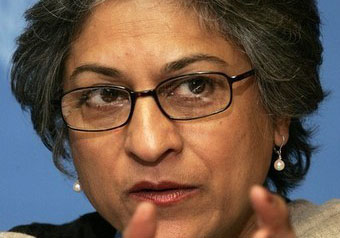
The ICJ mourns the loss of its former Commissioner, Executive Committee Member and Honorary Member, Asma Jahangir, who was at the frontline of the struggle for the rule of law and human rights in Pakistan and around the world.
Ms. Jahangir died of cardiac arrest on Sunday, 11 February, in Lahore, Pakistan. She was 66.
“The ICJ benefited immeasurably from Asma Jahangir’s contribution and leadership. She was a giant of the human rights movement, dedicated to defending the rule of law and fighting for the rights of everyone – including her fiercest detractors,” said Sam Zarifi, ICJ’s Secretary General.
Asma Jahangir was elected to the ICJ in 1998, and went on to serve on the organization’s Executive Committee until the end of her term.
She continued to work closely with the ICJ as an Honorary Member.
Asma Jahangir started her journey as a human rights defender as a petitioner is a case challenging the military dictatorship of Yahya Khan. She was only 19 at the time.
She continued throughout her life to be an outspoken critic of military rule and abuses in Pakistan and at the forefront of the struggle for human rights and the rule of law in the country.
In 1987 she co-founded the Human Rights Commission of Pakistan, which remains one of the oldest and most preeminent human rights organizations in the region.
Asma Jahangir was a senior advocate of the Supreme Court with a legal career spanning nearly forty years.
In 1987, along with other women lawyers, she established the first legal aid cell in the country for free legal representation to women, children, bonded laborers and religious minorities.
She also made lasting contribution to the human rights globally, and served as a UN Special Rapporteur for three different mandates: Extrajudicial, summary or arbitrary executions (1998 to 2004); freedom of religion or belief (2004 to 2010); and the situation of human rights in Iran (2016 – 2018).
In the course of her work as a human rights activist, she was repeatedly threatened, put under house arrest and even imprisoned. However, these attacks did not deter her from her commitment to human rights.
“Asma Jahangir’s brave, powerful voice for human rights and dignity has fallen silent much too soon. We will miss her and strive to live up to her example,” said Zarifi.
Last year, Asma Jahangir participated in ICJ’s Women profiles video series:
Asma Jahangir profile

Feb 8, 2018 | News
A proposed new law regulating public assembly adopted by the Philippine House of Representatives would allow for unlawful restrictions on the right to peaceful assembly, the ICJ said today.
On 5 February 2018, the House of Representatives passed on third reading House Bill 6834, which proposes to repeal the Public Assembly Act of 1985.
The law would prohibit persons below the age of 15 from organizing a public assembly and would subject participants or organizers to potential criminal liability for holding a peaceful assembly without the approval of local executives.
“This legislation deceives us into thinking that there is no more need to obtain prior permission to holding a public assembly,” said Emerlynne Gil, ICJ’s Senior International Legal Adviser for Southeast Asia.
“But in effect, organizers will still need to secure the approval of the local executive before holding a public assembly,” she added.
The proposed law states that any person or group intending to organize a public assembly will only need to serve notice to the city or municipal mayor at least three days prior to the assembly without having to secure a permit.
However, at the same time it prohibits the “holding of a public assembly at a time and place other than that approved by the city or municipal mayor.”
“The proposed law does not improve on the old one. It now increases the penalty for holding a public assembly without approval of local authorities to six (6) years,” Emerlynne Gil said.
“The law is also silent as to who may be penalized. Hence, the ICJ fears that organizers and participants alike could be held liable,” she added.
Under international standards, freedom of people to assemble should generally not require prior permission.
The law would also contravene the rights of children that are protected under the Philippines’ legal obligations.
“The provision incorporates into law the arcane and discredited attitude that ‘children should be seen but not be heard’,” said Emerlynne Gil.
“If children are prohibited from organizing a peaceful assembly, this prevents them from exercising their right to impart information freely,” she added.
Under the Convention on the Rights of the Child, children must be guaranteed the right to freedom of assembly.
The bill now goes to the Philippine Senate for its consideration.
The ICJ calls on lawmakers in the Philippines not to adopt the proposed law in its current form.
Any new legislation should conform to international standards, including on the right to freedom of assembly without prior permission and the rights of children to assemble freely, the ICJ adds.
Contact
Emerlynne Gil, Senior International Legal Adviser for Southeast Asia, tel. no. +662 619 8477 (ext. 206); e: emerlynne.gil(a)icj.org
Philippines-Public assembly act 1985-News-Web stories-2018-ENG (Full story in PDF)
Feb 7, 2018 | News
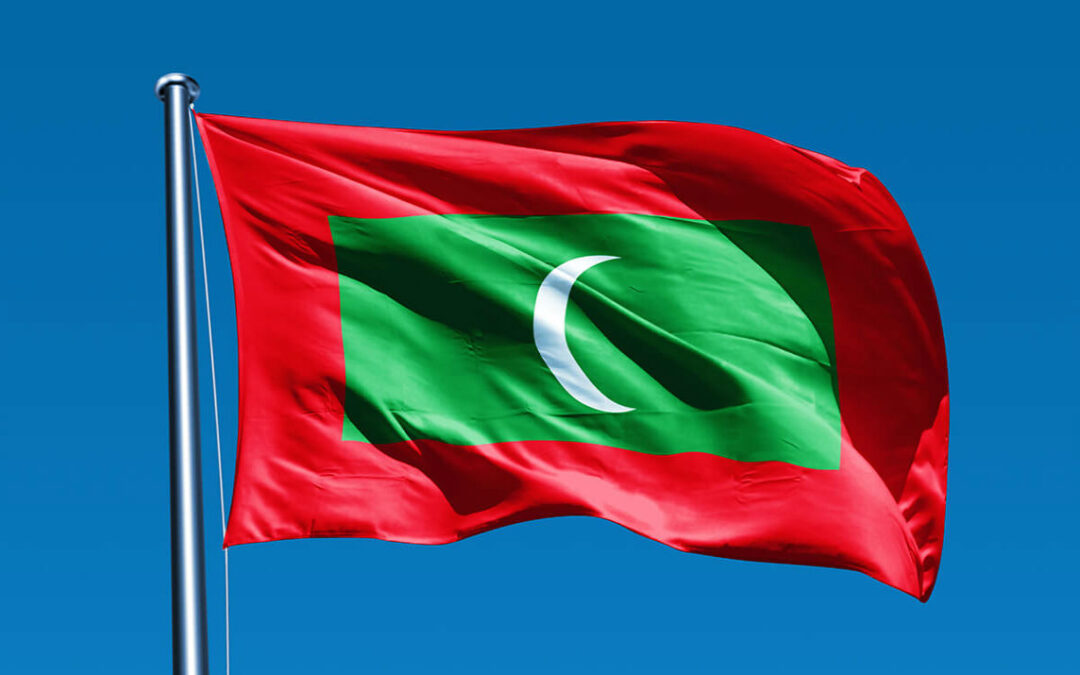
The judgment yesterday by three Supreme judges of a rump Supreme Court that overturned order of the full Supreme Court to release nine members of opposition political parties lacks legitimacy, the ICJ said today.
On 1 February, the Supreme Court had ordered the release of nine members of the opposition parties, who had been convicted for or charged with a wide range of offences, and held the cases required “retrial and judgments pursuant to the law”.
The petitioners had alleged the criminal proceedings against them were based on “political motivations” and were in violation of the Constitution of the Maldives and its international human rights obligations.
Instead of implementing the judgment, the Government responded by declaring a state of emergency and suspending a range of human rights protections.
On the night of 5 February, the national defense forces and the police forcefully entered the Supreme Court.
The Chief Justice held members of the forces in contempt of court, after which they dragged the Chief Justice out of the Court premises.
The Chief Justice and Justice Ali Hameed were later arrested on charges of corruption and “obstructing administration of law or other government function”.
On 6 February 2018, the remaining three judges of the Supreme Court overturned parts of the 1 February judgment, including the directions to release members of the opposition parties, “in light of the concerns raised by the President.”
“The judgment by three judges on Tuesday, reversing an order by the full court, lacks legitimacy. By unlawfully arresting two members of the Court, including the Chief Justice, the Government has effectively stripped the Supreme Court of all its independence and impartiality,” said Ian Seiderman, ICJ’s Legal and Policy Director.
“The arrest of judges Abdulla Saeed and Justice Ali Hameed for carrying out their proper and legitimate judicial functions would have sent a clear message to the remaining judges that any exercise of independence that was contrary to wishes of the governments would not be tolerated,” Seiderman added.
The ICJ also highlighted that conduct of the remaining judges of the Supreme Court suggests a risk that they themselves could become complicit in ongoing human rights violations.
The ICJ also expressed concern at the health of Justice Ali Hameed, who was taken to the hospital on Tuesday night and is feared to be in critical condition.
His family has reportedly been denied access to him.
The ICJ has also learned that Justice Ali Hameed’s family members have been detained and are being denied access to lawyers.
There are also credible reports that suggest Justice Ali Hameed is being detained in very small cells with poor ventilation that get very hot because of direct sun exposure for prolonged periods – which could be a possible cause of his health condition.
“The detention of judges and their family members and their possible ill-treatment smacks of retribution, which is prohibited under Maldivian and international law,” said Seiderman.
The ICJ urged the Government to immediately lift the state of emergency, release judges of the Supreme Court and all other political prisoners, implement the 1 February ruling of the Supreme Court and ensure the independence of the judiciary.
Contact:
Ian Seiderman, ICJ Legal and Policy Director, e: ian.seiderman(at)icj.org
Reema Omer, ICJ International Legal Adviser for South Asia (London), t: +447889565691; e: reema.omer(at)icj.org
Additional information
Under international standards, including the UN Basic Principles on the Independence of the Judiciary, it is the duty of all governmental and other institutions to respect and observe the independence of the judiciary.
This means that there shall not be any inappropriate or unwarranted interference with the judicial process and judges shall be free to decide cases without any restrictions, pressures, threats or interferences.
Furthermore, international standards provide that all complaints against judges in their judicial and professional capacity shall be processed expeditiously and fairly under an appropriate procedure; they shall have the right to a fair hearing; and they shall be subject to suspension or removal only for reasons of incapacity or behaviour that renders them unfit to discharge their duties.