Aug 3, 2017 | News
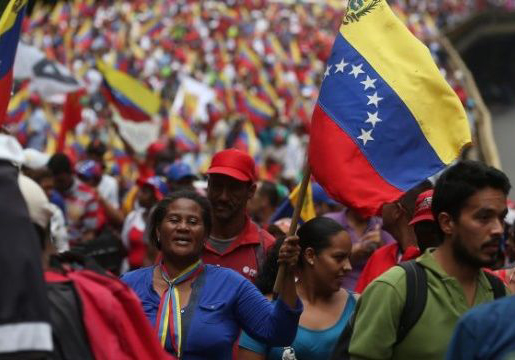
The ICJ is deeply concerned by the Constituent Assembly elections held in Venezuela on 31 July and the violence that accompanied the process and left a number of people killed, injured or arbitrarily detained.
The ICJ considers that the election of a National Constituent Assembly (NCA) failed to comply with the Article 347 of the current Constitution, which provides the legal basis for convening of an NCA. In particular, a significant portion of the members of the NCA should be chosen in open and universal elections, but instead are to be selected from restricted social sectors.
Such arrangements undermine the right to direct, free, equal and secret elections recognized under international human rights standards, the Geneva-based organization adds.
“A Constitution which does not guarantee the basic principles of the rule of law and the validity of fundamental human rights and freedoms not only violates the international obligations of the Venezuelan State, but can also be used as a means of undermining the human rights of Venezuelans,” said Sam Zarifi, Secretary General of the ICJ.
The ICJ also calls for a prompt and independent investigation into alleged electoral fraud on the day of the poll.
The ICJ says that irrespective of its legitimacy, the new NCA must respect human rights and rule of law principles.
In particular, until the approval of a new Constitution, the NCA must respect the current Constitution of 1999, especially in terms of judicial independence, and protection of human rights.
Similarly, the new Constitution, which the NCA will draft, must also fully guarantee the basic principles of the rule of law, including the separation of powers, legislative autonomy, the independence of the judiciary, the subordination of military forces to the civil authority and the principle of legality and judicial control of executive actions.
The new Constitution also must fully guarantee the protection of human rights and fundamental freedoms.
It must enshrine the prohibition of trials of civilians by military courts, and ensure that states of emergency respect the requirements and guarantees of the Covenant International Covenant on Civil and Political Rights (ICCPR) and other international law and standards, the ICJ adds.
The ICJ also considers that the new Constitution, in addition to incorporating the human rights and fundamental freedoms already contained in the current Constitution, should add the express prohibition of extrajudicial executions, enforced disappearances, torture and ill-treatment, arbitrary detention, and other serious human rights violations.
Jul 20, 2017 | News
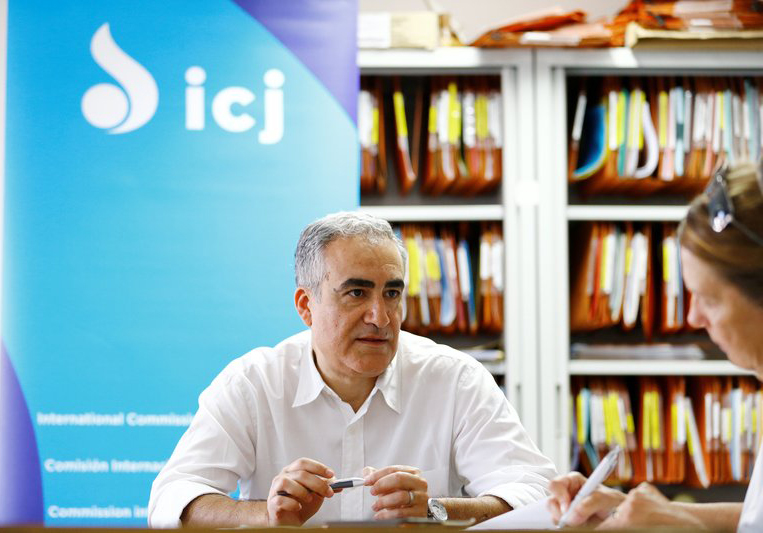
An interview of ICJ Secretary General Sam Zarifi with Reuters journalist Stephanie Nebehay.
GENEVA (Reuters) – Donald Trump is one of a new breed of leaders around the world who seek to use their democratic mandate to undermine the rule of law, the head of a legal and human rights watchdog said on Wednesday.
Branding the U.S. president an “authoritarian populist”, Saman Zia-Zarifi, secretary-general of the Geneva-based International Commission of Jurists (ICJ), compared him to the leaders of Turkey, the Philippines, Hungary and Venezuela.
Zarifi cited as an example Trump’s travel ban on nationals from six Muslim-majority countries, a policy that he called “highly problematic” under the U.S. constitution and international law.
“What is different now is that a certain kind of populism is being used to actually counter the notion of the rule of law,” Zarifi said in an interview at the headquarters of the ICJ, which is composed of 60 eminent judges and lawyers from all regions who seek to protect human rights and the rule of law.
“The new populism has a certain shamelessness about it that is new. It’s not that people are denying that they are violating rights, what they are saying is they can violate rights because somehow they are empowered by the people,” he said.
Zarifi, who took over at the ICJ in April, said the new breed of populists included Turkey’s President Tayyip Erdogan, Venezuela’s Nicolas Maduro, the Philippines’ Rodrigo Duterte, Hungary’s Prime Minister Viktor Orban and Jaroslaw Kaczynski, head of Poland’s ruling party.
“I would say that in the U.S., Trump is an authoritarian populist. He has authoritarian tendencies but he still is facing checks and balances,” Zarifi said. “So he is not a full-blown authoritarian figure.”
The U.S. Supreme Court revised parts of Trump’s executive order banning travellers from Iran, Libya, Somalia, Sudan, Syria and Yemen, a policy Trump says is aimed at tackling terrorism.
“Looking at it again from the point of view of U.S. law – I’m an American lawyer – it seems highly problematic,” said the Iranian-born Zarifi, who moved to the United States as a teenager and holds a law degree from Cornell University.
Supreme Court rulings would be, he said, “a test for the health of the system of checks and balances in the U.S.”
Turkish Judiciary “Politically Compromised”
A crackdown by Erdogan’s government has led to the arrest of 50,000 people and the suspension of 150,000 in the year since a failed military coup in Turkey where the judiciary is “now politically compromised”, Zarifi said.
The Turkish government has said the action is justified by the gravity of the threat to the state from the coup attempt.
On Monday, the state prosecutor asked a court to remand the local Amnesty International director and nine other activists in custody pending trial for membership of a terrorist organisation.
Erdogan was quoted by Turkish media this month as saying they were detained on the basis of intelligence and that the judiciary would make its own decision.
But Zarifi said the judiciary should have thrown the case out.
“The handling of the case highlights the very serious concerns – and alarm in fact at this point – that we have raised about the independence of the judiciary and the legal system in Turkey over the last few years.”
Photo Credit: Reuters / Pierre Albouy
Jul 13, 2017 | News
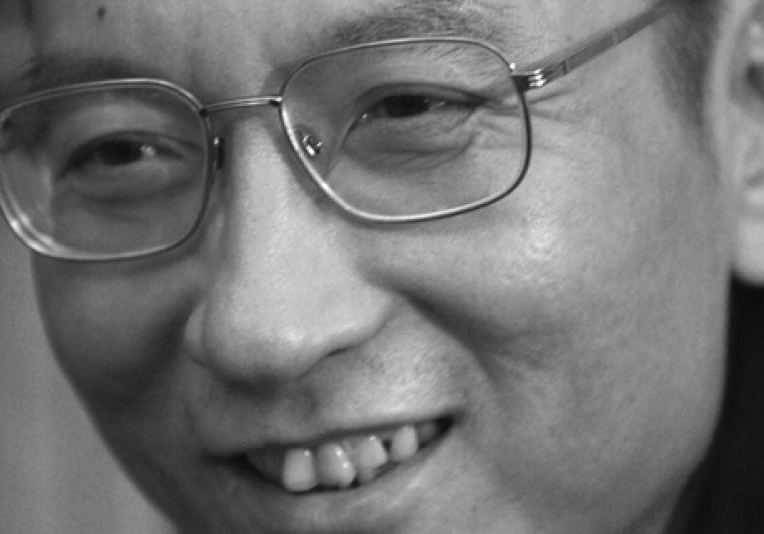
The ICJ today mourns the passing of Chinese human rights defender and Nobel Peace Prize winner, Liu Xiaobo. Liu Xiaobo was awarded the Nobel Peace Prize in 2010 and was described as the “foremost symbol of the struggle for human rights in China.”
He passed away today at the First Hospital of China Medical University, while still in the custody of Chinese authorities.
He has been imprisoned since 2009, after being found guilty for “subverting state power”, for calling for a new constitution in China. His wife, poet Liu Xia, remains under house arrest in Beijing.
In May 2017 authorities announced that he had been diagnosed with late-stage liver cancer.
Chinese authorities refused calls that he be allowed to travel to receive medical treatment abroad.
The ICJ honors Liu Xiaobo for his peaceful and unrelenting pursuit for human rights in China, and calls on the government to end the house arrest, and guarantee the freedom of movement, of Liu Xia.
Sam Zarifi, ICJ’s Secretary General said: “Liu Xiaobo will continue to serve as an inspiration not only for those fighting for human rights in China, but also for all human rights defenders working to promote and protect human rights all over the world.”
The ICJ believes that the death of Liu Xiaobo should serve as a wake up call to the Government of China that they cannot simply and brutally silence dissenting voices.
Liu Xiaobo’s death only serves to amplify his call for human rights and upholding the rule of law in China.
The ICJ has consistently called upon the Chinese government to end the harrassment and unlawful detention of lawyers and human rights defenders.
Jul 6, 2017 | News
The ICJ welcomed today’s judgment by the International Criminal Court (ICC) that South Africa had violated its legal obligations by failing to arrest Sudanese President Omar al-Bashir during his visit to the country in June 2015.
The ICC said the South Africa should have surrendered him to the ICC for prosecution.
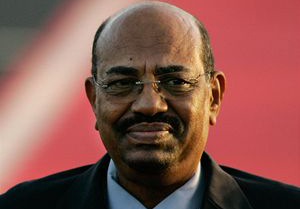
President al-Bashir (photo) had been indicted by the ICC for genocide, crimes against humanity and war crimes in connection with attacks against civilians in the Darfur region of the country.
“The judgment is a victory for international justice. It is an extremely important step toward tackling impunity in Sudan and worldwide,” said Arnold Tsunga, the ICJ Africa Regional Director.
The court said unequivocally that South Africa had a duty to arrest and surrender president Bashir to the ICC for prosecution.
It said that South Africa had a duty to recognize that head of state immunity did not apply to al Bahsir under the terms of the Rome Statute, and that leaving the question of immunity to South Africa’s voluntary discretion would have created “an insurmountable obstacle for the court to exercise its jurisdiction.”
The Court also said that Sudan itself had an obligation to remove and immunities for al-Bashir in respect to matters for which he was under indictment.
“The ICJ calls upon the Governments of South Africa and Sudan to respect the judgment of the Court, and urges all States to cooperate with the Court to bring President al-Bashir, and others indicted to justice,” Tsunga added.
The ICC also called on the UN Security and the Assembly of States Parties of the ICC to take appropriate measures to address the non-compliance by South Africa and Sudan.
Background
South Africa has been a party to the Rome Statute of the International Criminal Court since 27 November 2000.
States parties to the Rome Statute are obliged to cooperate with ICC, including by arresting and surrendering persons under indictment by the ICC who may be on their territory.
South Africa took measures to cooperate with the ICC by enacting the Implementation of the Rome Statute of the International Criminal Court Act, 2002.
Accordingly, South Africa had a duty to arrest President al-Bashir when he visited South Africa in 2015
President al-Bashir stands accused of serious crimes, with two warrants of arrest issued by the pre-trial chamber of the ICC.
They all are for war crimes, crimes against humanity and genocide, related to events in the Darfur region of Sudan.
Among the acts are widespread murder, rape and torture.
Read also:
South Africa appears before ICC for failure to arrest Sudanese President Bashir – The ICJ observes the hearing
Contact
Arnold Tsunga, ICJ Director for Africa, t +27716405926 ;
Thulani Maseko, ICJ Legal consultant, t: +268 7602 5165
Ian Seiderman, ICJ Legal & Policy Director, t: +41 22 979 3837
Jul 6, 2017 | News
The Turkish government should immediately release 11 people, including eight Turkish human rights defenders, who were detained yesterday in Istanbul, said the ICJ today.
The human rights defenders were arrested on unknown charges while attending a training in Istanbul on digital security and information management; also reported arrested were two trainers (reportedly a German and a Swedish national) and the owner of the training venue.
Amnesty International has reported that they were denied access to family members and lawyers, contrary to existing regulations.
“These arrests are an alarming setback to efforts to restore the rule of law in Turkey,” said ICJ Secretary General Sam Zarifi.
“Arrest and harassment of human rights defenders violates Turkey’s international legal obligations. Turkish authorities should be protecting human rights and supporting the important work of human rights defenders, but instead we have witnessed a continuing pattern of arrests on human rights defenders in the country,” he added.
On 6 June, Taner Kiliç, the President of Amnesty International Turkey was arrested.
He is currently detained on remand in what several international observers have qualified as baseless charges.
Turkey is currently under a State of Emergency enacted after the attempted coup d’etat of 15 July 2016.
While recognizing the serious attack suffered by Turkish institutions, the ICJ has repeatedly called for an end to this year-long state of emergency under which sweeping measures have been enacted that continue to erode human rights, including rights of fair trial, the right to liberty, and freedoms of expression and association.
“It is time to turn the page of the emergency and return to the rule of law,” said Sam Zarifi. “The work of human rights defenders, judges and lawyers is essential to a democratic society that upholds human rights.”
Background
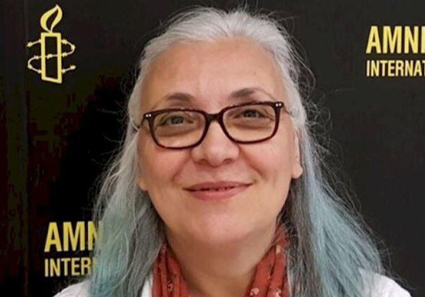
The human rights defenders arrested are Idil Eser (current Director of Amnesty International Turkey, photo), İlknur Üstün (Women’s Coalition), Günal Kurşun (Human Rights Agenda Association), Nalan Erkem (Citizens Assembly), Nejat Taştan (Equal Rights Watch Association) , Özlem Dalkıran (Citizens’ Assembly), Şeyhmuz Özbekli, and Veli Acu (Human Rights Agenda Association).
Contact
Olivier van Bogaert, ICJ Director of Media & Communications, t: +41 22 979 3808 ; e: olivier.vanbogaert(a)icj.org