

Bangladesh: ICJ condemns the execution of Asadul Islam
The ICJ today condemned the execution of Asadul Islam, leader of Jamayetul Mujahideen Bangladesh (JMB), a banned Islamist group.
Asadul Islam was hanged on Sunday for his alleged role, along with seven other JMB leaders, in a 2005 bus bombing that killed two lower court judges.
He was tried and convicted in absentia in 2005, later detained in July 2007, and had been in prison since that time. In August 2016, the Bangladesh Supreme Court dismissed his final appeal, paving the way for his execution this week.
“The death penalty is the ultimate form of cruel and inhuman punishment, and does not serve the interests of justice,” said Sam Zarifi, Asia-Pacific Regional Director for the ICJ.
“While Bangladesh authorities have an obligation to bring to justice perpetrators of such terror attacks, this must be done through fair trials and the rule of law,” he aded.
The International Covenant on Civil and Political Rights (ICCPR), to which Bangladesh is a party, protects the right to life and the right to a fair trial.
As the UN Human Rights Committee has emphasized, because of its irreversible nature it is particularly important that all applicable fair trial standards be scrupulously observed in capital punishment cases.
Failure to respect such standards constitutes a violation of both the right to life (ICCPR article 6) and the right to a fair trial (ICCPR article 14).
The ICJ is particularly concerned that his trial in absentia impaired Islam’s right to a fair trial, as the right to be present at trial and present a defence are critical elements of a fair trial.
The ICJ opposes capital punishment in all cases without exception.
The ICJ considers that the death penalty constitutes a violation of the right to life and the right not to be subjected to cruel, inhuman or degrading treatment.
In December 2014, the UN General Assembly by an overwhelming margin adopted a resolution, for the fifth time since 2007, emphasizing that the use of the death penalty undermines human dignity and calling on those countries that maintain the death penalty to establish a moratorium on its use with a view towards its abolition.
“Especially where the death penalty is concerned, the State must take extra care to ensure that the trial process meets the highest standards of fairness and due process under international law, as there is no possibility of reversal once carried out,” Zarifi said.
“Bangladesh has an unfortunate record of administering unfair trials in terrorism cases, including those involving the death penalty,” he added. “Asadul Islam’s case raises serious concerns that the Bangladesh authorities once again failed to meet their fair trial obligations under international law, and therefore this death sentence should not have been carried out.”
The ICJ calls on Bangladesh to impose an official moratorium on the death penalty and take prompt measures towards its abolition.
Contact
Sam Zarifi, ICJ Asia Pacific Regional Director (Bangkok), t: +66 807819002; email: sam.zarifi(a)icj.org
Cease wrongful detentions in Jammu and Kashmir
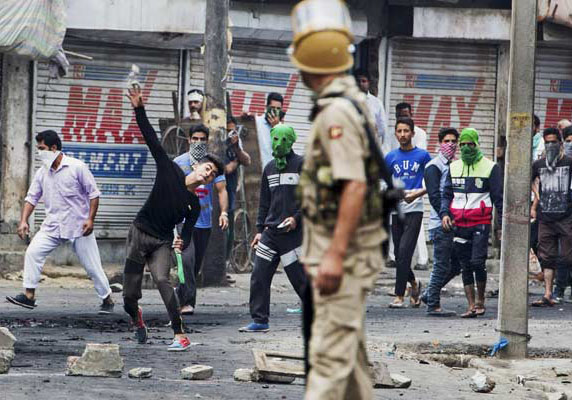
Authorities in Jammu and Kashmir should end the use of the Jammu and Kashmir Public Safety Act (PSA) to arbitrarily detain people, including children, the ICJ, Amnesty International India and Human Rights Watch said today.
The PSA violates international due process standards and should be repealed, the groups said.
“The use of the PSA to detain people, particularly children, violates a range of human rights, and its increasing use in recent weeks undermines the rule of law and further entrenches impunity in Kashmir,” said Sam Zarifi, ICJ Asia Director.
“Police should end the use of the PSA; if people are suspected of committing offences, they should be properly charged and given fair trials,” he added.
The PSA is an administrative detention law that allows detention without charge or trial for up to two years in some cases.
Following an amendment in 2012, the PSA expressly prohibits the detention of anyone under 18.
Between 9 July – when protests and violent clashes broke out in the state following the killing of a leader of the armed group Hizbul Mujahideen – and 6 October, authorities have detained over 400 people, including children, under the PSA, according to media reports.
“The government has a responsibility to address violence during protests, but indefinitely detaining people without charge only adds to the lawlessness,” said Meenakshi Ganguly, South Asia Director, Human Rights Watch. “Detaining children under the PSA is not only unlawful, but could have negative repercussions for years.”
On 16 September, Rayees Ahmad Mir, who is 16 years old according to his school records, was arrested in Baramulla district under ordinary criminal procedure for allegedly throwing stones at security forces.
Two days later, an executive official passed an order to detain him under the PSA, to preclude his release on bail.
The order incorrectly stated that he was 18 years old. Rayees Mir’s family challenged the order before the Jammu and Kashmir High Court, producing documents that proved he was only 16.
On 7 October, the court stated that Rayees Mir should be treated according to juvenile justice rules, as there was prima face evidence that he was a minor, and ordered his transfer to a juvenile home. The PSA detention order has not yet been quashed.
An official at the Kot Bhalwal jail said on 14 October that the prison authorities had not yet transferred Rayees Mir, as they had not received a copy of the court order.
Mir Shafqat Hussain, a lawyer representing many PSA detainees, said: “In a number of cases the families have not been informed about the grounds of detention. Arresting minors and booking them under PSA is definitely going to have an effect on their psyche. From schools and colleges, these boys end up in jails where they will be kept together with adults. It is definitely going to have an adverse effect on them.”
On 18 August, Waheed Ahmed Gojree, who is 16 according to his school records, was arrested in Kupwara district and detained at a police station.
According to his family, the police at first told them he would be released the next day, but then said that he had been detained under the PSA.
He was first taken to a jail in Baramulla, and then to the central jail in Jammu.
An official at the central jail confirmed that he had been detained under the PSA.
The family has not yet received a copy of the detention order, or been formally informed about the grounds of Waheed Gojree’s detention.
The authorities appear to have not taken his age into account before issuing his detention order.
“The central and state governments have spoken about following the principle of insaniyat, or humanity, in dealing with the crisis in Jammu and Kashmir,” said Aakar Patel, Executive Director at Amnesty International India. “But detaining children under the PSA is neither humane nor lawful.”
Amnesty International India, Human Rights Watch and the ICJ believe that anyone detained under the PSA must either be charged promptly with a recognizable criminal offence or prosecuted in a fair trial, or else be released.
Not prosecuting people suspected of committing offences can also violate the human rights of the victims of these offences.
Contact
Sam Zarifi, ICJ Asia & Pacific Regional Director (Bangkok), t: +66 807819002; email: sam.zarifi(a)icj.org
india-joint-statement-psa-news-press-release-2016-eng (full text of statement, in PDF)
Renowned Uyghur intellectual Ilham Tohti selected as 2016 Martin Ennals Award Laureate
Selected by a jury of 10 global human rights organizations, including the ICJ, Ilham Tohti has worked for two decades to foster dialogue and understanding between Uyghurs and Han Chinese. Detained in China, he could not travel to collect his prize in Geneva.
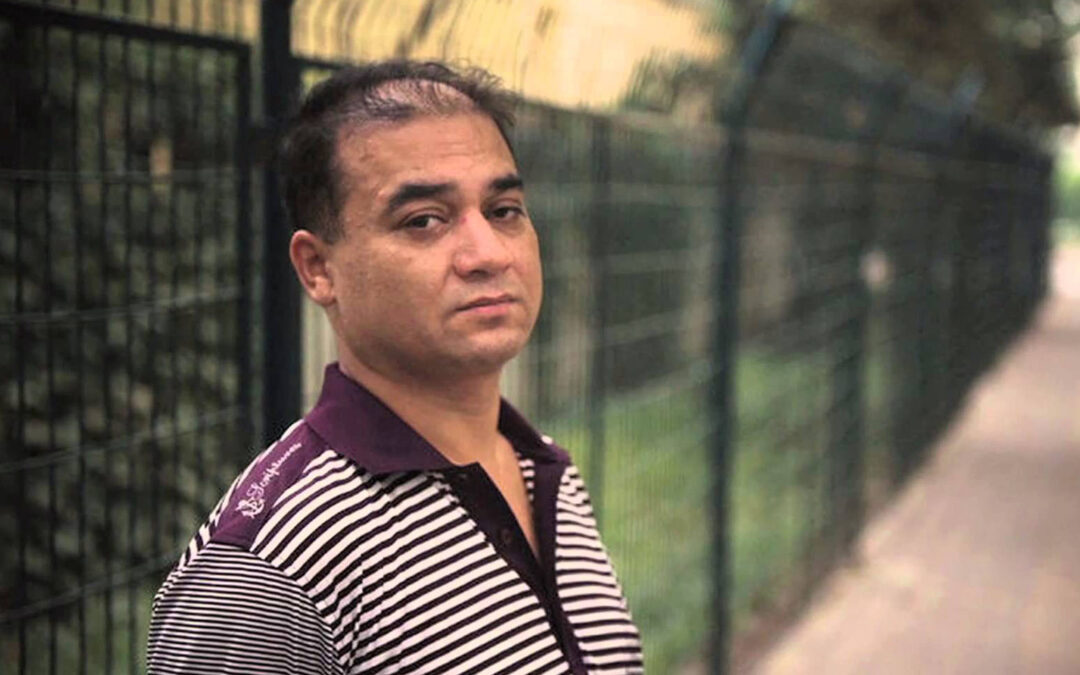
A renowned Uyghur intellectual in China, Ilham Tohti (photo) has rejected separatism and violence, and sought reconciliation based on a respect for Uyghur culture, which has been subject to religious, cultural and political repression in the Xinjiang Uyghur Autonomous Region.
In 1994 he began to write about problems and abuses in Xinjiang, which led to official surveillance.
From 1999 to 2003 he was barred from teaching.
Since then the authorities have also made it impossible for him to publish in normal venues.
As a response, he turned to the Internet to broaden public awareness of the economic, social and developmental issues confronting the Uyghurs.
In 2006 he established Uyghurbiz.net, a Chinese-language site, to foster dialogue and understanding between Uyghurs and Han Chinese.
Over the course of its existence, it has been shut down periodically, and people writing for it have been harassed.
In 2009, he was arrested for several weeks after posting information on Uyghurs who had been arrested, killed and “disappeared” during and after protests.
In the following years he was periodically subjected to house arrest, and in 2013, while bound to take up a post as a visiting scholar at Indiana University, USA, he was detained at the airport and prevented from leaving China.
On January 15, 2014, Ilham Tohti was arrested on charges of separatism and sentenced to life imprisonment, after a two-day trial.
Numerous statements were issued by Western governments and the European Union condemning his trial and sentence, and in early 2016 several hundred academics petitioned the Chinese leadership for his release.
Upon his nomination as a Finalist for the Martin Ennals Award earlier this year, his daughter stated: “My father Ilham Tohti has used only one weapon in his struggle for the basic rights of the Uyghurs of Xinjiang: Words; spoken, written, distributed, and posted. This is all he has ever had at his disposal, and all that he has ever needed. And this is what China found so threatening. A person like him doesn’t deserve to be in prison for even a day.”
Martin Ennals Foundation Chair Dick Oosting said: “The real shame of this situation is that by eliminating the moderate voice of Ilham Tohti the Chinese Government is in fact laying the groundwork for the very extremism it says it wants to prevent.”
The two other finalists received Martin Ennals Prizes.
Zone 9 Bloggers (Ethiopia) are nine young activists who called themselves ‘Zone 9’ as a symbol for Ethiopia as a whole (Kality prison in Ethiopia, has 8 zones and holds many journalists and political prisoners).
They document human rights abuses and shed light on the situation of political prisoners in Ethiopia.
Six of its members were arrested and charged with terrorism.
Although they have now been released, three are in exile while four of the six remaining in Ethiopia are still facing charges and banned from travel.
Razan Zaitouneh (Syria) has dedicated her life to defending political prisoners, documenting violations, and helping others free themselves from oppression.
She founded the Violations Documentation Center (VDC), which documents the death toll and ill-treatment in Syria’s prisons.
She had started to cover all sides in the conflict when she was kidnapped, alongside with her husband and two colleagues, on 9 December 2013. Her whereabouts remain unknown.
Background
The “Nobel Prize of Human Rights”, the Martin Ennals Award for Human Rights Defenders (MEA) is a unique collaboration among ten of the world’s leading human rights organizations to give protection to human rights defenders worldwide.
Strongly supported by the City of Geneva, the award is given to Human Rights Defenders who have shown deep commitment and face great personal risk. Its aim is to provide protection through international recognition.
The Jury is composed of the following NGOs: ICJ, Amnesty International, Human Rights Watch, Human Rights First, Int’l Federation for Human Rights, World Organisation Against Torture, Front Line Defenders, EWDE Germany, International Service for Human Rights, and HURIDOCS.
Contact:
Michael Khambatta, Director, Martin Ennals Foundation, t: +41 79 474 8208, e: khambatta(a)martinennalsaward.org
Olivier van Bogaert, Director, ICJ Media and Communications, and ICJ Representative on the MEA Jury, t: +41 22 979 38 08, e: olivier.vanbogaert(a)icj.org
china-mea-laureate-2016-news-press-releases-2016-chi (full text in Chinese, PDF)
Watch the Martin Ennals Award Ceremony 2016:
Watch the Ilham Tohti movie:
Thailand: ICJ alarmed at increasing use of arbitrary powers under Article 44
Thailand should immediately end the use of Article 44 of the Interim Constitution which gives the Head of the military junta sweeping, unchecked powers contrary to the rule of law and human rights, said the ICJ today.
Despite widespread international condemnation of Article 44, its use has increased every year since the Interim Constitution was promulgated on 22 July 2014 following the coup d’état of 22 May 2014.
The Head of the National Council for Peace and Order (NCPO), Prayut Chan-o-cha, has issued at least 107 Orders under Article 44 (available in the public domain): at least one in 2014; 44 in 2015; and 62 in 2016 to date – with 37 Orders being issued since June 2016 alone.
“The Head of the NCPO’s increasing willingness to use extraordinary powers to make ad hoc, arbitrary changes to existing laws and regulations without judicial oversight should be alarming to everyone, including the business sector,” said Wilder Tayler, Secretary General of the ICJ.
“Article 44 places law making power in the hands of one man, while Articles 47 and 48 of the Interim Constitution block judicial review or access to remedies and reparation. This is entirely inconsistent with the three fundamental pillars of the rule of law, equality, accountability and predictability, and should be revoked immediately,” he added.
The Article 44 orders range from those restricting the civil rights of all people in Thailand to those aimed at seemingly minor and ordinary bureaucratic processes.
To date, Article 44 has been used to introduce a raft of revisions into existing Thai law without observing proper process or practice, including providing for the acquisition of land for the establishment of Special Economic Zones bypassing the usual environmental and social checks and balances provided for in domestic legislation; granting military officers sweeping powers of investigation, arrest and detention; and prohibiting the gathering of five or more persons for political purposes.
“It is long past time for Thailand to revoke Article 44 and all others laws, orders and announcements issued since the military coup that are inconsistent with the rule of law and human rights,” Tayler said.
“The justifications the military presented for such measures were never valid or credible, and certainly not so after more than two years of direct military rule.”
All Orders issued under Article 44 – and all other NCPO Orders and Announcements – will continue to remain in force under the draft Constitution that was accepted at a public referendum on 7 August 2016, and may only be repealed or amended by an Act.
Last week, Deputy Prime Minister Wissanu Krea-ngam announced that the NCPO was considering converting many of the hundreds of orders issued by the NCPO into legislation, including those issued under Article 44.
thailand-art-44-ncpo-news-press-releases-2016-eng (full text with background, in PDF)
thailand-head-of-ncpo-orders-advocacy-2016-eng (full list of all publicly available Head of NCPO Orders, in PDF)
thailand-art-44-ncpo-news-press-releases-2016-tha (full text in Thai, PDF)
Recent News
 El Salvador: Crimes against humanity within the framework of public security policy11 Mar 2026
 HRC61: Joint oral statement of The ICJ in the interactive dialogue with the Special Rapporteur on Counter-terrorism and Human Rights11 Mar 2026
 A Human Rights-Based Approach to Decriminalizing Conduct Associated with Poverty and Status10 Mar 2026
 HRC61: Oral statement of The ICJ in the interactive dialogue with the Special Rapporteur on the Rights of Persons with Disabilities06 Mar 2026