
ICJ E-Bulletin on counter-terrorism and human rights – no. 104
Read the 104th issue of ICJ’s monthly newsletter on proposed and actual changes in counter-terrorism laws, policies and practices and their impact on human rights at the national, regional and international levels. The E-Bulletin on Counter-Terrorism and Human...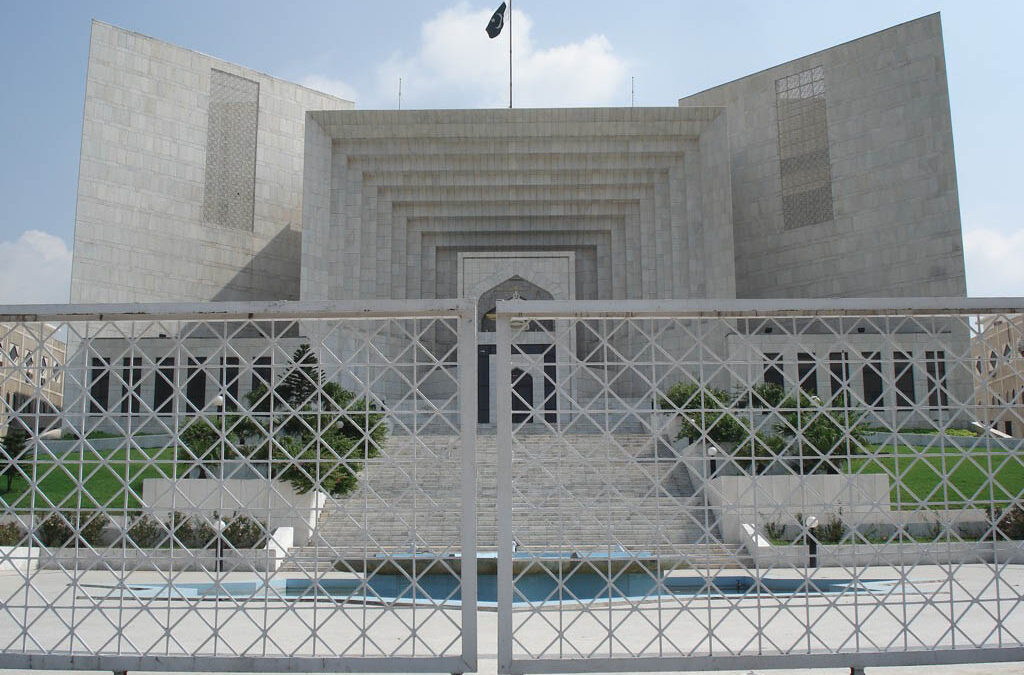
Pakistan: Supreme Court validation of military court trials a blow to the rule of law
Pakistan’s Supreme Court’s rejection of petitions by families of 16 people sentenced to death who complained of unfair trials in the country’s military courts seriously set back respect for human rights and the rule of law, the ICJ said today.
“The Supreme Court failed to use an important opportunity to show that human rights protect all people, including those who are accused of terrorist acts or other heinous crimes,” said Sam Zarifi, ICJ’s Asia Director. “Pakistan’s very serious problem with terrorism can only be addressed with more respect for human rights and the rule of law, not less, and certainly not through deeply flawed military tribunals that provide neither justice nor truth.”
Families of sixteen civilians sentenced to death by military courts in secret proceedings challenged their convictions and sentences in the Supreme Court on fair trial grounds. In its 182-page judgment, a five-member bench Supreme Court headed by Chief Justice Anwar Zaheer Jamali held the petitioners had failed to prove the military violated their constitutional right to a fair trial. At convicts are now at imminent risk of execution.
The ICJ is calling on the government of Pakistan to desist from executing these or other convicts, and to reinstate a moratorium on the death penalty it held from 2008 to 2014.
“Trial of civilian suspects in military courts is anathema to human rights and international standards are clear that military courts should only have jurisdiction over military officers for military offences,” said Zarifi. “Pakistan’s military tribunals in particular offer nothing like a fair trial and should be immediately dismantled.”
As highlighted by the ICJ in a briefing paper released in June, proceedings before Pakistani military courts fall well short of national and international standards requiring fair trials before independent and impartial courts: judges are part of the executive branch of the State and continue to be subjected to military command; the right to appeal to civilian courts is not available; the right to a public hearing is not guaranteed; and a duly reasoned, written judgment, including the essential findings, evidence and legal reasoning, is denied. In addition, the procedures of military courts, the selection of cases to be referred to them, the location and timing of trial, and details about the alleged offences are kept secret.
“The ICJ supports the pursuit of justice for all victims of terrorism in Pakistan,” added Zarifi. “However, justice will not be done by subverting the foundational pillar of justice: the right to a fair trial for all suspects –regardless of how serious the offence.”
Since January 2015, when Pakistan empowered military courts to try civilians for terrorism-related offences, 11 military courts have been constituted to hear cases related to terrorism.
These 11 military courts have thus far concluded the trials of 128 people, finding the defendants guilty in 104 cases. A hundred people have been sentenced to death and four have been given life sentences. At least 12 people have been hanged after trials that are grossly unfair.
The ICJ has called on the Pakistan government to roll back the system of “military injustice”, and ensure that all terrorism suspects are guaranteed basic fair trial protections.
The ICJ has also urged that Pakistan reinstate a moratorium on executions with a view to abolishing the death penalty in law and practice, reflecting the call of an overwhelming majority of States in repeated UN General Assembly resolutions. The ICJ considers the death penalty to constitute a denial of the right to life and a from of cruel, inhuman and degrading punishment.
Contact:
Sam Zarifi, ICJ Asia Pacific Regional Director (Bangkok), t: +66 807819002; e: sam.zarifi(a)icj.org
Reema Omer, ICJ International Legal Adviser for Pakistan (Lahore), t: +923214968434; e: reema.omer(a)icj.org
Additional information
In January 2015, Pakistan empowered military courts to try civilians for terrorism-related offences as part of its 20-point “National Action Plan”, adopted by the Government following the horrific attack on the Army Public School in Peshawar.
The expansion of military jurisdiction over civilians was accomplished through the 21st Amendment to Pakistan’s Constitution and amendments to the Army Act, 1952. These amendments allow military courts to try offences related to “terrorism” committed by those who claim to, or are known to, belong to a terrorist organization “using the name of religion or a sect”.
Both amendments are set to expire on 6 January 2017 pursuant to a “sunset clause”, after which they will cease to be in effect, although there is a risk that they could be renewed.
In August 2015, the Pakistani Supreme Court upheld the constitutionality of the 21st amendment and the trial of civilians by military courts for terrorism-related offences.

Pakistan: ICJ condemns attack on lawyers and others in Quetta
The ICJ has deplored a suicide attack at a hospital in Quetta, which killed dozens of people today, in the deadliest attack ever on lawyers in Pakistan and among the worst anywhere.
Many of those killed were lawyers, who had been gathered at a hospital in Quetta following the killing of former president of the Balochistan Bar Association, Bilal Anwar Kasi, in a shooting incident earlier in the day.
“This attack targeted mostly lawyers and intellectuals (many of them from the Pashtun community) who had gathered at the hospital to mourn the loss of one of their own,” said Sam Zarifi, ICJ’s Asia Director.
“As such, it constituted a serious loss for the legal community and increases existing pressure on the independence of the bar.”
The ICJ calls on the Pakistani Government to conduct an immediate, impartial and thorough investigation into the attack and to bring those responsible to justice, including anyone who ordered or was otherwise complicit the crime.
The ICJ also urges the Government to take urgent measures to guarantee the security of lawyers, which should include effective measures of protection against attempts on their lives and lives of their family members.
The UN Basic Principles on the Role of Lawyers affirm that“[w]here the security of lawyers is threatened as a result of discharging their functions, they shall be adequately safeguarded by the authorities.”
“If lawyers are under constant fear of violence, they cannot ensure the functioning of an independent and impartial legal profession – an indispensible requirement for rule of law,” Zarifi added.
Contact:
Sam Zarifi, ICJ Asia Pacific Regional Director (Bangkok), t: +66 807819002; e: sam.zarifi(a)icj.org
Reema Omer, ICJ International Legal Adviser for Pakistan (London), t: +44 7889565691; e: reema.omer(a)icj.org
Turkey: ICJ urges for respect of the rule of law during state of emergency
The ICJ urges Turkish authorities to fully respect the rule of law and human rights under the recently declared state of emergency.
The ICJ is concerned that yesterday’s declaration of a state of emergency could further exacerbate the ongoing attack on institutions and professions that are guardians of the rule of law in Turkey, including the judiciary, the media and academia.
The ICJ reiterates its concern at the ongoing purge within the judiciary that led to the suspension of 2,745 judges and the arrest of hundreds.
Since then, Turkish authorities have summarily suspended, dismissed or arrested more than 50,000 academics, judges, including military judges, and public officials.
The ICJ is concerned that many of these measures are arbitrary and unlawful.
“Turkey needs to respect the tenets of the rule of law and human rights law during the state of emergency,” said Wilder Tayler, ICJ Secretary General.
“There are human rights that can never be restricted even in a state of emergency, notably the right to life, the prohibition of torture or ill-treatment, and the essential elements of arbitrary deprivation of liberty and to a fair trial,” he added.
“The current allegations of torture and ill-treatment of detainees and arbitrary arrests already point to serious violations of human rights. Widespread arrests and suspensions of judges, which began before the declaration of any state of emergency, threaten the right to a fair trial,” Tayler further said.
“The state of emergency must not be used as a means to subvert the rule of law and human rights.”
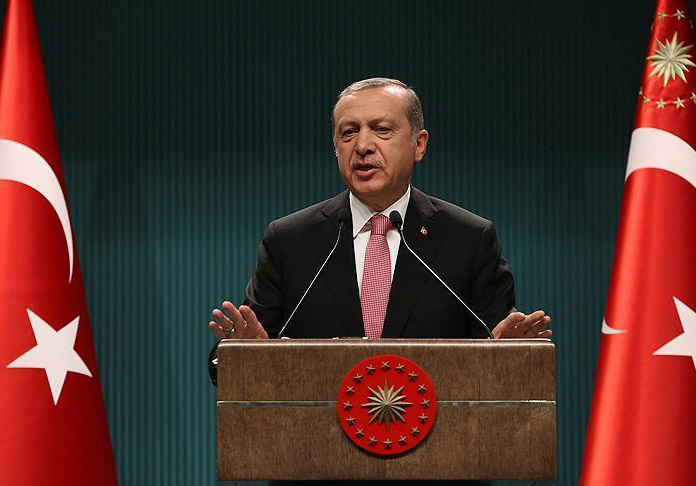
The ICJ remains concerned at President Erdoğan’s statements that he would allow for a reinstatement of the death penalty.
The ICJ firmly opposes the death penalty under any circumstances, and its reintroduction in Turkey which would also be incompatible with Turkey’s obligations under the European Convention on Human Rights and the Second Optional Protocol to the International Covenant on Civil and Political Rights.
Contact
Róisín Pillay, Director, ICJ Europe Programme, t: +32 476 974263 ; e: roisin.pillay(a)icj.org
Massimo Frigo, Legal Adviser, ICJ Europe Programme, t: +41 22 979 38 05 ; e: massimo.frigo(a)icj.org
Background information
The Council of Ministers, chaired by President Recep Tayyip Erdoğan, declared yesterday a three-month state of emergency throughout the whole territory of Turkey in accordance with article 120 of the Turkish Constitution.
The declaration must be ratified by the National Assembly. He has not yet announced what specific measures will be introduced.
Turkey is a party to many human rights treaties, including the European Convention on Human Rights and the International Covenant on Civil and Political Rights.
Under these treaties, the declaration of a state of emergency must remain within the strict boundaries of the law, in particular constitutional and international law.
Any measures derogating from them must be strictly necessary to meet a threat the life of the nation.
Certain human rights obligations cannot be derogated from even under a state of emergency. All rights must continue to be respected, although lawful derogating measures may restrict their scope of application.
Recent News
 El Salvador: Crimes against humanity within the framework of public security policy11 Mar 2026
 HRC61: Joint oral statement of The ICJ in the interactive dialogue with the Special Rapporteur on Counter-terrorism and Human Rights11 Mar 2026
 A Human Rights-Based Approach to Decriminalizing Conduct Associated with Poverty and Status10 Mar 2026
 HRC61: Oral statement of The ICJ in the interactive dialogue with the Special Rapporteur on the Rights of Persons with Disabilities06 Mar 2026