Mar 8, 2018 | Multimedia items, News, Video clips
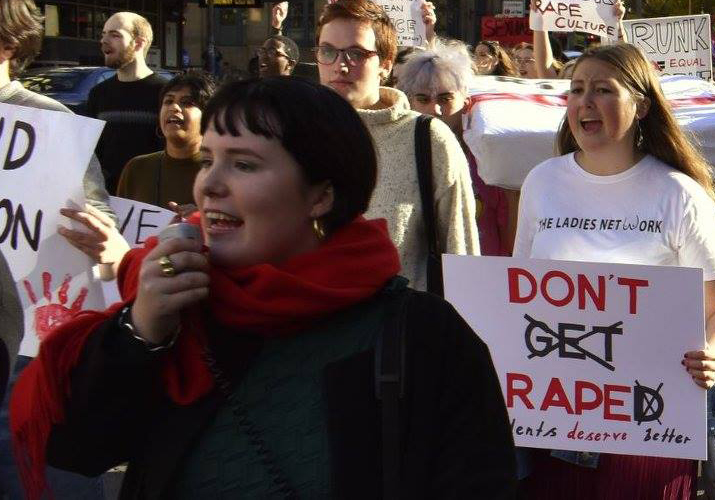
Today on International Women’s Day the world looks to celebrate the achievements of women and advances made towards the realization of women’s human rights but the day is also an opportunity to address the issues that continue to disadvantage women.
In the 70th anniversary year of the Universal Declaration of Human Rights many women around the world have seen States failing to live up to their obligations to ensure that they are able to exercise their human rights.
Where women’s human rights are violated many women face discrimination, denial of equal protection of the law and other impediments in accessing the justice that they deserve.
“The ICJ has a strong commitment to addressing the obstacles women face in accessing justice,” said ICJ Acting Vice-President, Justice Radmila Dragicevic-Dicic.
“The judiciary has an important role in protecting the rights of women, but in many States there is a lack of proper awareness and understanding of issues such as gender based-violence. Many judges would benefit from judicial education on specific gender-based issues to ensure that women victims are made visible and their rights protected by domestic laws and relevant international standards,” she added.
For several years the ICJ has worked on women’s access to justice issues in different countries in all regions with a variety of stakeholders, including human rights defenders, lawyers, judges, governmental authorities and international rights experts and mechanisms.
For example, in Tunisia, the ICJ issued a memorandum calling on authorities to remove the obstacles women face in accessing justice.
The ICJ has held regional dialogues in Africa and Asia with judges and lawyers.
In Asia, one outcome of this was The Bangkok General Guidance for Judges in Applying a Gender Perspective, designed to assist judges in employing a gender perspective in deciding cases before them, which has since been adopted for use by judiciaries in Indonesia and the Philippines.
In Africa, the need for gendered perspectives in judicial decision-making was also raised in a regional report evaluating sexual and gender based violence (SGBV) and fair trial rights.
The ICJ has undertaken substantial work on women’s access to justice in the context of SGBV, including a report calling for an eradication of harmful gender stereotypes and assumptions and a Practitioners’ Guide on Women’s Access to Justice for Gender-Based Violence.
Both have been used as training tools in Asia, Africa and MENA, most recently at a workshop on SGBV in Swaziland.
Last year the ICJ released a memorandum on effective investigation and prosecution of SGBV in Morocco.
The ICJ has also undertaken trial observations during hearings in the landmark Sepur Zarco case, the first case that resulted in a conviction for sexual crimes that had occurred during Guatemala’s internal conflict in the early 1980s.
The ICJ regularly engages with the UN Human Rights Council and the UN Committee on the Elimination of all Forms of Discrimination against Women to highlight issues around women’s access to justice and call on the international community to be vigilant in upholding women’s rights protections.
“The ICJ is lucky to count among its number some very impressive women human rights defenders, who bring a great deal of expertise to the work of the organization,” said Dragicevic-Dicic.
“The five most recent additions to the ICJ have further strengthened the organization’s ability to speak authoritatively on women’s rights, and I look forward to working with my new colleagues to enhance women’s access to justice,” she added.
The new additions to the ICJ include Dame Silvia Cartwright, Former Governor of New Zealand; Professor Sarah Cleveland, Constitutional and Human Rights Professor at Columbia Law School in the USA; Justice Martine Comte who has over 30 years judicial experience in France; Mikiko Otani, member of the UN Committee on the Rights of the Child from Japan; and Justice Lillian Tibatemwa-Ekirikubinza from the Supreme Court of Uganda.
In an interview with the ICJ, Commissioner Justice Elizabeth Evatt, a distinguished Australian lawyer, jurist and trailblazer for women in the legal profession in her country, spoke about the importance of women being able to access justice.
One of the architects of Australia’s Family Law Act of 1975, Justic Evatt told the ICJ how the Act made divorce more accessible and abolished the Common Law relics that gave men greater rights over women, however new problems have emerged since then.
Justice Evatt explained that “(the Act) was an extremely important reform for women. It made it far easier for men and women to access divorce and have their matters dealt with because the court had conciliation and counselling services and also legal aid was more readily available. But I am afraid that since those days, thing have changed. The Family Court is now beset with delays and obstacles and it is impossible for people to get legal aid. People have to take their case on their own or face huge legal costs, so having begun well, it hasn’t continued well. More resources are needed.”
Justice Evatt also considers that there is a need for the government and the judiciary to take more action to address domestic violence.
However, she noted, “there has been a change over the years with a growing awareness of both the police and the local courts, which are the main ones dealing with violence. They have become far more aware of the need to take action to protect women and prevent violence but the cure for domestic violence does not lie just with the courts but also with the whole of society.”
Watch the interview:
Feb 26, 2018 | Events
On 28 February 2018, the ICJ is holding a workshop on combatting sexual and gender-based violence (SGBV) in Swaziland, in cooperation with Women and Law in Southern African – Swaziland (WLSA Swaziland) and the Swaziland Action Group Against Abuse (SWAGAA).
The workshop, held as part of the ICJ’s Global Redress and Accountability Initiative, will consider the prevalence of SGBV in Swaziland, and contributing factors, and will focus on the extent to which perpetrators of such violence are, and can be, held accountable in law and in practice and the means by which victims of SGBV may better access effective remedies and reparation.
Participants will also discuss opportunities for engagement with UN mechanisms on addressing SGBV in the Kingdom of Swaziland.
The workshop is set against the backdrop of urgent recommendations adopted by the UN Human Rights Committee in 2017 on the combatting of violence against women, in respect of which Swaziland must report to the Committee by July 2018.
It comes ahead of Swaziland’s anticipated report, also due in July 2018, to the UN Committee on the Elimination of All Forms of Discrimination Against Women which in 2014 also adopted several recommendations on the combatting of violence against women.
The workshop also comes as national debates continue on the enactment of the Sexual Offences and Domestic Violence Bill, which Swaziland had committed to enact without delay at its 2016 Universal Periodic Review.
Workshop Agenda
Feb 12, 2018 | News
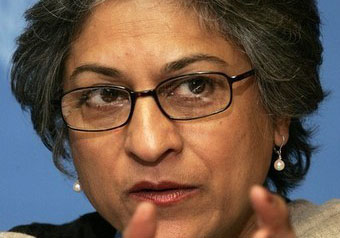
The ICJ mourns the loss of its former Commissioner, Executive Committee Member and Honorary Member, Asma Jahangir, who was at the frontline of the struggle for the rule of law and human rights in Pakistan and around the world.
Ms. Jahangir died of cardiac arrest on Sunday, 11 February, in Lahore, Pakistan. She was 66.
“The ICJ benefited immeasurably from Asma Jahangir’s contribution and leadership. She was a giant of the human rights movement, dedicated to defending the rule of law and fighting for the rights of everyone – including her fiercest detractors,” said Sam Zarifi, ICJ’s Secretary General.
Asma Jahangir was elected to the ICJ in 1998, and went on to serve on the organization’s Executive Committee until the end of her term.
She continued to work closely with the ICJ as an Honorary Member.
Asma Jahangir started her journey as a human rights defender as a petitioner is a case challenging the military dictatorship of Yahya Khan. She was only 19 at the time.
She continued throughout her life to be an outspoken critic of military rule and abuses in Pakistan and at the forefront of the struggle for human rights and the rule of law in the country.
In 1987 she co-founded the Human Rights Commission of Pakistan, which remains one of the oldest and most preeminent human rights organizations in the region.
Asma Jahangir was a senior advocate of the Supreme Court with a legal career spanning nearly forty years.
In 1987, along with other women lawyers, she established the first legal aid cell in the country for free legal representation to women, children, bonded laborers and religious minorities.
She also made lasting contribution to the human rights globally, and served as a UN Special Rapporteur for three different mandates: Extrajudicial, summary or arbitrary executions (1998 to 2004); freedom of religion or belief (2004 to 2010); and the situation of human rights in Iran (2016 – 2018).
In the course of her work as a human rights activist, she was repeatedly threatened, put under house arrest and even imprisoned. However, these attacks did not deter her from her commitment to human rights.
“Asma Jahangir’s brave, powerful voice for human rights and dignity has fallen silent much too soon. We will miss her and strive to live up to her example,” said Zarifi.
Last year, Asma Jahangir participated in ICJ’s Women profiles video series:
Asma Jahangir profile

Jan 22, 2018 | News
The ICJ today called on the Egyptian Parliament to adopt a Draft Law on the appointment of women to the judiciary and to eliminate longstanding discrimination against their appointment as judges.
The Draft Law was introduced by member of the Parliament (MP) Nadia Henry this month and is supported by another 60 MPs.
The Speaker of Parliament has referred it to the legislative committee for review.
“Ensuring women’s full and equal participation in Egypt’s judiciary is necessary for a fair legal system reflective of the community it serves,” said Said Benarbia, ICJ MENA Director.
“It’s also necessary to end decades of discriminatory practices that have meant only a handful of women judges have ever been appointed despite explicit guarantees of equality in the Constitution,” he added.
Article 11 of the Constitution requires the State to ensure the “achievement of equality between women and men in all civil, political, economic, social and cultural rights,” including the right of “holding public and senior management offices in the state and their appointment in judicial bodies and authorities without discrimination”.
Women were first appointed to judicial office in 2007. Between 2007 and 2017 there were less than 67 female judges across Egypt, for a population of more than 100 million.
This significant under-representation of women is entrenched in a widespread discriminatory view, including within the judiciary itself, that working as a judge in court was an inappropriate profession for women.
“The Draft Law is significant first step towards challenging these discriminatory views and harmful practices. The Authorities must not only adopt it, they must also adopt other urgent, practical and structural measures to fully guarantee the rights of women to have equal access to judicial office and ensure their equal representation in the judiciary,” Benarbia added.
Background
The first article of the draft law places an obligation on all judicial bodies to appoint women to judicial offices and ensure that the conditions of their appointment are consistent with those that are applicable to men.
In its second article, the draft law nullifies any law that infringes on the obligation set forth in Article 1. Article 3 of the draft law invalidates any procedures in relation to the appointment of judges if such procedures do not comply with the Article 1 of the draft law.
Article 10 of the UN Basic Principles on the Independence of the Judiciary provide that, “In the selection of judges, there shall be no discrimination against a person on the grounds of race, colour, sex, religion, political or other opinion, national or social origin, property, birth or status…”.
The Convention for the Elimination of Discrimination against Women and the International Covenant on Civil and Political Rights, key human rights treaties to which Egypt has been party since the early 1980s, also explicitly prohibit discrimination against women, including in relation to access to public office such as judicial appointments.
Contact
Saïd Benarbia, Director of the ICJ Middle East and North Africa Programme, t: +41.22.979.3817, e: said.benarbia(a)icj.org
Egypt-women judges-news-2018-ARA
Dec 21, 2017 | News
The ICJ today called on the Moroccan authorities to effectively investigate and prosecute sexual and gender-based violence (SGBV) offences, including by ensuring the rights of victims to effective remedies and reparation and by combatting the impunity prevailing in Morocco over such offences.
The statement came following a high-level mission to Morocco from 18 to 21 December 2017 in which the ICJ launched its memorandum Morocco: ensuring the effective investigation and prosecution of sexual and gender-based violence against women and girls, and engaged with members of the government, the Parliament and the judiciary on the findings and recommendations of the memorandum.
Based on a review of 75 judgments handed down by Moroccan First Instance Tribunal and Courts of Appeal in cases involving SGBV offences, and on interviews with various actors in the justice system, the ICJ documented how the lack of guidelines on investigating and prosecuting SGBV, combined with the inadequacy of evidentiary rules and procedures, frustrate the successful prosecution of SGBV cases in Morocco.
Cases are often dismissed on grounds of insufficient evidence; and sentences, in those cases brought to trial, are often disproportionately lenient. This is partly due to the prevalence of judicial stereotyping, reduction of sentence when the defendant marries the victim (a practice that itself raises human rights concerns), and the arbitrary or unexplained application of mitigating circumstances such as the “social situation of the defendant” or “the relative seriousness of the acts that were committed”.
“Moroccan authorities should overhaul the framework and procedures on investigation and prosecution of SGBV,” said Saïd Benarbia, Director of the ICJ Middle East and North Africa Programme. “They should ensure effective and timely protective measures for the victims; provide for clear guidelines and protocols for law enforcement officers, prosecutors, doctors and other health professionals, and consolidate and supplement the victims’ testimony with additional evidence, in particular medico-legal and forensic evidence.”
“Those in charge of investigations and prosecutions must also minimize the burden on the victims with a view to avoiding their secondary victimization; refrain from stereotyping, victims’ blaming and other harmful practices that undermine the rights of the victims, and challenge, by way of appeal, disproportionately lenient sentences,” concluded Martine Comte, honorary judge and former President of the Court of Appeal of Orléans, France, who led the ICJ Mission.
Contact:
Saïd Benarbia, Director of the ICJ Middle East and North Africa Programme, t: +41.22.979.3817, e: said.benarbia(a)icj.org
Additional information
The mission was led by Martine Comte, honorary judge and former President of the Court of Appeal of Orléans, France, and included Saïd Benarbia, Director of the ICJ MENA programme, and Giulia Soldan, Programme Manager of the ICJ MENA programme.
The ICJ delegation met with Mr Mohamed Aujjar, Minister of Justice; Mr Adil El Bitar, President of the Commission on Justice, Legislation, and Human Rights at the Chamber of Deputies; Mr Mohamed Abdennabaoui, President of the Office of the Public Prosecutor and Prosecutor General of the Cassation Court; and representatives of civil society.
This Press Release is also available in Arabic (in PDF format), here: MOR Mission Dec PR ARABIC
The memorandum Morocco: ensuring the effective investigation and prosecution of sexual and gender-based violence against women and girls is available (PDF format):