Jan 8, 2024 | Advocacy, Cases, News
For Immediate Release
Gambian Ex-Minister Sonko Faces Crimes Against Humanity Charges
(Geneva, January 5, 2024) – The opening of a Swiss trial on January 8, 2024, for serious crimes committed in The Gambia represents a significant advance for justice for the victims of grave abuses, Gambian and international groups that are part of the Jammeh2Justice campaign said today.
The former Gambian Interior Minister Ousman Sonko is charged with crimes against humanity relating to torture, kidnapping, sexual violence, and unlawful killings between 2000 and 2016 under then-President Yahya Jammeh. Jammeh’s 22-year rule was marked by systematic and widespread human rights violations, such as arbitrary arrests, torture including sexual violence, extrajudicial killings, and enforced disappearances of actual and perceived opponents to his rule.
“The trial of Ousman Sonko is another major step in the search for justice for victims of brutal crimes and their families committed under Jammeh’s rule,” said Sirra Ndow, coordinator of the Jammeh2Justice campaign. “The Sonko case should reinforce efforts back in The Gambia to try crimes under Jammeh’s rule so that perpetrators are held to account for the atrocities committed.”
Sonko was arrested in Bern, Switzerland on January 26, 2017, the day after TRIAL International filed a criminal complaint against him. The Office of the Attorney General of Switzerland filed an indictment against Sonko before the Federal Criminal Court on April 17, 2023. The trial, taking place in the city of Bellinzona, is expected to last about three weeks.
The trial is possible because Swiss law recognizes universal jurisdiction over certain serious international crimes, allowing for the prosecution of these crimes no matter where they were committed and regardless of the nationality of the suspects or victims. Swiss nongovernmental organizations, former federal prosecutors, members of parliament, and others have previously criticized judicial officials in Switzerland for lagging behind other European countries on universal jurisdiction cases despite having solid legislation to address serious crimes.
“With Sonko’s trial, Switzerland appears at last to be gaining momentum on prosecuting atrocity crimes committed abroad,” said Philip Grant, executive director at TRIAL International, which supports plaintiffs in the case. “Sonko is the highest-level former official to be tried under the principle of universal jurisdiction in Europe.”
Sonko is the second person to be tried in Switzerland before a non-military court for serious crimes committed abroad, the second person to be tried in Europe for crimes committed in The Gambia, and the highest ranked official to be prosecuted in Europe on the basis of universal jurisdiction. Gambian activists and survivors, and international advocates will attend the trial’s opening in Bellinzona and are available for comment. The first case addressing crimes committed in The Gambia was in Germany against Bai Lowe, a former member of the paramilitary unit known as the “Junglers,” which Jammeh created. Lowe was convicted and sentenced to life in prison by a German court on November 30, 2023, for two murders and an attempted murder, constituting crimes against humanity.
A major challenge will be to ensure that Gambians, whether in the audience or outside the courtroom, can access, follow, and understand the proceedings, which will be conducted in German. Survivors, victims’ groups, and civil society groups have tried to ensure that information on developments is disseminated within The Gambia to increase their impact.
“Developments in the proceedings of such a significant case should be made accessible to Gambians, victims and non-victims alike, in the English language, which they understand, there by boosting their interest in the trial,” said Fatoumata Sandeng, a plaintiff in the Sonko case who heads the Solo Sandeng Foundation. “Greater action on accountability by the government back home in Gambia is also needed.”
Since Jammeh’s fall, The Gambia has moved forward with only two prosecutions for Jammeh-era crimes. In December 24, 2021, the final report of Gambia’s Truth Reconciliation and Reparations Commission (TRRC) found that Jammeh and 69 of his associates committed crimes against humanity, and called for their prosecution. On May 25, 2022, the Gambian government accepted the TRRC’s recommendation for accountability, but without an action plan.
On May 12, 2023, the government presented a long-awaited detailed implementation plan calling for the creation of a Special Prosecutor’s Office to complete the investigations initiated by the TRRC and to prepare case-ready dossiers. A hybrid tribunal of Gambia and the Economic Community of West African States (ECOWAS) would be created to carry out prosecutions of the most serious offenses. The Gambia and ECOWAS have created a joint technical committee to develop the hybrid court.
“The Gambian government and ECOWAS should move without delay to create the hybrid court,” said Elise Keppler, associate international justice director at Human Rights Watch. “Victims and the Gambian public have waited a very long time to have the chance to see justice done.”
Groups involved with the campaign include: Africa Center for International Law and Accountability (ACILA), African Network Against Extrajudicial Killings and Enforced Disappearances (ANEKED), Amnesty International–Ghana, Center for Justice and Accountability, Commonwealth Human Rights Initiative (CHRI), Gambia Center for Victims of Human Rights Violations, Ghana Center for Democratic Development (CDD-GHANA), Human Rights Advocacy Center, Human Rights Watch, International Commission of Jurists, Institute for Human Rights and Development in Africa (IHRDA), Media Foundation for West Africa (MFWA), POS Foundation, Right 2 Know–Gambia, Solo Sandeng Foundation, The Toufah Foundation, TRIAL International, and Women’s Association for Victims’ Empowerment (WAVE).
For more information on the trial, please visit:
https://trialinternational.org/latest-post/ousman-sonko-case-the-second-trial-for-crimes-against-humanity-in-switzerland-to-take-place-in-january-2024/
or, https://trialinternational.org/wp-content/uploads/2023/04/The-Ousman-Sonko-Case_QA.pdf
For more information, please contact:
For Human Rights Watch, in New York, Elise Keppler (English, French): +1-917-687-8576 (mobile); or kepplee@hrw.org. Twitter: @EliseKeppler
For TRIAL International, in Geneva, Vony Rambolamanana (English, French, German): +33-66 -48-80-305 (mobile); or media@trialinternational.org. Twitter: @trial
For ANEKED, in New York, Nana-Jo Ndow (English, French, Spanish, Portuguese): +1-929-684-5734 (mobile); or nanajo.ndow@aneked.org. @theANEKED
For International Commission of Jurists, in Barcelona, Reed Brody (English, Spanish, French, Portuguese): +1-917-388-6745 (mobile); or reedbrody@gmail.com. Twitter: @reedbrody
For Solo Sandeng Foundation, in Germany, Fatoumatta Sandeng (English, German, Mandinka, Wollof) +49-16-31-74-75-19 (mobile); or solosandengfoundation@gmail.com. Twitter: @solosandengfound
Dec 20, 2023 | Cases, News
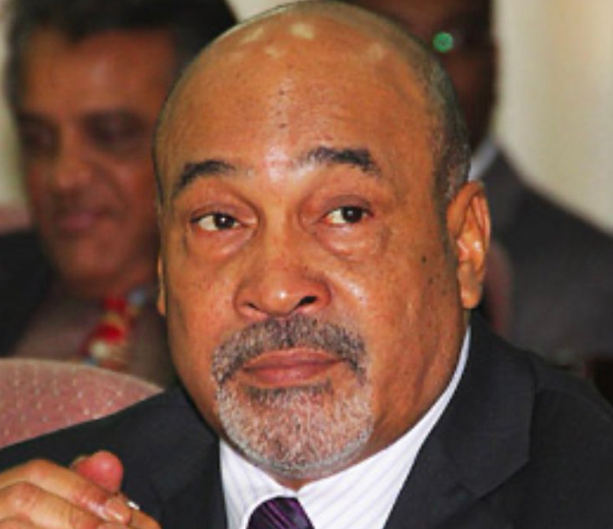
Desi Bouterse sentenced to 20 years in prison
Paramaribo, Suriname; 20 December 2023 – The International Commission of Jurists (ICJ) welcomed the 20 December decision by the Hof van Justitie, the highest court in Suriname, confirming the conviction of former president Desi Bouterse for the 1982 murders of 15 political prisoners.
The three-judge chamber also confirmed Bouterse’s sentence of 20 years in prison. It was not immediately clear when Bouterse, who was not in court, would begin serving his term. The court also sentenced his four co-accused to 15 years each.
It took 41 years, but the long arm of the law has finally caught up to Desi Bouterse,” said Reed Brody, an American lawyer who attended the verdict for the ICJ. “Suriname has chosen the rule of law. The judges who rendered today’s decision and those who issued the original conviction while Bouterse was still president should be praised for their fortitude and their independence.”
Bouterse’s lawyer had indicated that in the event of a conviction, he would file a challenge with the Inter-American Commission on Human Rights, though it is not clear on what ground, and such a filing does not stay the operation of the sentence. The only domestic channel available for Bouterse is to seek a pardon from president Chan Santokhi.
The ICJ underscored that extrajudicial executions are crimes under international law, that Heads of State enjoy no special immunity from prosecution for such crimes irrespective of when they were committed, and that pardons may not be applied to shield those responsible from criminal accountability.
Today’s decision is a victory for the families of Bouterse’s victims, who never gave up, and for all those around the world seeking to bring powerful abusers to justice,” said Brody. “It should serve as another reminder that accountability for the most serious crimes has no expiration date.”
Background
On 8 December 1982, 15 leading opponents of Suriname’s then military regime led by Desi Bouterse, who had been taken from their homes and arbitrarily detained the night before, were executed at the military barracks of Fort Zeelandia in the capital Paramaribo, after apparently being subjected to torture. The victims included the country’s chief labor leader, four lawyers, two reporters, a radio commentator, the owner of a news service, an industrialist, a former congressman, and a professor of biophysics.
No investigation of the killings was undertaken, even following the restoration of democracy in 1987. On the eve of the expiration of the 18-year statute of limitations for murder in 2000, the families of the victims obtained a court order mandating an investigation. In November 2007 the Krijgsraad (a military court comprised in the case of Bouterse of civilian judges) was established to hear charges against Bouterse and 24 other suspects. The process was plagued with prolonged suspensions and delays, especially following the election of Bouterse as president of Suriname in July 2010. First, the trial was suspended for four years following an amendment passed by Bouterse’s party to the Amnesty Law of 1989 (now repealed) granting him and the other accused immunity from prosecution. Then Bouterse ordered the attorney general (procureur-generaal) to block resumption of the trial on “national security” grounds, but the courts refused the request. He also sought unsuccessfully to fire the attorney general,an independent judicial officer with lifetime tenure, for failing to stop the prosecution. Finally, on 29 November 2019, while Bouterse was still president, the Krijgsraad sentenced him to 20 years in prison for planning and ordering the “December murders”. Because Bouterse chose not to be present at that trial, he was able to obtain a review of the conviction. On 30 August 2021, the Krijgsraad affirmed the conviction. Eyewitness and video evidence adduced at the trials placed Bouterse at Fort Zeelandia where he personally confronted victims before they were shot.
Bouterse, who lost power in 2020, appealed to the Hof van Justitie.
The ICJ has been monitoring the Bouterse trial since 2012. Details of some earlier ICJ’s missions reports and statements can be found here.
Contact:
In Paramaribo, Reed Brody (English, Spanish, French, Portuguese): +1-917-388-6745 or reedbrody@gmail.com. Twitter: @reedbrody
Watch his post-verdict interview with ITV here: https://www.youtube.com/watch?v=1A3DBVVsAmY&t=132s
Dec 17, 2023 | Cases, News
ICJ will monitor Desi Bouterse appeal
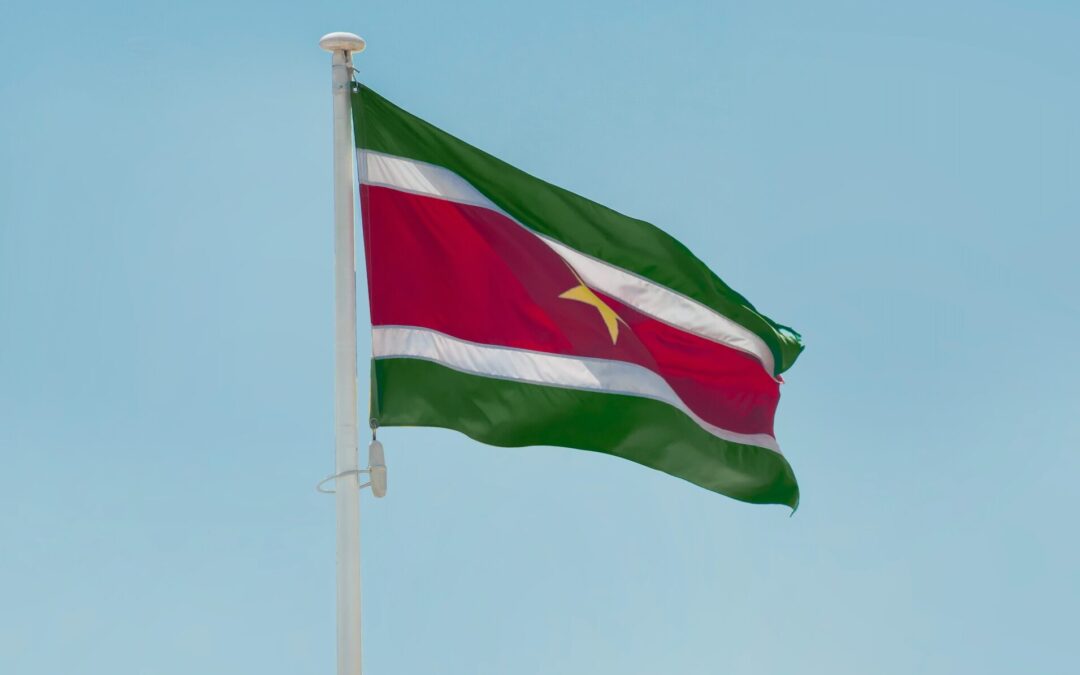
Paramaribo, Suriname; 17 December 2023 – On 20 December 2023, the Hof van Justitie, the highest court in Suriname, is expected to issue its final decision in the appeal by former president Desi Bouterse against his conviction for the 1982 murders of 15 political prisoners.
The International Commission of Jurists, which has monitored the trial since 2012, will be present in court in Paramaribo.
“This is the most important criminal trial in Suriname’s history,” said Reed Brody who will attend the verdict for the ICJ. “That a final decision will be delivered, after so many delays and detours, is a tribute to the courage and independence of Surinamese judges, the perseverance of the victims’ families and the resilience of the rule of law.”
Background
On 8 December 1982, 15 opponents of Suriname’s then military regime led by Desi Bouterse, including lawyers, union leaders and journalists, who had been arbitrarily detained the day before, were executed at the military barracks of Fort Zeelandia, Paramaribo, Suriname, after apparently being subjected to torture. Following a complaint by the families of the victims in 2000, in November 2007 the Krijgsraad (a military court comprised in the case of Bouterse of civilian judges) was established to hear charges against Bouterse and 24 other suspects. The process was plagued with serious suspensions and delays, especially following the election of Bouterse as president of Suriname in July 2010 and an amendment of the Amnesty Law of 1989 (now repealed) granting him and the other accused immunity from prosecution. On 29 November 2019, following a decade-long court martial, the Krijgsraad sentenced Bouterse- while he was still president – to 20 years in prison for planning and ordering the “December murders”. On 30 August 2021, the Krijgsraad affirmed the conviction and Bouterse- who lost power in 2020 – appealed. A final decision of the Hof van Justitie is due on 20 December in the cases of Bouterse and four others who have appealed their convictions.
ICJ Monitors
The ICJ trial monitors have been: from 2012 until 2020 – Jeff Handmaker, a former UK barrister and associate professor at Erasmus University in The Netherlands and the University of the Witwatersrand in South Africa; from 2020 – Godfrey Smith SC, former Attorney General of Belize, former acting Justice of Appeal of the Eastern Caribbean Supreme Court; and from 2023 – ICJ Commission member and veteran war crimes prosecutor Reed Brody who has participated in cases involving Augusto Pinochet, Hissène Habré and Jean-Claude Duvalier among others.
Reed Brody will be present in court on 20 December.
Details of some earlier ICJ’s missions reports and statements can be found here.
Contact:
In Paramaribo, Reed Brody (English, Spanish, French, Portuguese): +1-917-388-6745 or reedbrody@gmail.com. Twitter: @reedbrody
Dec 15, 2023 | Advocacy, News
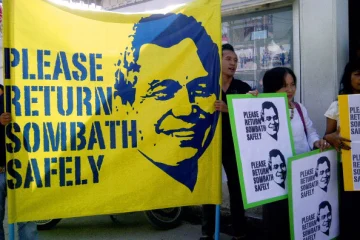
On the 11-year anniversary of the enforced disappearance of Lao civil society leader Sombath Somphone, we, the undersigned civil society organizations and individuals, strongly condemn the Lao government’s continued failure to provide necessary information as to his fate and whereabouts and reiterate our calls to the authorities to deliver truth, justice and reparations to his family.
International concerns over Sombath’s case, expressed by international civil society, United Nations (UN) human rights experts, and UN member states on last year’s anniversary of Sombath’s enforced disappearance, have been ignored by the Lao government.
On 25 September 2023, in a submission to the UN Human Rights Committee as part of its follow-up review of Laos under the International Covenant on Civil and Political Rights, the Lao government repeated previous misleading statements and miserably failed to provide any additional information on the steps it said it had taken to find Sombath. The government claimed it “never stopped trying to find the truth” about Sombath’s fate “in order to bring the offender(s) to justice.” In reality, the Lao authorities have continued to disregard Sombath’s wife, Shui Meng Ng, and have not provided her with any updates on her husband’s case since 2017. The government then made the extraordinary assertion that its Task Force’s investigation had been “carried out on the basis of transparency, impartiality and accountability, including the use of modern investigative techniques consistent with international standards by the capable inquiry officials.” It concluded that the case of Sombath needed “more time for investigation” and added that the Task Force was “still active in the investigation” and had “not yet closed the case.”
These government statements are unequivocally false in suggesting any degree of transparency. Existing evidence is clear that the Lao government has been engaged in a continuous cover-up of the facts of Sombath’s case since he was forcibly disappeared in 2012, including providing misleading information about its actions to his family, the Lao public, and the international community, as stated above.
We deplore the unmistakable pattern of inaction, negligence, and obfuscation that various Lao authorities have repeatedly engaged in for more than a decade and we continue to resolutely stand in solidarity with Sombath’s family and all other victims of enforced disappearances in Laos.
We reiterate our calls on the Lao authorities to take real and effective measures to establish the fate or whereabouts of Sombath and all other victims of enforced disappearances in the country, identify the perpetrators of such serious crimes, and provide victims with an effective remedy and full reparations. We also urge the government to immediately ratify without reservations the International Convention for the Protection of all Persons from Enforced Disappearance, which it signed in 2008, and to fully implement it into national law, policies, and practices.
As upcoming chair for the Association of Southeast Asian Nations (ASEAN), Laos will be placed in a strategic position to lead the regional efforts to strengthen, promote, and protect human rights. However, its continued failure to act on Sombath’s enforced disappearance sends a message of inadequacy to head the regional bloc and to fulfill ASEAN’s purpose under Article 1(7) of the ASEAN Charter, which is to strengthen democracy, enhance good governance, and the rule of law and to promote and protect human rights and fundamental freedoms.
We will continue to seek justice and accountability for Sombath. Until the truth is found and justice is delivered to his family, we will not stop demanding answers from the Lao government to the same question we have been asking for the past 11 years: “Where is Sombath?”
Background
Sombath Somphone, a pioneer in community-based development and youth empowerment, was last seen at a police checkpoint on a busy street of Vientiane on the evening of 15 December 2012. Footage from a traffic CCTV camera showed that police stopped Sombath’s vehicle at the checkpoint and that, within minutes, unknown individuals forced him into another vehicle and drove him away in the presence of police officers. CCTV footage also showed an unknown individual arriving and driving Sombath’s vehicle away from the city center. In December 2015, Sombath’s family obtained new CCTV footage from the same area and made it public. The video shows Sombath’s car being driven back towards the city by an unknown individual.
For further information, please visit: https://www.sombath.org/en/
List of Signatories
Organizations:
- Alternative ASEAN Network on Burma (ALTSEAN-Burma)
- Amnesty International
- Armanshahr Foundation | OPEN ASIA
- ARTICLE 19
- Asia Democracy Network (ADN)
- Asia Europe People’s Forum
- Asian Cultural Forum on Development (ACFOD)
- Asian Forum for Human Rights and Development (FORUM-ASIA)
- AWAM Pakistan
- Banglar Manabadhikar Suraksha Mancha (MASUM)
- Boat People SOS
- Cambodian Human Rights and Development Association (ADHOC)
- Cambodian League for the Promotion and Defense of Human Rights (LICADHO)
- Campaign Committee for Human Rights (CCHR)
- Campaign for Popular Democracy (CPD)
- Center for Prisoners’ Rights (CPR)
- Centre for Civil and Political Rights
- CIVICUS: World Alliance for Citizen Participation
- Commission for the Disappeared and Victims of Violence (KontraS)
- Committee of the Relatives of the May 1992 Heroes
- Community Resource Centre (CRC)
- Cross Cultural Foundation (CrCF)
- Dignity-Kadyr-kassiyet
- FIDH – International Federation for Human Rights
- Focus on the Global South
- Fortify Rights
- Fresh Eyes
- Front Line Defenders
- Hawai’i Institute for Human Rights
- Human Rights Alert
- Human Rights and Development Foundation (HRDF)
- Human Rights Commission of Pakistan (HRCP)
- Human Rights in China
- Human Rights Lawyers Association (HRLA)
- Human Rights Watch
- Indonesia Legal Aid Foundation (YLBHI)
- INFORM Human Rights Documentation Centre Sri Lanka
- Informal Sector Service Center (INSEC)
- International Campaign for Tibet (ICT)
- International Coalition Against Enforced Disappearances (ICAED)
- International Commission of Jurists (ICJ)
- International Rivers
- Internet Law Reform Dialogue (iLaw)
- Judicial System Monitoring Program (JSMP)
- Karapatan Alliance Philippines
- Kazakhstan International Bureau for Human Rights and Rule of Law (KIBHR)
- Korean House for International Solidarity (KHIS)
- Lao Movement for Human Rights
- Law and Society Trust Sri Lanka
- League for the Defence of Human Rights in Iran (LDDHI)
- Madaripur Legal Aid Association (MLAA)
- Malaysians Against Death Penalty and Torture (MADPET)
- Maldivian Democracy Network
- Manushya Foundation
- MARUAH
- National Commission for Justice and Peace (NCJP)
- Odhikar
- Pakistan Kissan Rabita Committee
- People’s Solidarity for Participatory Democracy (PSPD)
- People’s Watch
- Perhimpunan Bantuan Hukum Indonesia (PBHI)
- Philippine Alliance of Human Rights Advocates (PAHRA)
- Progressive Voice
- Pusat Komas
- Refugee and Migratory Movements Research Unit (RRMRU)
- Solidarity for People’s Education and Lifelong Learning (SPELL)
- Stiftung Asienhaus
- Suara Rakyat Malaysia (SUARAM)
- Task Force Detainees of the Philippines (TFDP)
- Thai Lawyers for Human Rights (TLHR)
- Think Centre
- Transnational Institute
- Vietnam Committee on Human Rights (VCHR)
- WOREC Nepal
- World Organisation Against Torture (OMCT)
Individuals:
- Anne-Sophie Gindroz
- David JH Blake
- Nico Bakker
- Randall Arnst
- Shui Meng and Sombath’s family, Vientiane
Dec 6, 2023 | Noticias
Perú violó sus obligaciones bajo el derecho internacional al liberar al expresidente Alberto Fujimori, en flagrante desafío a las órdenes emitidas por la Corte Interamericana de Derechos Humanos (Corte IDH), dijo hoy la Comisión Internacional de Juristas (CIJ).
La CIJ ha hecho un llamamiento para que Perú cumpla con sus obligaciones legales y para que los órganos de la Organización de Estados Americanos (OEA) adopten medidas efectivas para garantizar dicho cumplimiento.
La excarcelación anticipada de Fujimori, por supuestos motivos humanitarios, a pesar de no haber reconocido ninguna responsabilidad ni arrepentimiento por las atrocidades por las que fue condenado, es una afrenta a las numerosas víctimas y sus familias que sufrieron graves abusos bajo su gobierno.
Aunque la acción no equivale formalmente a una revocación de la declaración de culpabilidad o a un perdón de los delitos, Perú no siguió procedimientos que tuvieran en cuenta las preocupaciones de las víctimas o que justificaran la necesidad humanitaria de su liberación.
En 2009, Fujimori fue condenado a 25 años de prisión por su participación en la comisión de ejecuciones extrajudiciales, desapariciones forzadas y otros actos que, en su conjunto, constituían crímenes de lesa humanidad. El 6 de diciembre de 2023, fue puesto en libertad por orden del Tribunal Constitucional peruano tras un indulto humanitario emitido el 24 de diciembre de 2017 por el entonces presidente Pedro Pablo Kuczynski Godard.
El Tribunal y el Presidente no tuvieron en cuenta los derechos de las víctimas a la verdad, la justicia y la reparación”, dijo Carolina Villadiego, Líder del equipo de América Latina de la CIJ.
El flagrante desconocimiento por parte del Tribunal Constitucional del requerimiento explícito de la Corte Interamericana de hacer esta evaluación es una afrenta a las víctimas de los crímenes de Fujimori”, agregó Villadiego.
Aunque los derechos humanos de los condenados exigen que las autoridades judiciales tengan en cuenta el impacto de la detención en su salud, cualquier consideración sobre la salud debe estar fundamentada, y las víctimas deben ser escuchadas y sus derechos tenidos en cuenta a la hora de determinar si debe concederse la libertad por motivos humanitarios.
Tras la emisión del indulto en 2017, el 30 de mayo de 2018, la Corte IDH adoptó una resolución solicitando a las autoridades peruanas evaluar la posibilidad de una revisión judicial del indulto humanitario. Según la Corte IDH, dicha evaluación debería tener en cuenta, entre otras consideraciones, el derecho de las víctimas de Fujimori a acceder a la justicia; la proporcionalidad de la pena impuesta y su ejecución; los derechos de Fujimori, en particular su derecho a la vida, a la integridad personal y a la salud.
La Corte Interamericana identificó inconsistencias en la evaluación de la salud de Fujimori, lo que debería haber impulsado a los tribunales nacionales a investigar a fondo las circunstancias que condujeron al indulto y garantizar que se tuvieran en cuenta los derechos de todas las partes implicadas”, afirmó Villadiego. “Los derechos de las víctimas parecen haber sido dejados de lado tanto por el presidente Kuczynski como por el Tribunal Constitucional, dando al traste con años de avances en la lucha contra la impunidad en el país”, añadió Villadiego.
La Corte IDH ejerce supervisión sobre las decisiones relacionadas con el caso Fujimori, casos Barrios Altos y La Cantuta, en las que determinó que Perú había violado sus obligaciones en virtud de la Convención Americana sobre Derechos Humanos (CADH) al no exigir responsabilidades a los autores de graves violaciones de los derechos humanos cometidas en Perú. Las autoridades peruanas están obligadas a cumplir las decisiones de la Corte IDH en este caso, en consonancia con los principios fundamentales del Estado de derecho.
La CIJ resalta de manera inequívoca que las autoridades peruanas deben cumplir con las órdenes de la Corte IDH. El Tribunal Constitucional peruano no está facultado para desconocer la potestad de la Corte IDH de emitir órdenes en el marco de su función jurisdiccional de supervisión de la ejecución de sus decisiones y dejar sin efecto dichas órdenes.
La CIJ pide a las autoridades peruanas que cumplan las órdenes de la Corte IDH y revisen el indulto humanitario ejecutivo de Fujimori. Esto requiere una evaluación actualizada, exhaustiva e imparcial de la salud de Fujimori y la consideración de los derechos de las víctimas de Fujimori.
La CIJ también hace un llamamiento a la comunidad internacional, en particular a los miembros de la OEA, para que exijan a Perú que acate las órdenes de la Corte IDH y cumpla con sus obligaciones internacionales en materia de derechos humanos en relación con las víctimas de graves violaciones de derechos humanos y crímenes de derecho internacional.
Antecedentes
En 2009, la Corte Suprema de Perú condenó a Alberto Fujimori por el asesinato de 25 personas, las lesiones graves a cuatro personas y el secuestro de dos personas y que consideró que dichos crímenes constituían crímenes de lesa humanidad. Como principio general, las normas y estándares internacionales prohíben la concesión de amnistías e indultos a los condenados por violaciones graves de derechos humanos que constituyan crímenes de derecho internacional. El derecho internacional también exige la protección del derecho a la salud de todas las personas, incluidos los presos, lo que, en algunos casos, podría permitir el encarcelamiento institucional.
Las decisiones del Tribunal Constitucional del Perú
El 4 de diciembre de 2023, el Tribunal Constitucional dictó una sentencia en la que ordenaba al Instituto Nacional Penitenciario la inmediata puesta en libertad del expresidente Fujimori, que cumple una condena de 25 años de prisión, la cual concluye en febrero de 2032. El fallo fue la última decisión judicial iniciada por el indulto humanitario, por problemas de salud, otorgado a Fujimori el 24 de diciembre de 2017 por el entonces presidente Pedro Pablo Kuczynski Godard. Previamente, el 17 de marzo de 2022, el Tribunal Constitucional había resuelto que el indulto humanitario a Fujimori debía ejecutarse.
En la sentencia de 2023, el Tribunal también declaró que la Corte IDH no tenía competencia para pronunciarse sobre la no ejecución de una sentencia nacional como parte de la función judicial de la Corte IDH de supervisar la ejecución de sus decisiones. Esta afirmación fue en reacción de la resolución adoptada el 7 de abril de 2022, en la que la Corte IDH había ordenado al Estado peruano no ejecutar la sentencia del Tribunal Constitucional de 2022.
La posición del Tribunal es contraria a las facultades de la Corte IDH establecidas en los artículos 33, 62.1, 62.3 y 65 de la Convención Americana sobre Derechos Humanos (CADH) y en el artículo 69 del Reglamento de la Corte IDH. Además, la posición del Tribunal podría implicar que algunas actuaciones de las autoridades judiciales pueden estar fuera del ámbito del control de convencionalidad, y por lo tanto, fuera de la obligación establecida en la CADH
Las decisiones de la Corte Interamericana de Derechos Humanos
Antes de la sentencia condenatoria de 2009 contra Fujimori, por los mismos hechos, en 2001 y 2006, en los casos de Barrios Altos y La Cantuta, la Corte IDH había determinado que el Estado peruano había incumplido sus obligaciones en virtud de la CADH. La Corte IDH determinó que Perú había violado el derecho a la personalidad jurídica (artículo 3), el derecho a la vida (artículo 4), el derecho a la integridad personal (artículo 5), el derecho a la libertad personal (artículo 7) y el derecho a las garantías judiciales y a la protección judicial (artículos 8 y 25). En ambos casos, entre otras medidas de reparación, la Corte IDH ordenó a Perú que identificara, investigara, procesara y sancionara a los responsables de las violaciones de derechos humanos.
Como parte de la función judicial de supervisar la implementación de sus decisiones, la Corte IDH ha emitido varias resoluciones ordenando medidas para la plena implementación de las órdenes en los casos de Barrios Altos y La Cantuta. Tras la emisión del indulto humanitario en diciembre de 2017, la Corte IDH emitió una resolución el 30 de mayo de 2018 solicitando a las autoridades peruanas evaluar la posibilidad de una revisión judicial del indulto humanitario.
Para la Corte IDH, esta revisión judicial debería considerar: (i) el derecho de las víctimas de Fujimori a acceder a la justicia; (ii) la proporcionalidad de la pena impuesta y de su ejecución; (iii) los derechos de Fujimori, en particular su derecho a la vida, a la integridad personal y a la salud; y (iv) el hecho de que las penas de prisión no pueden convertirse en penas de muerte. Además, la Corte IDH consideró que existían serias dudas sobre si se habían cumplido los requisitos legales establecidos en la legislación peruana para la concesión del indulto humanitario. La CIDH destacó las inconsistencias en la evaluación de la salud de Fujimori y las alegaciones de que el indulto se concedió para dar al entonces presidente Kuczynski los votos en el Congreso para impedir la vacancia presidencial.
Adicionalmente, la Corte IDH también mencionó que, en casos de graves violaciones a los derechos humanos y crímenes de derecho internacional, los indultos por razones de salud, como en el caso Fujimori, es necesario tener en cuenta la salud del condenado, pero también se debe considerar:
(…) que se haya cumplido una parte considerable de la pena privativa de libertad y se haya pagado la reparación civil impuesta en la condena; la conducta del condenado respecto al esclarecimiento de la verdad; el reconocimiento de la gravedad de los delitos perpetrados y su rehabilitación; y los efectos que su liberación anticipada tendría a nivel social y sobre las víctimas y sus familiares”.
La revisión judicial llevada a cabo por el Tribunal Constitucional peruano no tuvo en cuenta ninguno de los requisitos establecidos por la Corte IDH en su resolución de 30 de mayo de 2018. En consecuencia, el 7 de abril de 2022 y el 5 de diciembre de 2023, la Corte IDH ordenó al Estado peruano no implementar la decisión del Tribunal Constitucional en relación con el indulto humanitario a Fujimori. Ello, a fin de garantizar el derecho de acceso a la justicia de las víctimas de los casos Barrios Altos y La Cantuta.
Contactos:
Carolina Villadiego Burbano, Líder del equipo de América Latina de la CIJ, correo electrónico: carolina.villadiego@icj.org
Rocío Quintero Martínez, Asesora Legal de la CIJ para el programa de América Latina, correo electrónico: rocio.quintero@icj.org