Dec 6, 2023 | News
Peru violated its obligations under international law by releasing former President, Alberto Fujimori, in blatant defiance of orders issued by the Inter-American Court on Human Rights (IACtHR) said the International Commission of Jurists (ICJ) today.
The ICJ has called for Peru to abide by its legal obligations and for effective measures by the bodies of the OAS to ensure such compliance.
The early release of Fujimori on purported humanitarian grounds, despite his failure to acknowledge any responsibility or contrition for the atrocities for which he was convicted, is an affront to the many victims and families who suffered severe abuse under his Presidential rule.
Even though the action does not formally amount to a reversal of finding of culpability or a forgiveness of crimes, Peru failed to follow procedures which would take into account the concerns of victims or to substantiate the humanitarian necessity of his release.
In 2009, Fujimori was sentenced to 25 years in prison for his role in the commission of extrajudicial executions, enforced disappearances and other acts, which cumulatively amounted crimes against humanity. On 6 December 2023, he was released by order of the Peruvian Constitutional Tribunal following an executive humanitarian pardon on 24 December 2017 issue by then-president Pedro Pablo Kuczynski Godard.
The Tribunal and President failed to take into account the victims’ rights to truth, justice, and reparations”, said Carolina Villadiego, ICJ Latin America Team Leader.
The Constitutional Tribunal’s flagrant disregard for the Inter-American Court’s explicit requirement to make this assessment is an affront to the victims of Fujimori’s crimes”, added Villadiego.
Although the human rights of convicted persons require judicial authorities to consider the impact of detention on their health, any imperative health considerations must be substantiated, and the victims must be heard, and their rights taken into account when determining whether humanitarian release should be granted.
Following issuance of the executive pardon in 2017, on 30 May 2018, the IACtHR adopted a resolution requesting the Peruvian authorities to evaluate the possibility of a judicial review of the humanitarian pardon. According to the IACtHR, that assessment should have into account, among other considerations, the right of Fujimori’s victims to have access to justice; the proportionality of the sentence imposed and its execution; the rights of Fujimori, in particular his right to life, personal integrity, and health.
The Inter-American Court already identified inconsistencies in Fujimori’s health assessment, which should have prompted domestic courts to fully inquire into the circumstances leading to the pardon and ensure the rights of all parties involved were considered”, affirmed Villadiego. The rights of victims seem to have been sidelined by both President Kuczynski and the Constitutional Tribunal, unravelling years of progress towards combating impunity in the country”, added Villadiego
The IACtHR exercises a supervisory duty over decisions related to Fujimori’s case, Barrios Altos and La Cantuta cases, in which it found Peru had violated is obligations under the American Convention on Human Rights (ACHR) by failing to hold perpetrators of gross human rights violations committed in Peru to account. Peruvian authorities are obligated to comply with the IACtHR’s decisions in this case, consistent with fundamental rule of law principles.
The ICJ underscores unequivocally that the Peruvian authorities must comply with the orders of the IACtHR. The Peruvian Constitutional Tribunal does not have the authority to disregard the IACtHR’s power to issue orders as part of its judicial function of supervising the execution of its decisions and to override those orders.
The ICJ calls on the Peruvian authorities to comply with the orders of the IACtHR and to review Fujimori’s executive humanitarian pardon. This requires an updated, thorough and impartial assessment of Fujimori’s health and consideration of the rights of Fujimori’s victims.
The ICJ also calls upon the international community, in particular members of the Organization of American States, to demand that Peru comply with the orders of the IACtHR and fulfil its international human rights obligations towards victims of serious human rights violations and crimes under international law.
Background
In 2009, the Peruvian Supreme Court convicted Alberto Fujimori for the murder of 25 people, the serious injury of four people and the kidnapping of two people, which it held amounted to crimes against humanity. As a general principle, international law and standards prohibits the issuance of amnesties and pardons for those convicted of gross human rights violations amounting to crimes under international law. International law also requires protection of the right to health of all persons, including prisoners, which in some instances could preclude institutional incarceration.
Peruvian Constitutional Tribunal’s rulings
On 4 December 2023, the Peruvian Constitutional Tribunal handed down a ruling ordering the National Penitentiary Institute to immediately release former President Fujimori, who is serving a 25-year prison sentence that is due to be completed in February 2032. The ruling was the last judicial decision triggered by a humanitarian pardon for health issues granted to Fujimori on 24 December 2017 by then-president Pedro Pablo Kuczynski Godard. Previously, on 17 March 2022, the Constitutional Tribunal had ruled that Fujimori’s humanitarian pardon should be implemented.
In the 2023 ruling, the Tribunal also stated that the IACtHR did not have the competency to rule on the non-enforcement of a national ruling as part of the IACtHR’s judicial function of supervising the execution of its decisions. This pronouncement was in reaction to the action taken on 7 April 2022, in which the IACtHR had ordered the Peruvian State not to implement the 2022 Constitutional Tribunal’s ruling.
The Tribunal’s position is contrary to the IACtHR’s faculties established in Articles 33, 62.1, 62.3 and 65 of the ACHR and Article 69 of the Rules of Procedure of the IACtHR’s. Moreover, the Tribunal’s position might imply that some actions of judicial authorities may be outside the scope of the control of conventionality, and therefore, outside the obligation established under the ACHR.
Inter-American Court of Human rights’ decisions
Before the 2009 conviction sentence against Fujimori, for the same facts, in 2001 and 2006, in the cases of Barrios Altos and La Cantuta, the IACtHR’s had found that the Peruvian state had breached its obligations under the ACHR. The IACtHR determined that Peru had violated the right to juridical personality (Article 3), the right to life (Article 4), the right the right to humane treatment (Article 5), the right to personal liberty (Article 7), and the right to a fair trial and judicial protection (Articles 8 and 25). In both cases, among other reparation measures, the IACtHR ordered Peru to identify, investigate, prosecute, and punish those responsible for human rights violations.
As part of the judicial function of supervising the implementation of its decisions, the IACtHR’s has issued several resolutions ordering measures for the full implementation of the orders in the cases of Barrios Altos and La Cantuta. Following the issuance of the humanitarian pardon in December 2017, the IACtHR’s issued a resolution on 30 May 2018 requesting the Peruvian authorities to evaluate the possibility of a judicial review of the humanitarian pardon.
For the IACtHR, this judicial review would consider: (i) the right of Fujimori’s victims to have access to justice; (ii) the proportionality of the sentence imposed and its execution; (iii) the rights of Fujimori, in particular his right to life, personal integrity and health; and (iv) the fact that prison sentences cannot be converted into death sentences. In addition, the IACtHR considered that there were serious doubts as to whether the legal requirements laid down in Peruvian law for the granting of the humanitarian pardon had been met. The IACtHR highlighted inconsistencies in Fujimori’s health assessment and allegations that the pardon was granted to give then-President Kuczynski the votes in Congress to avoid impeachment.
In addition, the IACtHR also mentioned that in cases of serious human rights violations and crimes under international law, pardons for health reasons, such as in the Fujimori case, it is necessary to take into account the health of the convicted person, but it should also be considered:
(…) [whether] a substantial part of the sentence has been served and the civil compensation imposed in the sentence has been paid; the behaviour of the convicted person with regard to the clarification of the truth; the recognition of the seriousness of the crimes committed and their rehabilitation; and the effects that early release would have on society and on the victims and their families.”
The judicial review carried out by the Peruvian Constitutional Tribunal failed to take into account any of the requirements established by the IACtHR in its resolution of 30 May 2018. As a result, on 7 April 2022 and on 5 December 2023, the IACtHR ordered the Peruvian State not to implement the decision of the Constitutional Tribunal in relation to Fujimori’s humanitarian pardon. This was done in order to guarantee the right to access to justice of the victims of the cases of Barrios Altos and La Cantuta.
Contact:
Carolina Villadiego Burbano, ICJ Latin America Team Leader, email: carolina.villadiego@icj.org
Rocío Quintero Martínez, ICJ Legal Adviser for the Latin America Programme, email: rocio.quintero@icj.org
Nov 30, 2023 | Events, News
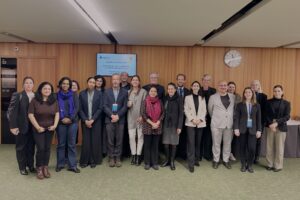
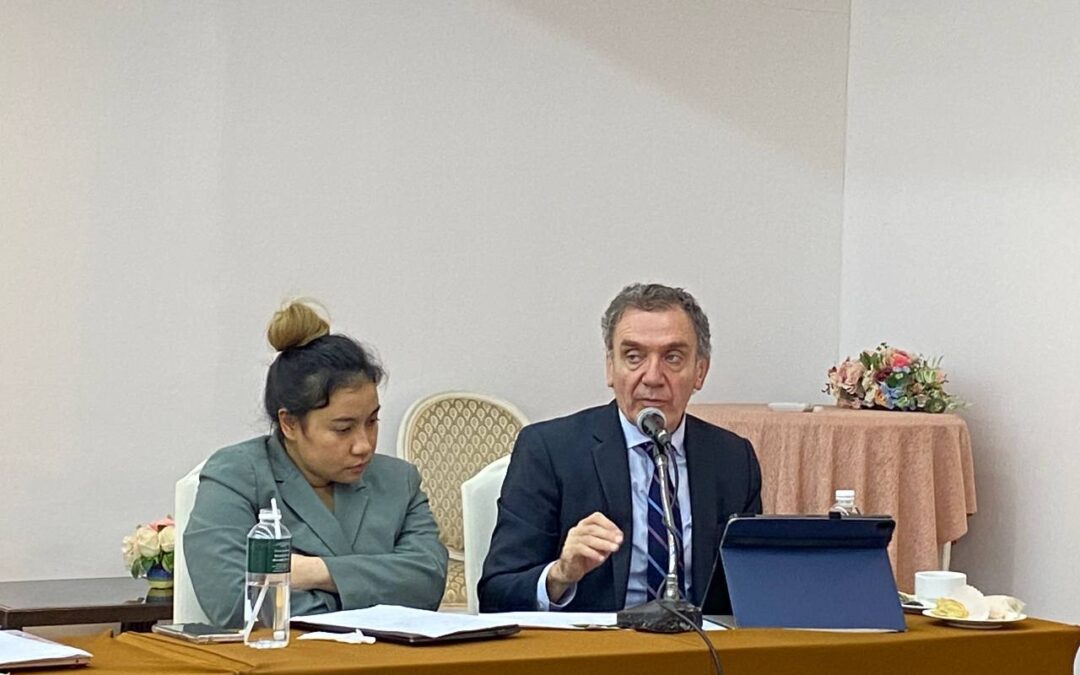
On 29 November 2023, the ICJ co-hosted a dialogue among Thai lawyers, academics, and Santiago A. Canton, Secretary General of the ICJ to exchange best practices from Latin America, specifically focusing on insights from the Inter-American Court of Human Rights and domestic courts in the region – to address ongoing challenges in litigating cases involving suspected enforced disappearances within Thai courts.
The Dialogue involved challenges encountered in litigating cases of enforced disappearances, particularly in terms of accessing, collecting, and admitting evidence within Thai courts. These challenges are notably complex, especially when the crimes have occurred beyond Thailand’s borders.
Additionally, participants discussed the difficulties related to establishing the responsibility of individuals for these serious crimes and how courts have handled evidence submitted in previous enforced disappearance cases. This included instances where evidence, such as telecommunications, as well as various forensic evidence like biological evidence and DNA evidence, was dismissed, and the failure to identify the perpetrator in cases where the victims’ bodies or remains could not be located.
“The crime of enforced disappearance completely eradicates any trace of the victim, with no acknowledgment by the authorities and no effective investigation. The requirement to locate the disappeared individuals’ bodies and remains contradicts the very nature of the crime of enforced disappearance,” said Santiago A. Canton, Secretary General of the ICJ.
While highlighting that the criteria for evaluating evidence within the Inter-American Court of Human Rights (IACtHR) are less formal compared to domestic criminal legal systems, Canton noted IACtHR’s jurisprudence relevant to the admissibility of circumstantial and indicative evidence, which was particularly instructive as enforced disappearances typically involve deliberate attempts by state officials to destroy direct evidence, aimed at securing impunity.
“The standard of proof in the Inter-American Court of Human Rights allows lawyers, under certain circumstances, to only establish a demonstrable ‘practice’ of enforced disappearances at the time of a specific case. When combined with circumstantial evidence, this can result in a judicial presumption of enforced disappearance,” said Canton.
Participants also discussed the ‘continuous nature’ of enforced disappearance crimes, which are recognized under Thai law and enable cases from the past, where the fate and whereabouts of victims remained unknown, to be prosecutable before the court, notwithstanding the fundamental principle of non-retroactivity.
Closing remarks by Angkhana Neelapaijit, a Member of the UN Working Group on Enforced or Involuntary Disappearances, whose husband Somchai Neelapaijit was a victim of enforced disappearance, detailed the role of the Working Group and the steps taken globally to address the crime.
Background
More than 20 Thai experts, lawyers, and academics, who represent or have experience researching cases of enforced disappearances in Thailand, participated in the discussion.
Thailand’s Act on Prevention and Suppression of Torture and Enforced Disappearance became effective in February 2023. However, its implementation has been slow. The majority of cases involving suspected torture, ill-treatment, and enforced disappearances are still in the investigation phase, and not yet moved into the adjudication phase. Limited information about its progress has been made available to the public.
Prior to the enactment of this new law, only two cases of apparent enforced disappearances reached Thai courts: the case of prominent Muslim lawyer Somchai Neelapaijit and Karen activist Pholachi ‘Billy’ Rakchongcharoen. Unfortunately, these cases concluded with limited success, mainly due to challenges surrounding the evidence submitted to the court.
Contact
Sanhawan Srisod, ICJ Associate International Legal Adviser, e: sanhawan.srisod@icj.org
Further reading
Thailand: a report on the criminal trial and investigation of the enforced disappearance of the Thai human rights lawyer, Somchai Neelapaichit
Ten Years Without Truth: Somchai Neelapaijit and Enforced Disappearances in Thailand
Nov 28, 2023 | Cases, News
FOR IMMEDIATE RELEASE
Berlin, November 28, 2023 – A German court in the city of Celle is expected to deliver a verdict on November 30, 2023, in the first trial in Germany for crimes committed in The Gambia, Gambian and international civil society groups said today in releasing a question and answer document about the trial.
The groups are: the African Network against Extrajudicial Killings and Enforced Disappearances (ANEKED), the European Center for Constitutional and Human Rights (ECCHR), the Gambian Center for Victims of Human Rights Violations, Human Rights Watch, the International Commission of Jurists, Reporters Without Borders (RSF), the Rose Lokissim Association, the Solo Sandeng Foundation, and TRIAL International.
This trial is possible because Germany recognizes universal jurisdiction over certain serious crimes under international law, allowing for the investigation and prosecution of these crimes no matter where they were committed and regardless of the nationality of the suspects or victims.
The trial concerns Bai L., an alleged member of the “Junglers,” a paramilitary unit also known as the “Patrol Team,” which was set up by then-president Yahya Jammeh in the mid-1990s. Jammeh’s 22-year rule was marked by systematic oppression and widespread human rights violations, including torture, extrajudicial killings, enforced disappearances, and sexual violence against actual and perceived opponents.
German prosecutors accuse Bai L. of being a Junglers driver involved in the attempted murder of Ousman Sillah, a lawyer; the murder of Deyda Hydara, a journalist; the attempted murder of Ida Jagne and Nian Sarang Jobe, who worked with the independent newspaper Hydara; and the murder of a former Gambian soldier, Dawda Nyassi
The verdict in the Bai L. case represents a major step in the search for justice for years of abuses committed under Jammeh’s rule in The Gambia, the groups said. The Bai L. trial reinforces the role that governments like Germany can play in advancing justice for atrocities committed abroad under the principle of universal jurisdiction.
Civil society groups will hold a news conference online on Thursday, November 30 after the verdict is issued – scheduled for 3:30 pm CET – at the following link: https://us06web.zoom.us/j/81236784593?pwd=tvLgbtT3I8N9rF2Db2XTIRyH3Kn1gv.1
To read the question-and-answer document, please see the attached PDF:
Questions and Answers on first German trial for serious crimes
For more information, please contact:
For Reporters Without Borders, in Dakar, Sadibou Marong (English, French): +221-70-960-40-92 (mobile); or smarong@rsf.org. Twitter: @cheikhsadbu
For TRIAL International, in Geneva, Babaka Mputu (English, French, German): +41-775-07-04-56 (mobile); or media@trialinternational.org. Twitter: @Trial
For Human Rights Watch, in New York, Elise Keppler (English, French): +1-917-687-8576 (mobile); or kepplee@hrw.org. Twitter: @EliseKeppler
For Solo Sandeng Foundation, in Germany, Fatoumatta Sandeng (English, German, Mandinka, Wollof): +49-163-174-7519 (mobile); or solosandengfoundation@gmail.com. Twitter: @solosandengfound
For ANEKED, in New York, Nana-Jo Ndow (English, French, Spanish, Portuguese): +1-929-684-5734 (mobile); or nanajo.ndow@aneked.org. @theANEKED
For Reporters Without Borders, in Berlin, Nicola Bier (German, English, French, Spanish, Italian): +49-160-9957-6073 (mobile); or nicola.bier@reporter-ohne-grenzen.de. Twitter: @ReporterOG
Lawyer for Baba Hydara and Omar and Modou Nyassi, in Celle, Patrick Kroker (German, English, French): +49-170-813-6258 (mobile); or info@patrickkroker.net. Twitter: @pkroker2
For International Commission of Jurists, in New York, Reed Brody (English, Spanish, French, Portuguese): +1-917-388-6745 (mobile); or reedbrody@gmail.com. Twitter: @reedbrody
Nov 22, 2023 | Advocacy, Joint Statement
In light of credible allegations of ongoing violations of international humanitarian law arising from the protracted armed conflict in Israel and the Occupied Palestinian Territory, in particular in the Gaza Strip, the International Commission of Jurists (ICJ), Amnesty International (AI), and Human Rights Watch (HRW) support the call by a number of High Contracting Parties to the 1949 Geneva Conventions addressed to Switzerland, in its capacity as the depository of the four Geneva Conventions, to convene an urgent Conference of High Contracting Parties to the Geneva Convention Relative to the Protection of Civilian Persons in Time of War of 12 August 1949 (“the Fourth Geneva Convention”).
This call is based on Common Article 1 to the four Geneva Conventions, which states that “The High Contracting Parties undertake to respect and to ensure respect for the present Convention in all circumstances”. Underscoring the continued relevance of this body of law, the ICJ, AI, and HRW recall operative paragraph 1 of the UN Security Council Resolution 2712 on the situation in the Middle East, including the Palestinian question, of 15 November 2023 demanding “that all parties comply with their obligations under international law, including international humanitarian law, notably with regard to the protection of civilians, especially children.” In the same vein, our organisations recall operative paragraph 2 of the UN General Assembly, entitled Protection of civilians and upholding legal and humanitarian obligations, of 26 October 2023 demanding “that all parties immediately and fully comply with their obligations under international law, including international humanitarian law and international human rights law, particularly in regard to the protection of civilians and civilian objects, as well as the protection of humanitarian personnel, persons hors de combat, and humanitarian facilities and assets”.
The ICJ, AI, and HRW call on all High Contracting Parties to uphold the fundamental principle of international law that treaties must be executed in good faith, and fulfil their obligations under Common Article 1 “to ensure respect” for the Fourth Geneva Convention by participating in the Conference and acting collectively to prevent further violations of international humanitarian law in the Occupied Palestinian Territory and Israel.
The ICJ, AI, and HRW consider that in the circumstances currently prevailing in Israel and the Occupied Palestinian Territory, including, in particular, the Gaza Strip, ensuring respect for international humanitarian law requires, at a minimum, a suspension of arms transfers to the parties to the conflict; ensuring accountability for serious violations of international humanitarian law; supporting and cooperating with the Independent International Commission of Inquiry on the Occupied Palestinian Territory, including East Jerusalem, and Israel, and with the International Criminal Court’s ongoing Palestine investigation; and supporting other pathways to accountability including through the principle of universal jurisdiction.
Contact:
Said Benarbia, Director, ICJ Middle East and North Africa Programme, email: said.benarbia@icj.org
Katherine Iliopoulos, Legal Adviser, ICJ Middle East and North Africa Programme, email: katherine.iliopoulos@icj.org
Nov 17, 2023
Photo by Amir Shiri on Unsplash
LEGAL BRIEFER: States’ Duty to Prevent Genocide under the 1948 Genocide Convention
This legal briefer focuses on States’ duty to prevent genocide under international law. However, the International Commission of Jurists (ICJ) notes that there are credible allegations of other serious crimes under international law having been committed in the course of the ongoing hostilities in Israel and the Occupied Palestinian Territory, including the Gaza Strip.
Given the scale and severity of Israel’s ongoing attacks on Gaza, reports that Israel has now killed over 11,000 civilians, including over 4,000 children, in the Gaza Strip since 7 October 2023 and recent warnings, including by a group of independent United Nations human rights experts on 16 November that, “grave violations committed by Israel against Palestinians in the aftermath of 7 October, particularly in Gaza, point to a genocide in the making”, the ICJ urges States to fulfil their international legal obligations, including in particular under the Convention on the Prevention and Punishment of the Crime of Genocide of 1948 (hereafter the Genocide Convention), and take immediate action to prevent acts of genocide in Gaza.
Acts of Genocide
Article II of the Genocide Convention defines the crime of genocide outlining its two main elements:
(1) specific underlying acts, namely, the material elements of the crime; and
(2) specific intent, namely, the mental state required of the person committing the material elements of the crime.
The Genocide Convention and the Rome Statute of the International Criminal Court (ICC) outline the following five specific underlying acts, any one of which may be constitutive of the crime of genocide:
- Killing members of a national, ethnical, racial or religious group;
- Causing serious bodily or mental harm to members of the group;
- Deliberately inflicting on the group conditions of life calculated to bring about its physical destruction in whole or in part;
- Imposing measures intended to prevent births within the group; and
- Forcibly transferring children of the group to another group.
The ICC Elements of Crimes define the term “conditions of life” as including but not limited to “deliberate deprivation of resources indispensable for survival, such as food or medical services, or systematic expulsion from homes.”
The ICJ considers that the complete blockade of Gaza – coupled with depriving civilians of water, food, medicine, electricity and fuel – may constitute the specific underlying act of “deliberately inflicting on the group conditions of life calculated to bring about its physical destruction”, as per the genocide definition set out above.
Some of the underlying acts of the crime of genocide may also simultaneously constitute the material elements of certain war crimes or crimes against humanity.
Specific Intent
The distinguishing feature of genocide is that the perpetrator commits the specific underlying acts of the offence with the specific intent to destroy, in whole or in part, a national, ethnical, racial or religious group, as such.
The Palestinian people constitute a national group for the purposes of the Genocide Convention. The Palestinians of the Gaza Strip constitute a substantial proportion of the Palestinian nation.
The ICJ is concerned that certain statements by senior officials and politicians in Israel disclose evidence of what may be characterised as intent to destroy Palestinians of the Gaza Strip.
For example, on 9 October, the Israeli Defence Minister Yoav Gallant said, “I have ordered a complete siege on the Gaza Strip. There will be no electricity, no food, no fuel, everything is closed. We are fighting human animals and we act accordingly.” On 10 October, the head of the Israeli Army’s Coordinator of Government Activities in the Territories (COGAT), Maj. Gen. Ghassan Alian, addressed a message directly to Gaza residents: “Human animals must be treated as such. There will be no electricity and no water, there will only be destruction. You wanted hell, you will get hell”. On 13 October, the Israeli Defence Minister said: “Gaza won’t return to what it was before. We will eliminate everything.”
The ICJ is concerned that such statements by officials responsible for Israel’s ongoing military offensive in Gaza, with their expressed emphasis on siege on the Gaza Strip, on depriving the population of essential needs, on the total destruction and elimination of everything and everyone in the Gaza Strip and on evacuation – taken together with well-documented patterns of reported crimes under international law in Gaza, such as indiscriminate bombardment of densely populated areas, including airstrikes resulting in extensive civilian casualties, attacks on medical units, transports and personnel, refugee camps, evacuation routes, humanitarian corridors and other vital civilian infrastructure, collective punishment and the forced transfer of over one million Palestinians from northern Gaza to the south – disclose evidence sufficient to trigger the duty of each State to take reasonable action to seek to prevent acts of genocide in Gaza.
The Duty to Prevent
Notwithstanding individual criminal liability for acts of genocides outlined above, under international law, States have a duty to prevent acts of genocide.
It is not necessary for a definitive determination that genocide is taking place. As the International Court of Justice (“the Court”) held in Bosnia v Serbia, a “State’s obligation to prevent, and the corresponding duty to act, arise at the instant that the State learns of, or should normally have learned of, the existence of a serious risk that genocide will be committed.” The ICJ considers, based on the above, that such threshold has been reached in Gaza, triggering States’ duty under international law to take measures to prevent acts of genocide.
The totality of destruction by Israeli forces against Palestinians in Gaza, as documented in numerous open sources, should guide an assessment by the international community and individual States as to whether genocide is underway or whether there exists a serious risk of genocide, triggering the corresponding duty to prevent it. States’ legal obligation to prevent genocide is not a passive obligation, but rather, according to the Court in Bosnia v Serbia, “implies that each State party must assess whether a genocide or a serious risk of genocide exists”.
When the Court issued its order for provisional measures in The Gambia v. Myanmar in January 2020, it held that there was no requirement of demonstrating violations of obligations under the Genocide Convention, but rather that “the acts complained of … are capable of falling within the provisions of the Genocide Convention”.
The Genocide Convention imposes a minimum legal obligation on States to each take reasonable action to contribute toward preventing genocide, a duty that extends extraterritorially and applies regardless of whether any one State’s actions alone are sufficient to prevent genocide. The Court in Bosnia v. Serbia held that States with strong political links to the State concerned have a greater duty to use their influence in this regard, as the duty to prevent varies from State to State depending on its:
“capacity to influence effectively the action of persons likely to commit, or already committing, genocide. This capacity itself depends, among other things, on the geographical distance of the State concerned from the scene of the events, and on the strength of the political links, as well as links of all other kinds, between the authorities of that State and the main actors in the events”.
The Court also held that, “if the State has available to it means likely to have a deterrent effect on those suspected of preparing genocide, or reasonably suspected of harbouring specific intent, it is under a duty to make such use of these means as the circumstances permit”. Third State responsibility may be incurred if a State manifestly fails to take all measures that are within its power to prevent acts of genocide, and that might contribute to preventing such acts.
Recommendations
In light of the above, the ICJ calls upon States who have a position of influence with the Government of Israel – particularly the United States – to take all reasonable measures within their power to prevent genocide in Gaza, including by calling for a ceasefire, taking steps to ensure the lifting of the siege and preventing the displacement of Palestinians outside the Gaza Strip, and to discontinue any military assistance, including arms sales, that would enable or facilitate genocide, and other crimes under International law.
The ICJ urges other States to immediately act under article VIII of the Genocide Convention, by calling on the competent organs of the United Nations, including the UN Security Council, and particularly the UN General Assembly, to take urgent action under the UN Charter appropriate for the prevention and suppression of any acts of genocide in Gaza, including calling for an immediate ceasefire.
The ICJ also calls on UN Independent International Commission of Inquiry on the Occupied Palestinian Territory, including East Jerusalem, and Israel, and the Office of the Prosecutor of the ICC, to rapidly expand their investigations in relation to the situation in Palestine to include genocide.
Contact:
Said Benarbia, Director, ICJ Middle East and North Africa Programme, email: said.benarbia@icj.org
Katherine Iliopoulos, Legal Adviser, ICJ Middle East and North Africa Programme, email: katherine.iliopoulos@icj.org