Apr 17, 2018 | News
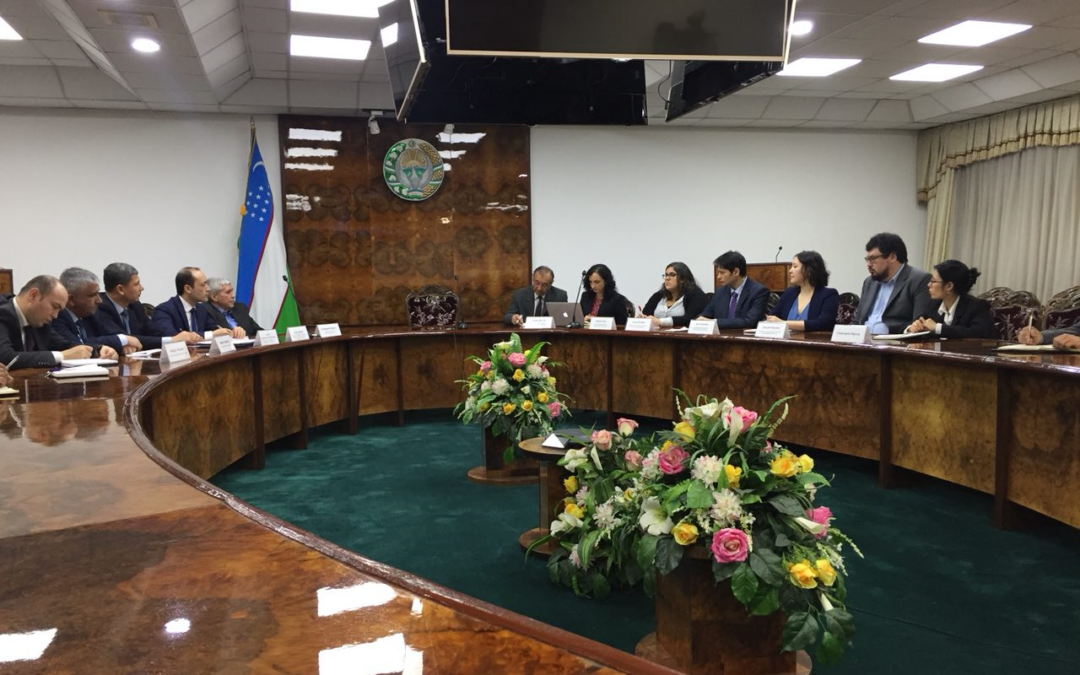
From April 16 to 20, the ICJ is conducting a research mission to Uzbekistan to identify the priority ESC rights issues which will be the focus of its project on access to the economic, social and cultural (ESC) rights (ACCESS project).
During the mission, ICJ experts will meet with key stakeholders, including relevant State bodies, CSOs, legal experts, international organizations in Uzbekistan and other actors to discuss legal and practical aspects of ensuring access to justice for ESC rights.
During the meetings, among others, the following issues will be addressed:
- current legislation ensuring ESC rights in Uzbekistan;
- ongoing and planned reforms in ensuring ESC rights;
- legal protection of ESC rights and barriers to their enjoyment;
- discussion of possible legal, practical aspects related to access to justice in the field of ESC rights.
The ICJ will rely on international standards in the area of ESC rights, in particular, the International Covenant on Economic, Social and Cultural Rights (ICESCR), to which Uzbekistan is a party.
The results of the mission will form a baseline report which will inform the construction and implementation of the ACCESS project.
The ICJ appreciates the facilitation of the Government and of the European Union, which supports the project, in arranging meetings with relevant State institutions.
Contact:
Temur Shakirov, temur.shakirov@icj.org
Apr 13, 2018 | Multimedia items, News, Video clips
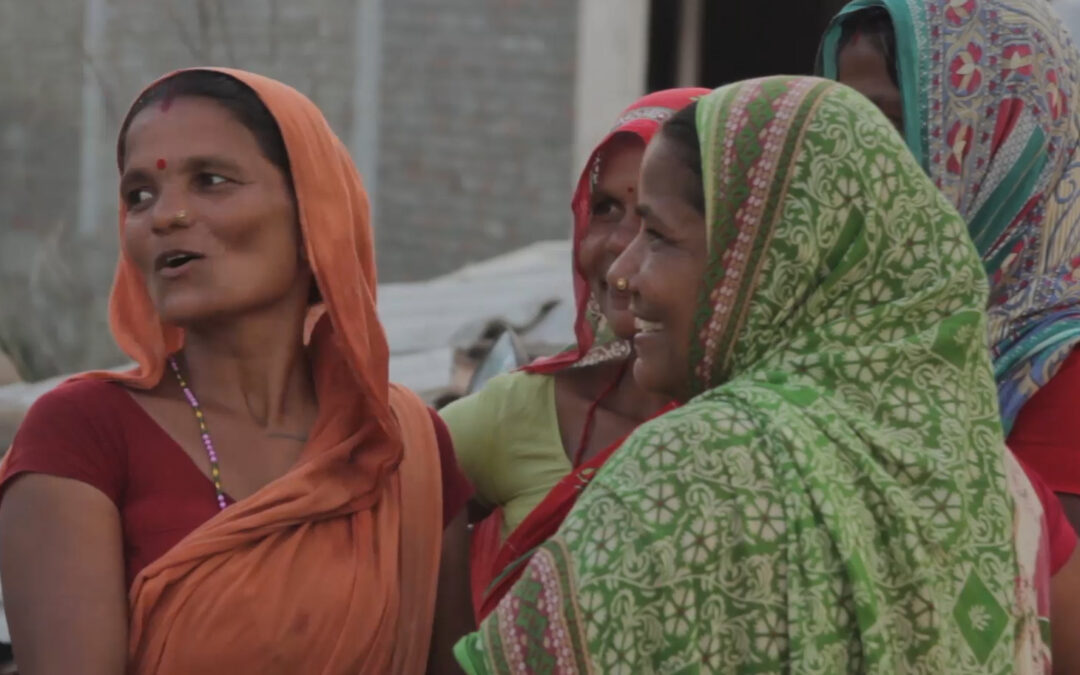
In 2017, Nepal held its first local-level elections for almost 20 years and the first ever conducted under the new federal state structure established under the 2015 Constitution. They were significant because of the unprecedented number of women who stood as candidates and won.
Women in Nepal have experienced systemic discrimination for decades, especially those in rural areas, among ethnic minorities and marginalized groups.
These elections presented the women of Nepal with the opportunity to break through barriers that have prevented them for decades from participating in political and public life.
The Local Level Governance Act lays out the mandate and functions of newly formed local bodies.
If the recently elected women are allowed to meaningfully participate in local governance, the new law could empower them further so that they can take the lead in addressing key human rights issues, especially the human rights of women.
This video documents the campaign of Rikam BK, a Nepalese politician, belonging to the Communist party of Nepal-Maoist (CPN-M).
In the Nepal Legislative Election held on 26 November 2017, she was elected as a Sub-Mayor (NCP Maoist) of Lahan Municipal Council winning 5000 votes.
She is the chairperson of the Dalit Preservation Abhiyan Forum, in Siraha. She has been advocating the issue of land certificates in the names of both husband and wife.
She continues to call for those deprived of land rights to have equal access to land. She is also the member of National Alliance for Women Human Rights Defenders (NAWHRD).
Many of the women featured in this video are women human rights defenders who have been working to promote and protect human rights in Nepal for decades.
Many of them participated in the Regional Conference on Women Human Rights Defenders as Political Actors, which was organized by the ICJ, with the cooperation of NAWHRD.
The conference was held from 28 to 29 August 2017 in Kathmandu.
The ICJ recently released a briefing paper laying out the key points of the conference and offering a set of future actions aimed at supporting WHRDs in their role as political actors pursuing a human rights agenda.
Watch the video
Mar 27, 2018 | News
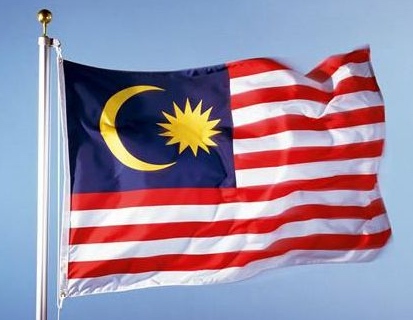
The ICJ and Suara Rakyat Malaysia (SUARAM) today urged Malaysia’s Parliament not to pass the Anti-Fake News Bill 2018.
The two organizations are concerned that the bill will unduly limit freedom of opinion or expression in Malaysia, and could be used to suppress legitimate criticism of the government.
“The bill is flawed in its design and will be open to abuse by the Malaysian government which maintains a poor track record in upholding freedom of expression,” said Sevan Doraisamy, SUARAM’s Executive Director.
“The term ‘fake news’ is in itself problematic. It is defined in an overbroad manner in the draft law, and therefore vulnerable to arbitrary interpretation and enforcement,” said Emerlynne Gil, ICJ’s Senior International Legal Adviser.
“Given past experience in Malaysia, it is highly likely to be used to suppress legitimate criticism of the government on matters of opinion or where the facts are contested,” she added.
The right to freedom of opinion and expression is guaranteed by the Federal Constitution of Malaysia, as well as the Universal Declaration of Human Rights.
The bill makes no provision for exceptions or defences such as honest mistake, parody, artistic merit, or public interest. The bill would allow up to ten years imprisonment.
“The penalties are wildly disproportionate,” said Gil. “Indeed, under international standards, imprisonment is never an appropriate penalty for such offences.”
On 3 March 2017, the UN Special Rapporteur on Freedom of Opinion and Expression, together with his counterparts from the Organization for Security and Cooperation in Europe (OSCE), the Organization of American States (OAS), and the African Commission on Human and People’s Rights (ACHPR), issued a joint declaration on ‘fake news’, disinformation, and propaganda.
The joint declaration emphasized that “the human right to impart information and ideas is not limited to ‘correct’ statements, that the right to also protects information and ideas that may shock, offend and disturb.”
It also said that “general prohibitions on the dissemination of information based on vague and ambiguous ideas, including ‘false news’ or ‘non-objective information’ are incompatible with international standards for restrictions on freedom of expression.”
The ICJ and SUARAM also note that the timing and the lack of transparent consultation on how it was developed raise concerns about the government’s motivation behind the introduction of this bill.
The bill has been introduced during the final days of Parliament sitting and is expected to be voted on within this week, leaving little time for deliberation or consultation.
“Allowing this bill to be passed would only serve as an affront to democratic values. It will be another strike on Malaysia’s already shoddy human rights record,” Doraisamy said.
“Adopting a law that would unduly limit the right to freedom of opinion and expression is not the optimal way to counter disinformation and propaganda,” said Gil.
“The best way is to disseminate accurate information and to make such information accessible to everyone,” she added.
The ICJ and SUARAM strongly urge the Malaysian parliament not to pass the Anti-Fake News Bill 2018 and uphold the right to freedom of opinion and expression in the country.
Contact
Emerlynne Gil, Senior International Legal Adviser for Southeast Asia of ICJ, t: + 662 619 8477 (ext. 206) ; e: emerlynne.gil@icj.org
Background
The Anti-Fake News Bill 2018 has been tabled for first reading at the Malaysian Parliament on 26 March 2018 and may be voted on this week or early next week.
The bill defines ‘fake news’, without any defences or exceptions, as including “any news, information, data and reports” which are “wholly or partly false”.
Furthermore, the bill states that ‘fake news’ may be “in the form of features, visuals or audio recordings or in any other form capable of suggesting words or ideas.”
If passed, any person may be subject to a penalty of up to ten (10) years imprisonment and/or a fine amounting to MYR 500,000 (approximately USD 127,681) if convicted of knowingly creating, offering, publishing, printing, distributing, circulating, or disseminating any ‘fake news’ or publication of ‘fake news’.
The bill also seeks to penalize both Malaysians and foreigners alike, even if they are outside of Malaysia, as long as the fake news concerns Malaysia or a Malaysian citizen.
Mar 9, 2018 | Events, News
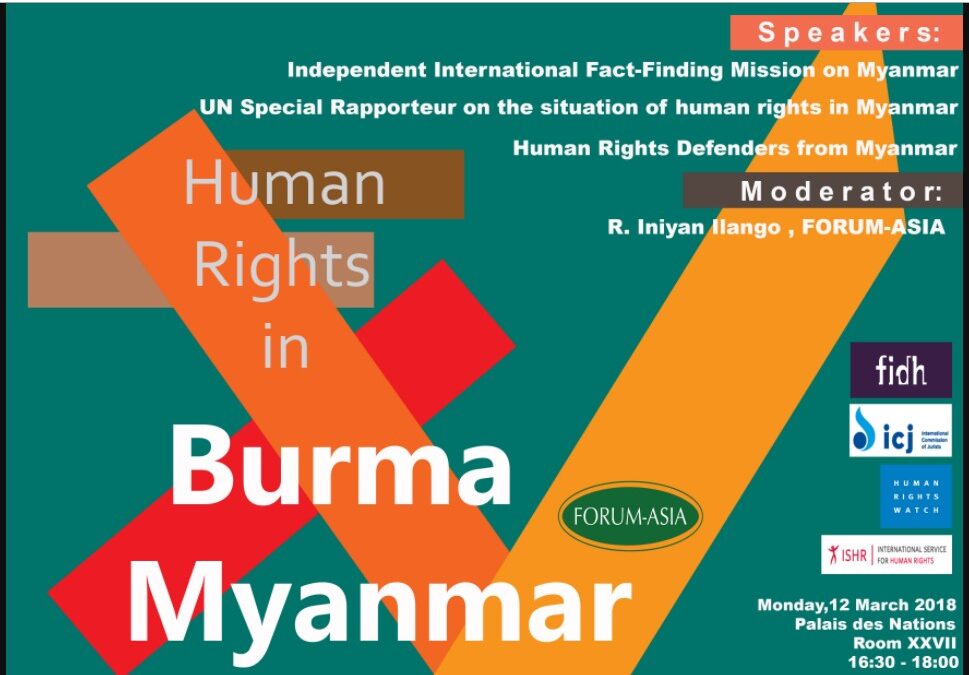
This side event at the Human Rights Council takes place on Monday, 12 March, 16:30-18:00, room XXVII of the Palais des Nations. It is organized by Forum-Asia, and co-sponsored by the ICJ.
Speakers:
Independent International Fact-Finding Mission on Myanmar
UN Special Rapporteur on the situation of human rights in Myanmar
Human Rights Defenders from Myanmar
Moderator:
R. Iniyan Ilango, Forum – Asia
Mar 3, 2018 | Agendas, Events, News
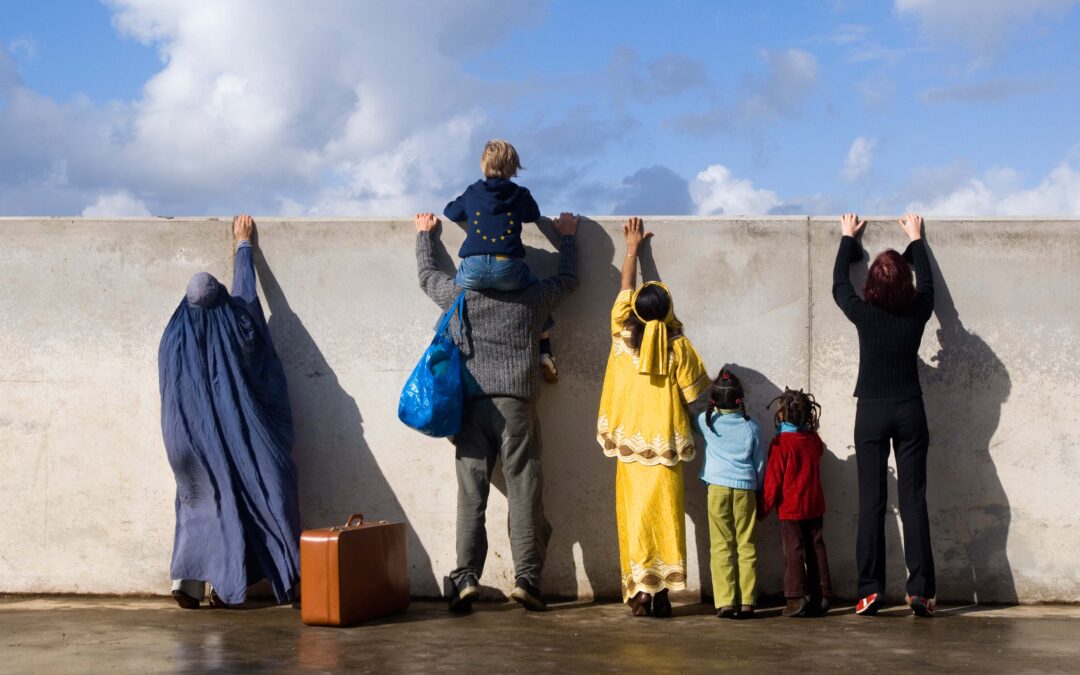
Today begins in Istanbul (Turkey) a two-day training for lawyers and CSO practitioners representing and working with migrants, refugees and asylum-seekers.
This event is organized by ICJ, in cooperation with its partners Refugee Rights Turkey, the European Council on Refugees and Exiles (ECRE), Mülteci-Der (MD) and ICJ-EI, as part of the EU co-financed project Fostering Access to Rights for Migrants, Refugees and Asylum-Seekers in Turkey.
30 lawyers and civil society practitioners – representing nine different bar associations and relevant organisations from the Ankara area and other nearby key migration and asylum locations – are taking part in the training on 3 and 4 March.
The training aims to update lawyers and CSOs on the international and national law on the rights of refugees, migrants and asylum-seekers in order to be effective in their work at both the national and international levels. It aims at an effective implementation of the Turkish legal framework on asylum and migration.
The main thematic areas to be discussed will be the principle of non-refoulement, international protection, detention and access to economic, social and cultural rights.
The training will use as a basis the draft training materials prepared by the ICJ and its partners (to be published an the end of 2019) and, among other sources, the ICJ Practitioners Guide no. 6: Migration and International Human Rights Law.
The project “Fostering Access to Rights for Migrants, Refugees and Asylum-Seekers in Turkey” is funded by the European Instrument for Democracy and Human Rights (EIDHR) of the European Union.
Turkey-Training-Istanbul2-MigrationAsylum-Agenda-2018-tur (download the agenda in Turkish)