Jan 6, 2016
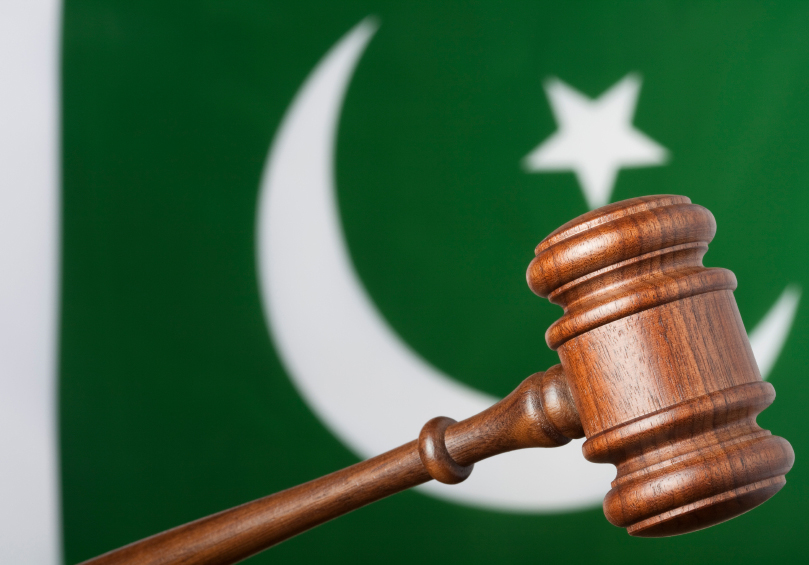
One year into the establishment of military courts to try civilians for terrorism-related offences, the operation of Pakistan’s system of “military justice” shows complete disregard of the right of a fair trial, the ICJ said in a new briefing paper released today.
“The trials by Pakistan’s military courts have reaffirmed fears of human rights groups and the legal community that military trials in Pakistan are secret, opaque and make a mockery of Pakistan’s domestic and international fair trial obligations”, said Sam Zarifi, ICJ’s Asia Director.
In its analysis brief, the ICJ examines the performance of Pakistan’s military courts in the first year of their operation, including their failure to respect the defendants’ right to a fair trial.
Proceedings before Pakistani military courts fall well short of national and international standards requiring fair trials before independent and impartial courts:
- Judges are part of the executive branch of the State and continue to be subjected to military command;
- The right to appeal to civilian courts is not available;
- The right to a public hearing is not guaranteed;
- A duly reasoned, written judgment, including the essential findings, evidence and legal reasoning, is denied;
- The procedures of military courts, the selection of cases to be referred to them, the location and timing of trial, and details about the alleged offences are kept secret; and
- The death penalty is implemented after unfair trials.
In addition to these concerns, the ICJ has also received reports that suspects being tried by military courts have been subjected to torture and ill-treatment in detention and their family members have been harassed and intimidated by military authorities.
These concerns are exacerbated by the military’s refusal to give family members and civil society monitors access to detention centers.
A number of families have also alleged that juveniles are being tried by military courts in contravention of Pakistani and international law standards on the rights of children.
“Pakistan faces a genuine threat from militant groups engaging in acts of terrorism and the Pakistani Government has an obligation to protect all people from such attacks,” said Zarifi.
“But militarizing the judicial process will not lead to justice and it will not control terrorism. This is the lesson from around the world,” he added.
Since the amendments to the Constitution and Army Act one year ago, the Pakistan Government has constituted 11 military courts to hear terrorism-related cases. Military courts have concluded the trials of 64 people, finding the defendants guilty in 40 cases. 36 people have been sentenced to death and four have been given life sentences.
Nearly a hundred cases are still pending before the various military courts in the country.
Eight civilians convicted by military courts in secret trials for their involvement in “terrorist activities” have been hanged.
The ICJ considers these executions unlawful, in breach of Pakistan’s domestic law and its international legal obligations.
The ICJ has urged Pakistan to roll back the system of “military justice” and undertake a comprehensive review of its counter terrorism laws, policies and practices to ensure they are compatible with Pakistan’s national and international legal obligations.
Contact
Sam Zarifi, ICJ Asia Pacific Regional Director (Bangkok), t: +66 807819002; email: sam.zarifi(a)icj.org
Reema Omer, ICJ International Legal Adviser for South Asia (London), t: +44 7889565691; email: reema.omer(a)icj.org
Pakistan-military courts brief-Advocacy-Analysis brief-2016-ENG (full text in PDF)

Dec 14, 2015
The Australian Section of the ICJ, in Victoria, has called for a human rights based approach to countering the threat of violent extremism within the counter-terrorism strategy of the Australian Government.
ICJ Victoria’s Position Paper addresses the current approach of the Australian Government, proposing that this risks aggravating, rather than mitigating, the social causes of violent extremism; and that an effective counter-terrorism strategy must include prevention, deradicalisation and rehabilitation programmes in order to be effective and just. It concludes with recommendations to those ends.
Australia-DeradicalisationRehabilitationPrevention-ICJVictoria-2015-EN (download Position Paper in PDF)

Nov 16, 2015 | News
The International Commission of Jurists (ICJ) deplores the devastating criminal attacks carried out in Paris on 13 November, leading to the loss of at least 129 lives and many serious injuries. The ICJ extends its condolences to the victims and their families.
The attacks were calculated to cause the greatest possible arbitrary destruction of lives and of human rights.
Those responsible for these heinous crimes must now be investigated and brought to justice, in a manner that ensures strict compliance with human rights and the rule of law.

Nov 11, 2015 | News
While welcoming the Maldives government’s revocation of the emergency yesterday, the arbitrary manner in which the emergency was first imposed and then suddenly revoked within the span of a week reflects a deeper erosion of the rule of law in the country, the ICJ said today.
On 10 November, a week after declaring a 30-day state of emergency, the Maldives lifted the emergency reportedly because authorities had arrested several people in connection with an alleged plot to “use dangerous weapons and explosives”, thereby neutralizing the purported national security threat cited as the grounds for the emergency.
Maldivian authorities have not provided any information as to who or how many individuals were arrested or the nature of the charges.
“The imposition of a state of emergency is not a political tool to be used willy-nilly as a matter of convenience to suspend human rights protections and suppress political opposition,” said Nikhil Narayan, ICJ’s South Asia Senior Legal Adviser.
“A state of emergency that suspends constitutional rights is not to be declared lightly,” he added. “It has serious implications for human rights and the rule of law in the country, and must only be invoked in the most extreme situations and in accordance with international law.”
International law expressly permits derogations of certain human rights only in times of public emergency which threatens ‘the life of the nation’.
“Declaring a 30-day emergency and then suddenly lifting it a week later only reinforces the serious concerns previously raised as to the legitimacy of the emergency in the first place, and speaks to the larger rule of law crisis in the country,” Narayan said.
The emergency decree issued by the Maldives government last week suspended several constitutional rights, including the right to freedom of peaceful assembly, and reduced the constitutionally mandated period for the vice president to respond to impeachment charges from 14 to 7 days.
The opposition Maldivian Democratic Party (MDP) had planned a public anti-government demonstration for 6 November, two days prior to which the emergency was declared.
Meanwhile, the vice president was removed from his post the day after the emergency decree, 5 November, in a swift and seemingly arbitrary impeachment hearing.
“The circumstances surrounding events in the Maldives this past week clearly suggest that the government was using the emergency as a ploy to prevent the planned opposition rally and to eliminate the vice president as a political threat,” said Narayan.
The emergency also granted sweeping powers of search, arrest and detention without warrant to the police, who reportedly raided several buildings and arrested an unknown number of individuals under its emergency powers over the past week.
“The Maldives government cannot flout international law by invoking emergency powers as a means to deny the due process rights of the vice president and others arrested or detained for alleged crimes,” added Narayan. “The government must ensure that the individuals arrested during the emergency are afforded their full fair trial and due process rights in accordance with international law.”
Additional Information:
The ICJ previously raised concerns that the alleged grounds for the emergency did not appear to establish a threat to the life of the as required by the high threshold set by international law, and could not in any event justify the complete suspension of constitutional rights.
In August 2015, following a joint fact-finding mission to the Maldives, the ICJ and South Asians for Human Rights (SAHR) documented the breakdown of the rule of law and human rights in the Maldives in a 35-page report, Justice Adrift: Rule of Law and the Political Crisis in the Maldives.
Contact:
Nikhil Narayan, ICJ Senior Legal Adviser for South Asia, t: +977 9813187821 ; e: nikhil.narayan(a)icj.org
Nov 9, 2015
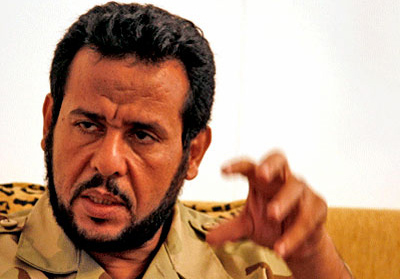
The ICJ, together with JUSTICE, Amnesty International and REDRESS, filed a third party intervention with the Supreme Court in the case Abdul-Hakim Belhaj and Other v. Jack Straw and Others.
The case involves the appeal of an action brought by a Libyan national and his spouse against the UK authorities for their alleged role of complicity in the rendition and torture of the complainants. The appeal is from a decision of the High Court, which had determined that the case could not go ahead because the courts could not adjudicate the complaint since it was an “act of States” not subject to judicial review.
The four organizations argued that application of the act of state and of the sovereign immunity doctrines, in the manner accepted by the High Court and rejected by the Court of Appeal, was not consistent with national and international human rights law.
In their brief, the human rights organisations addressed the following topics:
- The scope of the doctrine of State immunity in English law, in particular the circumstances in which a foreign State is directly or indirectly “impleaded”;
- Whether the act of State doctrine in English law reflects international law, and the scope of the principle that the act of State doctrine cannot be invoked in cases where serious breaches of international law (including international human rights law) are alleged;
- The nature of the prohibition of torture and the right to a remedy for serious human rights violations in international law.
UK-ICJ&others-AmicusBrief-Belhadj_v_Straw-SC-legalsubmission-2015 (download the amicus brief)
Background information
On 20 December, the High Court of Justice dismissed the claim for civil damages of Abdul-Hakim Belhaj, a Libyan opposition member during the rule of Muammar Gaddafi, and of his wife Fatima Boudchar. They sought civil compensation from the UK government for complicity of the UK secret services in their US-led rendition to Libya in 2004, including their unlawful detention and torture in China, Malaysia, Thailand and Libya. Fatima Boudchar was pregnant at the time of the rendition. Abdul-Hakim Belhaj was released from detention in Libya only in 2010. The Court, although it rejected Government claims of immunity, held that the action was barred on the basis of the doctrine of “act of state” according to which “domestic court exercises judicial restraint in order to avoid adjudicating upon the actions of foreign sovereign states, ‘in the area of transactions between states’”. The Court held that it could not assess the lawfulness of actions committed by officials of China, Malaysia, Thailand and Libya in those countries according to their laws. It also declined “to decide that the conduct of US officials acting outside the United States was unlawful, in circumstances where there are no clear and incontrovertible standards for doing so and where there is incontestable evidence that such an enquiry would be damaging to the national interest”.

![Smoke rises after an Israeli air strike on the village of Taybeh in southern Lebanon [Source: Al Jazeera]](https://www.icj.org/wp-content/uploads/2026/03/Screenshot-2026-03-20-at-15.56.24-300x200.png)