Sep 14, 2015
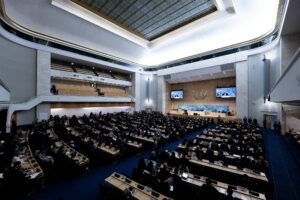
The UN Working Group on Arbitrary Detention will today present to the Human Rights Council its “Basic Principles and Guidelines on remedies and procedures on the right of anyone deprived of their liberty to bring proceedings before a court” (UN Doc A/HRC/30/37 (2015)).
“The Basic Principles and Guidelines act to reflect important elements necessary to preserve and protect the right to liberty,” said Wilder Tayler, Secretary-General of the ICJ.
“The document assists States, international organization and civil society to enhance, in law and in practice, respect for the right to challenge the lawfulness of detention by habeas corpus or equivalent procedures,” he added.
As concluded by the ICJ’s Eminent Jurists Panel on Terrorism, Counter-terrorism and Human Rights, there has been a progressive erosion of international law principles since the so-called ‘war on terror’.
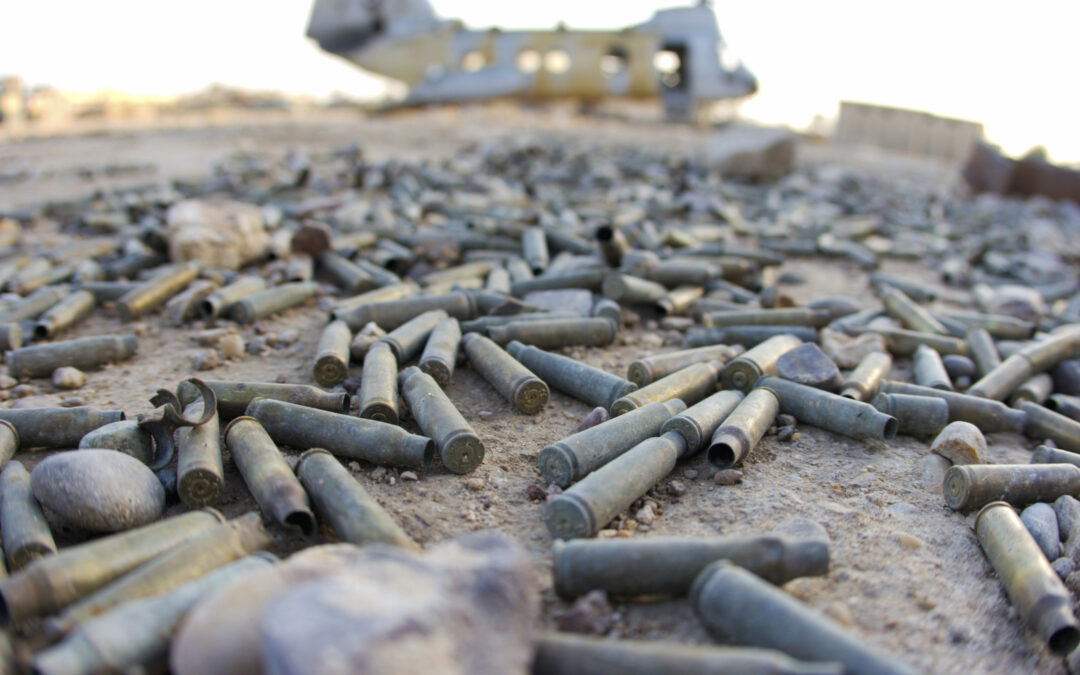
Along with many other aspects of the Basic Principles and Guidelines, the ICJ has therefore welcomed the attention given to the application human rights standards alongside international humanitarian law and the related provisions of the document pertaining to detention in armed conflict.
“In light of some recent State practices, including in the context of unlawful rendition and secret detention programmes, there is an especially important value in this aspect of the Basic Principles and Guidelines, including for the combating of incommunicado and secret detention, enforced disappearance and torture and other cruel, inhuman or degrading treatment,” Tayler said.
“It is for this reason that the ICJ has produced a Legal Commentary on elements of the Basic Principles and Guidelines pertaining to detention in armed conflict,” he added.
The ICJ’s Legal Commentary supports the general approach adopted by the Working Group in its formulation of the Basic Principles and Guidelines as they pertain to detention in armed conflict.
It provides further explanation and justification for the Working Group’s approach, with particular reference to international law and standards, showing why the Basic Principles and Guidelines – as they apply to detention in armed conflict – should be scrupulously followed.
Background
Under its resolution 20/16 (2012), the UN Human Rights Council requested the Working Group on Arbitrary Detention to prepare draft basic principles and guidelines on remedies and procedures on the right of anyone deprived of his or her liberty.
The Basic Principles and Guidelines were adopted by the Working Group in April 2015, following a two-year process of deliberations and open consultations.
The Working Group set out a first draft set of principles and guidelines ahead of its global consultation on the subject in September 2014.
From 2 to 5 February 2015, the Working Group met to continue its elaboration of the Basic Principles and Guidelines, resulting in the adoption of a second draft.
The Working Group adopted its final iteration of the document at the conclusion of its session on 29 April 2015.
The ICJ engaged in all stages of the Working Group’s elaboration and consultations.
It made written submissions in November 2013, April 2014 and March 2015.
Its staff, Matt Pollard and Alex Conte, gave panel presentations at the September 2014 global consultation.
Contact:
Alex Conte, Senior Legal Adviser at ICJ, t: +41 22 979 3838 ; e: alex.conte(a)icj.org
Universal-Commentary-WGAD-PrincGuideArmedConflict-Advocacy-2015-ENG (full text in PDF)

Aug 26, 2015
Hoy, la CIJ y la Organización Mundial Contra la Tortura (OMCT) presentaron a un Amicus Curiae ante la Corte Constitucional de Colombia, sobre una reforma constitucional (Acto Legislativo 01 de 25 de junio 2015, “Por el cual se reforma el artículo 221 de la Constitución Política de Colombia”).
Esta reforma constitucional pretende ampliar de forma exhorbitante el ámbito de competencia de la jurisdicción penal militar y niega los principios de complementariedad entre el Derecho internacional de los Derechos Humanos y el Derecho Internacional Humanitario y de la doble protección del ser humano bajo estas dos ramas del Derecho Internacional en las situaciones de conflicto armado.
La reforma constitucional fue demandada ante la Corte Constitucional por la Comisión Colombia de Juristas, varias Organizaciones No Gubernamentales de Derechos Humanos y asociaciones de víctimas de violaciones a los derechos humanos de Colombia.
Colombia-AmicusCuriaeCIJOMCT-Advocacy-Legal submission-2015-SPA (texto íntegro en PDF)

Aug 26, 2015 | Incidencia
Hoy, la CIJ y la Organización Mundial Contra la Tortura (OMCT) presentaron a un Amicus Curiae ante la Corte Constitucional de Colombia, sobre una reforma constitucional (Acto Legislativo 01 de 25 de junio 2015, “Por el cual se reforma el artículo 221 de la Constitución Política de Colombia”).
Esta reforma constitucional pretende ampliar de forma exhorbitante el ámbito de competencia de la jurisdicción penal militar y niega los principios de complementariedad entre el Derecho internacional de los Derechos Humanos y el Derecho Internacional Humanitario y de la doble protección del ser humano bajo estas dos ramas del Derecho Internacional en las situaciones de conflicto armado.
La reforma constitucional fue demandada ante la Corte Constitucional por la Comisión Colombia de Juristas, varias Organizaciones No Gubernamentales de Derechos Humanos y asociaciones de víctimas de violaciones a los derechos humanos de Colombia.
Colombia-AmicusCuriaeCIJOMCT-Advocacy-Legal submission-2015-SPA (texto íntegro en PDF)

Aug 25, 2015
The Maldives government must immediately reverse the politicisation of the country’s judiciary and the erosion of rule of law in the country, said the ICJ and South Asians for Human Rights (SAHR) in a joint fact-finding report released today.
The 35-page report, entitled Justice Adrift: Rule of Law and the Political Crisis in the Maldives highlights the breakdown of the rule of law and human rights protections in the Maldives, exemplified by the arrest and trial of former President Mohamed Nasheed.
Nasheed, who had been under house arrest, was unexpectedly imprisoned again on Monday without a clear legal basis.
The ICJ and SAHR called on the Maldives government to immediately release Nasheed from detention and to ensure he receives necessary medical care and access to his family and lawyers.
A joint delegation of the ICJ and SAHR conducted a fact-finding mission to the Maldives in May 2015 to assess the human rights situation since the current government assumed power in 2013.
“We documented a serious erosion of the independence, impartiality and integrity of the judiciary, which has resulted in the deterioration in the rule of law in the Maldives and the stalling of the country’s transition toward a more representative government,” said Hina Jilani, SAHR Chairperson and a Commissioner of the ICJ.
“This current crisis in the rule of law risks turning the country back to the authoritarian days of the past that it had so promisingly broken away from in 2008,” she added.
After decades of authoritarian rule, in 2008 the Maldives promulgated a new Constitution that established independent democratic institutions, the rule of law, human rights protections and the separation of powers.
The new report documents how the institutional and legal reforms needed to consolidate this democratic transition stalled and have endangered a backslide to the country’s authoritarian legacy.
“The political crisis in the Maldives has hurt the country’s human rights situation, and it can only be resolved with the establishment of credible and impartial institutions in the country, particularly the judiciary,” said Nikhil Narayan, ICJ Senior Legal Adviser for South Asia.
“The Maldives should take immediate steps to establish effective and independent government institutions in compliance with its international human rights obligations under Commonwealth and UN standards on judicial independence and separation of powers,” he added.
Among the specific problems identified in the report are: judicial proceedings against the national human rights commission and other independent institutions, as well as interference in other spheres, in a manner that raises serious concerns as to judicial independence and accountability; judicial conduct in high-profile criminal cases, including former President Mohamed Nasheed, which are grossly unfair and violate international fair trial standards; arbitrary and undue parliamentary interference in independent constitutional institutions; and, instances of serious violations and abuse of fundamental rights of civil society and human rights defenders, among other concerns raised.
“The Maldives must urgently implement the necessary reforms to strengthen judicial independence, the rule of law and human rights in accordance with international standards,” said Jilani.
The Maldives’ human rights record will be discussed at the UN Human Rights Council later next month as part of the Universal Periodic Review (UPR) process.
Member states of the UN have already made a range of recommendations to the Maldives, and can make further statements at the Council session.
The government will be expected formally to respond and indicate which of the recommendations it will commit to implement over the coming years.
The ICJ-SAHR report therefore comes at a timely moment, urging Maldives authorities to strengthen human rights protections, judicial independence and the rule of law, including by accepting and implementing key UPR recommendations as well as prior recommendations by UN Special Rapporteurs who have visited the country, and urging the international community to hold the Maldives to its obligations and commitments.
“The Maldivian government must make good on its assurances to the ICJ-SAHR delegation, the UN Human Rights Council, the UN Special Rapporteur on Independence of Judges and Lawyers and other outside observers of its commitment to the goal of strengthening judicial independence, the rule of law, fundamental rights and separation of powers, by demonstrating real steps to implement the recommendations set out by the delegation,” said Narayan.
Contact:
Nikhil Narayan, ICJ Senior Legal Adviser for South Asia, t: +977 9813187821 ; e: nikhil.narayan(a)icj.org
Deekshya Illangasinghe, Executive Director, SAHR, t: + 941 12695910 ; e: deekshya(a)southasianrights.org
Maldives-Justice-Adrift-Rule of Law-Publications-fact-finding report-2015-ENG (full report in pdf)

Aug 17, 2015 | News
The ICJ today condemned the promulgation of the Counter-Terrorism Law by the Egyptian President, Abdel Fattah el-Sisi, as a new, repressive move that would erode the rule of law and brush aside fundamental legal and human rights guarantees.
Calls to revise the draft Counter-Terrorism Law by the ICJ and other international and national human rights organizations and stakeholders, including Egypt’s quasi-governmental National Human Rights Council, were disregarded.
“The promulgation of the Counter-Terrorism Law by President el-Sisi expands the list of repressive laws and decrees that aim to stifle dissent and the exercise of fundamental freedoms,” said Said Benarbia, Director of the ICJ’s Middle East and North Africa Programme.
“Egypt’s authorities must ensure the law is not used as a tool of repression and, to this end, comprehensively revise it so that it fully complies with international human rights law and standards,” he added.
In a position paper published on 9 July, the ICJ detailed how the law is inconsistent with, and in numerous ways violates, Egypt’s obligations under international law, including those relating to the right to life, the right to liberty and not to be subjected to arbitrary detention, the right to privacy, and fair trial rights.
Further, the law gives state officials broad immunity from criminal responsibility for the use of force in the course of their duties, including the use of lethal force when it is not strictly necessary to protect lives, grants sweeping surveillance and detention powers to prosecutors, entrenches terrorism circuits within the court system (which have in the past frequently involved fair trial violations), and grants the President far-reaching, discretionary powers to “take the necessary measures” to maintain public security, where there is a “danger of terrorist crimes.”
Contact:
Alice Goodenough, Legal Adviser, ICJ Middle East and North Africa Programme, t: +44 7815 570 834; e: alice.goodenough(a)icj.org
Nader Diab, Associate Legal Adviser, ICJ Middle East and North Africa Programme, t: +41 229 793 804; e: nader.diab(a)icj.org
Egypt-Counter-Terrorism Law Promulgated-News-Press releases-2015-ARA (full text in pdf, ARABIC)

![Smoke rises after an Israeli air strike on the village of Taybeh in southern Lebanon [Source: Al Jazeera]](https://www.icj.org/wp-content/uploads/2026/03/Screenshot-2026-03-20-at-15.56.24-300x200.png)