Jul 23, 2015 | News
The ICJ today called on the Tunisian authorities to amend the deeply flawed draft Counter-Terrorism and Money Laundering law with a view to ensuring its full compliance with international standards.
“Tunisian authorities have obligations under international law to protect individuals under their jurisdiction against all acts of terrorism,” said Said Benarbia, Director of the Middle East and North Africa Programme at the ICJ.
“At the same time, all counter-terrorism measures must fully respect human rights guarantees and the rule of law,” he added.
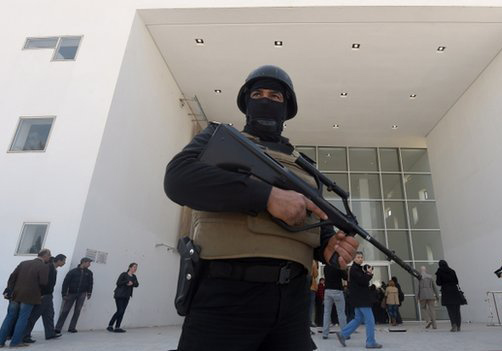
The draft Counter-Terrorism and Money Laundering law, revised since it was first introduced last year, was revived following a series of attacks against members of the security forces and the army and the deadly Bardo Museum (photo) attack on 18 March 2015.
In response to the killing of 38 tourists in Sousse on 26 June and the following declaration of a state of emergency on 4 July 2015 by the Tunisian President, the Tunisian Assembly of the People’s Representatives has accelerated the process of discussing and adopting the Draft Law.
The Draft Law criminalizes a wide range of acts through overbroad and imprecise definitions of terrorism and terrorism-related acts.
Such definitions could potentially have the effect of criminalizing activities not actually related to terrorism, or even the lawful and peaceful exercise of fundamental rights and freedoms, including the right to freedom of expression, the ICJ says.
The ICJ is particularly concerned that the draft law grants, in its article 68, immunity from criminal prosecution for security forces, outside cases of self-defence, when using force in the course of their duties.
This provision requires amendment to ensure that it does not immunize use of force that violates the right to life in violation of international law and standards, including for instance intentional use of lethal force when it is not strictly unavoidable in order to protect life, the Geneva-based organization adds.
“The draft law should not dilute the specificity of terrorist acts by drawing ordinary crimes within the scope of the counterterrorism legislation, nor should it be used as a tool to shield members of security forces from accountability in cases of human rights violations committed in the course of their functions,” Benarbia said.
Furthermore, the bill contains provisions that could potentially result in undue prosecution of whistleblowers and journalists, or otherwise disproportionally limit the freedoms of expression and information in violation of international law, the ICJ notes.
A number of offences under the Draft Law are punishable with the death penalty.
The ICJ opposes the death penalty in all circumstances as a violation of the right to life and the prohibition of torture and other cruel, inhuman or degrading punishment.
The Draft Law also creates an exceptional regime for police custody, allowing the prosecutor to order up to a period of 15 days of detention (articles 37 and 39) without access to a lawyer or a judge, in violation of the right to liberty, fair trial guarantees, and guarantees for the prevention of torture and other abuses in detention.
It further provides for extensive infringements of the right to privacy through various forms of surveillance, and potentially breaches lawyers’ duties of confidentiality in ways that have not been justified.
“In reviewing and approving the Draft Law, members of the Assembly must ensure that it is fully in line with Tunisia’s obligations under international law, including those relating to the right to life, to liberty and to a fair trial,” Benarbia added.
Contact
Theo Boutruche, Legal Adviser of the ICJ Middle East and North Africa Programme, t: +96 170 888 961 ; e: theo.boutruche@icj.org
Tunisia-Counter Terrorism Draft Law-2015-ARA (Full text in Arabic, PDF)
Jul 9, 2015
In a new position paper, the ICJ calls on the Egyptian authorities to refrain from promulgating the deeply flawed draft Counter-Terrorism Law.
The draft law, which was approved by the Cabinet on 1 July and the State Council the next day, was introduced following the assassination of the Prosecutor-General, Hisham Barakat, on 29 June, and attacks by armed groups in the Sinai two days later that left dozens of soldiers dead.
“Egypt’s draft Counter-Terrorism Law would erode the rule of law and brush aside fundamental legal and human rights guarantees,” said Said Benarbia, Director of the Middle East and North African Programme at the ICJ.
“It contravenes the unanimous declaration of all states at the UN, that human rights should be the cornerstone of counter-terrorism efforts,” he added.
The draft law criminalizes an enormous range of acts using broad definitions and vague wording. Such definitions have the potential to criminalize the legitimate and peaceful exercise of rights, including the rights to freedom of expression, association and assembly, the ICJ says.
A number of these crimes are punishable with the death penalty. The ICJ opposes the death penalty in all circumstances as a violation of the right to life and the prohibition of torture and other cruel, inhuman or degrading punishment.
Furthermore, the draft grants wide powers to investigative and law enforcement officials that present severe risks of arbitrary detention and extensive infringements of the right to privacy without adequate safeguards or judicial oversight, the ICJ adds.
The draft law also grants immunity from criminal prosecution for State officials, including potentially those who unlawfully use lethal force.
A new terrorism court with expedited procedures, which fall short of international fair trial standards, is also provided for under the draft law.
The draft also grants the President sweeping discretionary powers, including the power to take any “necessary measures” when there is a “danger of a terrorist crime.”
“Egyptian authorities must drop the draft Counter-Terrorism Law and ensure that any future counter-terrorism measures are fully in line with Egypt’s obligations under international law, including the obligation to uphold the rule of law and human rights,” Benarbia said.
Contact:
Alice Goodenough, Legal Adviser of the ICJ Middle East and North Africa Programme, t: +44 7815 570 834; e: alice.goodenough(a)icj.org
Nader Diab, Associate Legal Adviser of the ICJ Middle East and North Africa Programme, t: +41 229 793 804; e: nader.diab(a)icj.org
Egypt-Counter-Terrorism Law-Advocacy-Position papers-2015-ENG (full text of position paper in PDF, English)
Egypt-Counter-Terrorism Law-News-Press releases-2015-ARA (full text of Press release in PDF, Arabic)
Latest update (17 August):
Since publication of the ICJ’s Position Paper, certain aspects of the law have been amended, in particular by replacing the proposed “terrorism courts” with the entrenchment of terrorism circuits established within the court system. However, the main points of the criticism in the Position Paper remain valid for the version of the law promulgated on 17 August 2015.
Jun 29, 2015 | News
The ICJ calls on the UN Human Rights Council and the Security Council to respond to the findings of the Independent Commission of Inquiry on the 2014 Gaza Conflict, and fully implement all its recommendations.
This should be done with a view to ensuring accountability, including effective remedy and reparation, for all violations of international humanitarian law and human rights abuses committed by the Israeli Defence Forces (IDF) and by Palestinian armed groups, the ICJ says.
The ICJ further calls on the Human Rights Council to establish an independent mechanism to monitor the implementation of the Commission’s recommendations by both parties.
“Israeli and Palestinian authorities must break the chronic cycle of impunity in the Israeli-Palestinian conflict. All credible evidence of war crimes, such as the Commission of Inquiry has highlighted, must be properly investigated,” said Said Benarbia, Director of the ICJ MENA Programme.
“No one who is responsible, whether military or civilian and regardless how high their office, can be allowed to escape justice,” he added.
The Report published last week, and discussed today at the Human Rights Council, documents serious violations of international law and human rights abuses committed during the conflict, such as indiscriminate attacks, including disproportionate attacks, and direct attacks against civilians and against civilian objects that are not justified under the International Humanitarian Law.
The Commission found that artillery and other explosive weapons had been used in densely populated areas, that entire neighborhoods in Gaza had been destroyed, and that unguided rockets had been used.
As indicated by the Commission, some of those acts may constitute war crimes.
To date, both Israeli and Palestinian authorities have failed to meet their obligations under international law to effectively investigate the violations and to prosecute anyone criminally responsible.
Investigations and criminal proceedings initiated by the IDF’s Military Advocate General (MAG), which is also involved in the planning and execution of the IDF’s military operations, fall short of international standards including in relation to independence and impartiality.
No criminal investigations into violations and abuses committed by Palestinian armed groups appear to have been initiated by the Gaza authorities.
The ICJ calls on both authorities to provide for effective, independent and impartial investigation mechanisms in line with international standards.
Absent such reforms, international justice mechanisms can and should fill accountability and remediation gaps where domestic authorities are unwilling or unable to effectively administer justice.
“Israeli and Palestinian authorities must reform the framework for their current investigations and prosecutions. They must also fully cooperate with international accountability mechanisms, including the preliminary examination initiated by the International Criminal Court,” Benarbia said. “The aim throughout must be to make known the truth about the violations, to identify and hold those responsible to account, to ensure victims’ rights, and to prevent any recurrence.”
Contact:
Theo Boutruche, Legal Adviser of the ICJ Middle East and North Africa Programme, tel: +33 670735747, e-mail: theo.boutruche(a)icj.org
POT-UN Report Gaza -News-Press release-2015-ARA
Jun 25, 2015 | News
While welcoming the recent momentum towards finalizing the drafting of a new Constitution, the ICJ said that the Constituent Assembly in Nepal must ensure strong and effective protections for all human rights, consistent with its international human rights obligations.
In addition, they also must ensure that the drafting process is fully inclusive and participatory,
After seven years of political impasse, the devastating earthquake of 25 April 2015 provided Nepali political leaders an opportunity to restore public faith in public authority by reinvigorating the constitutional process.
The country’s four major political parties have now apparently reached agreement on some previously contentious issues and developed a fast-tracked process for the adoption of a new democratic Constitution.
“The horrific earthquake and the government’s response to it has led to a renewed sense of urgency about finalizing and adopting a Constitution that will help create a stable, representative government structure in Nepal consonant with rule of law principles”, Sam Zarifi, ICJ’s Asia director. “The country’s political leaders have a unique responsibility, and opportunity, to adopt a strong, progressive and human rights-compliant constitutional text”.
International law and standards require meaningful public consultation through a transparent and inclusive process. However, the lack of transparency in the current fast-tracked process, combined with the accelerated timeframe, risks undermining people’s ability to participate effectively in the development of the Constitution.
“None of Nepal’s previous Constitutions were the result of meaningful consultation and public participation”, Zarifi said. “The current government must take immediate steps to consult and ensure the participation of all stakeholders, including marginalized groups and minorities”.
The new Constitution must serve to implement the full range of human rights guaranteed under international law. Specifically, while drafting the new constitution, the ICJ urges the Government of Nepal to ensure, among other things, that:
- The new constitution guarantees all of Nepal’s international human rights obligations;
- Permissible limitations on human rights and provisions derogating from rights during emergencies in the new Constitution comply with international human rights laws;
- There is no impunity for gross violations of human rights and serious violations of international humanitarian law committed during the armed conflict, and criminal law is applicable to acts committed at the time;
- The right to effective remedies and reparation for all human rights is recognized;
- Economic, social and cultural rights are recognized as justiciable; and
- Judicial independence is reinforced.
Contact
Nikhil Narayan, ICJ Senior Legal Advisor (Kathmandu), t: +977 9851061167; Email: nikhil.narayan(a)icj.org
Jun 24, 2015 | Advocacy
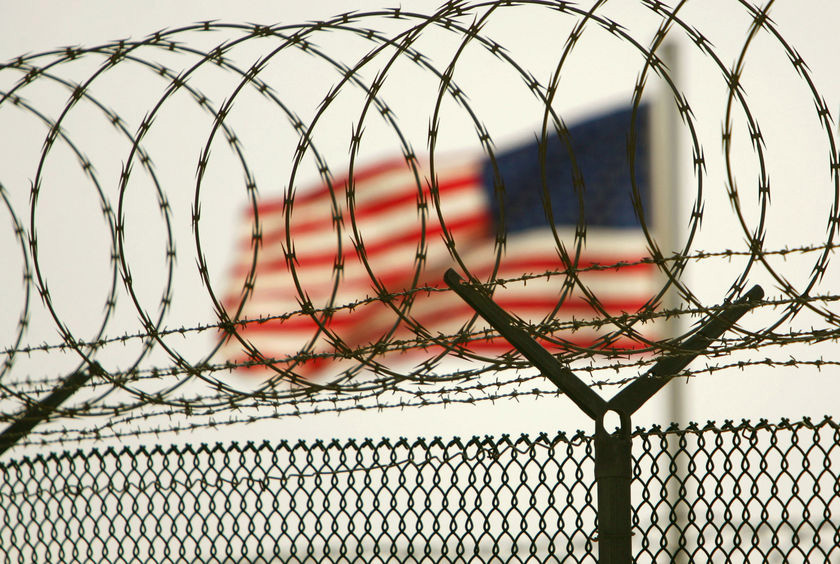
The ICJ joined more than 100 organizations in endorsing a call before the UN Human Rights Council for accountability of US officials responsible for torture and enforced disappearances in the rendition and secret detention programmes and for reparations to be provided for the victims.
The call was made by the American Civil Liberties Union, the Centrol de Estudios Legales and Sociales, Conectas Direitos Humanos, and the Washington Office on Latin America.
The statement can be downloaded here:
USA-HRC29ShortOralStatementTortureRendition-Advocacy-2015-ENG (short version, in PDF)
USA-HRC29StatementTortureRendition-Advocacy-2015-ENG (full text in PDF)
USA-HRC29StatementTortureRendition-Advocacy-2015-SPA (full text in PDF, Spanish)
USA-HRC29StatementTortureRendition-Advocacy-2015-ARA (full text in PDF, Arabic)

![Smoke rises after an Israeli air strike on the village of Taybeh in southern Lebanon [Source: Al Jazeera]](https://www.icj.org/wp-content/uploads/2026/03/Screenshot-2026-03-20-at-15.56.24-300x200.png)