Apr 20, 2015
En febrero de 2014, el Representante para Suramérica de la CIJ rindió un dictamen pericial en audiencia pública ante la Corte Interamericana de Derechos Humanos, en el Caso Cruz Sánchez y otros Vs. Perú.
Este caso está referido a la ejecución extrajudicial de tres miembros del grupo armado “Movimiento Revolucionario Túpac Amaru – MRTA”, luego de ser puestos fuera de combate, por las fuerzas de seguridad peruanas en el marco de la llamada “Operación Chavín de Huántar”, de retoma de la Embajada del Japón en Lima (Diciembre 1996 –abril 1997).
El dictamen pericial rendido por la CIJ abordó cuestiones relativas a: i) la naturaleza jurídica de graves infracciones al derecho internacional humanitario; ii) la intervención de la justicia militar en la investigación y juzgamiento de delitos que no son de función y que pueden constituir violaciones a los derechos humanos; y iii) los estándares internacionales relativos a la debida diligencia en la investigación, juzgamiento y sanción de los responsables de violaciones de derechos humanos.
El pasado 17 de abril de 2015, la Corte Interamericana profirió Sentencia en el caso.
Peru-PeritajeFAGChavinHuantar-Advocacy-legal submission-2015-SPA (texto íntegro en PDF)
Apr 15, 2015
In a briefing paper released today, the ICJ provides answers to key questions regarding the legal framework and political context of Pakistan’s move to allow military courts to try civilians for offenses allegedly related to terrorism.
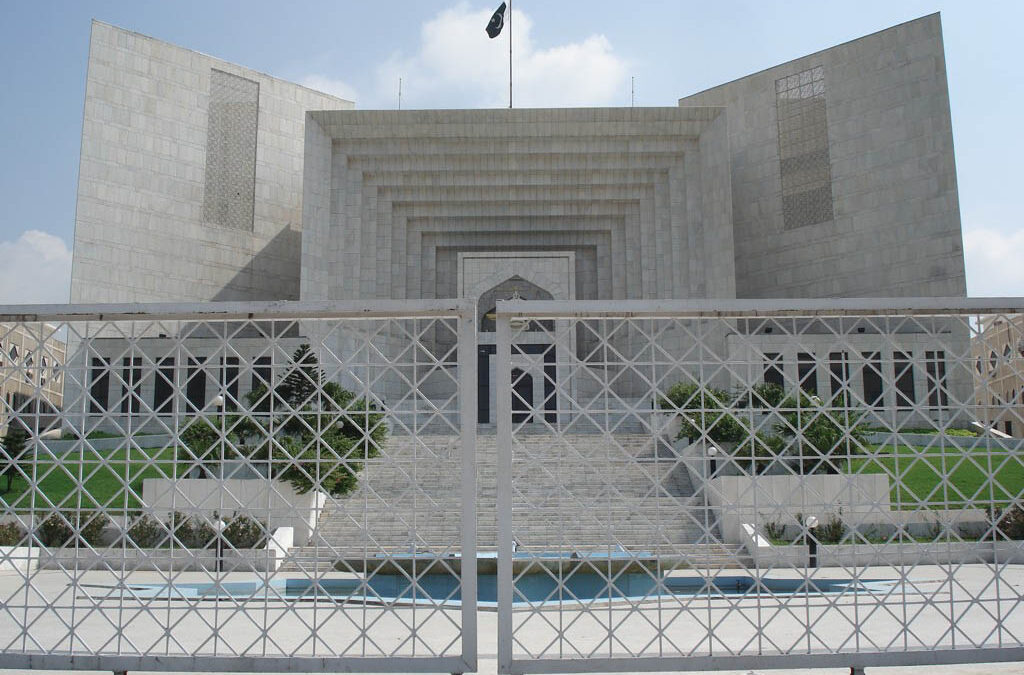
The ICJ is publishing this paper as the Supreme Court of Pakistan (photo) is about to resume hearings (tomorrow), in a constitutional challenge to the newly enacted legal framework granting jurisdiction to military courts to try civilians for terrorism related offences.
The briefing paper analyses the new provisions and military court proceedings in the light of international standards guaranteeing the right to fair trial before independent and impartial courts.
“Pakistan’s new system of ‘military justice’ falls well short of domestic and international fair trial standards, flouts previous Supreme Court rulings, and goes against a regional and global trend of limiting rather than expanding military courts’ jurisdiction,” said Sam Zarifi, ICJ’s Asia director.
Earlier this month, the Chief Justice of Pakistan, Nasir-ul-Mulk, constituted a full-bench of the Supreme Court comprising of all 17 justices to hear over a dozen petitions that argue that the extension of military court’s jurisdiction over civilians is a violation of the right to a fair trial and the independence of the judiciary, and a breach of the principle of separation of powers.
“The failure of the government and military authorities to make public information about the time and place of the trials, the charges against accused persons as well as the procedures used by military courts have confirmed fears of human rights groups and the legal community that the military trials in Pakistan are secret, opaque and violate Pakistan’s domestic and international fair trial obligations,” Zarifi added.
“The Supreme Court has in the past contributed positively to protecting human rights, notably in cases of enforced disappearance and the rights of religious minorities,” he said.
“All eyes are now on the Court to remedy the militarization of justice in progress in Pakistan under the guise of combatting terrorism.”
Background
On 6 January, Pakistan’s Parliament passed the 21st amendment to the Constitution and amendment to the Army Act, 1952, to allow military tribunals to try civilians accused of belonging to “a terrorist group or organization using the name of religion or a sect” carrying out acts of violence and terrorism.
On 2 April, military courts delivered their first set of verdicts under the new legal provisions. Seven accused persons were convicted for undisclosed offences: six were sentenced to death and one was sentenced to life imprisonment.
Contact
Sam Zarifi, ICJ Asia Pacific Regional Director (Bangkok), t: +66 807819002; email: sam.zarifi(a)icj.org
Reema Omer, ICJ International Legal Adviser for Pakistan (London), t: +447889565691; email: reema.omer(a)icj.org
Pakistan -Q and A Military Courts-Advocacy-Analysis Brief-2015-ENG (full text in PDF)
Apr 7, 2015
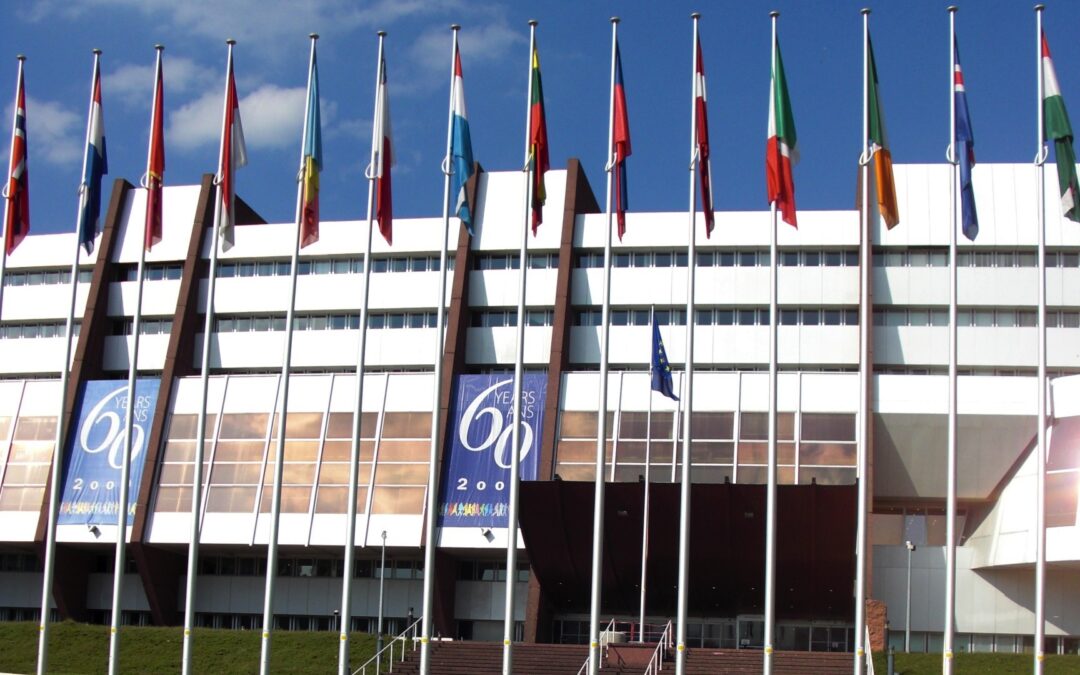
The ICJ and Amnesty International submitted today their observations on the revised draft Additional Protocol to the Council of Europe Convention on the Prevention of Terrorism to the Committee of Experts on Terrorism (CODEXTER).
The submission highlights key points that the two organizations set out in more detail in a previous submission to the Committee on Foreign Terrorist Fighters and Related Issues (COD-CTE) on a previous (12 March) draft of the Additional Protocol, as well as in earlier preliminary observations, and which are not reflected in the text of the draft Protocol as it presently stands. This submission also includes comments on the new Article 7 of the draft Protocol.
The ICJ and Amnesty International urged CODEXTER to consider these concerns and recommendations and to make further amendments to the text of the draft Protocol accordingly before it is submitted for adoption by the Committee of Ministers of the Council of Europe.
CouncilofEurope-CODEXTER-DraftProtocolTerrorismConvention-ICJ-AISubmission-2015-ENG (download the last submission)
CouncilofEurope-Submission-ForeignFighters-Advocacy-Legal Submission-2015-ENG (download the second submission)
CouncilofEurope-Letter-ForeignFighters-Advocacy-Legal Submission-2015-ENG (download the first submission)

Apr 7, 2015
The draft Prevention of Terrorism Act (POTA) should either be rejected or amended by the parliament of Malaysia, said the ICJ today in an open letter to the Speaker of the Lower House of the Parliament of Malaysia.
“This law is really prone to abuse and violates international human rights standards,” said Emerlynne Gil, ICJ International Legal Adviser for Southeast Asia.
“This is just the unlawful Internal Security Act with another name. Persons may be sent to prolonged administrative detention on security grounds, on a permanent basis, while the draft law also precludes any effective inquiry by the judiciary into the lawfulness of any other aspect of the arrest or detention of persons arrested under this law.”
“There is a very high threshold that needs to be met to justify the creation of a system of administrative security detention. The government of Malaysia has not shown how the current situation in the country meets this threshold,” Gil added.
Malaysia-Open Letter to Parliament on POTA-Advocacy-open letter-2015-ENG
Mar 31, 2015 | News
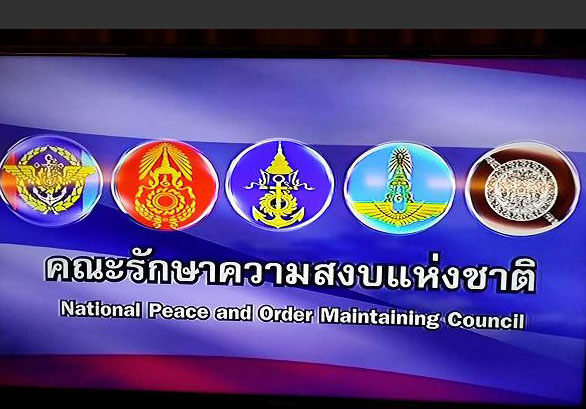
Thailand must lift martial law and return the country to civilian rule, instead of invoking arbitrary powers under Article 44 of the country’s interim constitution, said the ICJ today.
Today, Prime Minister and head of the ruling National Council for Peace and Order (NCPO), General Prayut Chan-o-cha, announced that he had submitted a revocation of the Martial Law, imposed nationwide on 20 May 2014, to King Bhumibol Adulyadej.
Gen. Prayut stated that in place of Martial Law, he would invoke Article 44 of the Interim Constitution, which effectively gives him the authority to rule without any legal restrictions or accountability.
“Ending Martial Law is a necessary step, but replacing it with Article 44 does not address the serious violations of Thailand’s obligations under international human rights law. Article 44 of the Interim Constitution is drafted so broadly that it could give the head of the junta even greater powers than Martial law,” said Wilder Tayler, Secretary General of the ICJ. “Article 44 would allow the head of the NCPO to issue any orders he wishes under the pretext of strengthening public unity and national security, and also deems any such order to be legal and constitutional, removing any possibility of judicial oversight.”
Article 44 of the interim Constitution gives the NCPO power to give any order deemed necessary for “…the benefit of reform in any field and to strengthen public unity and harmony, or for the prevention, disruption or suppression of any act which undermines public peace and order or national security, the Monarchy, national economics or administration of State affairs …,” and provides that any such order “…is deemed to be legal, constitutional and conclusive…”
“Article 44 violates the fundamental pillars of the rule of law and human rights, including equality, accountability, and predictability. Article 44 could potentially allow for arbitrary rule by the head of the NCPO, so using it would not be a real improvement over the Martial Law, which at least has been in existence since 1914, and has a degree of clarity to its scope and application,” said Tayler.
“The NCPO should revoke Martial Law and also explicitly commit itself to observing Thailand’s international obligations, which means avoiding any use of Article 44,” he added.
International law strictly regulates attempts by governments to suspend or restrict protection for human rights on grounds of emergency.
Such “derogations” are permissible under Article 4 of the International Covenant on Civil and Political Rights (ICCPR), to which Thailand is a State Party, only “in time of public emergency which threatens the life of the nation”.
“The situation in Thailand does not meet the extremely high threshold required for derogating from international human rights law,” said Tayler. “Thai authorities have repeatedly promised a rapid return to the rule of law and respect for human rights in the country, but replacing Martial Law with rule by Article 44 doesn’t suggest an improvement for the rule of law or respect for human rights.”
Thailand-Martial Law-Article 44-News-Press release-2015-THA (Thai version, full text in PDF)

![Smoke rises after an Israeli air strike on the village of Taybeh in southern Lebanon [Source: Al Jazeera]](https://www.icj.org/wp-content/uploads/2026/03/Screenshot-2026-03-20-at-15.56.24-300x200.png)