Jun 16, 2016 | Advocacy, Non-legal submissions
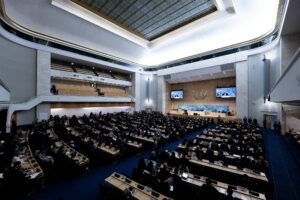
The ICJ today joined a statement delivered by the International Bar Association on indicators of independence of justice systems.The statement came during the interactive dialogue with the UN Special Rapporteur on the Independence of Judges and Lawyers.
It read as follows:
As international organisations of legal professionals, we endorse the recommendation made by the Special Rapporteur to develop a set of international indicators to assess the independence of justice systems.
The Special Rapporteur has previously stated: ‘No ideal justice system exists; rather, there are universal principles that must be respected in the structure and functioning of any judicial system, so that it can duly fulfil its purpose’. (Report of the Special Rapporteur on the independence of judges and lawyers, (2014) UN Doc A/69/294, para 92.)
Achieving Sustainable Development Goal 16 – that is, providing access to justice for all and building effective, accountable and inclusive institutions – will require respect for the universal principles of independence and impartiality of justice systems and the independence of the legal profession.
In 2015, the International Bar Association (IBA) and the International Commission of Jurists (ICJ) proposed two indicators under SDG16, regarding the independence of the judiciary and an independent and self-governing legal profession. The IBA is currently developing ‘indicia of independence’ that can be used to assess the state of independence of the legal profession in a given jurisdiction. The Commonwealth Lawyers Association (CLA) and the Commonwealth Magistrates’ and Judges’ Association (CMJA) continue to monitor judicial and legal independence through the Commonwealth Latimer House Working Group.
We therefore, Madam Special Rapporteur, fully support your endeavour to develop universal indicators that complete the UN Rule of Law Indicators, and build on the UN Basic Principles on the Independence of the Judiciary, the Basic Principles on the Role of Lawyers, and the Guidelines on the Role of Prosecutors.
We further call upon States to ensure that national targets and indicators duly align with international indicators and international principles.
Thank you, Mr President
The following organisations endorsed the statement:
- Avocats Sans Frontières -Suisse
- Commonwealth Magistrates’ and Judges’ Association
- Commonwealth Lawyers Association
- International Bar Association’s Human Rights Institute
- International Commission of Jurists
- Judges for Judges
- Lawyers for Lawyers
- Southern Africa Litigation Centre
The statement can be downloaded in PDF format here: HRC 32- Joint Oral Statement Item 3 SR IJL_FINAL
Jun 16, 2016 | Advocacy, Non-legal submissions
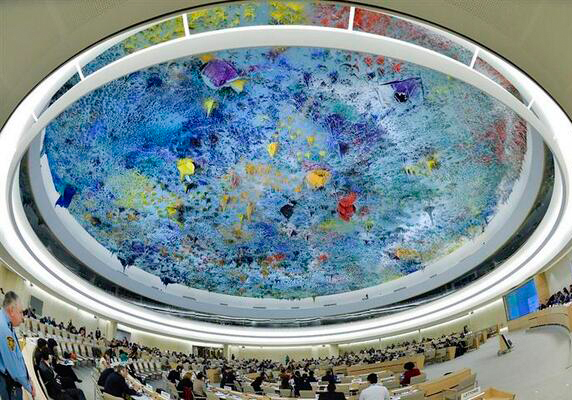
The ICJ today delivered a statement at the UN Human Rights Council, on judicial accountability, and attacks on lawyers. The ICJ made the statement on behalf of a group of eight NGOs, including professional organisations of judges and lawyers.
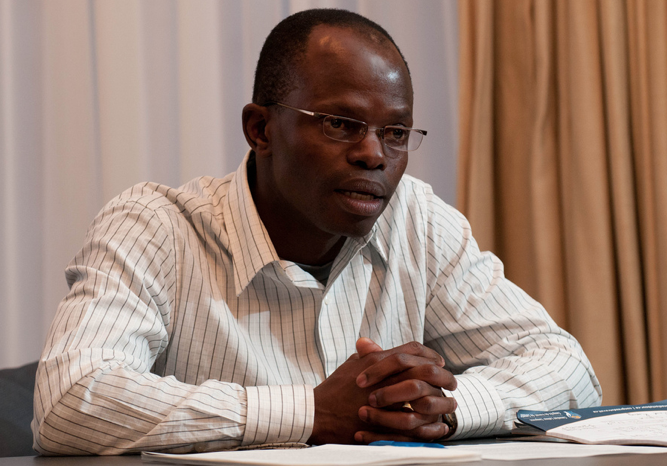
The statement, read out by Swaziland lawyer Thulani Maseko during the Interactive Dialogue with the UN Special Rapporteur on the Independence of Judges and Lawyers, read as follows:
Madame Special Rapporteur on the Independence of Judges and Lawyers,
Our organizations strongly support your mandate. An independent judiciary and legal profession are essential to the rule of law and to the effective protection of human rights.
Independence and impartiality of the judiciary require integrity of individual judges and judicial institutions. Accordingly, there must be accountability for judicial corruption and judicial involvement in human rights violations.
Accountability mechanisms must themselves be independent, fair and transparent, in order to ensure they do not undermine the independence of the judiciary and that victims and the broader population see them as credible and accessible.
We note in this regard the International Commission of Jurists’ newly published Practitioners’ Guide on Judicial Accountability, and the International Bar Association’s recent report on Judicial systems and Corruption.
We also must highlight the growing problem of repression of lawyers who act in cases perceived to have human rights or political aspects, including through: harassment, suspension or disbarment; arrest, detention, unfair trial, and arbitrary imprisonment; torture or other cruel, inhuman or degrading treatment, enforced disappearance, or even unlawful killings.
This is inconsistent with the UN Basic Principles on the Role of Lawyers and incompatible with the rule of law. It violates the rights of individual lawyers and undermines the independence of the legal profession. It denies the rights of the people the lawyers are trying to protect.
Among current examples, the scale and depth of repressive measures against lawyers and HRDs in China is particularly stark, but similar concerns arise in, for instance, Egypt, Turkey, Thailand, Azerbaijan, Malaysia, Tajikistan, and Vietnam. (I myself was arbitrarily imprisoned in my own country Swaziland, for publicly expressing my opinions about judicial misconduct.)
We accordingly will urge lawyers, legal professional associations and others around the world to respond to the questionnaire you have prepared for your upcoming General Assembly report on the legal profession.
I thank you.
The following organizations joined or otherwise supported the statement:
The statement may be downloaded in PDF format here: HRC32-OralStatement-JudicialAccountabilityLawyers-2016

Jun 2, 2016
In a briefing paper issued today, the ICJ raises concerns at measures eroding the independence of the judiciary, prosecution, and legal profession in Turkey, with serious consequences for protection of human rights.
The briefing paper Turkey: the Judicial System in Peril follows a research mission by the ICJ in December 2015.
It analyses developments in law and practice that have affected the independence of both the governing institutions of the judiciary and prosecution, and the security of tenure and independence of individual judges in practice. In particular:
- the independence of the High Council for Judges and Prosecutors (HSYK), the governing body of the judiciary, from executive influence has been substantially diminished;
- punitive measures against judges who act contrary to the putative interests of the executive have chilled the climate for independent exercise of the judicial function;
- prosecutions and dismissals of prosecutors, apparently related to their decisions in sensitive cases, have a damaging effect on autonomous decision making in the prosecution service; and
- attacks on and threats to lawyers, in particular those engaged in the defence of human rights, have further compounded the problems in the justice system.
The briefing paper makes recommendations for action to address these developments.
It urges the executive and legislative authorities to refrain from all actions and rhetoric contrary to the separation of powers, and emphasises the need to protect the safety of lawyers and other human rights defenders, and to undertake a prompt, thorough and independent investigation into the killing of the President of the Diyarbakir Bar Association, Tahir Elçi.
Turkey-Judiciary in Peril-Publications-Reports-Fact Findings Mission Reports-2016-ENG (full report in PDF)
May 12, 2016 | News
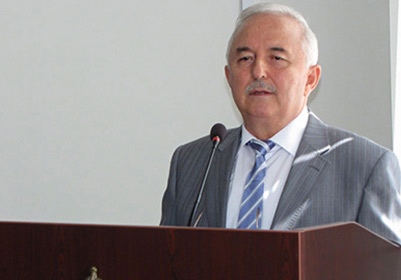
The ICJ is concerned at the reported resignations of federal judges in the Chechen Republic of the Russian Federation following apparent pressure by the acting Head of the Republic Ramzan Kadyrov who had suggested that resignation would be the “most correct decision of their lives”.
The ICJ considers these statements, which appear to have led directly to the resignations of federal judges, to be inappropriate interference with the functioning and independence of the judiciary.
The ICJ calls on the Russian Federation judicial authorities to take all measures within their power to ensure that all judges’ security of tenure is preserved and that any allegations of misconduct are addressed through appropriate disciplinary proceedings that respect the right to a fair hearing.
The ICJ further calls on the executive authorities to refrain from any comments which may undermine the independence of the judiciary.
On 5 May, Ramzan Kadyrov, currently acting Head of the Chechen Republic, recommended that several named judges should step down.
In his post on social media, Kadyrov identified as problems unfair decisions of courts, procrastination in criminal cases, decisions regarding housing and inconsistent decisions.
He mentioned that although examples of such decisions were sporadic, they did not help build trust in the judiciary.
He then recommended that the President of the Supreme Court of the Chechen Republic, Magomed Karatayev (photo) and three other judges, Takhir Murdalov, Sulyan Yandarov and Zayndi Khusainov, should resign “if they had a notion of honour and professional ethics”.
It was reported that two judges of the Urus-Martan City Court and Grozny District Court, Sulyan Yandarov and Zayndi Khusainov, submitted their resignations on the same day.
The President of the Supreme Court of Chechnya, Magomed Karatayev, and his deputy Takhir Murdalov, are reported to have already filed a request for resignation.
The resignations, apparently in direct response to criticism by the executive, undermine the separation of powers and the independence of the judiciary in the Russian Federation.
Under international law, including the right to a fair trial protected, inter alia, by Article 6 of the European Convention on Human Rights and Article 14 of the International Covenant on Civil and Political Rights, the independence of the judiciary must be guaranteed.
The UN Basic Principles on Independence of the Judiciary enshrines “the duty of all governmental and other institutions to respect and observe the independence of the judiciary” and provides the judiciary shall not be subject to “any restrictions, improper influences…pressures, threats or interferences, direct or indirect from any quarter or for any reason.”
While judges have an obligation to adhere to judicial ethics and should be held accountable for professional misconduct, the representatives of the executive must refrain from statements which jeopardize the independence of the judiciary.
The Council of Europe’s Recommendation on judges specifies that “the executive and legislative powers should avoid criticism that would undermine the independence of or public confidence in the judiciary.”
Public pressure from the executive on judges to resign can nullify the security of tenure of judges protected under national and international law and standards.
According to Principle 12 of the Basic Principles on the Independence of the Judiciary, “[j]udges, whether appointed or elected, shall have guaranteed tenure until a mandatory retirement age or the expiry of their term of office, where such exists.”
Under international standards, allegations of misconduct against judges should be dealt with by the self-governing institutions of the judiciary, through fair disciplinary procedures.
Under the Basic Principles, the only basis for removal of judges is “incapacity or behaviour that renders them unfit to discharge their duties.
The comments by Ramzan Kadyrov also run contrary to the legislation of the Russian Federation, which spells out in detail the procedure for disciplinary measures against judges in case of alleged professional misconduct.
RUSSIA-Chechen judges statement-News-web story-2016-RUS (full text in Russian, PDF)
May 11, 2016 | Artículos, Noticias
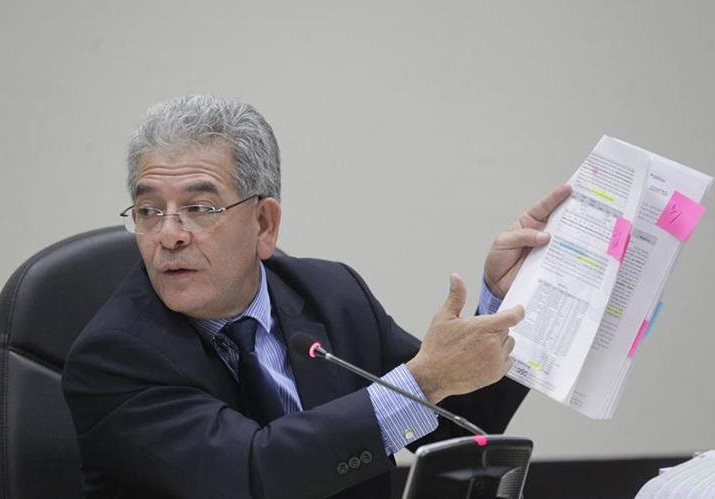
En los días pasados, el juez Miguel Ángel Gálvez ha sido víctima de amenazas que pretenden intimidarlo en su función de administración de la justicia.
La CIJ expresa su repudio ante cualquier tipo de presión en contra de operadores de justicia independientes y honestos.
Estas presiones no solamente amenazan la integridad física del juez Gálvez, sino también el trabajo valioso que realiza administrando justicia en casos de alto impacto.
Según los Principios Básicos de las Naciones Unidas Relativos a la Independencia de la Judicatura, no se permitirán intromisiones indebidas o injustificadas en los procesos judiciales.
Es esencial que los jueces puedan resolver los casos que conozcan con imparcialidad y sin restricción alguna.
La CIJ demanda que el Estado investigue estos actos intimidatorios y tome medidas efectivas de protección, para garantizar la seguridad física del juez Miguel Ángel Gálvez.
Ramón Cadena, Director de la CIJ para Centroamérica expresó: “Urgimos a las autoridades del Estado y en particular al Organismo Judicial a tomar medidas adecuadas para evitar que las y los jueces independientes resulten afectados por este tipo de intimidaciones y que se respete la integridad física y la independencia del juez Miguel Ángel Galvez.”

![Smoke rises after an Israeli air strike on the village of Taybeh in southern Lebanon [Source: Al Jazeera]](https://www.icj.org/wp-content/uploads/2026/03/Screenshot-2026-03-20-at-15.56.24-300x200.png)