Feb 18, 2016
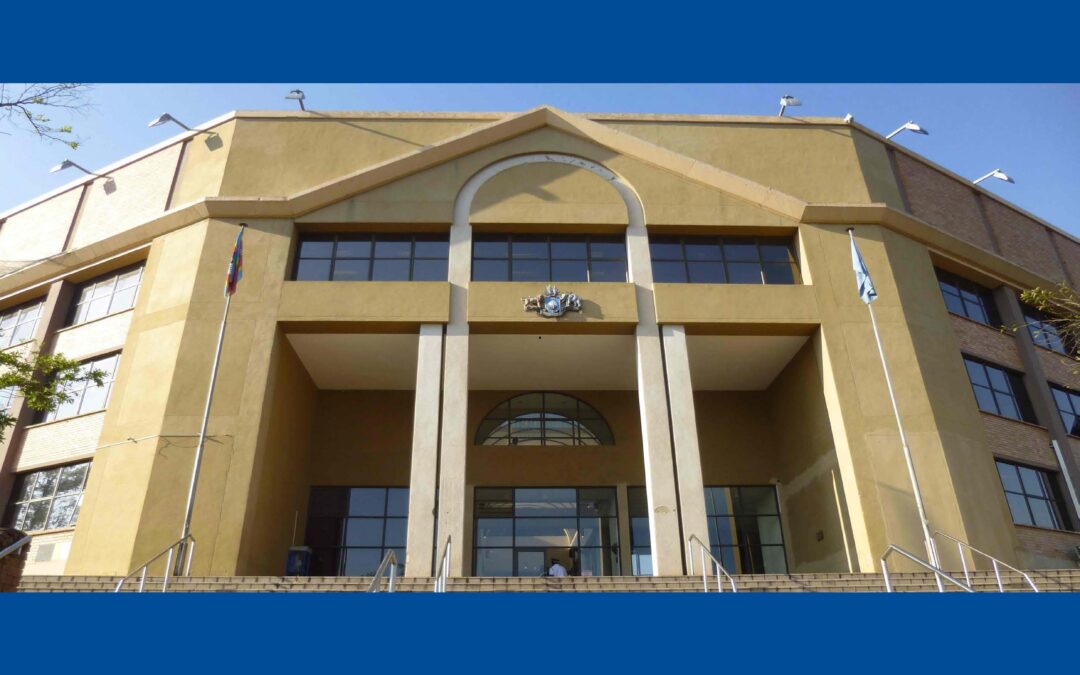
Today the ICJ launched a new report that makes several findings and recommendations regarding the independence and accountability of the judiciary in the country.
The report is a result of the International Fact Finding Mission in Swaziland (IFFM-SZ) held in 2015 by the ICJ, in collaboration with the Africa Judges and Jurists Forum (AJJF), Judges for Judges Netherlands (J4J) and the Commonwealth Magistrates’ and Judges’ Association (CMJA).
The mission was conducted at the backdrop of a number developments of concern for the independence and accountability of the judiciary in Swaziland.
The report observes that:
- The Kingdom of Swaziland has a constitutional and legislative framework that does not respect the separation of powers or provide the necessary legal and institutional framework and safeguards to ensure the independence of the judiciary;
- The former Chief Justice Ramodibedi failed to protect and defend the institutional independence of the judiciary;
- The Executive failed to respect the independence of the judiciary; and
- The failure to respect the independence of the judiciary by the Executive and the failure by the Chief Justice to defend the institutional independence of the judiciary created conditions conducive to abuse of the legal system for personal gain
Presenting the Mission’s findings, the ICJ Africa Regional Programme Director, Arnold Tsunga urged the Crown, Judiciary, civil society and international community to collectively work towards the implementation of the recommendations to strengthen the institutional and structural independence of the judiciary thereby restoring citizen’s and stakeholders confidence in the judiciary and the rule of law.
Contact
Arnold Tsunga, ICJ Regional Director for Africa, t: +27 73 131 8411, e: arnold.tsunga(a)icj.org
Swaziland-Justice locked out RoL crisis-Publications-Fact Finding Mission Report-2016-ENG (full report, in PDF)

Feb 18, 2016
Today the ICJ published a final report on the reform of the legal profession in the Kyrgyz Republic and creation of a unified bar association.
The report sets out the ICJ’s observations and provides recommendations on the issues that should be addressed as a matter of priority in the course of the reform.
“Resolving these issues will lay the foundations for a strong Kyrgyz legal profession based on international law and standards on the independence of lawyers,” said Róisín Pillay, ICJ Europe Programme Director.
The report welcomes the establishment of a unified Advokatura as an important step both for lawyers and the whole justice system as lawyers play an essential role in any legal system in upholding the rule of law and protecting human rights.
However, the report notes that the establishment of a legal and institutional framework is only the first step in creating an independent, self-regulated profession capable of ensuring integrity and high professional standards.
The ICJ stresses the importance of the momentum as well as the privileged position of lawyers who became the leadership of the new Advokatura.
“It is the vision and actions of these people that will shape the future of the legal profession in the country,” Róisín Pillay added.
The report is based on the ICJ’s mission to the Kyrgyz Republic in September 2015, organized to assess, examine and analyze the reform in terms of the functioning of the legal profession.
An ICJ team met with various representatives of the Advokatura, including members of the Council of the Advokatura and the Advokatura’s constituent bodies, such as the Ethics Commission, the Committee to Protect the Rights of Advocates and the Legislation Committee of Advokatura.
The ICJ, in cooperation with the Training Centre of Advokatura, held a round table discussion with lawyers and held meetings with members of the Prosecutor’s Office and the Judiciary.
Kyrgyzstan-New Advokatura-News-Web Story-2016-RUS (Story in Russian, PDF)
Kyrgyzstan-New Advokatura-Publications-Reports-Fact Finding Mission Report-2016-ENG (Report in English, PDF)
Kyrgyzstan-New Advokatura-Publications-Reports-Fact Finding Mission Report-2016-RUS (Report in Russian, PDF)
Feb 13, 2016 | News
The ICJ today called for the reversal of last Thursday’s decision removing Judge Mohamed Al-Haini from office with suspension of his pension rights.
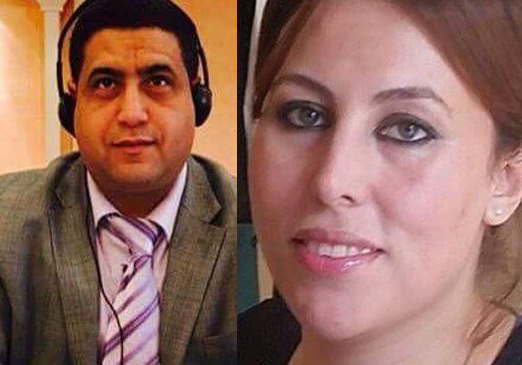
Judge Al-Haini, together with his colleague Amal Homani, was referred to the High Judicial Council by the Minister of Justice on unwarranted allegations of “violating the duty of discretion” and “expressing opinions of a political nature” following social media comments and media articles written by the judges in which they criticized the government’s Draft Laws on the Conseil Supérieur du Pouvoir Judiciaire and on the Statute for Judges.
The ICJ stresses that it is entirely appropriate for a judge to comment on matters of public interest that go to the organization and governance of the legal profession.
The ICJ, as well as Moroccan professional associations of judges and civil society organizations, has previously called on the Moroccan authorities to revise these same two draft laws to fully comply with international standards on judicial independence.
The ICJ is concerned both at the unfair and arbitrary nature of the proceedings against Judge Al-Haini. He was only granted two hearings before the High Judicial Council’s decision to dismiss him was taken.
Furthermore, several flaws in the proceedings curtailed Judge Al-Haini’s right to defense.
In particular, the High Judicial Council refused to strike the Minister of Justice from the disciplinary panel.
The Minister clearly had a conflict of interest, given his role in initiating the proceedings against the two judges.
As a result, Judge Al-Haini’s defense team withdrew from the case in protest.
At the second hearing the proceedings were carried out in the absence of any defense counsel.
“Despite recurring breaches of due and fair process standards, the disciplinary proceedings against Judge Al-Haini continued leading to the harshest disciplinary sanction possible in violation of principles governing the independence of the judiciary,” said Theo Boutruche, Legal Adviser of the ICJ Middle East and North Africa Programme.
According to international standards members of the judiciary facing disciplinary proceedings have the right to an independent and impartial authority or court with all the guarantees of a fair trial.
The ICJ is further concerned that under the current legal framework in Morocco, the decisions of the High Judicial Council are not subject to any form of review.
This is clearly inconsistent with international standards that require that any disciplinary decision should be subject to an independent review.
“The absence of any possibility to challenge the decision of dismissal deprives Judge Al-Haini of a safeguard against the improper use of disciplinary proceedings, which is clearly the case here,” Boutruche warned.
The ICJ had previously called on the Moroccan authorities to end the unwarranted and arbitrary disciplinary proceedings against Judges Al-Haini and Homani.
The ICJ stressed that members of the judiciary, like other persons, enjoy the rights to freedom of expression, belief, association and assembly in consonance with the dignity of their office and the impartiality and independence of the judiciary.
“This decision should be nullified and the proceedings against the two judges themselves should be terminated,” Boutruche added.
“This case is a stark reminder of the need for the Moroccan authorities to revise the two draft laws, that were adopted last Wednesday by the parliament, to properly strengthen the judicial independence and create a truly independent Conseil Supérieur du Pouvoir Judiciaire in line with international standards,” he concluded.
Contact:
Theo Boutruche, Legal Adviser of the ICJ Middle East and North Africa Programme, tel: +961 70 888 961, e-mail: theo.boutruche@icj.org
Morocco-Al Haini Dismissal-Web Story-2016 (full web story in PDF, Arabic)

Feb 5, 2016 | News
The ICJ today called on the Royal Thai Government to immediately drop criminal proceedings against human rights lawyer Sirikan Charoensiri.
On 2 February 2016, Sirikan Charoensiri received two summons to appear at the Chanasongkram Police Station on 9 February 2016 to be charged with two offences under the Criminal Code of Thailand: “giving false information regarding a criminal offence” and “refusing to comply with the order of an official”.
Such charges could result in punishment of up to two years’ imprisonment.
“The charges against Sirikan Charoensiri apparently relate to her efforts to protect the legal and human rights of her clients, students who never should have faced arrest or criminal proceedings for peacefully exercising their freedoms of expression and assembly in the first place,” said Matt Pollard of the ICJ’s Centre for the Independence of Judges and Lawyers.
“Prosecuting Sirikan Charoensiri for her efforts to defend human rights is totally unacceptable and will only put Thailand further in violation of its international obligations,” he added.
The charges appear to relate to the circumstances surrounding Sirikan Charoensiri’s provision of legal aid to 14 students who were arrested on 26 June 2015 after carrying out peaceful protests calling for democracy and an end to military rule.
Although the precise basis for the changes is not set out in the summonses, the complainant is named as Pol. Col. Suriya Chamnongchok, a police officer involved in the investigation of the 14 students.
Sirikan Charoensiri, a lawyer with Thai Lawyers for Human Rights (TLHR), has provided legal aid to many individuals, including activists and human rights defenders, since military rule was imposed in May 2014.
The ICJ first expressed concern about the Government’s targeting of Sirikan Charoensiri on 2 July 2015, after the Royal Thai Police threatened Sirikan Charoensiri with legal action, publically announced they were considering charging her with a crime, and visited her home and questioned her family.
These threats and harassment, like the currently pending charges, appeared to be in retaliation for her having refused consent for police to search her car after the students’ court hearing, and for having filed a complaint with the police when they proceeded to impound it.
The ICJ has brought the case to the attention of the United Nations Special Rapporteurs on the Independence of Judges and Lawyers, and on the Situation of Human Rights Defenders.
The situation of human rights in Thailand will be examined by the UN Human Rights Council in May 2016, as part of the Council’s Universal Periodic Review of all States.
“Ahead of Thailand’s human rights review by the United Nations in May, and against the background of the tabled ‘roadmap’ towards democratic rule, the need for the Royal Thai Government to restore respect for human rights only grows more urgent by the day,” said Pollard.
Contact
In Bangkok: Kingsley Abbott, International Legal Adviser for Southeast Asia, t +66 94 470 1345 ; e: kingsley.abbott(a)icj.org
In Geneva: Matt Pollard, ICJ Senior Legal Adviser, t: +41 22 979 38 12 ; e: matt.pollard(a)icj.org
Background
The International Covenant on Civil and Political Rights (ICCPR), to which Thailand is a Party, guarantees the right to peaceful assembly; the right to freedom of expression; the prohibition of arbitrary arrest or detention; the right to a fair and public hearing by a competent, independent and impartial tribunal established by law (including the right of prompt access to a lawyer and precluding jurisdiction of military courts over civilians in circumstances such as these); and the prohibition of arbitrary or unlawful interference with privacy, family, home and correspondence (which includes arbitrary searches or seizures).
The UN Declaration on Human Rights Defenders affirms the right of everyone peacefully to oppose human rights violations. It prohibits retaliation, threats and other harassment against anyone who takes peaceful action against human rights violations, both within and beyond the exercise of their professional duties. It protects the right of persons to file formal complaints about alleged violations of rights. The UN Basic Principles on the Role of Lawyers provide that governments are to ensure that lawyers are able to perform their professional functions without intimidation, hindrance, harassment or improper interference.
Thailand-Sirikan Charoensiri-News-Press releases-2016-THA (full text in PDF, Thai)

Feb 5, 2016 | News
The ICJ is monitoring the ongoing trial under court martial of the 23 members of the Lesotho Defence Forces in the case The King vs Brigadier Mareka and 22 Others.
The Court Martial was convened through a government order issued and signed by the Minister of Defence and National Security Hon Tseliso Mokhosi on 13 August 2015.
Under the convening order, Brigadier Mareka and 22 others were generally accused of charges related to planning and or involvement in mutiny and violence.
The convening order also identified the names of the members of the court martial as well as the prosecuting authority at such court martial.
The court martial raises issues around observance of human rights, the rule of law and good governance in Lesotho.
Its significance is reflected in the fact that the Southern African Development Community (SADC), an inter-governmental organization, is also seized with the matter as part of its mandate under the SADC Organ on Politics, Defence and Security Cooperation, and directed the convening of a SADC supported Commission of Inquiry into the issues related to the court martial.
The subsequently-established Commission of Inquiry has completed its work and filed its report with the SADC Organ on Politics, Defence and Security Cooperation and the Prime Minister of Lesotho.
The report is yet to be made public and is planned to be released on the 8th February 2016.
The ICJ will particularly monitor the consistency of the Court Martial trial with international fair trial standards, both in terms of the conduct of proceedings, and the independence and impartiality of the tribunal including in light of the manner of selection of the Court Martial members, in which a number of junior soldiers were promoted in rank in order to justify their presiding in a disciplinary case over their superiors.
In particular the promotion of the President of the Court Martial Major General Letsoela seems to have been done to facilitate that he as a junior officer sits to determine a case involving Brigadier Mareka and another brigadier who ordinarily are his superiors in terms of rank.
The ICJ will also monitor whether the Court Martial and investigative authorities act in accordance with international standards in responding to the credible allegations of human rights violations committed against Brigadier Mareka and 22 others.
The allegations include prolonged incommunicado detention, torture, inhuman and other degrading treatment while in custody, being inhibited from fully consulting with and briefing their legal representatives, and defiance of High Court orders by the Lesotho Defence Forces including that the soldiers should be detained in open prison and not a military detention facility and should not be kept in leg irons.
Contact
Arnold Tsunga, ICJ’s Africa Director, t: +277 16405926 ; e: arnold.tsunga(a)icj.org
LESOTHO-Brig Mareka and 22 Others-News-Web story-2016-ENG (full story in PDF)

![Smoke rises after an Israeli air strike on the village of Taybeh in southern Lebanon [Source: Al Jazeera]](https://www.icj.org/wp-content/uploads/2026/03/Screenshot-2026-03-20-at-15.56.24-300x200.png)