Nov 27, 2014 | News
The ICJ today strongly condemned the decision by Prime Minister Najib Razak to retain and even strengthen the country’s 1948 Sedition Act despite having made a commitment in 2012 to repeal the Act.
The ICJ has repeatedly expressed its concern that the Sedition Act has been used to stifle and criminalize the exercise of freedom of expression and to silence human rights defenders, lawyers, political activists, among others.
The ICJ considers the Act as it stands to be incompatible with international human rights standards and to be made still more repugnant by the politically loaded manner in which it is typically applied.
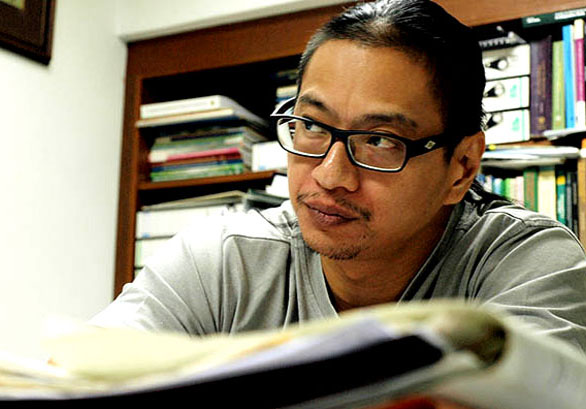
In early September, the ICJ denounced the use of sedition against two members of the legal profession, Dr. Azmi Sharom (photo) and N. Surendran for commenting on questions of law and public policy.
On 20 September 2014, Edmund Bon a prominent human rights and constitutional lawyer, was questioned by the police regarding comments made in a based on the decision of a Malaysian Federal Court.
On 30 September 2014, Dr. Abdul Aziz Bari, a law professor at the University of Selangor, was summoned for a police interview over comments made about the selection process of the new Chief Minister by the Sultan of Selangor.
Background:
The 1948 Sedition Act, originally enacted by the British colonial government and amended several times over the years, criminalizes speech and publications considered to have “seditious tendencies”.
The term “seditious tendencies” is ambiguously defined to mean any kind of speech or publication that causes “hatred or contempt, or excite disaffection” against any ruler or the government or promotes “ill will and hostility between the different races or classes”.
The law also considers “seditious” any speech or publication that questions the special privileges of the Malay people, as provided in the Constitution.
Furthermore, sedition is a strict liability offence in Malaysia, which means that the intention of a person allegedly making seditious statements is irrelevant.
For instance, a person making a statement may not have the intent to cause “hatred or contempt” towards the government, but may nonetheless be held liable for sedition if authorities believe that the person in fact incited such feelings.
The ICJ considers that the Act, by its very terms, contemplates restrictions on the exercise of freedom of expression that are grossly overbroad and inconsistent with basic rule of law and human rights principles.
Nov 27, 2014 | News
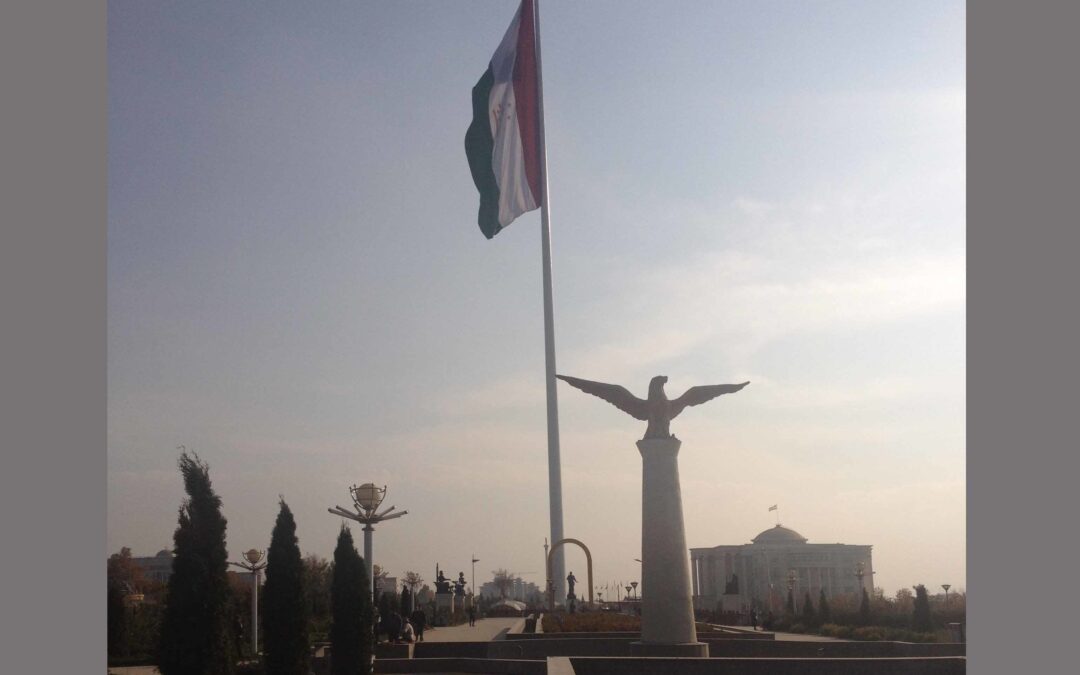
Following a visit to the country from 15 to 19 November, the ICJ called on the government of Tajikistan to take meaningful steps to ensure that the institutional independence of the legal profession and the personal integrity of individual lawyers are secured.
The ICJ expressed concern at the continued detention of lawyer Shukhrat Kudratov, on criminal charges. It welcomed the release of another lawyer, Fakhriddin Zokirov, who had been on trial on charges that appeared to constitute an act of retaliation for his work as a defence lawyer. He was released on 3 November as a result of an amnesty.
“While the release of Fakhriddin Zokirov is a positive step, we are concerned that Shukhrat Kudratov remains in detention pending trial on similar criminal charges. We have received credible information that the charges against him are linked to his representation of a client, contrary to international standards on the independence of lawyers”, said Róisín Pillay, Director of the Europe and CIS programme at the ICJ.
The ICJ reiterated its concern at aspects of the reform of the legal profession presently under consideration under the draft law on Advokatura.
Following a mission to Tajikistan in 2013, the ICJ expressed concerns that the independence of the legal profession would be undermined by requirements in the draft law that all lawyers go through a new qualification process, administered by a body in which the Ministry of Justice would play a prominent role.
Amendments recently introduced to the draft law have not altered the inappropriate role which the Ministry of Justice would play in regulating the profession.
Under the draft law, the Deputy Minister of Justice would serve as an ex officio Chair of the Qualification Commission which determines who may be accredited as a lawyer.
This significant role by a member of the executive would jeopardize the independence of the profession.
The ICJ also remains concerned that the draft law would still require requalification of many lawyers, with exemptions only for those with at least 15 years of professional experience as defence lawyers.
Such provisions are contrary to international standards on the independence of the legal profession, including the UN Basic Principles on the Role of Lawyers.
The ICJ recalls Tajikistan’s earlier commitment during the UN Human Rights Committee’s session of 2013 that the Qualification Commission would be placed under the Ministry of Justice only for a short transitional period. A provision to this effect has not yet been introduced in the draft law.
Contact:
Róisín Pillay, Director, ICJ Europe Programme, roisin.pillay(a)icj.org
Temur Shakirov, Legal Adviser, ICJ Europe Programme, temur.shakirov(a)icj.org
Notes:
From 15 to 19 November, an ICJ legal expert, Dr Stefan Strobl, visited Tajikistan and held meetings with a number of international and local civil society organizations and lawyers to discuss recent progress on the reform of the legal profession and the wide ranging challenges it faces.
The visit followed an ICJ mission to Tajikistan in November 2013.
Tajikistan-Independence of legal profession-News-webstory-2014-RUS (full text in PDF)
Nov 25, 2014 | Advocacy, Analysis briefs, News
Bangladesh must immediately launch a thorough investigation into alleged attacks on a prominent human rights lawyer, the ICJ said today. The government appears to have taken no real action in the year since the events.
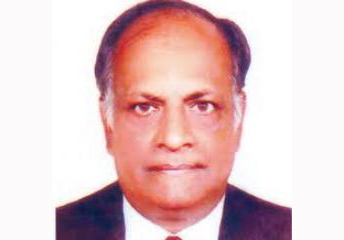
Rabindra Ghosh (photo), advocate at the Supreme Court of Bangladesh and President of the non-governmental organization Bangladesh Minority Watch, has made credible allegations that he was subjected to acts of violence, intimidation and other interference with his functioning as a lawyer.
”The authorities in Bangladesh seem not to have taken Rabindra Ghosh’s allegations seriously, in breach of international standards,” said Matt Pollard, head of ICJ’s Centre for the Independence of Judges and Lawyers. “In addition to his complaints, our own letters to the authorities simply went unanswered.”
Rabindra Ghosh, among other incidents, alleges that he was physically attacked by six of his peers on 25 November 2013, while he was at work in the Gopalgonj District Court.
He further alleges that on 14 January 2014 he was subjected to physical violence, threats, and verbal abuse at the hands of police officers.
He reports that there has been no substantive investigation of his complaints and that he has received no response from the responsible authorities.
“Lawyers play an essential role in protecting human rights and the proper administration of justice,” Pollard added. “International standards require State authorities to prevent attacks and harassment of lawyers and to take effective measures to protect their security.”
The ICJ requested the Prime Minister, the Ministry of Law, Justice and Parliamentary Affairs, the Ministry of Home Affairs and the President of the Bar Association to provide further information and a response to these allegations, but has received no response.
In addition to its call on the authorities of Bangladesh to immediately launch a thorough and independent investigation of the allegations made by Rabindra Ghosh, the ICJ calls on the authorities to take concrete measures to ensure that he and other lawyers are able to discharge their professional duties without any interference or intimidation of any kind. If the investigation confirms the allegations, those responsible must be held accountable.
“The ICJ has observed a general erosion of the rule of law and respect for the ability of lawyers to carry out their duties in Bangladesh,” said Pollard. “Lawyers play a crucial role in ensuring that people whose rights have been violated can demand their right to a remedy. When lawyers themselves become victims simply for carrying out their work, it signals a serious problem for the legal system.”
Rabindra Ghosh’s allegations come against the backdrop of a series of recent attacks on human rights defenders in Bangladesh, including among others the harassment of human rights defenders including Adilur Rahman Khan, secretary of Odhikar; the promulgation of a constitutional amendment that empowers the Parliament to impeach Supreme Court judges; and the amendment of the Information and Communication Technology Act, which is being used to assault freedom of expression and freedom from arbitrary detention.
Contact:
Matt Pollard, ICJ Senior Legal Adviser, +41 22 979 3812, matt.pollard(a)icj.org
A brief background note on the case is available here in PDF:
Bangladesh-Ghosh backgrounder-Advocacy-2014-ENG

Nov 13, 2014 | News
A trial observer from the ICJ Centre for the Independence of Judges and Lawyers will observe today the hearing of an appeal of disciplinary sanctions imposed on Bulgarian judge Miroslava Todorova.
The proceedings against Judge Todorova related to alleged faults associated with delays in delivering judgment in several cases. The alleged faults occured some nine years ago.
In an initial ruling in July 2012, the Supreme Judicial Council (SJC) sought to dismiss Judge Todorova from judicial service. Following judicial reviews and appeals, this was reduced at first to demotion for a period of two years, and then subsequently was reduced further to demotion for a period of one year. Both Judge Todorova and the disciplinary authority are challenging the one-year sanction in today’s hearing at the Supreme Administrative Council (SAC).
Whereas she had previously served on the Sofia City Court, during this two-year period she is permitted to work only in the lower level Sofia District Court. According to Bulgarian law, demotion is the second-most serious disciplinary sanction for a judge, one step less serious than dismissal.
ICJ has previously expressed concerns that the proceedings and sanctions against Judge Todorova may not be compatible with international standards for independence of the judiciary.
The proceedings today will also be attended by observers from Judges for Judges and MEDEL.
Nov 7, 2014 | Multimedia items, News, Video clips
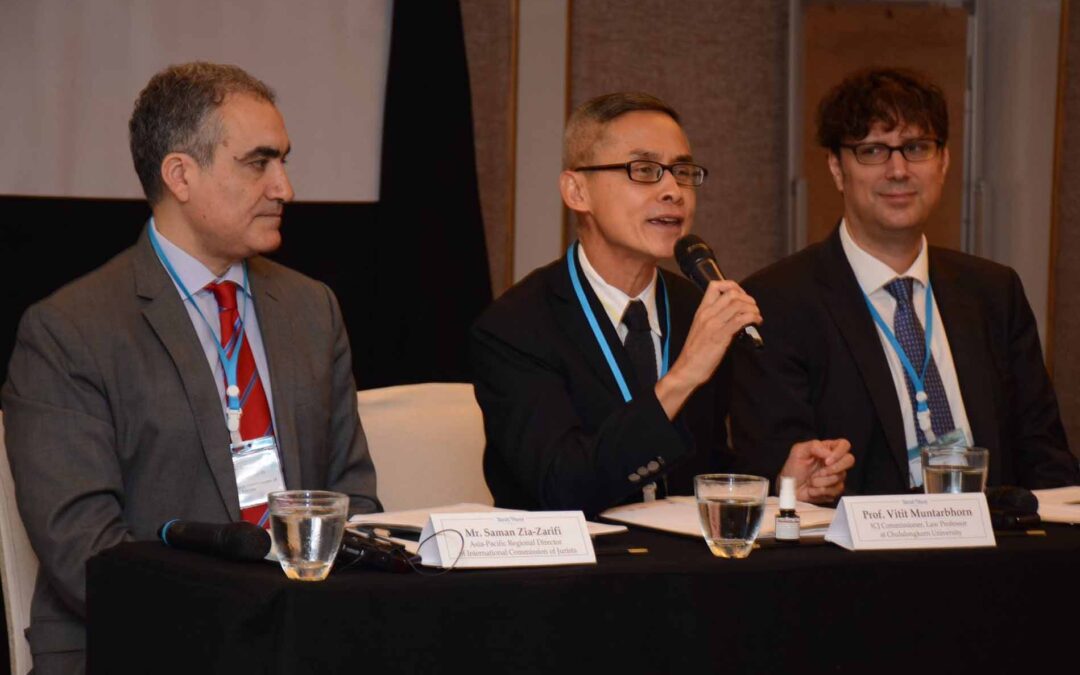
For the fist time, about 40 judges and representatives from judicial training institutions across Southeast Asia gathered to discuss recent developments in international human rights law on the right to life, with a focus on extrajudicial executions, deaths in custody and enforced disappearances.

![Smoke rises after an Israeli air strike on the village of Taybeh in southern Lebanon [Source: Al Jazeera]](https://www.icj.org/wp-content/uploads/2026/03/Screenshot-2026-03-20-at-15.56.24-300x200.png)