Dec 3, 2013 | Agendas, Events
The ICJ was at the Club de la Presse in Geneva for a roundtable ahead of the Fourth ICJ Geneva Forum of Judges and Lawyers. The event was live streamed.
Moderated by Leah Hoctor, Senior Legal Adviser at ICJ, the event was a unique opportunity to share the real life experiences of two African women, who have overcome the challenges of poverty and discrimination to become two of Africa’s most senior and admired judges.
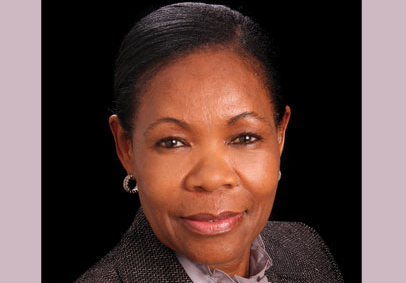
Justice Yvonne Mokgoro (photo) was the first black woman judge in South Africa and a former justice of its post-apartheid Constitutional Court.
Justice Lilian Tibatemwa-Ekirikabinza is an academic leader in Uganda. She was the first Ugandan woman to qualify for an award of a Ph.D. in Law.
The Press Club event came ahead of the Fourth ICJ Geneva Forum of Judges and Lawyers on 5-6 December.
The Forum is convened annually by the ICJ’s Centre for Independence of Judges and Lawyers, bringing together legal practitioners from around the world to help safeguard the independence and impartiality of the judiciary and the legal profession.
This year’s forum promotes the role of women in the judiciary, focusing particularly on women judges and lawyers from Africa and the Middle East.
It forms part of a broader ICJ initiative on women judges, lawyers and human rights defenders as agents of change.
Watch the event here:
Dec 3, 2013 | News, Publications, Reports, Thematic reports
Lawyers continue to encounter impediments to the exercise of their professional functions and freedom of association, as well as pervasive corruption, although they have been able to act with greater independence, says the ICJ in a new report launched today.
Right to Counsel: The Independence of Lawyers in Myanmar – based on interviews with 60 lawyers in practice in the country – says authorities have significantly decreased their obstruction of, and interference in, legal processes since the country began political reforms in 2011.
“The progress made in terms of freedom of expression and respect for the legal process is very visible,” said Sam Zarifi, ICJ Asia-Pacific director. “But despite the improvements, lawyers still face heavy restrictions and attacks on their independence, which can result in uncertainty and fear, particularly when it comes to politically sensitive issues.”
Systemic corruption continues to affect every aspect of a lawyer’s career and, as a result, is never absent from lawyers’ calculations vis-à-vis legal fees, jurisdictions and overall strategy.
“Corruption is so embedded in the legal system that it is taken for granted,” Zarifi said. “When the public also generally assumes that corruption undermines the legal system, this severely weakens the notion of rule of law.”
“Lawyers in Myanmar, as elsewhere, play an indispensable role in the fair and effective administration of justice,” Zarifi added. “This is essential for the protection of human rights in the country and the establishment of an enabling environment for international cooperation towards investment and development.”
But lawyers in Myanmar lack an independent Bar Council, the report says, noting that the Myanmar Bar Council remains a government-controlled body that fails to adequately protect the interests of lawyers in the country and promote their role in the fair and effective administration of justice.
The ICJ report shows that other multiple long-standing and systemic problems affect the independence of lawyers, including the poor state of legal education and improper interferences on the process of licensing of lawyers.
In its report, which presents a snapshot of the independence of lawyers in private practice in Myanmar in light of international standards and in the context of the country’s rapid and on-going transition, the ICJ makes a series of recommendations:
- The Union Attorney-General and Union Parliament should significantly reform the Bar Council to ensure its independence;
- The Union Attorney-General and Union Parliament should create a specialized, independent mechanism mandated with the prompt and effective criminal investigation of allegations of corruption;
- The Ministry of Education should, in consultation with the legal profession, commit to improving legal education in Myanmar by bolstering standards of admission to law school, law school curricula, and instruction and assessment of students.
Contact:
Sam Zarifi, ICJ Asia-Pacific Regional Director, (Bangkok), t:+66 807819002 e-mail: sam.zarifi(a)icj.org
Craig Knowles, ICJ Media & Communications, (Bangkok), t:+66 819077653, e-mail: knocraig(a)gmail.com
Myanmar-Right to Counsel-publications-report-2013-ENG (download full text in pdf)
MYANMAR-Right to Counsel-Publications-report-2015-BUR (Burmese version in pdf)
Dec 3, 2013 | News
Today, the ICJ observed a hearing in a case concerning Zinaida Mukhortova, a lawyer detained until recently in a psychiatric facility, allegedly for carrying out her professional duties, but released on 1 November.
At the hearing on 2 December, the Karaganda Regional Court confirmed the lawfulness of her detention, upholding the earlier decision of the Balkhash City Court of 20 August 2013, to grant the motion of the Prosecutor’s Office to detain the lawyer.
“The likelihood of her repeated detention for the lawful exercise of her profession has risen following this decision,” Almaza Osmanova, an ICJ observer present at the hearing, commented.
The deputy Head of the Medical Facility in which Zinaida Mukhortova (photo) was detained, Doctor R.R. Iskahakov was present at the hearing and insisted on the lawfulness of her detention.
The ICJ previously reported Doctor Iskahakov’s refusal to release lawyer Mukhortova until all the court proceedings had been completed.
The ICJ trial observation mission consisted of two observers: Almaza Osmanova, a practicing lawyer from Kyrgyzstan and Kayum Yusufov, a practicing lawyer from Tajikistan.
The ICJ has previously made statements following lawyer Mukhortova’s detention and subsequent release from the psychiatric facility:
Kazakhstan: ICJ welcomes release of a lawyer from psychiatric detention
Kazakhstan: psychiatric detention of lawyer must be ended
Contact:
Róisín Pillay, Director, ICJ Europe Programme, roisin.pillay(a)icj.org
Temur Shakirov, LegalAdviser, ICJ Europe Programme, temur.shakirov(a)icj.org

Nov 21, 2013 | Communiqués de presse, Nouvelles, Publications, Rapports
La CIJ a appelé aujourd’hui les autorités marocaines à assurer une réforme globale et significative du pouvoir judiciaire.
Cette déclaration intervient alors que la CIJ vient de conclure une mission de haut niveau au Maroc et de lancer son rapport «Réformer le système judiciaire au Maroc », le 21 Novembre 2013.
La CIJ a déclaré que les réformes devraient viser à mettre fin à toute forme d’influence ou de contrôle abusif du pouvoir exécutif sur les affaires judiciaires.
Elle a appelé au renforcement de l’autorité du Conseil Supérieur du Pouvoir Judiciaire (CSPJ) nouvellement créé, sur tous les aspects relatifs à la carrière des juges et des procureurs.
La CIJ a souligné que le Ministère Public devrait être séparé du pouvoir judicaire et qu’il devrait conduire ses activités de manière objective et impartiale, et en défense des droits de l’homme.
L’organisation a également demandé à ce que la compétence des tribunaux militaires soit limitée au personnel militaire pour manquement à la discipline militaire, et qu’en aucun cas ces tribunaux ne devraient être utilisés pour juger des crimes constituant des violations des droits de l’homme.
Morocco – Réforme judiciaire – News-press release-2013-Fr (Texte complet en PDF)
Maroc – Réformer le système judiciaire-publications-rapport RESUME-2013-fr (Résumé du rapport en PDF)

Nov 21, 2013
The ICJ today called on the Moroccan authorities to ensure comprehensive and meaningful reform of the judiciary.
The statement comes as the ICJ concluded a high-level mission to Morocco and launched its report Reforming the Judiciary in Morocco, on 21 November 2013.
The ICJ said that reforms should aim at putting an end to any form of undue influence or control by the executive over judicial matters. It called for the reinforcement of the authority of the newly established Conseil Supérieur du Pouvoir Judiciaire (CSPJ) over all aspects of the careers of both judges and prosecutors.
The ICJ stressed that the Office of the Public Prosecutor (OPP) should be kept independent of the judiciary and that it must carry out its activities objectively, impartially and in defence of human rights.
The organization also urged that the jurisdiction of military courts be restricted to military personnel for breaches of military discipline, and that by no means should military courts be used to try crimes consisting of human rights violations.
“The ICJ welcomes efforts by the Moroccan authorities to expand the competencies of the CSPJ over matters relating to the career of judges, including their nomination, promotion and disciplinary proceedings,” said Justice Kalthoum Kennou, ICJ Commissioner and judge at the Tunisian Cassation Court. “However, in elaborating the new laws relating to the judiciary, the Moroccan authorities must ensure that the legislation does not undermine, but instead reinforces, the independence of the judiciary in a manner that makes it an effective authority for the fair administration of justice.”
The ICJ emphasized that the new laws should provide clear and objective criteria for the members of the CSPJ who are either elected or appointed by the King and should ensure that the CSPJ has financial and administrative autonomy and plays a meaningful role in budgeting for the judiciary.
The organization also called for the elaboration and adoption of a comprehensive code of judicial ethics, in line with international standards, to serve as basis to ensure judicial accountability in Morocco.
The ICJ said that it considered that the reform of the judicial system in Morocco must include the reform of the OPP.
The Minister of Justice should have no authority over the OPP, including the careers of individual prosecutors. Since prosecutors are part of the judicial corps, guarantees of security of tenure should be extended to prosecutors.
The nature and scope of any power by hierarchical superiors to issue written instructions to prosecutors should be defined in law. Political authorities should be precluded from issuing instructions pertaining to individual cases, such as those aimed at preventing an investigation from proceeding to court.
The ICJ also indicated that meaningful reform of the judiciary must include the military justice system.
“The Moroccan authorities must ensure that civilians are not tried before military courts and that the jurisdiction of these courts is limited to trials of members of the military in cases involving alleged breaches of military discipline,” said Said Benarbia, Senior Legal Adviser for the Middle East and North Africa (MENA) Programme of the ICJ. “Where military courts are used, they must respect all aspects of the right to a fair trial, including the requirement of adequate time and facilities for the preparation of defence, access to materials that the prosecution intends to rely on in court, and the right of appeal of the conviction and sentence by the military court to a higher civilian tribunal.”
Contact:
Said Benarbia, ICJ Senior Legal Adviser of the Middle East and North Africa Programme, tel: 41 22 979 38 17, e-mail: said.benarbia@icj.org
Additional information:
During its mission, the delegation met with: Mr. Mustapha Ramid, Minister of Justice; Mr. Driss Dahak, Secretary General of the Government; Mr. Karim Ghellab, President of the House of Deputies; Mr. Mohamed Cheikh Biadillah, President of the House of Counsellors; Mr. Mustapha Farès, President of the Cassation Court; Mr. Abdelhalim Wahbi, President of the Commission on Justice, Legislation and Human Rights of the House of Deputies. The ICJ also met with representatives of the judiciary, the legal profession and civil society.
The delegation was composed of Kalthoum Kennou, ICJ Commissioner and judge at the Cassation Court in Tunisia, Said Benarbia, Senior Legal Adviser for the MENA Programme of the ICJ and Laura Torre, Programme Officer for the MENA Programme.
Morocco-Reforming the Judiciary-publications-reports-2013 (full text in pdf)

![Smoke rises after an Israeli air strike on the village of Taybeh in southern Lebanon [Source: Al Jazeera]](https://www.icj.org/wp-content/uploads/2026/03/Screenshot-2026-03-20-at-15.56.24-300x200.png)