Sep 12, 2013 | News, Uncategorized
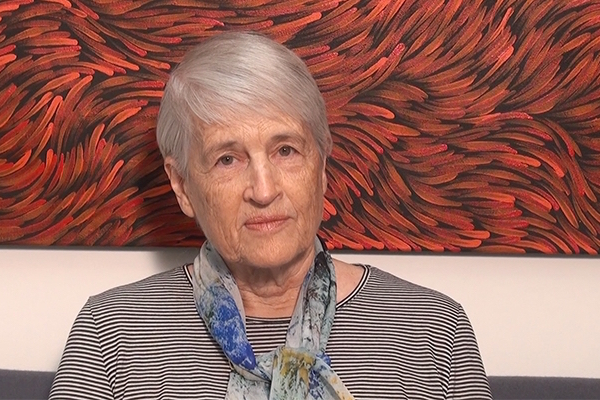
Justice Elizabeth Evatt AC (photo), will be observing the hearing of the appeal of Anwar Ibrahim’s case from 17 to 18 September 2013 at the Court of Appeal in Putrajaya.
Justice Evatt is the first female judge to be appointed to an Australian Federal Court, a former member of the United Nations Human Rights Committee, and a commissioner of the ICJ.
Anwar Ibrahim is a Malaysian politician and is currently the leader of the opposition party, Parti Keadilan Rakyat, and the opposition alliance known as Pakatan Rakyat.
The appeal hearing that Justice Elizabeth Evatt will be observing emerged from the 2008 charges filed against Anwar Ibrahim immediately after the general elections held that year.
He was charged for allegedly committing sodomy, which is a crime under Section 377B of the Penal Code and carries the penalty of up to 20 years of imprisonment and whipping.
The High Court acquitted Anwar Ibrahim on 9 January 2012.
This is the second time that Anwar Ibrahim is facing sodomy charges after his dismissal from the Malaysian Cabinet in 1998.
In 2004, The ICJ also sent a representative to observe the sodomy trial of Anwar Ibrahim, where the Federal Court overturned the High Court decision to convict him.
The ICJ called the Federal Court’s ruling “a step in the right direction in upholding the rule of law”.
Justice Evatt’s mandate as ICJ’s high-level observer to the appeal hearing includes monitoring the fairness of the proceedings against Anwar Ibrahim in the light of relevant international standards.
These standards include, among others the UN Basic Principles on the Independence of Judges, which set out standards on the independence and impartiality of judges, and the UN Guidelines on the Role of Prosecutors, which set out standards on the independence of prosecutors.
Justice Evatt will also be evaluating whether the prosecution under Section 377B of the Malaysian Penal Code is being used in this case to suppress political dissent, contrary to the right to freedom of expression.
“The right to observe trials stems from the general right to promote and secure the protection and realization of human rights. Trial observation is a key tool in monitoring the respect for human rights and the rule of law. It is an effective method to examine the level of independence and impartiality of a country’s criminal justice system,” said Emerlynne Gil, ICJ’s International Legal Adviser on Southeast Asia. “Trial monitoring also serves to promote better compliance with both domestic law and international standards that aim to ensure protection of human rights, including the rights to fair trial and due process.”
Contact:
Emerlynne Gil, International Legal Adviser for the ICJ Asia & Pacific Programme, t +662 6198477 ext. 206; email: emerlynne.gil(a)icj.org

Sep 10, 2013
Many lawyers in Central Asia face serious obstacles in carrying out their functions, including harassment, intimidation and physical attacks and are in need of much greater protection for their work and independence, an ICJ new report says.
Published today, The Independence of the Legal Profession in Central Asia assesses the challenges to the independence of lawyers in Central Asia, and the barriers lawyers in the region face in providing effective legal assistance to their clients.
The report analyses the laws and practices concerning the legal profession in each of the five Central Asian states, Kazakhstan, Kyrgyzstan, Tajikistan, Turkmenistan, and Uzbekistan.
It finds that the weakness of the legal profession is deeply entrenched in the law and legal culture of Central Asian states, and that lawyers’ associations are in certain countries wholly controlled by the executive, and in others are vulnerable to undue government influence or interference.
In some countries in the region, recent reforms of the legal profession have been retrogressive, and have further undermined lawyers’ independence from government, the report shows.
“Across Central Asia, dedicated and independent lawyers who work to protect the rights of their clients, are facing harassment, intimidation and physical attack, as well as impediments to accessing clients in detention, and unequal treatment in courts that impose convictions in nearly 100 percent of cases considered,” said Róisín Pillay, Director of the Europe Programme of the ICJ. “With stronger, independent institutions to govern the legal profession, and greater protection for their work and their independence, lawyers in Central Asia could contribute significantly to strengthening the rule of law in their countries and implementing human rights protections guaranteed under national and international law.”
“There needs to be significant reform both of the law, and of practice, to ensure compliance with international standards on the role of lawyers, ” she added.
The report also examines systems for entry to the legal profession and licensing of lawyers, which in most countries of Central Asia are controlled by the Ministry of Justice, rather than by independent associations of lawyers.
There are similar problems with the disciplinary system for lawyers, which, contrary to international law and standards, is typically subject to significant government control or influence, it says.
“The disciplinary systems of Central Asian countries have failed to address the long-standing problem of lawyers, particularly some state-funded defence lawyers, who act not in the interests of their clients, but effectively under the dictates of the prosecution or other powerful interests,” said Temur Shakirov, Legal Adviser of the Europe Programme. “On the other hand, it is a matter of concern that lawyers who diligently carry out their roles in representing their client’s interests and protecting their rights in accordance with recognized professional standards, have been threatened with or subjected to disciplinary measures.”
The report makes recommendations designed to ensure that lawyers operate independently and effectively to represent the interests of their clients and protect their human rights.
These recommendations are based on international law and standards including the UN Basic Principles on the Role of Lawyers, which affirm the obligation of governments to protect lawyers against intimidation, hindrance, harassment or improper interference in the performance of their professional functions, and protect the right of lawyers to form and maintain independent, self-governing professional associations to represent their interests, promote their training and protect their professional integrity.
CONTACTS:
Róisín Pillay, Director, ICJ Europe Programme, roisin.pillay(a)icj.org
Temur Shakirov, Legal Adviser, ICJ Europe Programme, temur.shakirov(a)icj.org
Central Asia-Legal Profession Report.press release-2013-Rus (full text in pdf)
Central Asia-Independence of the Legal Profession-Publication-2013-Eng (full text in pdf)
Central Asia-Independence of the Legal Profession-Publication-2013-Rus (full text in pdf)
Picture: Almaty Collegium of Lawyers, Legal Consultation

Sep 3, 2013 | News
The ICJ today expressed its serious concern at the continued detention of lawyer Zinaida Mukhtorova in a psychiatric facility.
In its statement, the ICJ expressed concern that this detention may amount to an act of harassment or reprisal for Zinaida Mukhtorova’s legitimate exercise of her professional functions. Furthermore, the ICJ is concerned at reports that her detention may have been extended today as a reprisal for her challenging the detention through the courts.

Sep 1, 2013
The ICJ organized a high level mission to the Kingdom of Lesotho in March 2013 to gather facts concerning a crisis in judicial leadership in this country.
The dispute emerged from a dispute between the office of the Chief Justice, presently occupied by the Honourable Justice M Lehohla1, and the office of the President of the Court of Appeal, presently occupied by the Honourable Justice M Ramodibedi, over the issue of which of them is the head of the judiciary.
The mission team’s objective was also to make recommendations on possible solutions to the crisis.
The ICJ considers that a resolution of this crisis is necessary to bring about harmony in the administration of justice in Lesotho, to facilitate access to justice, to protect the independence of the judiciary and to preserve public confidence in Lesotho’s judicial institutions.
The full mission report can be downloaded below.
Lesotho-Crisis judicial leadership-Publications-Mission report-2014-ENG (full text in pdf)

Aug 29, 2013 | Artículos, Noticias
También la CIJ solicita audiencia temática a la comisión interamericana de derechos humanos.
La CIJ condenó los ataques que se han venido dando en contra de defensores de derechos humanos en Guatemala.
Por tal razón, conjuntamente con organizaciones sociales y campesinas como el Comité de Unidad Campesina (CUC), Asociación para la Promoción y el Desarrollo de la Comunidad (CEIBA), WAQIB´KEJ y otras organizaciones sociales de Guatemala, solicitaron a la Comisión Interamericana de Derechos Humanos una audiencia temática sobre el fenómeno de la criminalización de la protesta social el pasado viernes.
El objeto de la misma es, además de proporcionar información sobre el fenómeno de la criminalización de la protesta social, identificar patrones de represión en contra de líderes sociales en Guatemala.
Según la CIJ, este fenómeno es un claro retroceso del proceso democrático de Guatemala.
En efecto, se han identificado patrones de represión estatal, utilizando el derecho penal para reprimir las libertades de pensamiento, expresión y reunión de sus actores.
En este contexto, la CIJ nota con preocupación varios patrones de ataque en contra de defensores y defensoras de Derechos Humanos de Guatemala, que preocupan profundamente y que se expresan en detenciones ilegales, campañas de difamación y acusaciones falsas, ataques directos que han quitado la vida a cuatro periodistas en los últimos meses y falta de investigación pronta y eficiente, que identifique quien está detrás de estos hechos y si hay presencia de estructuras criminales organizadas que cometen estos crímenes para evitar la defensa de los derechos de los Pueblos Indígenas y de sus territorios.
Ramón Cadena, Director de la CIJ para Centroamérica expresó: “Pedimos a las autoridades del Sistema de Justicia que investiguen estos ataques. La impunidad de estos hechos sigue siendo alarmante. Por esta razón, la Organización de las Naciones Unidas debería nombrar cuanto antes al futuro representante de la Comisión Internacional contra la Impunidad (CICIG), quien debería ser un Fiscal con experiencia para continuar la lucha en contra de cuerpos ilegales y aparatos clandestinos de seguridad.”


![Smoke rises after an Israeli air strike on the village of Taybeh in southern Lebanon [Source: Al Jazeera]](https://www.icj.org/wp-content/uploads/2026/03/Screenshot-2026-03-20-at-15.56.24-300x200.png)